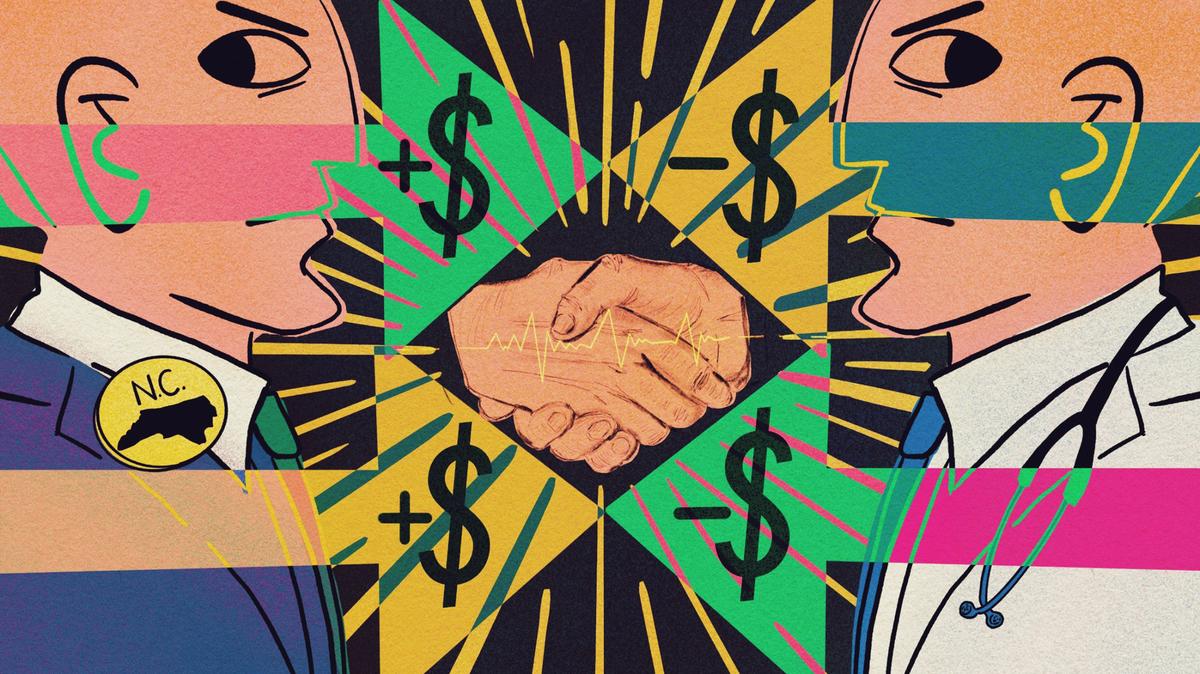
Relief or risk? North Carolina’s trailblazing plan to combat hospital debt sparks debate.
READ MORE
Confronting Medical Debt in North Carolina
Expand All
Fewer North Carolinians will be hounded by collections agencies. More will be able to buy homes and cars. And greater numbers will be able to seek hospital care without the fear of overwhelming bills.
That’s what’s expected in the years ahead, now that an ambitious state program to relieve patient debt is about to launch, proponents say. In a state where residents have been particularly hard hit by medical debt, the plan will provide relief to as many as 2 million people who need help, patient advocates predict.
“This a huge deal,” said Hyun Namkoong, a health advocate for the North Carolina Justice Center. “We have one of the highest rates of medical debt in the country. It’s affecting the ability of people to have upward economic mobility. It’s affecting the ability of people to get loans for their homes and cars.”
But some see risks. They warn that the program could lead to higher health insurance premiums and deductibles.
And while hospitals will get far more federal money for participating, it’s unlikely all that money will wind up helping patients, critics say. In fact, they say, the funding stream could result in more hospital consolidation and higher prices.
That would be an unwelcome development in North Carolina, which a recent Forbes Advisor study has already ranked as the most expensive state for healthcare.
Those concerned about the crushing weight of big hospital bills say there’s more to be done to protect patients.
Exactly how things will play out remains unclear, but one thing is certain: Major changes are afoot at the state’s 99 hospitals, all of which signed on to the debt-relief plan in August.
‘Eyes are on North Carolina’
Crafted by the state Department of Health and Human Services, the first-of-its-kind initiative requires hospitals here to wipe out potentially billions of dollars of patient debt and adopt standards to protect patients from crippling bills in the future. Hospitals must also stop reporting lower-income patients to credit bureaus, a change that would protect many from the sort of credit score damage that makes it hard to borrow money.
In exchange, hospitals are scheduled to get about $3.8 billion more in federal money for fiscal year 2024 and 2025.
The program should help people like Kerry Holbrook, a former preschool teacher who owes more than $3,200 to Duke University Hospital. She survives on disability benefits and has less than $32,000 in annual income.
“If I could get out from under this debt and not accrue anymore, it would be amazing,” the 61-year-old Durham resident said.

The plan is nothing less than “game changing,” said Allison Sesso, who heads Undue Medical Debt, a New York-based nonprofit that buys medical debt from hospitals across the country and retires it for pennies on the dollar.
“A lot of eyes are on North Carolina and what this is going to mean,” she said. “People are interested to see what it means for patients, what it means for access to care, and what it means for the hospitals themselves.”
Others, however, raise caution flags.
And as they look more broadly at what’s ahead for North Carolina’s hospital patients, advocates and experts are asking several fundamental questions:
Can patients expect higher prices and premiums?
Atrium Health, the state’s largest hospital system, has warned DHHS that the debt-relief program could spur some people to go without health insurance. And with fewer people paying premiums, system officials say, the cost of insurance could spike.
“While we recognize and appreciate the department’s good intentions to address the troubling impact medical debt has on patients and families, we are concerned it does not address the full picture of the root causes, and it could lead to unintended consequences,” Atrium’s parent organization, Advocate Health, stated in an August letter to DHHS Secretary Kody Kinsley after agreeing to participate in the state plan.
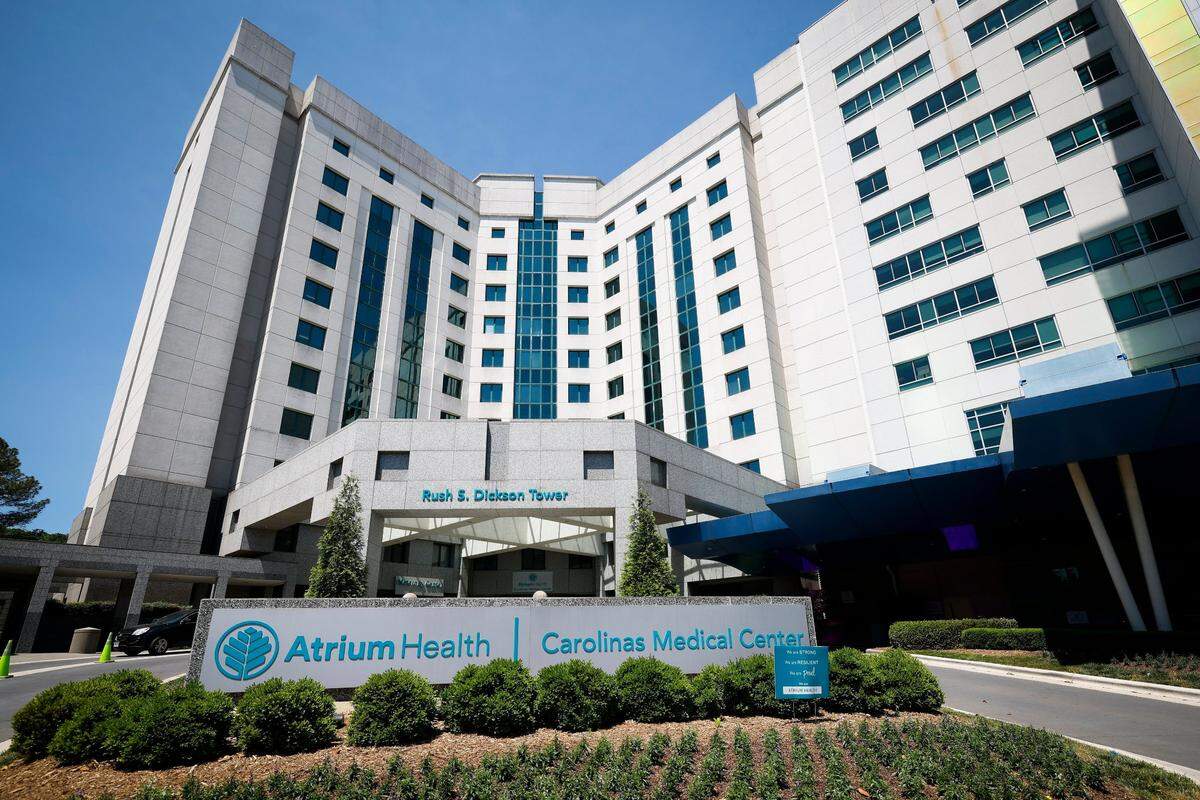
Both Advocate Health and the North Carolina Healthcare Association, the state’s powerful hospital lobby, argued before the plan was approved that it could prompt insurance companies to raise insurance deductibles and other amounts patients must pay out of pocket. Their reasoning: With hospitals serving as a safety net for more patients, insurance companies could save on claims costs by raising deductibles.
In a letter sent to hospitals in July, DHHS contended such concerns were ill-founded. Some states that have put in place policies to mitigate medical debt — including New Jersey, New York and Washington — have lower average deductibles than North Carolina, DHHS said.
And if California’s experience is any indication, large numbers of North Carolinians won’t choose to go without insurance coverage. Since the passage of a 2021 law in California that implemented charity care standards for hospitals, there’s been no indication that the law has added to the ranks of the uninsured, according to Jessica Altman, who heads Covered California, the state’s insurance marketplace.
“In fact, the most recent data shows California at its lowest uninsured rate on record,” Altman said.
Will hospitals have an incentive to raise prices?
Despite initial opposition by many North Carolina hospitals, all signed on the state’s debt relief plan. One reason: They stand to gain a lot of money.
Hospitals now get much of their federal funding through an initiative known as the Healthcare Access and Stabilization Program, or HASP. And by agreeing to participate in the debt-relief program, many hospitals are expected to get nearly twice as much of that money next year. Atrium Health, for instance, should get about $1.7 billion in HASP funding — about $824 million more than it would have received if it had opted out, according to DHHS projections.
Although it vigorously criticized the state’s debt relief plan this summer, the hospital association recently called the additional federal money “a lifeline” for the state’s patients and communities.
“The program enables hospitals to continue providing vital care, particularly to our most vulnerable populations,” the association’s Oct. 16 statement to the Observer said. “Ensuring access to services such as labor and delivery, behavioral health, and lifesaving emergency treatments.”
But the formula used to distribute the federal money gives hospitals an incentive to raise their prices, critics say. That’s because it’s tied to their average commercial rates — the amount hospitals typically charge insurers.
The debt-relief initiative will be a “wonderful, wonderful thing” for many patients, said Sam Watts, executive director of the State Health Plan, which provides health care coverage for more than 700,000 teachers, state employees, retirees and their dependents.
That said, people should brace for higher hospital prices, Watts told the Charlotte Observer.
“Hospitals can get more reimbursement just by raising prices,” he said.
Hospital prices in North Carolina are already above average. In 2022, commercial insurers paid hospitals in this state 280% of what Medicare pays overall, according to research by RAND. By that measure, just 14 states had more expensive commercial hospital prices.
The most expensive hospitals in North Carolina charge patients and businesses as much as 24 times what Medicare pays for common services, a 2023 study by the state Treasurer’s Office and the Johns Hopkins Bloomberg School of Public Health found.
Gerard Anderson, director of the Johns Hopkins Center for Hospital Finance and Management, predicts that hospitals here will use much of their additional money to acquire physicians’ practices, construct new buildings and do “all sorts of things unrelated to the hospital’s main business.”
“If you give hospitals money, they find ways to spend it,” he said. “And once they have higher costs, they pass it on to the commercial payers.”
Jonathan Kappler, DHHS chief of staff, said he expects commercial insurers will keep pressure on hospitals not to raise prices significantly.
“I don’t think that this program is going to demonstrably alter the trajectory of healthcare pricing in North Carolina,” he told the Observer.
Will hospitals gain more monopoly power?
Many experts say more needs to be done to combat one of the key trends driving hospital prices higher: consolidation.
As hospital systems have merged and grown, experts say, they’ve been able to use their market power to demand higher payments from insurance companies. And with access to more federal money, North Carolina hospital systems will soon have an even greater ability to buy up other hospitals and medical practices.
Data compiled by hospital consolidation expert Zack Cooper, an associate professor of health policy and economics at Yale University, shows that North Carolina’s hospitals are more consolidated than those in all but seven other states. More than half of North Carolina’s hospitals have a complete monopoly in their regions, Cooper’s data shows.
“I can’t think of any state where you have so many unchallenged monopolists,” said healthcare policy expert Barak Richman, a former Duke University law professor who now teaches at George Washington University.
One prime example of consolidation: Atrium Health has transformed itself into a healthcare juggernaut in recent decades by acquiring many hospitals and merging with other systems. It’s now part of Advocate Health, the nation’s third largest nonprofit health system.
One of the system’s hospitals, Atrium Health Pineville, marks up its charges more than most in the Charlotte region, federal records show. Overall, the hospital’s full charges — before any discounts provided to patients or insurers — are about six times more than its costs, according to the cost report it files with the federal Centers for Medicare and Medicaid Services.
Could hospitals afford to provide more help?
Most North Carolina hospitals are nonprofits, a designation that provides them lucrative tax breaks. In exchange, they are expected to give back to their communities, chiefly by providing care to those who can’t afford it.
Hospitals say they do. In 2023, North Carolina hospitals provided more than $4.1 billion in uncompensated care, “demonstrating their unwavering commitment to serving all patients, regardless of their ability to pay,” the NCHA said in its statement to the Observer.
But a 2012 Charlotte Observer investigation — and 2021 research by the state Treasurer’s office and the Johns Hopkins Bloomberg School of Public Health — found most hospitals received more in tax benefits than they gave back in the form of charity care.
Financial data collected by Medicare suggests many of those hospitals could afford to provide more financial assistance. Most of the state’s largest hospitals have more than $1 billion in reserves, an Observer review found. And more than 15 hospitals have profit margins above 20%, according to data compiled this year by the American Hospital Directory.
What happens to people hospitals sued?
The new debt relief program doesn’t address the liens that the state’s more litigious hospitals have placed on the homes of patients who didn’t pay their bills. But for some, relief is coming.
When hospitals sue patients for unpaid bills, they often obtain liens on the patients’ homes. Homeowners must generally pay off the liens when they sell or refinance their houses. That reduces the equity people have in what’s often their largest investment
From 2017 through June 2022, North Carolina hospitals filed lawsuits against more than 7,500 patients and family members to collect on medical bills, according to a report by Duke University Law School and the office of State Treasurer Dale Folwell, a persistent critic of the state’s nonprofit hospitals.
Five hospital systems filed the overwhelming majority of the lawsuits in the study. Charlotte-based Atrium Health filed more than 40% of them.
But in late 2022, Atrium stopped suing patients. And just last month, its parent organization announced that it would both forgive medical debt and cancel more than 11,500 liens that it holds on the homes of former patients it sued in North Carolina and five other states.

That will help people like Terry Belk, who was sued by Atrium in 2011 after he was unable to pay a hospital bill. Belk, a 68-year-old car salesman, said Atrium’s collection practices damaged his credit score and forced him to delay retirement.
Earlier this month, Belk got the paperwork he’d been eagerly awaiting: notification that Atrium lifted the lien on his three-bedroom home in east Charlotte.
“It’s going to alleviate a lot of stress for people who are sick,” Belk said of the hospital system’s decision to cancel liens. “For people who are sick, that’s the last thing they need to worry about.”
The state’s second most litigious hospital system, Gaston-County based CaroMont Health, filed more than 1,700 debt-collection lawsuits during the study period.
In response to Observer questions about those lawsuits, CaroMont spokeswoman Meghan Berney said that the hospital system in September “discontinued the practice of filing liens in small claims court for delinquent account balances and is in the process of removing all liens.”
CaroMont Health ended the practice because “it does not align with the spirit” of the state’s debt-relief program, Berney said in an Oct. 17 email.
How will the debt-relief plan be enforced?
It’s not yet clear how state officials will confirm that all hospitals comply with the debt-relief plan.
Hospitals will be required to report key metrics, such as the number of people whose debts are forgiven, said Kappler, the DHHS chief of staff. And those that fail to comply could wind up receiving less federal money. But the state has not set up any system for auditing the accuracy of their reports.

State officials will be able to see how hospitals compare to their peers in what they’re reporting, Kappler said. Patients can file complaints with the state Attorney General’s office if they feel hospitals aren’t meeting the requirements, he noted, and advocacy groups will also likely alert officials if they believe that’s happening.
“I feel very confident that the department will have good visibility into how this is playing out across the state,” he said.
Richman, the George Washington University healthcare policy expert, said that if hospitals do what the North Carolina program requires, patients will face fewer credit problems, fewer hospital lawsuits and fewer bankruptcies.
“But that’s a big if,” Richman said. “My guess is that we’ll have to continue to apply pressure to get hospitals to do what they’re supposed to do.”
Noam Levey, a senior correspondent for KFF Health News, contributed to this story.
Click here to read more from our Confronting Medical Debt series.
This story was originally published October 24, 2024 at 5:00 AM with the headline "Relief or risk? North Carolina’s trailblazing plan to combat hospital debt sparks debate.."
.JPG)