‘Bees hovering over the ground’? Why you may see them in NC & what to do
AI-generated summary reviewed by our newsroom.
- Ground nesting bees account for most of North Carolina’s roughly 560 native bee species.
- The insects usually emerge in the spring and are mostly gone a few weeks later.
- Experts advise against using gasoline or insecticide to target the important pollinators.
Bees are hovering over North Carolina yards — but you may want to think twice before racing to get rid of them.
That’s because you’re likely seeing ground nesting bees, which are known to be docile and play an important role in pollination.
“They live in these really large aggregations,” Gabriela Garrison, Eastern Piedmont habitat conservation coordinator for the N.C. Wildlife Resources Commission, told The News & Observer in a Thursday, April 16 phone interview. “So that’s, I think, what really tends to frighten people, because they see potentially hundreds of these little burrows in a relatively small area.”
Here’s what to know about ground nesting bees this spring, including how to identify their holes, when and where you may see them and what to do if they’re in your yard.
When you may see the bees
The wildlife commission in a news release said it fields several calls from “panicked landowners who have ‘a bunch of little bees hovering over the ground.’”
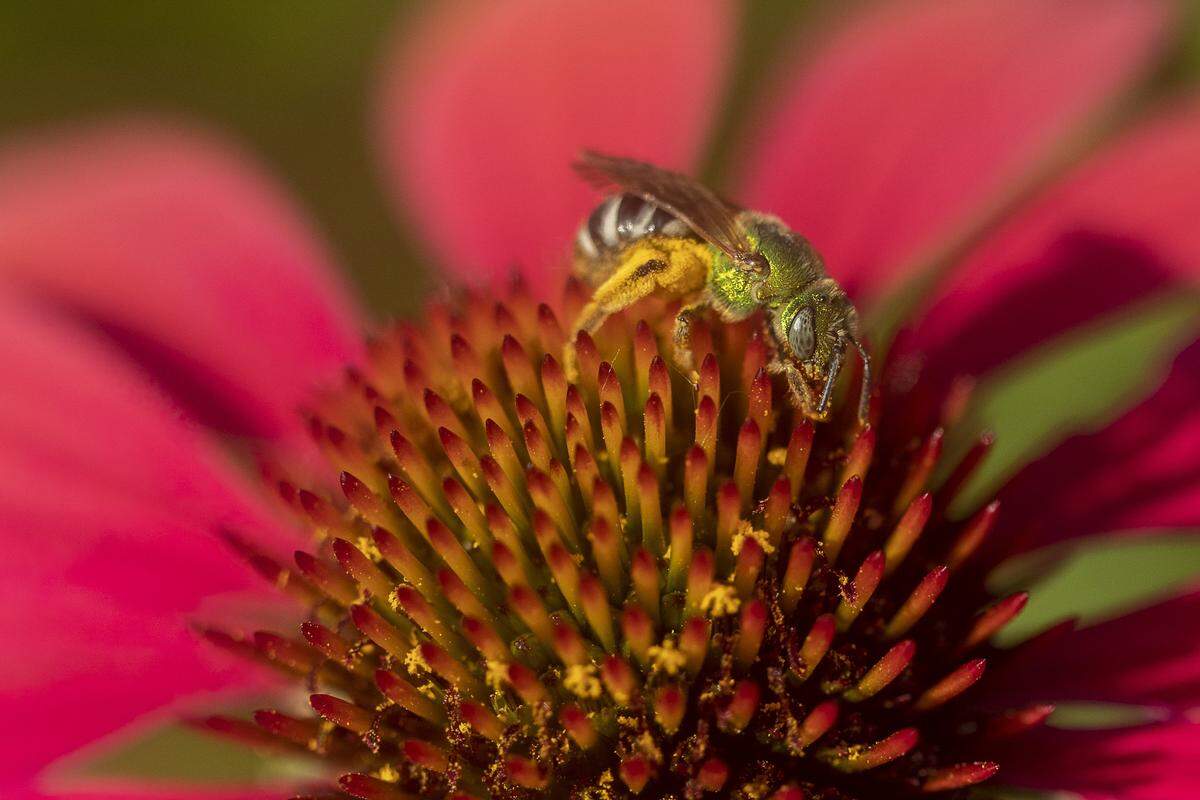
The callers are referring to ground nesting bees, which account for about 400 of the roughly 560 native bee species in North Carolina. It turns out, an estimated 70% of bees around the world build underground nests, according to the N.C. State Extension.
The insects are found throughout the state and include sweat bees and mining bees. Since there are so many different species, there’s variation in when you may see them. But experts say they tend to come out of the ground in February, March or April and may be seen throughout the summer.
Male bees are the first to hover as they wait for females to emerge above the surface for mating. Though you may see hundreds or thousands of nests in one location, the insects are solitary.
“They don’t have a hive or a colony to protect, so their mindset is not to attack somebody if they come near,” Garrison said. “Their mindset is to flee, because they’re this tiny little bee, and they don’t want to get stepped on or killed.”
Signs of ground nesting bees
Ground nesting bees are sometimes mistaken for other insects, such as ants or yellow jackets. But there are some signs you may have them in your yard.
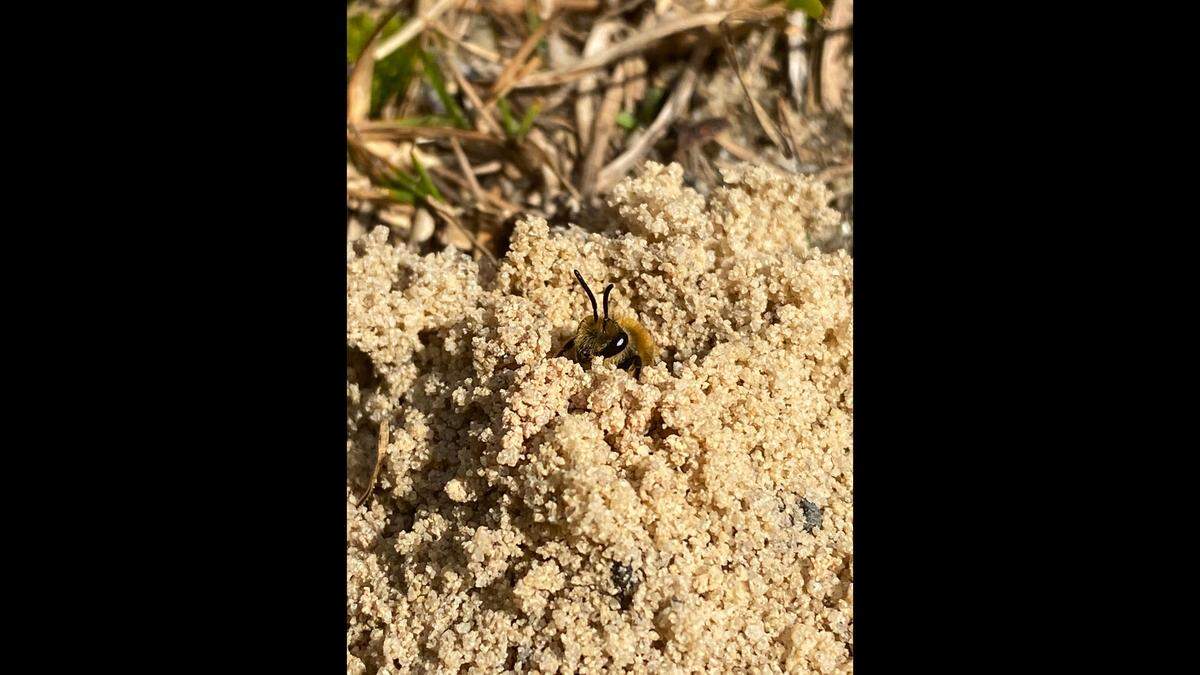
In addition to seeing the bees hovering near the ground, you may spot their burrows dotting the landscape. Above ground, the holes have piles of dirt next to them, Christopher Hayes, assistant professor and extension specialist at N.C. State University, told The N&O in a Thursday, April 16 phone interview.
“They look like, almost little mini volcanoes, for lack of a better way to describe it,” Garrison said. “And some people say they look like ant mounds. And in a sense they do, because they’re little burrows, but they kind of peak up in the center to a tiny little hole, which is quite literally the size that a little tiny bee would be able to get in and out of.”
It can be difficult for the bees to break through lush lawns, so their nests typically are in soil that has patches of grass or other sparse coverings. Another place you may find their nests is on south-facing hills, which the sun dries fast.
“We do see them a lot in areas that don’t have a lot of repeated disturbance,” such as cemeteries and parks, Garrison said.
What to do if you see the bees
When homeowners see ground nesting bees, some feel compelled to put gasoline or insecticide in their burrows to try to eliminate them. But adding toxins to the holes can spell bigger trouble for your soil and groundwater. Also, insecticides may not penetrate deep enough to prevent bees from emerging, according to experts.
The experts we spoke to want ground nesting bees to stick around due to their benefits to plants. They pollinate flowers and crops, creating economic benefits for our state.
“From a soil perspective, they’re doing all of this aeration because they’re creating all these little burrows in the ground and constantly moving in and out of the soil,” Garrison said.
So, what happens if you don’t try to get rid of the bees? You may want to play the waiting game.
“Most ground-nesting bees are only above the surface for a very short time,” the wildlife commission wrote. “They spend most of their lifecycle below ground in some phase of development. If you’re seeing bees on your front lawn today, chances are they will be mostly gone within two to three weeks, not to emerge again until next year.”
Hayes acknowledges that the bees’ holes may be unsightly to have in your yard. But they’re unlikely to sting if you leave them alone.
“At the end of the day, if your desire is to really, really try and eliminate those bees, it has to involve some type of landscaping,” Hayes said. “And it just is more headache than it’s worth.”
If you have questions about the bees, you can email Garrison at gabriela.garrison@ncwildlife.gov or call the commission’s help line at 866-318-2401.
This story was originally published April 22, 2026 at 7:00 AM.