It started as a basketball game. It ended as a reminder of what Kinston is up against
READ MORE
Dreams and Nightmares: A Kinston basketball story
North Carolina is home to various basketball cathedrals, places whose history transcend the sport and define the state’s culture. Our four-part series, publishing throughout Winter 2022, explores why Kinston High School rises above the rest of N.C.’s worthy shrines.
Expand All
Inside NC’s poorest community lies its richest basketball where nightmares fight dreams
It started as a basketball game. It ended as a reminder of what Kinston is up against
As teens are gunned down in Kinston, can basketball’s refuge prevent another victim?
A hoops dream ends in Kinston, but basketball’s place in fighting nightmares persists
Donald Ingram could be anywhere right now but he’s here. He could be in New York, in an NBA arena, watching his son, Brandon, play against the Brooklyn Nets. He could be traveling somewhere. Money is no concern. His son made it big, about as big as anyone can ever hope for in Kinston, and yet Donald Ingram is still here.
“Well, you know,” he says, explaining why. “It never crossed my mind to leave.”
Not even with Brandon earning $27.3 million this season with the New Orleans Pelicans, and not even after he’s now set to earn more than $50 million through five NBA seasons. Donald likes to travel, he says, but he doesn’t like the traffic or the hustle of the big city. He likes to “come back home and relax,” he says, and home is Kinston.
Besides, being here offers “a little bit better insight of what goes on in the community,” he says. “So we are seeing things that the community needs, like the homeless shelter, or just giving back a mentoring program, giving back to the high school. And so we didn’t want to abandon the community in that aspect.”
BEHIND THE STORY
MOREWhat is this series?
Kinston High School has long been home to one of the most successful boys basketball teams in the state. The Vikings have won 11 state championships and sent a long line of players onto major college programs over the years. They’ve also thrived in one of the most disadvantaged parts of North Carolina. This story is Part 2 of a series about a season in the life of Kinston High basketball. Perry Tyndall, the Vikings coach, has allowed reporter Andrew Carter behind-the-scenes access to his team as it navigates challenges on and off the court. The story of the 2021-22 Vikings is also a story about a struggling town and region; it’s a story about Kinston, home to some of the poorest census tracts in North Carolina, told through the lens of a high school basketball team.
Kinston has become the kind of place people find easy to leave. The kind that younger people might be desperate to escape. It wasn’t always that way, when it was growing and when jobs were more plentiful, and when the future seemed more certain. It has become that way, though, which is part of the reason Donald Ingram has remained, to help make this place a little better.
It’s why he’s here now with a broom in his hand, on the edge of the basketball court where his son first began to gain national prominence. It’s the third Saturday in January and an important day, especially, at Kinston High School, which is hosting the inaugural Brandon Ingram MLK Showcase. It’s a full day of high school basketball. Noon until late, game after game.
There are signs all over the roads leading into the school. The parking lot is full for the final game of the day, Kinston against Farmville Central. They’re fierce rivals, 25 miles of low-lying farmland apart, and these days they’re always among the best high school basketball teams in the state. Just last year, they each had one player who’s now on an ACC roster: Kinston’s Dontrez Styles, who went onto North Carolina, and Farmville’s Terquavion Smith, now at N.C. State.
This is the game everyone has come to see, the reason why the lot outside the gym is full.
Why it was full, at least.
Now the crowd is headed out. The gym is being evacuated. Outside, the blue lights of police cruisers illuminate the darkness. There was a basketball game here tonight, and an important one, but it ended before the final buzzer. After the chaos, the gym at Kinston High is mostly empty. The teams are on the court, trying to figure out if they can still play after everything that happened. And here’s Donald Ingram, off to the side, cleaning up the place. He’s wearing a shirt with his son’s image and name on it, promoting the event, which Donald has helped organize and run.
Now he sweeps. The father of one of Kinston’s favorite sons, on janitor duty.
The smell of pepper spray is still noticeable. It’s wafting into the gym, becoming stronger.
North Carolina’s NBA Triangle
In Kinston, perhaps nothing brings the community together more than basketball. There are community centers with gyms all over town, none of those with more history than the Holloway Recreation Center, but for a long time now the gym at Kinston High has been arguably the city’s most important gathering place. Whatever troubles have plagued Kinston on the outside, whether crime or a faltering economy, the Vikings and basketball have always provided pride and an escape.
For weeks and even longer than that, anticipation had been building for the Brandon Ingram MLK Showcase. It included 14 teams and seven games — none with more build-up than the 9 p.m. tipoff between Kinston and Farmville Central. This was the first time that Ingram’s name was attached to the event but in 2020, when it was known as the Kinston MLK Classic, there weren’t enough seats for everyone who wanted to come.
Back then, a couple of months before the start of the pandemic, a long line of people waited outside to make their way into the Kinston-Farmville game. Some of them didn’t get in. The game sold out. Inside, not only were the bleachers full but spectators also lined the walls behind both baskets. It was a little like the old days, the scene reminiscent of when Jerry Stackhouse regularly drew crowds like that in the early 1990s, back when things were a little different around here.
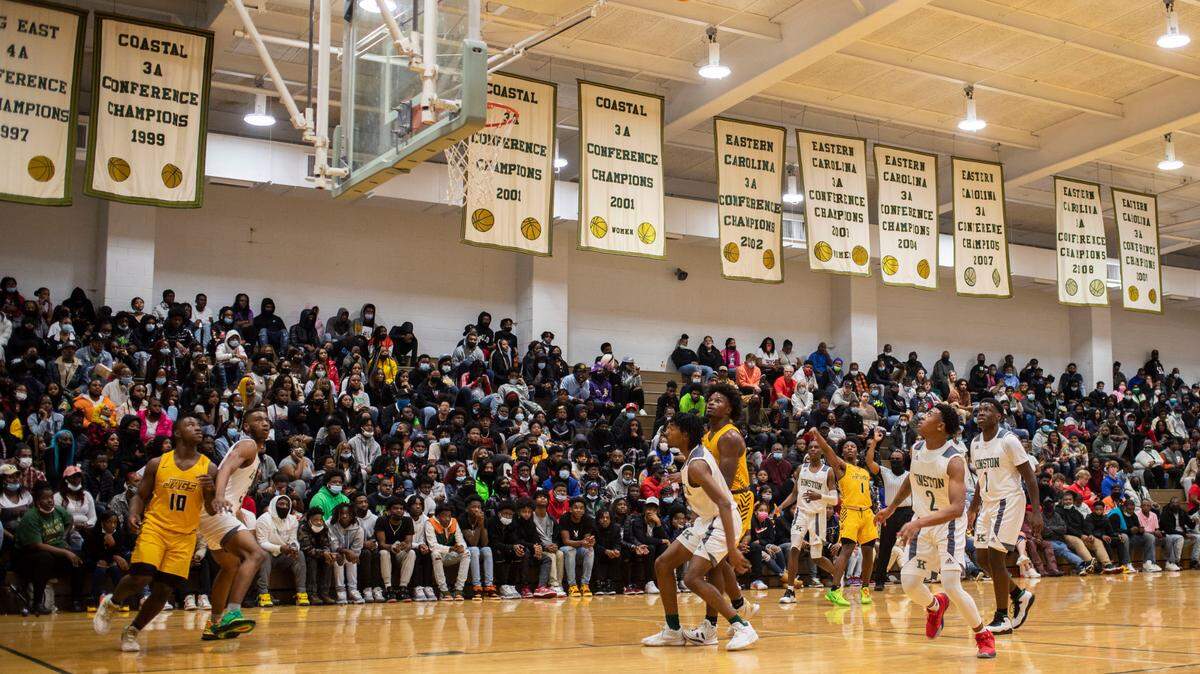
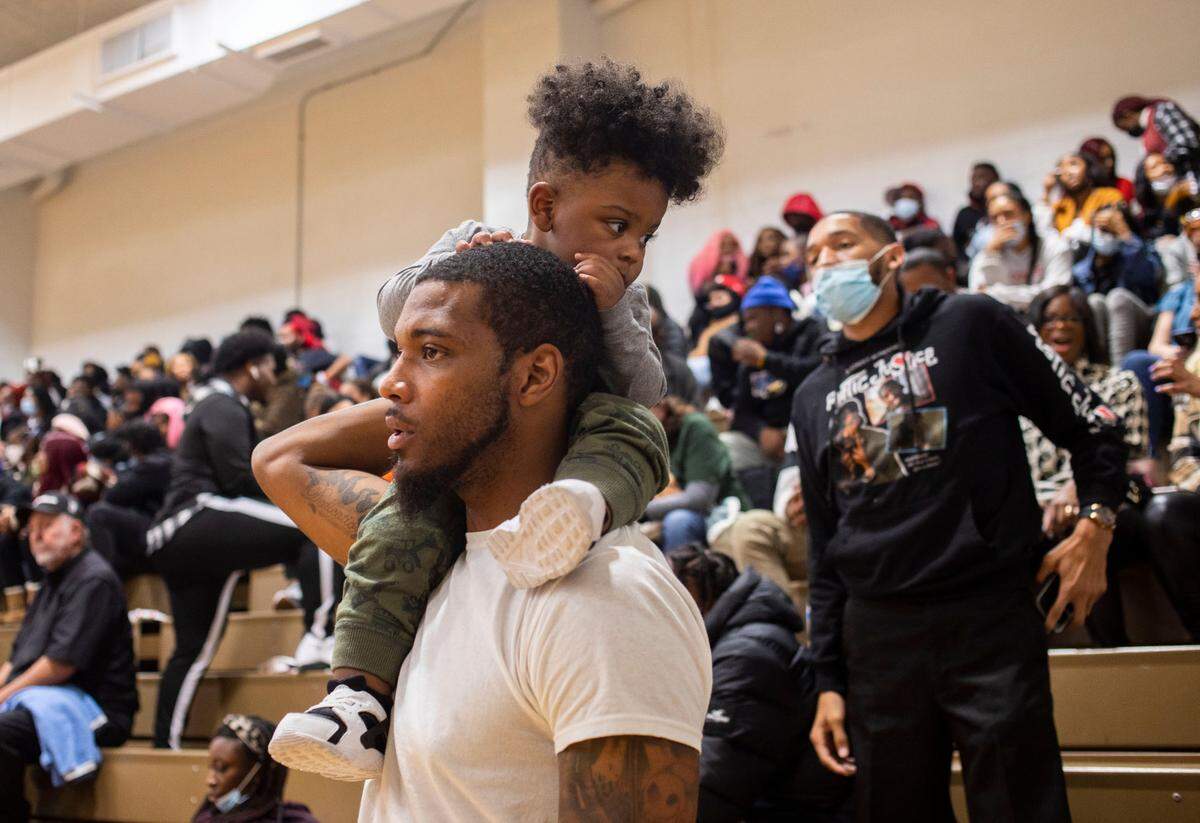
It wasn’t quite like that this year. No long line outside, or line of any kind. A smattering of empty seats in the bleachers remained throughout the day. No sellout. Yet there was still a certain energy and anticipation, the kind that’s unmistakable in smaller communities in the lead-up to a big high school football game on a Friday night or, in this case, a basketball game of significance between two rivals of close proximity.
That dynamic doesn’t often exist in bigger places, where high school sports usually fade into the background. Within the city limits of Raleigh, for instance, there are seven public high schools, some named after people or roads. In Kinston, there’s Kinston High, the way that in Farmville there’s Farmville Central. Schools named after communities that identify with them.
Around town, people had been talking about Kinston-Farmville in anticipation of Saturday, about whether Kinston could snap its losing streak against the Jaguars. That was the conversation between two old-timers hours before the game, in the Bojangles near the school. Outside, in a box selling the local paper, one of the lead stories told of two more business closings downtown.
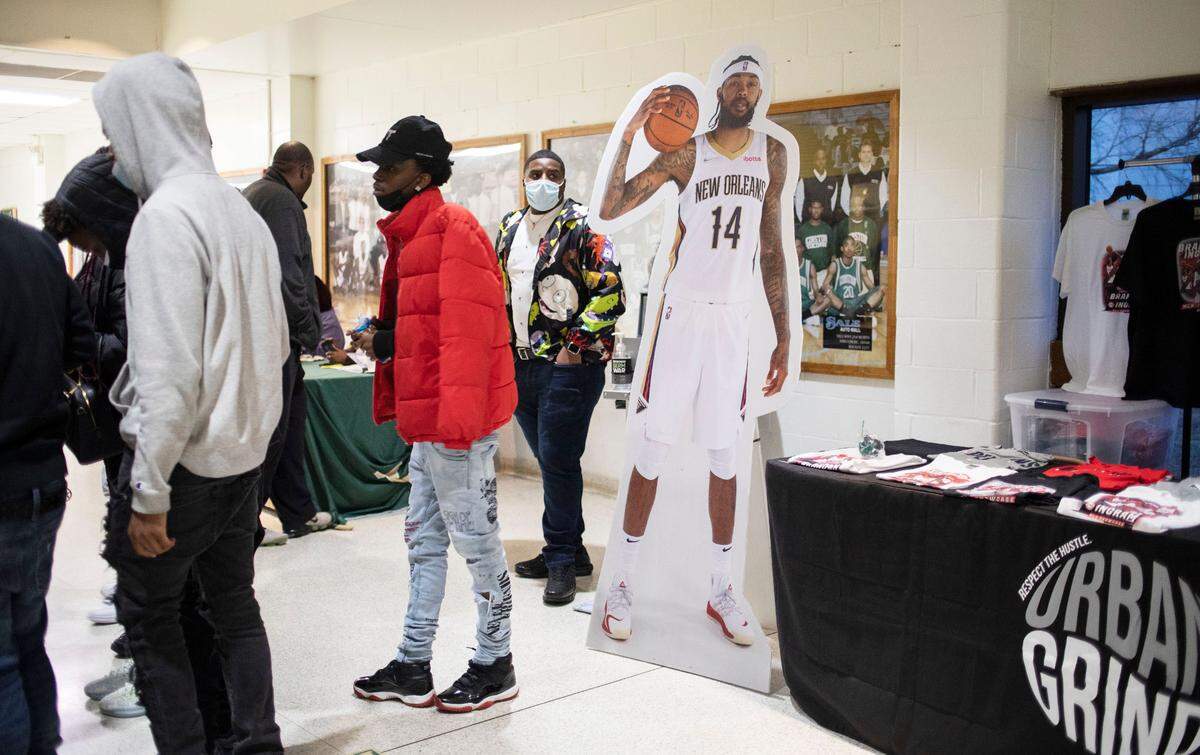
Across the street, back at Kinston High, traffic remained steady, cars and team buses turning into the school near one of the banners with Brandon Ingram’s name on it. Inside, just past the ticket table — $15 for a full day of games; not a bad deal — there was another table, this one full of Brandon Ingram MLK Showcase merch. A few of Ingram’s NBA jerseys hung in the background and, next to the merch table, there were two life-size cardboard cutouts of Ingram, where fans could come up and pose for pictures.
In Ingram’s day, which wasn’t all that long ago, Kinston was the most dominant high school team in the state. The Vikings won four consecutive state championships. They’ve remained formidable since, as they almost always are, but Farmville Central is the kind of power that Kinston was. Their game Saturday was to be one of the most important of the season for either team.
The competition on the court is the main reason why. But so is their proximity.
The 25 miles from Kinston to Farmville is an easy, pretty drive through the vast flatness of Eastern North Carolina. From Farmville Central, one could take three roads south down to Kinston. The most direct of them intersects with several smaller roads — one named after a mill, another after a school, another after a man named Fuzzy; three named after churches. There’s not much to see on that drive. Big old farmhouses next to crops. Decaying barns.
The roads between Kinston and Farmville are like an endless number of others throughout rural Eastern North Carolina. Except that on either end, they’re connected by basketball, which, as much as any crop, remains one of North Carolina’s proudest exports. Kinston, everyone knows about. The 11 state championships. The 18 state regional appearances. The lineage of memorable players.
Since the Vikings’ most recent state championship in 2015, Farmville Central has won three state championships of its own, all in the past three years. Their basketball rivalry has become ingrained in this little stretch of the state, as much a part of the local culture as chopped pork in roadside restaurants and the characteristic toughness with having to constantly rebuild. Farmville is along the western edge of Pitt County, about 13 miles west of Greenville, where the poverty rate is 30 percent.
It doesn’t get any more affluent out in the country. This is part of the state where opportunity can be difficult to find, where small towns are becoming smaller; a part of North Carolina that is not mentioned or highlighted in the tourism ads, the ones highlighting mountains or beaches or the Biltmore. In a state known for its basketball, though, Eastern North Carolina is also the place where a great many memorable players have deep roots.
Mike Jordan first provided glimpses of becoming Michael Jordan during his days at Laney High, in Wilmington, in the early 1980s. Before that, Phil Ford and Buck Williams went from Rocky Mount High to the ACC (Ford at North Carolina, Williams at Maryland) and then became NBA Rookies of the Year in 1979 (Ford) and 1982. Before he became known as the Human Highlight Film, Dominique Wilkins starred at tiny Washington High, in Washington, North Carolina.
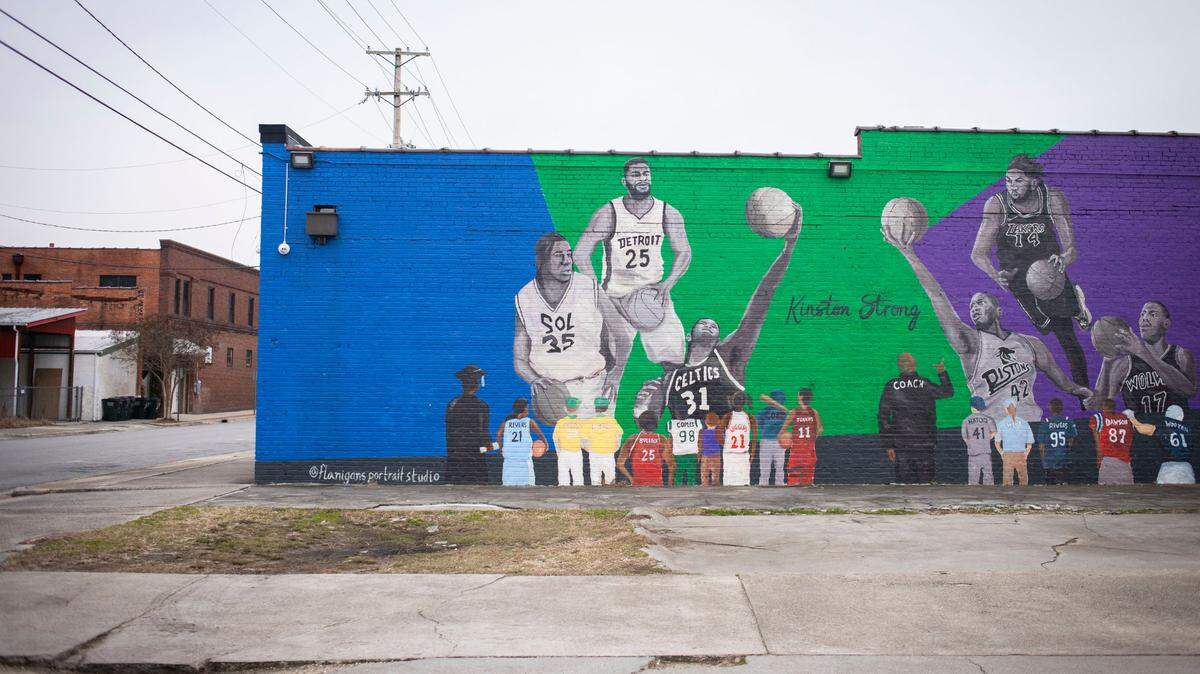
And then there’s everyone from Kinston, beginning with Cedric “Cornbread” Maxwell, who went from this small city along the Neuse River to the Boston Garden, and was a key part of the Celtics teams of the early-to-mid 1980s that remain some of the most fabled in the history of the sport. One could draw a border around Eastern North Carolina, from Wilmington in the south and north up to Rocky Mount, and produce an all-time starting five of locals that’d be as good or better than any real starting five in NBA history.
It’d compare with or exceed any fictional starting five, too, from any other basketball mecca: Harlem and greater New York City or Chicago. Documentaries have been filmed and books written about the playgrounds in those places and, to be sure, they have an advantage in population density and raw numbers. Per capita, though, can any place in the country claim the same kind of basketball fertility as that found in Eastern North Carolina?
Consider an all-time lineup of Ford and Jordan in the backcourt, Wilkins and Jerry Stackhouse on the wing; Williams with some muscle in the paint. Undersized, maybe, but that’s a lineup that’d win a few games, and don’t forget about Maxwell or Ingram as the sixth man, and Reggie Bullock, who can come off the bench and provide some shooting and defense, like he’s done for the past nine years in the NBA.
What is it about Eastern North Carolina that has allowed for such a legacy? It’s hard to know.
What’s certain is that all of those players began their journeys in little high school gyms throughout this part of the state and a few of them in this exact gym, in Kinston, where kids still dream about being the next one in that line. Now there was a game, one of the biggest of the year, and the crowd inside was growing larger, the hallway filling with people waiting for the show to start.
‘Welcome to Kinston’
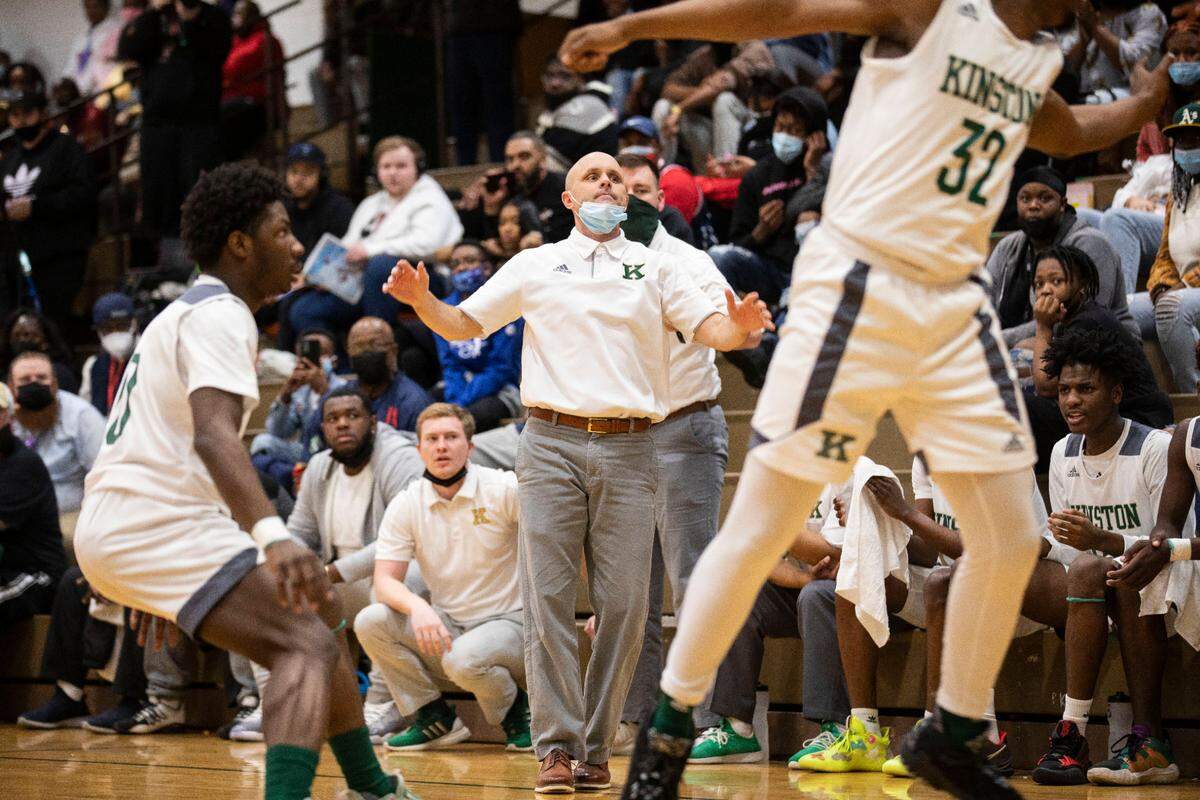
Less than an hour before Kinston and Farmville Central tip off and Perry Tyndall, the Kinston coach, is offering his players a reminder. After the Vikings won their first eight games of the season, something most unexpected happened their last time out: They lost. And lost to a team, Eastern Wayne, they’d beaten by 26 points earlier in the season.
Kinston doesn’t often lose but it’s pretty much always the school that other schools most want to beat. Tyndall played here and he has long grown used to the target the Vikings wear, how when they lose the coaches and players from the other team can say:
The school with all those NBA guys, and state championships? Yeah. We beat them.
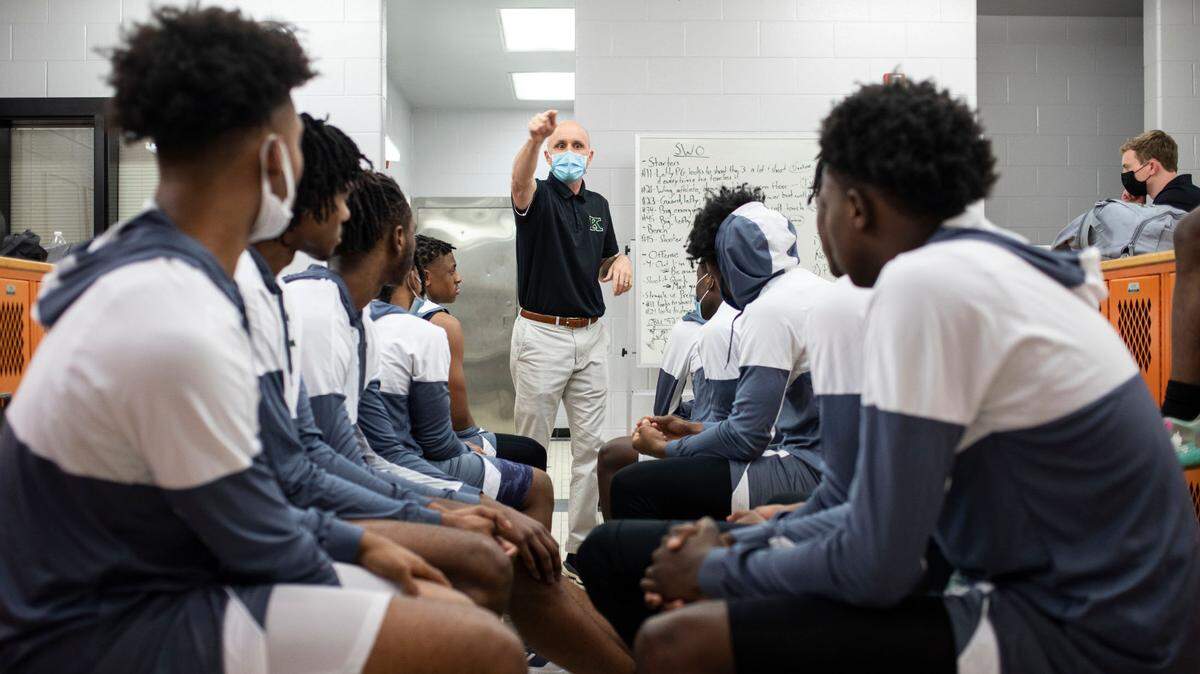
A victory against Kinston can be the highlight of a season for some teams, the way that loss for the Vikings can cause a crisis of confidence. Tyndall is trying to ward that off now in the locker room, reminding his team of its identity, that all it needs to do is focus.
“I shouldn’t have to say ‘lock in,’ ” Tyndall says, standing in front of his players. “I had to tell you to lock in the other night and I told you what was going to happen on Thursday night and you didn’t believe me. You didn’t believe me, and then it happened. It happened.
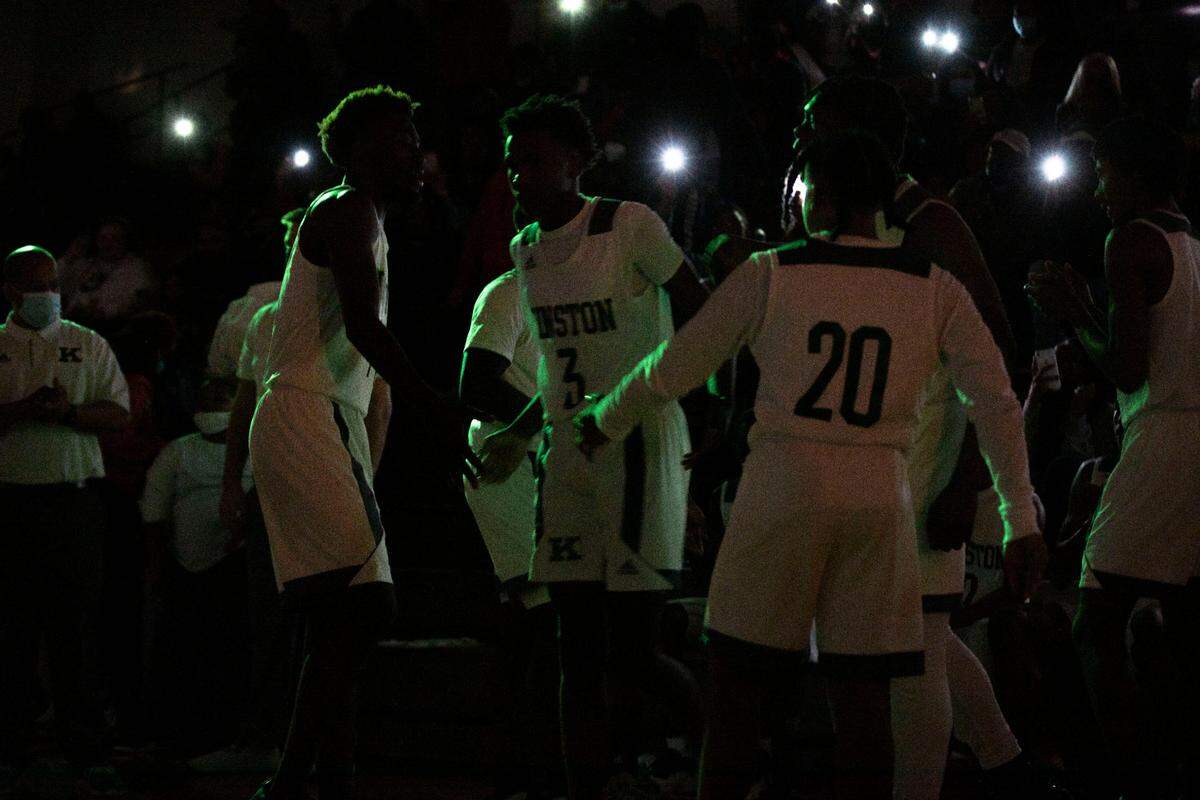
“This is a night you step up,” Tyndall says.
Outside, the bleachers are about full. So is the hall outside the gym. Not a sellout, but close.
“Tune out everything in the crowd,” Tyndall says, approaching the heart of his pregame speech. “It’s going to be a great high school environment. Many of you haven’t even been able to play in something like this because of COVID.
“Don’t let the moment dictate you. Just play, man. Play. Be secure in who you are. There ain’t nobody else in those stands that gets to play, in this moment, at 9 o’clock. And a lot of people would be scared to death to be in this moment. And you’ve got the opportunity.”
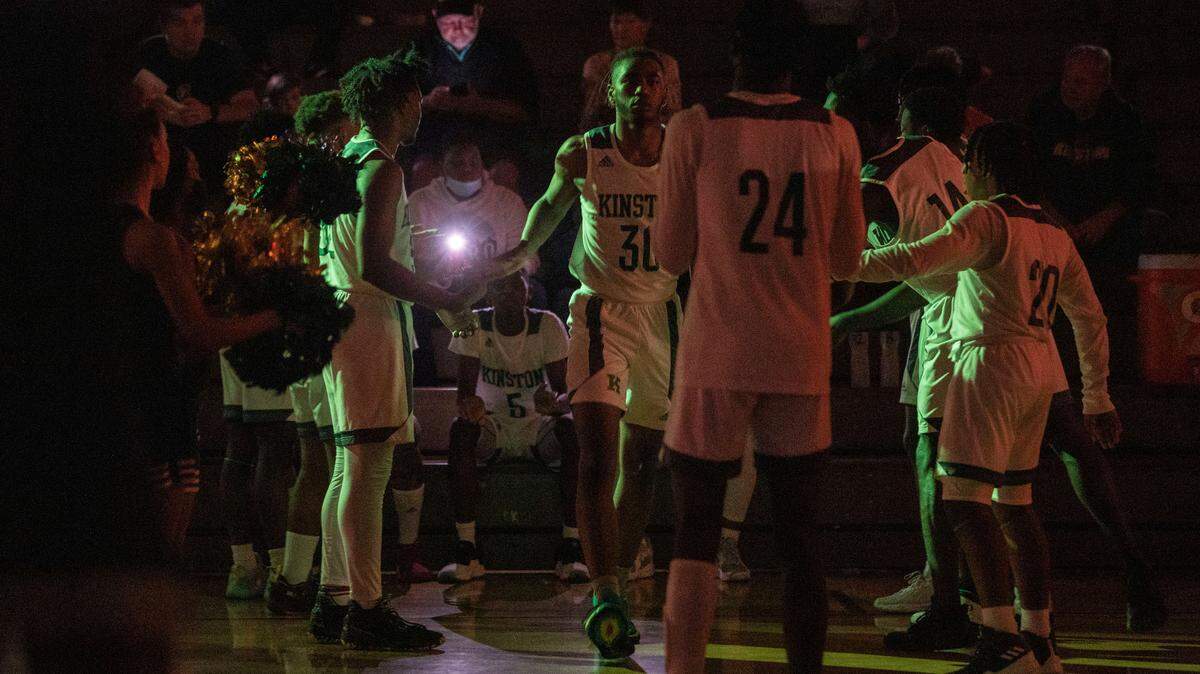
When the locker room door opens about 15 minutes later, the first person each Kinston player sees when he walks out is the mayor of the city, Don Hardy. He’s dressed to the nines — well-tailored suit with a black-and-white polka dot bowtie; shoes shined and spiffy. He gives each of the Vikings a fist bump and offers small words of encouragement.
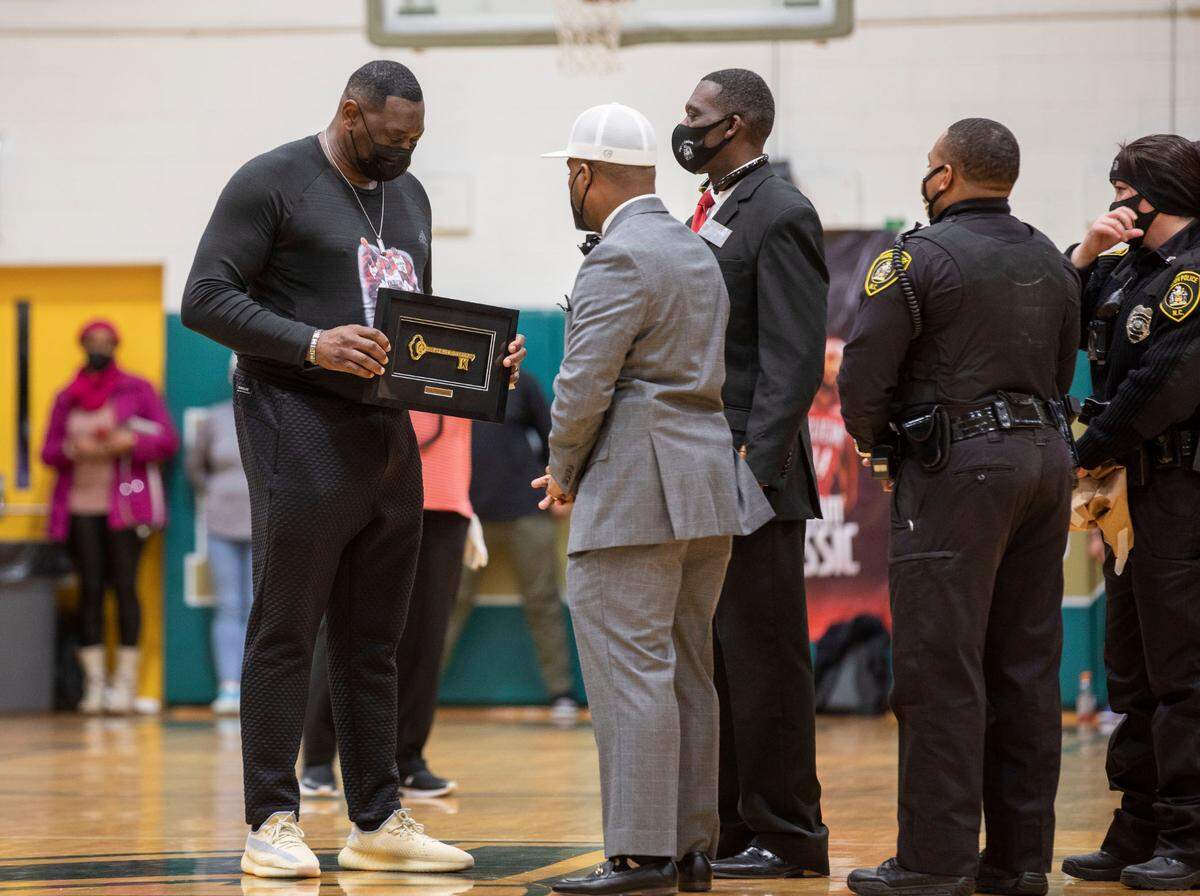
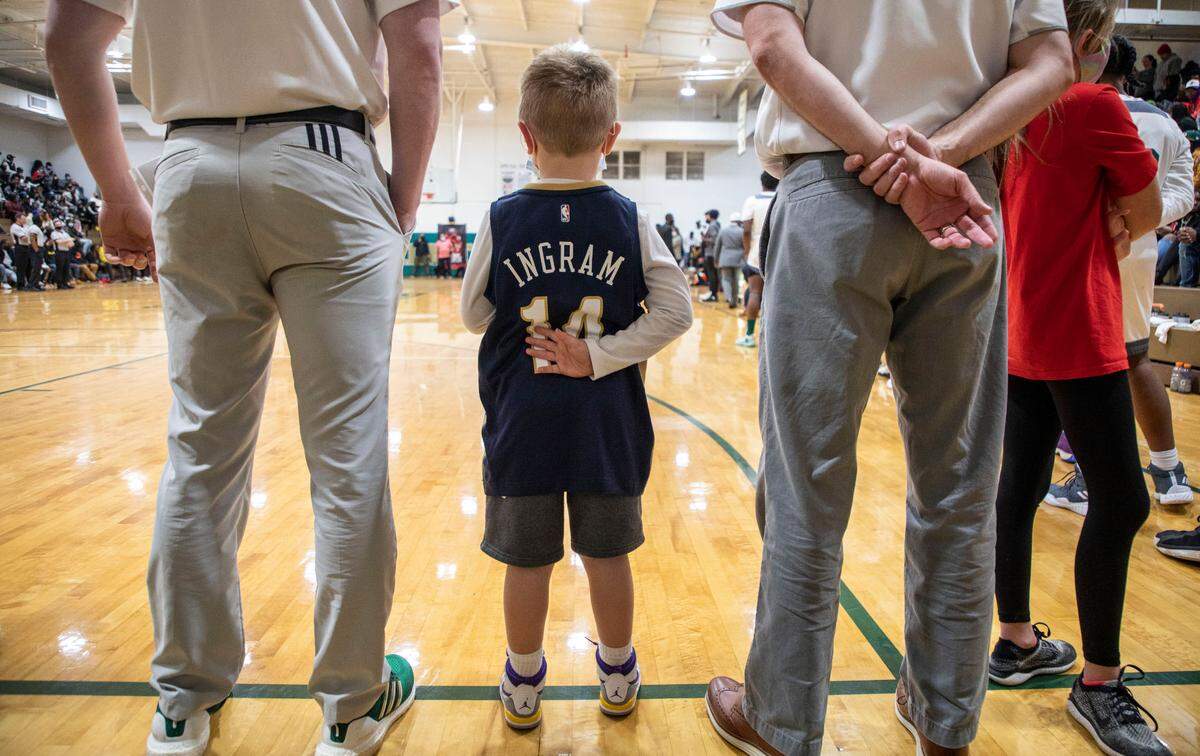
Soon it’s time and another door swings open. The Vikings enter their gym to perhaps the largest crowd they’ll see this season. Before tipoff, Hardy presents a key to the city to Donald Ingram, who’s recognized for his charity work around town, and then it begins, no shortage of Brandon Ingram jerseys among those in attendance.
The action is sloppy but competitive throughout most of the first half, and the lead goes back-and-forth. Jyrah Canaday, a Kinston senior inspired by his father’s plight, makes three 3s during those first 16 minutes. Meanwhile, off to the side of the court, a couple of college coaches sit and scout Jeremy Dixon, another Kinston senior.
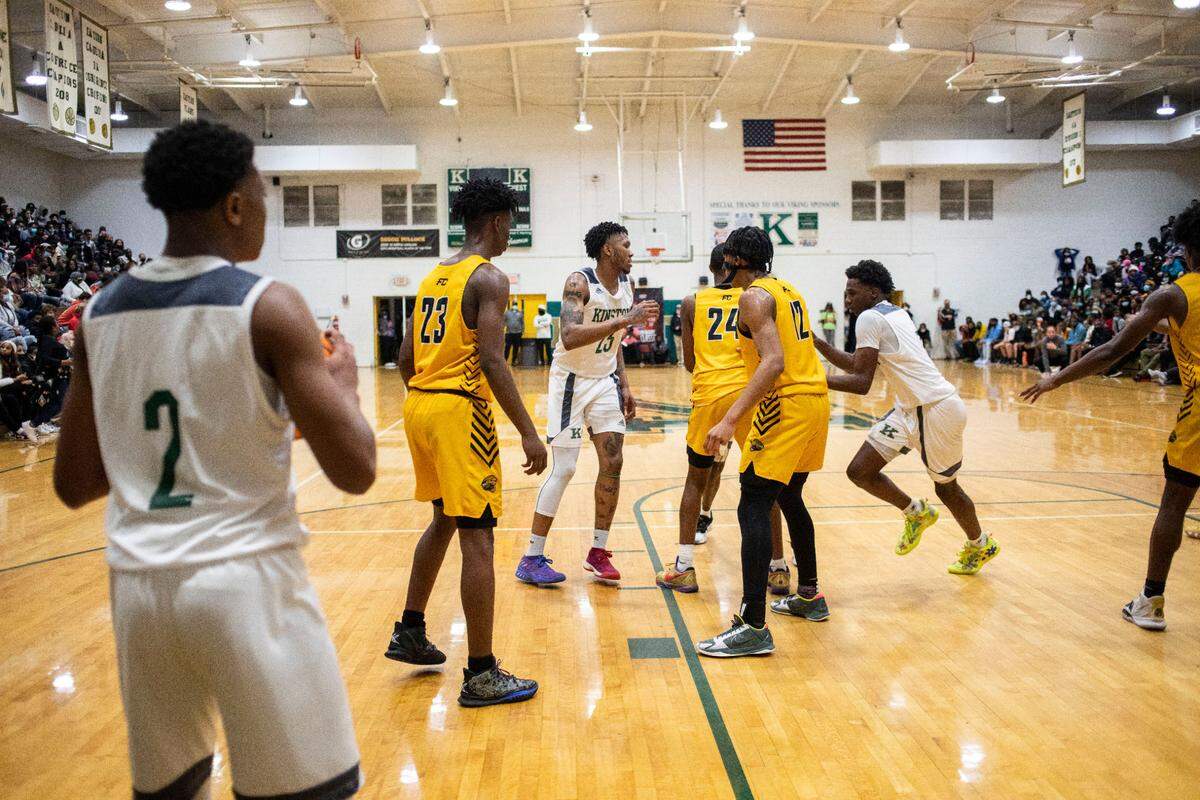
The Vikings lead 30-28 at halftime. Near the beginning of the third quarter, another Vikings senior, Dontae Ellis, crosses up a Farmville defender, who slips to the court near the top of the key. The crowd erupts at the move, then goes crazy when Ellis makes a 3 moments later. It’s something out of a highlight mixtape, an entire gym shaking.
It’s perhaps Kinston’s final highlight. Farmville takes control little by little, the Jaguars’ lead up to 16 points midway through the fourth quarter. People are headed out, the bleachers emptying.
And then the chaos starts. Slowly, at first. Then all at once — the stands emptying; people running onto the court, toward the doors opposite the hall with the trophies lining the walls. People are screaming. The game has stopped. The scoreboard clock is frozen.
4:42
Farmville Central 61, Kinston 45.
There’s a fight just outside the gym, someone in the crowd says. It doesn’t involve any of the players from either team, but people who’d been in the stands or along the wall or in the hall. The public address announcer tells spectators to get off the court. The coaches for both teams have ordered their players back into their locker rooms. For about a minute there’s a fear that the scene could escalate. A police officer jogs past and says, to no one in particular, “Welcome to Kinston.”
It takes several minutes for the gym to clear out. After it does, the Vikings and Jaguars come back, this time with the bleachers empty. They start to warm up, but the smell of pepper spray, which police deployed to break up the melee, is only becoming stronger. Near the corner of the gym, Donald Ingram is starting to clean up. In the hall outside, the cardboard cutouts of his son are on the ground, toppled. Both coaches decide to call the game.
That’s how it ends, with time still left on the clock. With police arresting three people, including a juvenile, according to Major Keith Goyette of the Kinston Police Department. Authorities say the fight was between rival gang members.
Tyndall, meanwhile, spends a lot of time talking with his guys about avoiding such trouble. Then it arrived where his team plays and practices, a place a lot of his players call home. Tyndall acknowledges that a fight like that can happen anywhere. One like it happened in Raleigh, for instance, at the John Wall Holiday Invitational in late December.
That same night, two teens were shot at a high school basketball tournament in Salisbury, near Charlotte. But Tyndall knows, too, that such a scene at a Kinston game only adds to “the stigma,” he says, that the city already carries. Tyndall sometimes drives some of his players home because he’d rather them not walk in certain parts of town; being from one area can spell trouble if you’re seen in another.
The gym is usually a safe haven from all that, a refuge. It wasn’t last Saturday. A day of promise and celebration ended on another note altogether, and in front of the mayor and the father of a local hero. If it could happen here, next to the trophies and in front of hundreds of people who’d come to watch basketball, it was enough to make anyone wonder what happens out of sight.
This story was originally published January 23, 2022 at 6:00 AM with the headline "It started as a basketball game. It ended as a reminder of what Kinston is up against."