As teens are gunned down in Kinston, can basketball’s refuge prevent another victim?
READ MORE
Dreams and Nightmares: A Kinston basketball story
North Carolina is home to various basketball cathedrals, places whose history transcend the sport and define the state’s culture. Our four-part series, publishing throughout Winter 2022, explores why Kinston High School rises above the rest of N.C.’s worthy shrines.
Expand All
Inside NC’s poorest community lies its richest basketball where nightmares fight dreams
It started as a basketball game. It ended as a reminder of what Kinston is up against
As teens are gunned down in Kinston, can basketball’s refuge prevent another victim?
A hoops dream ends in Kinston, but basketball’s place in fighting nightmares persists
Perry Tyndall gathered his players that night and first tried to calm them, and then tried to make them believe. After the fight that cleared the gym at Kinston High School, Tyndall and his players hoped they could resume. That they’d still have a chance.
It didn’t look good for the Kinston High Vikings, down 16 with about five minutes remaining against Farmville Central, but if there’s one defining trait in Kinston, it’s resilience. Defying the odds. In a way, it defines Kinston’s entire basketball legacy.
“We’ve got ourselves in a mess right here,” Tyndall told his players, “but these next five minutes, we’ve got to come out, and they’re going to (define), really, what direction we want to go.”
That night, though, a Saturday in mid-January, the Vikings never had the chance to overcome. They walked back onto the court to the smell of pepper spray. Police had used it to break up the fight. The game ended, some players rubbing their eyes or covering their mouths while the two teams bumped fists and told each other “good game” before walking off the court.
“I told them that they got robbed of a moment to play,” Tyndall says now, weeks later, recalling his conversation with his players. The fight had been between rival gangs, police said, community violence spilling into the safe haven of a high school gym. “And in that setting, they were disappointed. They wanted to be able to try to crawl back in that thing. And so we just talked about those decisions and those actions — it’s unfortunate. I didn’t have to say much.”
Tyndall is 42 now, himself a Kinston native and Kinston High alum. He knows what it means to be a Viking, having worn the jersey during his high school years, and he knows as much as anyone how his city has changed. More and more, he says, he has found himself in recent years working harder to keep his kids on the right path.
The fight offered a brief but momentarily frightening glimpse of what lurks in a troubled city. It resulted in a game called early and three arrests. It resulted in a bad memory but nothing more than that. A week and a half later brought something much worse. A shooting near downtown Kinston left one dead and two others critically injured. Teenage boys, all of them.
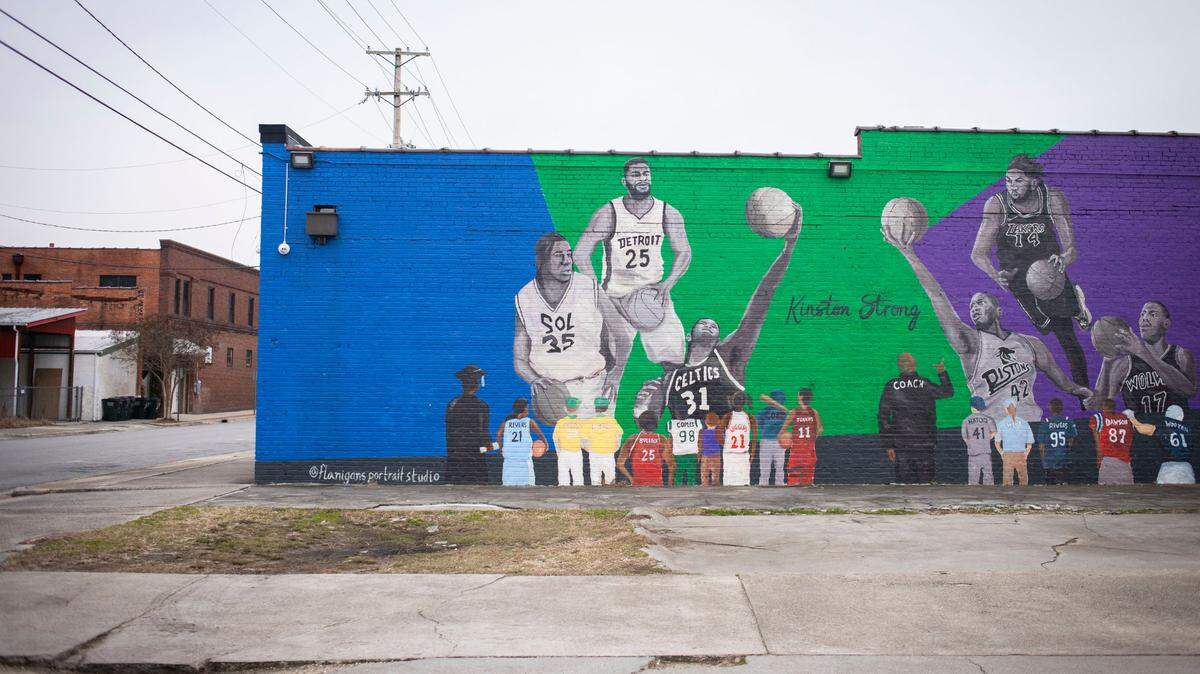
It happened off of Mitchell Street, a short walk from some of Kinston’s main attractions. The acclaimed restaurant The Chef and Farmer is a few blocks away. So is Mother Earth Brewing. So is a mural on the side of a downtown building, where a few years ago an artist painted Kinston’s most revered sporting heroes: Brandon Ingram and Reggie Bullock and Jerry Stackhouse and others. The mural makes it look like children are looking up to them, dreaming.
“Kinston Strong,” it says in large letters in the middle.
Now, a block away, one teenager had been killed. A community mourned and Tyndall again gathered his players to discuss life off the court. In Kinston, as in a lot of places, sports offer opportunity, a perceived path out of trouble. The difference here is the stakes are higher. Basketball isn’t a savior. But it does offer hope, and purpose, and those things are in need here now more than ever. The sport offers a kind of salvation and structure that’s often absent outside the gym.
BEHIND THE STORY
MOREWhat is this series?
Kinston High School has long been home to one of the most successful boys basketball teams in the state. The Vikings have won 11 state championships and sent a long line of players onto major college programs over the years. They’ve also thrived in one of the most disadvantaged parts of North Carolina. This story is Part 3 of a series about a season in the life of Kinston High basketball. Perry Tyndall, the Vikings coach, has allowed reporter Andrew Carter behind-the-scenes access to his team as it navigates challenges on and off the court. The story of the 2021-22 Vikings is also a story about a struggling town and region; it’s a story about Kinston, home to some of the poorest census tracts in North Carolina, told through the lens of a high school basketball team.
Trying to make it out of Kinston
For a time, Adrian Canady sometimes wondered where his son might be without basketball. He doesn’t wonder so much now. Jyrah Canady is a senior at Kinston High, one of the Vikings’ best players. He’s also a member of the National Honor Society and among the top 10 in his graduating class. He has long followed a fruitful path, though one that was less certain years ago.
“Basketball has kept him away from a lot of stuff that he maybe would be doing if there wasn’t no basketball,” says Adrian, who has been through many hardships of his own. Just about as soon as his son could walk, he was already practicing on a little toy hoop at home. It is like that for kids everywhere but especially in Kinston, where they grew up surrounded by legacy and tradition.
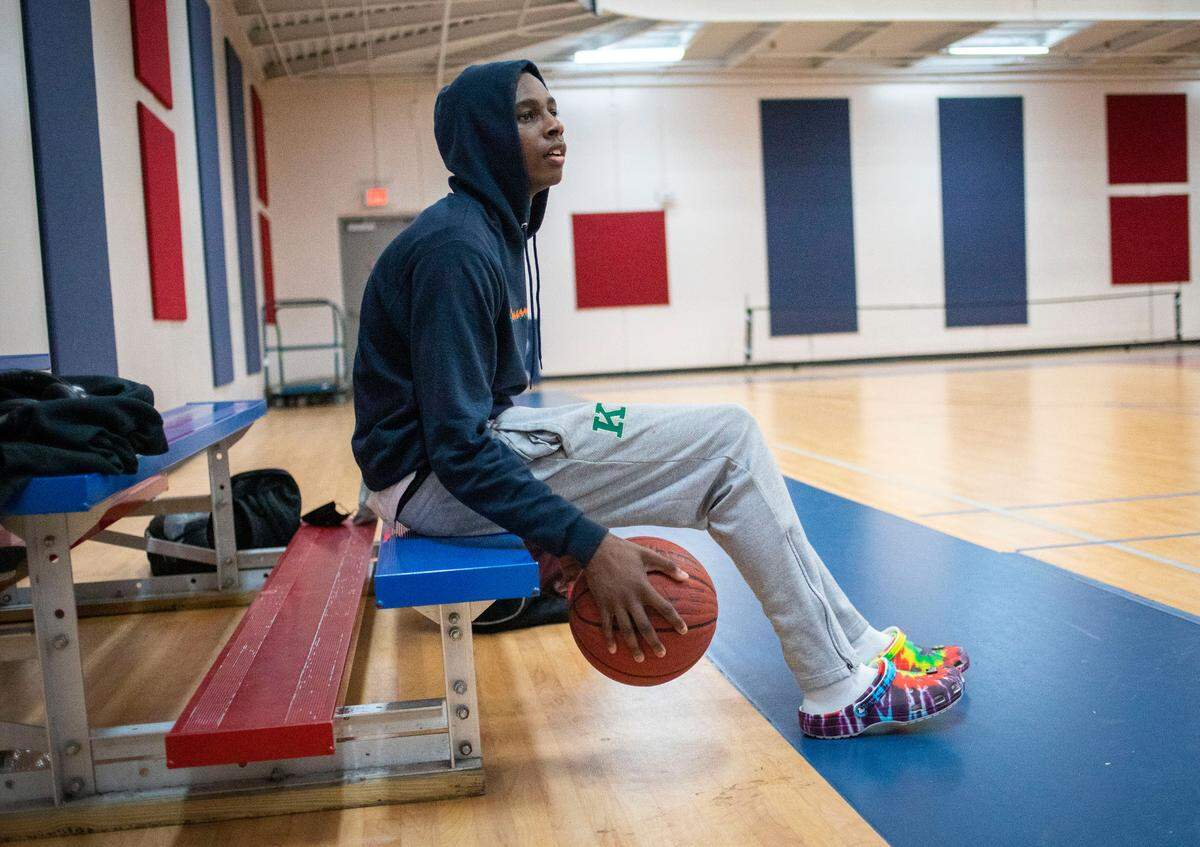
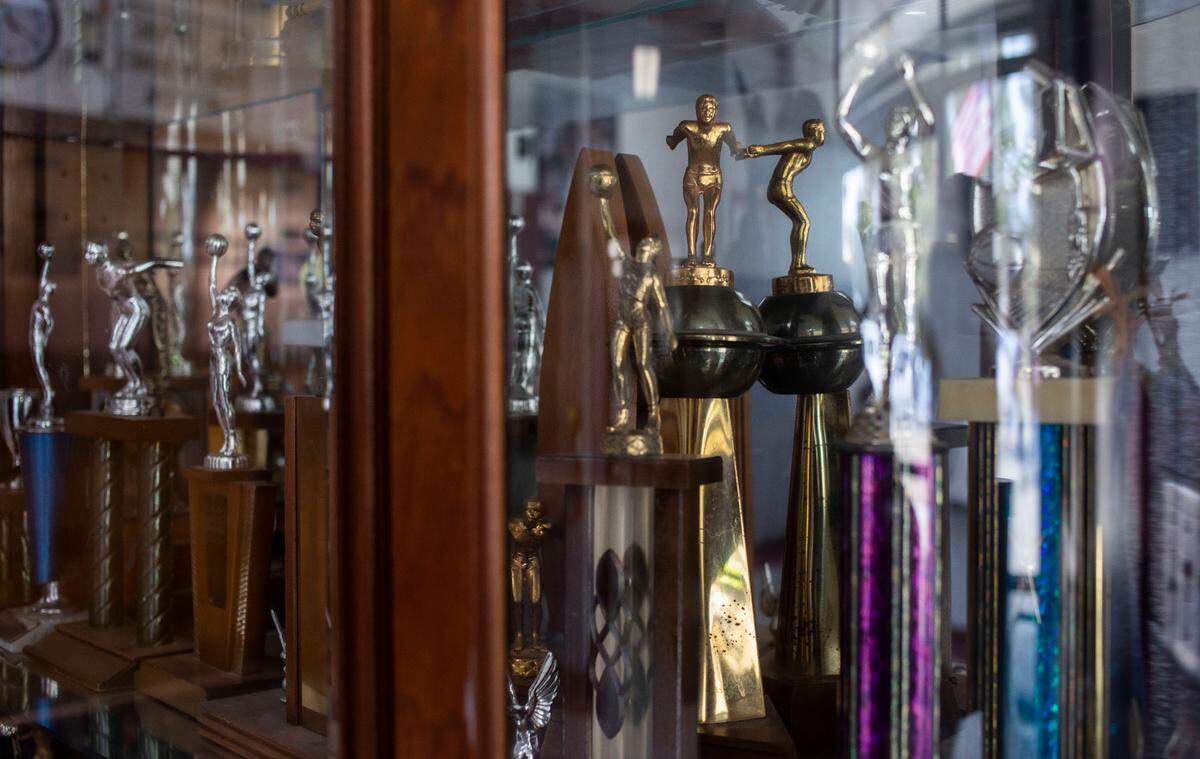
It’s like that at the Holloway Community Center, on the other side of town from Kinston High. It’s possible to walk in and know that Reggie Bullock grew up there on his way to the NBA, the same way it is possible to walk into the Teachers Memorial Gym and know that Brandon Ingram grew up there on his way to the NBA; just like it is possible to walk into the newer Woodman Community Center and see current Vikings playing pick-up with kids from all over town.
Jyrah Canady is there now, on a recent weeknight after practice, and he’s there because he loves the game and because he has thrived with a regimented schedule: School, then practice, then homework and then, usually, more time on the court. Canady grew up, like a lot of his teammates, familiar with the challenges inherent in Kinston. He also grew up immersed in the city’s basketball legacy. He attended his first Kinston High game when he was in seventh grade.
“A huge turnout,” he says, and as far back as remembers he wanted to be a Viking.
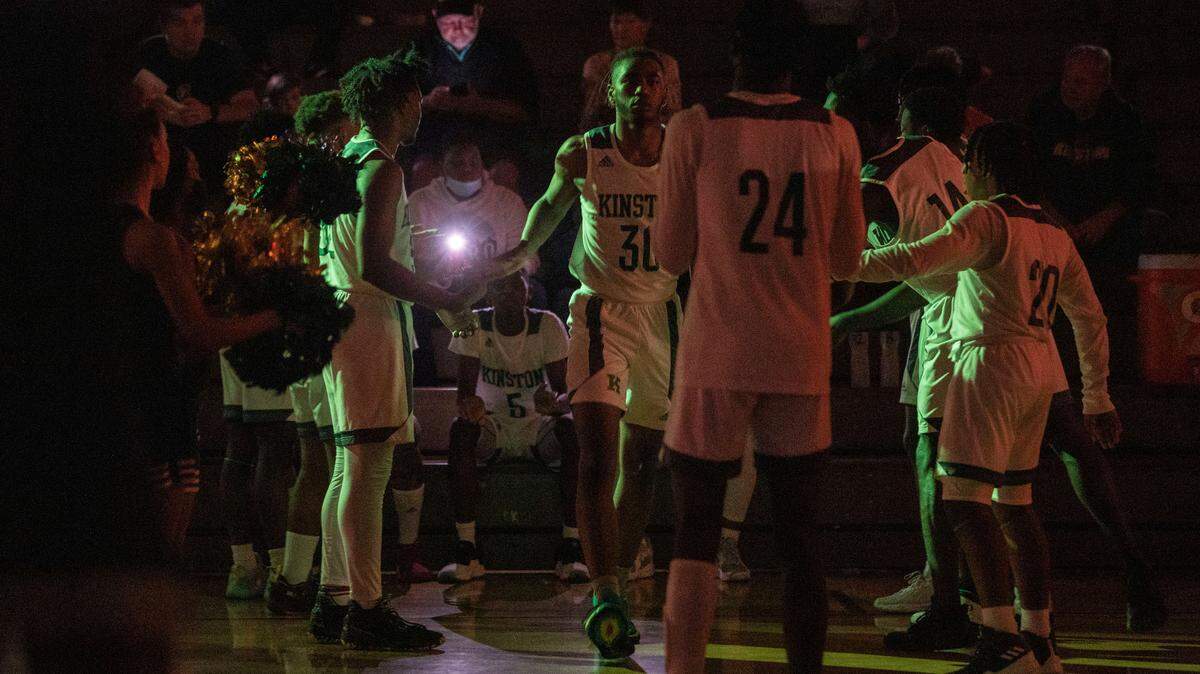
When it happened, and he made varsity near the start of his junior year, it was the achievement of a dream. Even during a pandemic-altered season, with smaller crowds and mostly empty gyms, just running through the tunnel and onto the court provided a thrill. Canady understands as well as anyone the meaning of being a Kinston High basketball player. There is a significance to it purely as an athlete, and one perhaps even greater for those who’ve overcome what he has.
“There’s a whole lot of stuff that you can fall into,” he says. “So with basketball, it just really kept me out the way. I really didn’t have time, or energy, to be out here like that,” and by “out here,” the implications are obvious enough.
Basketball’s power, and its limits
Yet the sport doesn’t offer an invisible forcefield. For a long time, the Vikings have thrived in an environment that’s especially difficult for young people, one defined by challenges. Filmmakers and writers have been drawn to Kinston by its basketball history and the question of what’s behind all the success. The place itself, and its plight, are as much a part of the answer as anything.
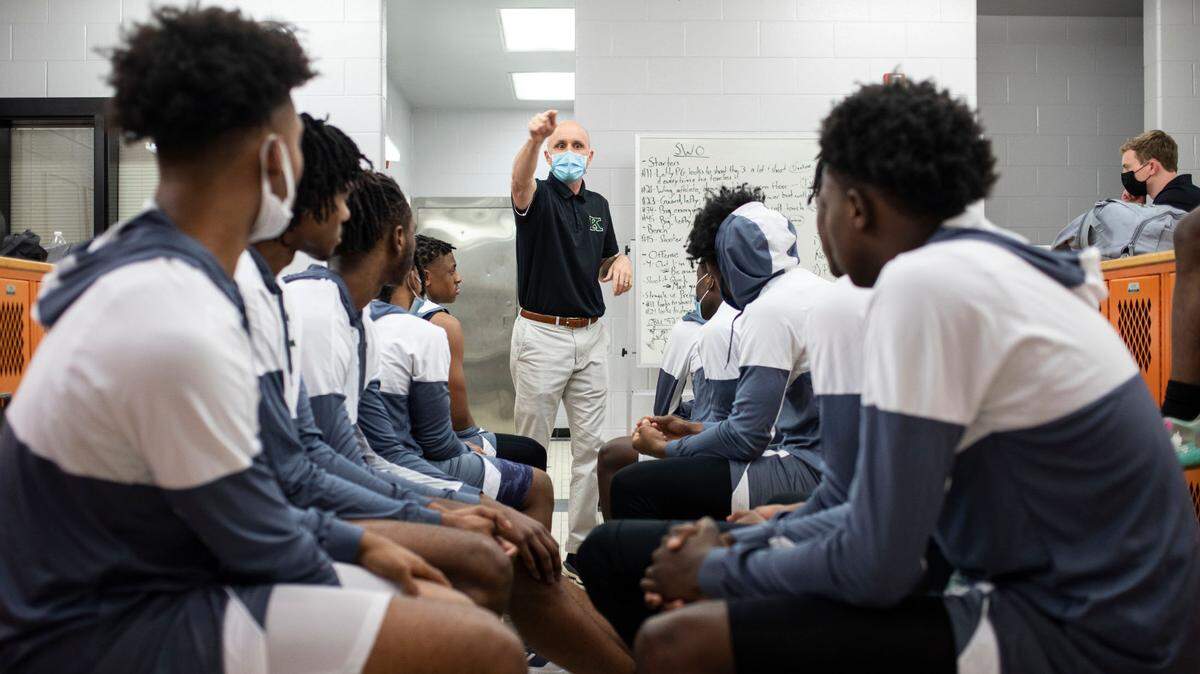
The day after the shooting, Tyndall stood in front of his team and tried to find the words. In larger communities, a shooting might blend into the news cycle but Kinston is small enough so that just about everyone knows someone affected by the violence, or someone who knows someone who was. Tyndall spoke with his players about decisions.
“We’re all imperfect and we’re going to make mistakes,” he told them, “but you know what, surround yourself with people that push you to goodness.”
“I just told them there’s so much more to life,” he says now, days after the shooting. He’s outside his team’s home gym following another Kinston victory. The Vikings are on a winning streak and perhaps rounding into form approaching the state playoffs, though the week had offered a reminder of basketball’s place in the grander scheme. It’s the last Friday night in January and Tyndall is reciting what he told his players the day before:
“There are so many things in your life that are coming that are going to bring you joy. I’m not saying that there’s not going to be trials and tribulations and temptations and those things, but there’s so much stuff ahead beyond even the next five years of what you can see right now.
“There are so many good things coming to you guys.”
His job, as much as coaching and winning games, is to help guide his players toward those good things. He remains concerned, the way leaders here have been concerned for years, about the lure of the streets and the ongoing violence. It has become a part of life in Kinston, the specter of shootings and the loss of young people, and “that’s not normal,” Tyndall says. “There’s nothing about that that’s normal, and we can’t get desensitized to those things happening in our community.”
A safe place to help combat violence
For years the old house at 818 Tower Hill Road, in East Kinston, looked like most of the others nearby. It was dilapidated and in disrepair, slowly crumbling. During his childhood, which wasn’t too long ago, the house served as something of a boundary for Chris Suggs. His grandmother didn’t want him walking or riding his bike any farther than that street.
When Suggs earned admittance into UNC-Chapel Hill and went off to college, his grandmother offered more guidance: “Go away as far as you can,” Suggs says she told him. Other relatives implored him to do the same thing.
“Because they see the unfortunate trajectory for so many young Black males like myself here in Kinston,” Suggs says. “The same thing they saw in me as a young kid, they could see that in the eyes of Michael Mills, 14 years old who was just gunned down Wednesday night.”
Now it’s two days later, a Friday afternoon, and Suggs, 21, is sitting on a couch inside 818 Tower Hill Road. The city planned to tear it down until he bought the home through foreclosure in 2018. He turned it into what’s known as The Hub, a neighborhood headquarters for Kinston Teens, the youth advocacy group Suggs founded in 2014, his freshman year at Kinston High.
The place is nice now, all fixed up. Colorful paint on the walls. New floors. An arcade machine in one corner, an old-school popcorn maker against another wall. A place to sit and watch movies, to use a computer and get online. A safe place for kids to gather in one of the most impoverished areas of North Carolina.
Suggs founded Kinston Teens two months after entering Kinston High. He founded it with the hope that it could combat the kind of violence he’s now grieving, again.
“We saw a severe string of gun violence throughout that year,” he says of 2014, “that was impacting young people — young people who I knew from growing up in the neighborhood, or I saw in school or had classes with.”
‘Significant amounts of poverty and economic inequalities’
Suggs needed only three years to graduate from Kinston High and, at UNC, he served as the President of the Black Student Movement and as Senior Class President of his graduating class. After earning degrees in Political Science and Religious Studies, he did not listen to his grandmother. He came back home.
He returned to Kinston, he says, to address the problems that have long plagued the city. A 2014 UNC study found one East Kinston census tract to be the most economically distressed in the state. Two others nearby ranked among the top 10, out of more than 2,000 tracts in North Carolina. Suggs ran for city council and, last November, became the youngest elected official in the state.
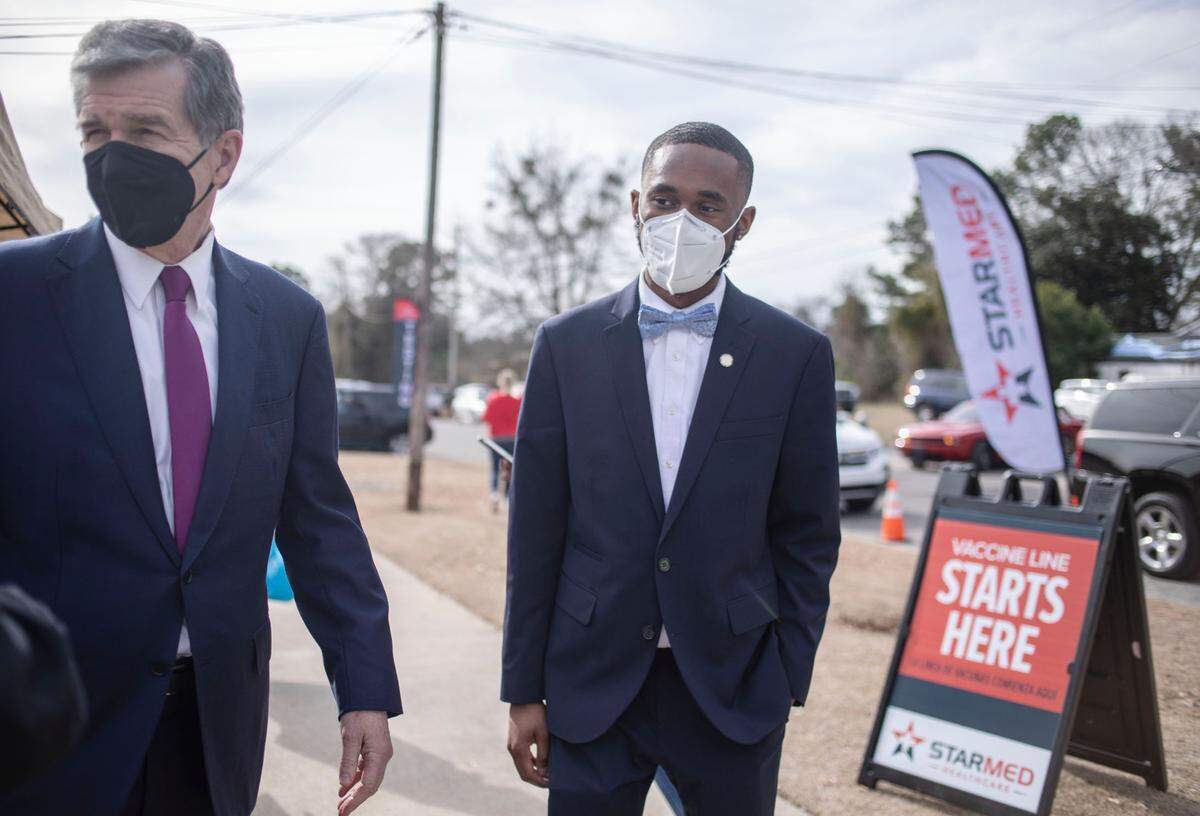
In Kinston, Suggs says, “I can see the potential that’s here, and I want to be a part of making that change happen.” Yet he also understands, more than most, what it will take to impart that change. The root of what ails Kinston is not easily solvable, and the problems here are the problems of a lot of smaller cities in decline throughout rural America and Eastern North Carolina.
“We have such significant amounts of poverty and economic inequalities,” Suggs says. “You have health disparities, and issues in our education levels, and educational attainment. You know, all those issues culminating on a systemic level lead to personal challenges, like hopelessness, and drug abuse, or the prevalence of folks getting involved in gang activity, or drug activity, and it heavily impacts adults in our community.
“But unfortunately we’re seeing that it is impacting folks younger and younger, too.”
Where do kids find hope outside of basketball?
Suggs entered high school when Brandon Ingram, now a budding star in the NBA, was a senior at Kinston High. Ingram’s recruitment, which came down to Duke and North Carolina, among others, was then a national college basketball story, and one of the most followed in the state in recent decades. Suggs treasures his memories of watching Ingram play in a packed gym, the way many in Kinston do, yet he founded Kinston Teens in part because he knew young people needed more than basketball, and the promise of sports.
It’s not that Suggs doesn’t see the value of the game in his hometown.
“I’m not as athletic as the rest of the folks here in Kinston,” he says, “but I love the sport just as much because I know how much it means to this community,” and like a lot of people he grew up going to the Holloway Community Center, known for influencing generations of Kinston kids. Outside the gyms, though, Suggs came to sense a void among his peers in his neighborhood.
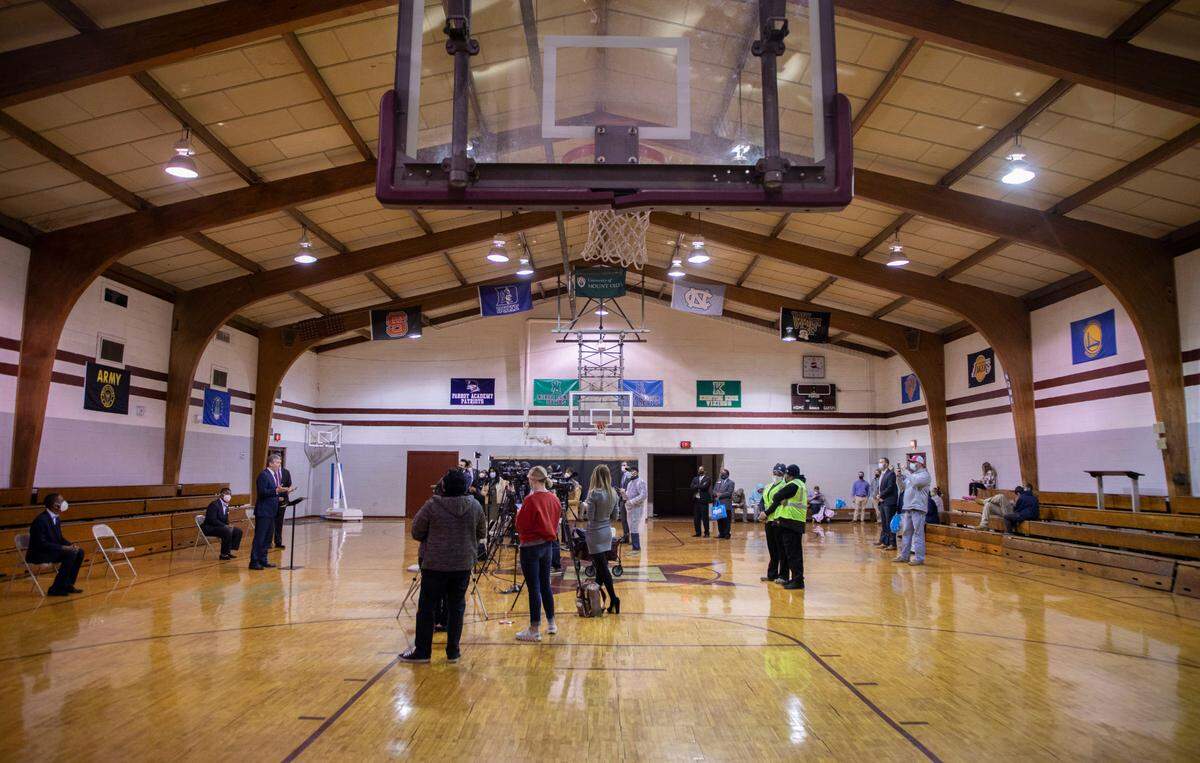
“Growing up here, I see a lot of my peers having a feeling of hopelessness,” he says. “There’s not too many avenues out, there’s not too many ways of success they see happening for them here in Kinston. But basketball is that thing.”
Suggs himself came to understand that at an early age. An older brother, Curtis Hines, played basketball at Shaw University after starring at Kinston High. Reggie Bullock grew up less than a mile away from the house on Tower Hill Road.
Basketball inspires kids here to a greater degree than most places but sometimes Suggs wonders:
“For those who know that basketball isn’t their thing,” he says, “where do they find hope?”
A few months ago, in October, Suggs and Kinston Teens hosted an event at the public library. It was an educational session about COVID-19, with music and games and some informational handouts. Those electric Bird scooters had just arrived in Kinston, and Suggs can still see one teen in particular riding up to the library on a scooter.
After the most recent shooting, Suggs’ mind flashed back. The kid on the scooter, he says, was Michael Mills, the 14-year-old who lost his life on Mitchell Street. Suggs says his mom, a teacher, had taught Mills and another one of the shooting victims who survived.
Less than 24 hours after the shooting, Kinston Police made the first of two arrests. Malik Bryant, 24, was charged with murder and attempted murder. He’d graduated from Kinston High in 2016. In a city of fewer than 20,000 people, teens have long become targets. Since 2016, according to police data, 39 Kinston teens, ranging from 14 to 19, have become shooting victims. Four, including Mills, have died.
“So these are folks I’ve seen throughout the community, who I’ve known since they were in Kindergarten,” Suggs says, “and to now see them victims of these tragic crimes is heartbreaking.”
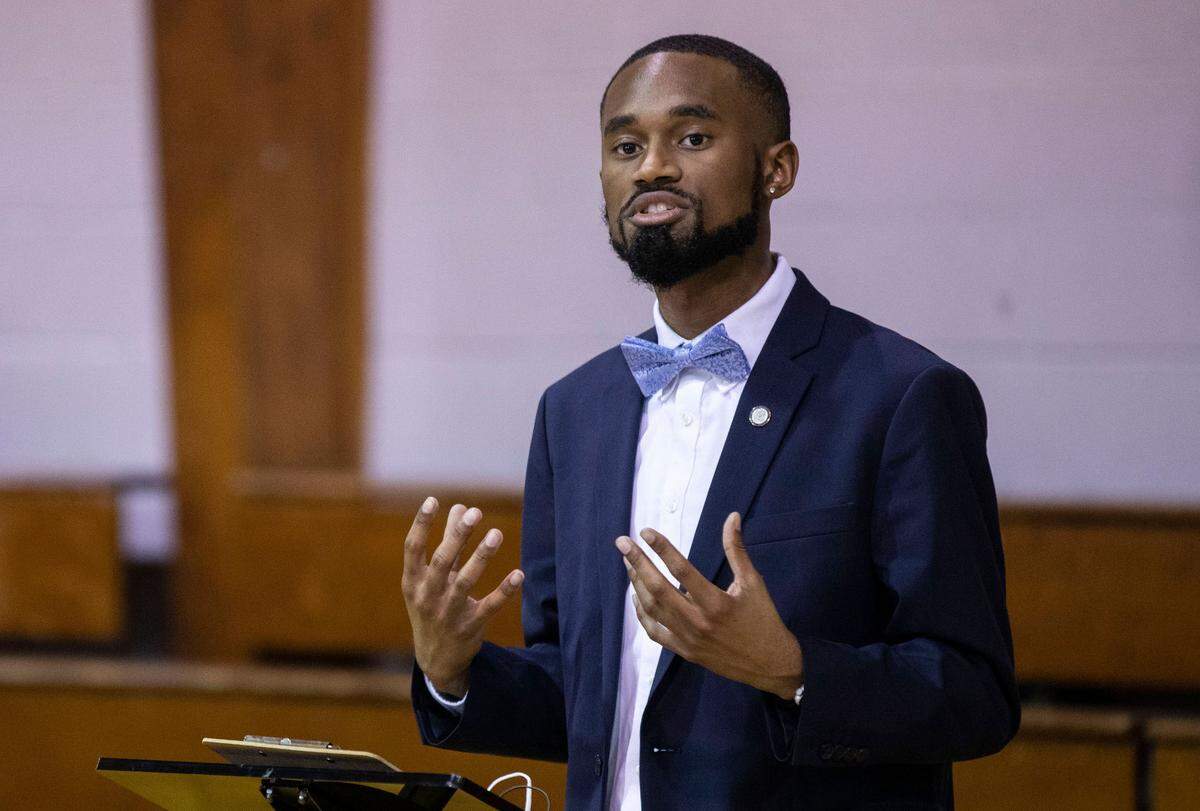
It’s two days after the most recent shooting, a gray and cold Friday, and there are two events that will bring people together later that night. One is the basketball game at Kinston High. The other, a vigil in a downtown park, not far from where the three teens were shot, and where one died.
Working to inspire kids to stay on track
Back at Kinston High, Tyndall’s role there is similar in a way to Suggs’ in the larger community: They’re both trying to do their part to inspire young people. It’s different now than when Tyndall played here and when he came back, after graduating from UNC, to start coaching.
“The challenges are way more abundant now, to me, than even 15 years ago, 20 years ago, when I started here,” Tyndall says, referencing the pull of the streets and that sense of hopelessness that can lead young people astray. “Not that those dynamics were not there, but it’s just heavier.”
Kinston basketball became what it is, and what it has been for a long time, in large part because of the local gyms and those who worked there. They were coaches, mentors, fathers. Disciplinarians, when they had to be. For decades, Skeet Davis was the most prominent among those figures. He ran the gym at the Holloway Community Center, coached football at Kinston High and was the head basketball coach at Rochelle Middle School.
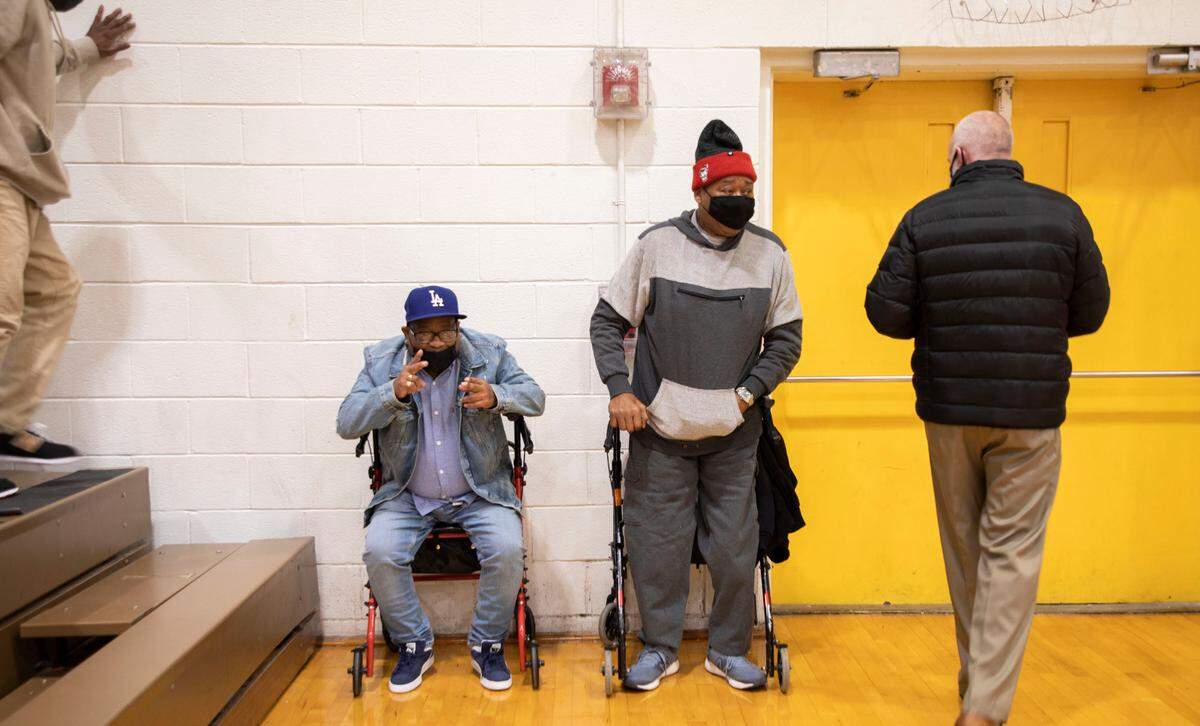
Over 14 years his teams went 144-4, and almost all of those players then went on to become Kinston High Vikings. Davis is 70 now, his voice deep and creaky, his steps slow. He goes in for dialysis three days a week, and still tries to attend as many Kinston High games as he can. He’s often along the baseline in the corner, watching from a walker with a seat, a living reminder of the sort of community pillar that for whatever reason seems to be growing rarer these days.
Davis can tell stories for days about the players he coached who went onto high-level success in college or the pros, or ones who became leaders in their communities. He can tell a lot of stories, too, about those he helped push past the finish line of graduation; the ones who arrived at Holloway lost and left, however many years later, with a better sense of direction.
“I’ve always felt if you get ‘em in middle school, you can about halfway get ‘em right,” Davis says.
Nowadays Tyndall, too, spends a lot of his time focusing on the youngest players in his program. The ones whose direction is less certain. Among his junior varsity players are several with potential to turn into good high school players, if only they could stay on track.
“We’ve got some JVs that I don’t know if they’ll be in the program next year,” Tyndall says, citing poor decision-making and the threat of off-court influences. It’s like that everywhere, though in Kinston the pitfalls are deeper, the risks greater for those without a clear path.
Given that truth, Tyndall over time has come to a realization: “Some of these kids need the program more than the program needs them,” he says. “And that’s hard because I think you give them the opportunity to play, but you’ve to be good stewards of something that’s bigger than an individual.”
While Tyndall worries about some of his younger guys, he’s less concerned about his older players. Jyrah Canady is among them. He’s a senior, a starter on the wing, one of the Vikings’ best shooters. His work in the classroom might even better than his work on the court, and one time Tyndall asked Canady about what drove him. Tyndall still remembers the gist of Canady’s answer:
“I didn’t want to be like a lot of what I’d seen.”
Kinston father sees what he could have been through his son
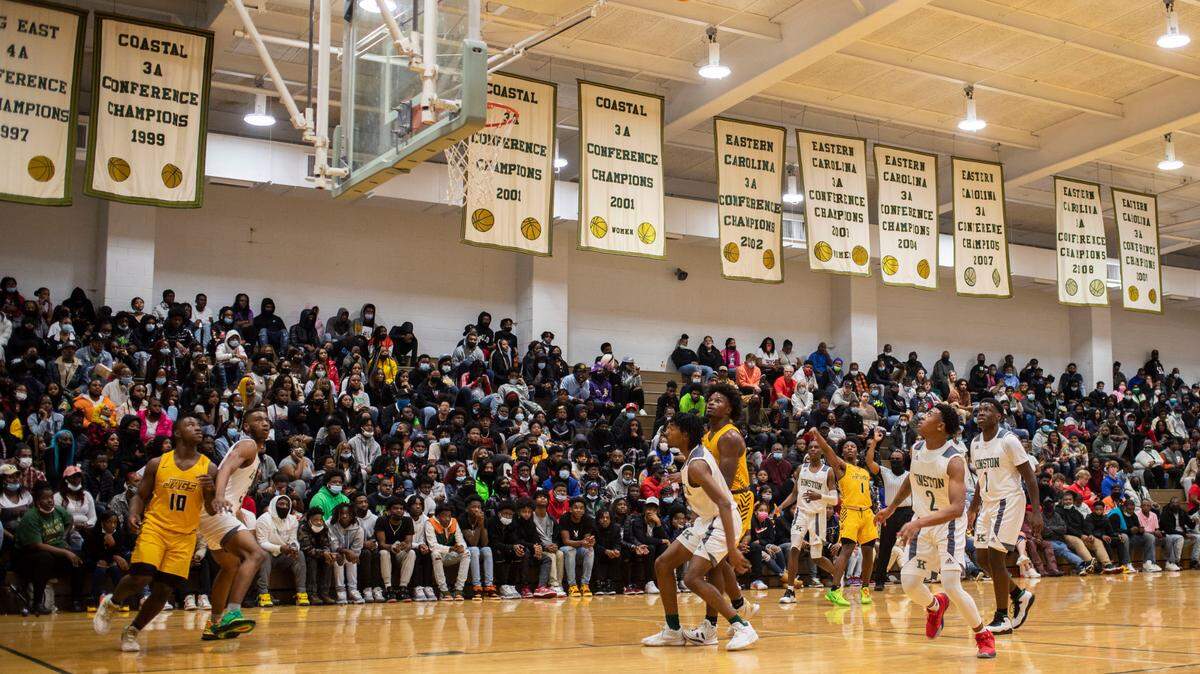
It’s the last Friday night in January now, and Jyrah’s dad, Adrian Canady, walks into the gym at Kinston High and climbs the bleachers to the top row. He leans against the wall, ready to watch his son and the Vikings in their game against Southwest Onslow High.
For much of his life, the elder Canady has been a single father. He was part of the Kinston High Class of 1998, but dropped out before he could graduate. He made mistakes, served time in prison and has spent the years since his release making sure Jyrah never followed a similar path.
“I didn’t want him to grow up, and do the things that I had done,” Adrian says. “I always wanted him to be better than me. Way better. Like, maybe speak for who we are as a people.”
He’s up against the wall atop the bleachers now with other members of Jyrah’s family. A cousin. An uncle. They all holler and clap when Jyrah makes a play, and he makes a lot of them.
“It’s been a long road, man,” Adrian says. “But we’re here.”
In his younger years, Adrian lived the life that a lot of young people in Kinston fall into.
He understands better than most what faces his son, and others like him, throughout Kinston.
“They’ve got to deal with gang-banging,” he says. “Shootings. Drugs. I mean, it’s a lot of stuff in the way. It’s a lot of things that go on that they have to face. So they just got to know you got to be strong. It’s going to be hard, but you learn so much more along the way, because it was hard.
“So embrace that. Because it’s going to be trip-ups and snares and it’s going to be hard. You’re young and you’re Black. And it shouldn’t be the reason (it’s hard), but it is.
“Use it to your advantage. You’re not limited.”
Down below, on the court, Jyrah is helping the Vikings build an early double-digit lead.
“Go to work! Go to work!” Adrian yells when Jyrah makes a steal and goes in for a fast-break layup.
Jyrah isn’t being recruited by a college as a basketball player. The TV cameras and Internet sites aren’t following his every move, the way they did when Brandon Ingram was here six years ago. Yet Jyrah’s story speaks to the power of Kinston basketball as much as anyone else’s. The game is part of his identity, part of what has kept him focused, his dad says. When he goes to college — Jyrah is still deciding where — he’ll become the first member of his family to do so.
Up above, Adrian continues to watch his son, shouting encouragement. The pride is visible in Adrian’s expression. He’s 40 now and in Jyrah, Adrian says, he sees what he could’ve been.
‘So much destiny in our locker room’
The Vikings coast to an easy 66-37 victory and afterward, Tyndall meets with his players. It has been a long week in Kinston, one that has underscored the importance of community leadership and, in a way, the value of a basketball program that gives young people purpose and hope.
Tyndall feels fortunate. Outside in the hall, his young son is playing with some other smaller children while his players are cleaning up and heading home.
“They’re great kids,” he says of his players. “They’re going to be great leaders, they’re going to be great in their professions, they’re going to be great husbands, they’re going to be great coaches.
“I mean, I see so much destiny in our locker room.”
This story was originally published February 13, 2022 at 6:00 AM with the headline "As teens are gunned down in Kinston, can basketball’s refuge prevent another victim?."