The Triangle Ten: The 10 most influential people in Raleigh, Durham sports in 2021
When the coaching job at Michigan State opened up in 2017, Rod Brind’Amour couldn’t even get a call back from the school where he played one decorated season of college hockey.
That seems crazy almost five years later, a period of time in which Brind’Amour took an NHL franchise that had been mired in mediocrity for a decade and steered it all the way to the conference finals as a rookie head coach, then continued to play a critical role in establishing the Carolina Hurricanes as a legitimate Stanley Cup contender.
“I thought I’d be a pretty good candidate, but apparently not,” Brind’Amour said. “It all worked out. Interesting, right? There’s a change here, (Hurricanes owner) Tom (Dundon) is like, ‘OK,’ he gave me a shot, and then we’re at where we’re at.”
It’s hard to blame the Spartans. Brind’Amour, at that time, was just another ex-player with a handful of years of experience as an NHL assistant coach. Brind’Amour was greeted with only slightly less skepticism when the Hurricanes promoted him to replace the now-disgraced Bill Peters in 2018, at least by those unfamiliar with him.
Even fans who backed him were leery Brind’Amour could tarnish a proud legacy with the franchise, as the player who legitimized it in North Carolina by re-signing in 2001 when he could have fled, then led it to an improbable Stanley Cup five years later. Instead, he has only burnished it. The Hurricanes are on their way to a fourth straight playoff appearance under Brind’Amour, who in some ways has remade the entire franchise in his own image.
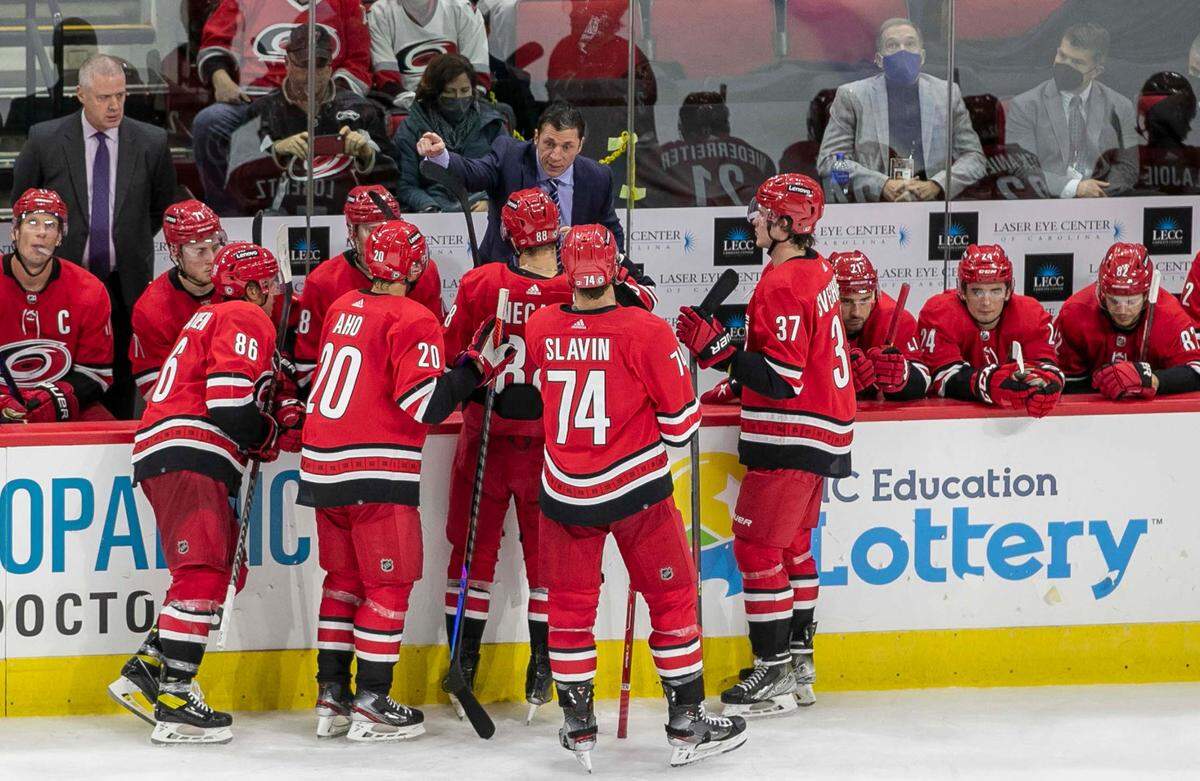
“It’s hard to find people that have that intensity and that drive, and then also people want to follow them and admire them and work hard with them,” Dundon said. “Sometimes that drive, that competitiveness, makes you hard to follow or hard to be around. It overtakes you. But he has this balance of empathy and hard work and enthusiasm and all this stuff that’s hard to explain. We have good players. We all know we’d be pretty good. But we don’t have to deal with any stuff. We don’t have to deal with anything because he’s around.”
While many have played a role, from a new owner to emerging stars like Sebastian Aho and Andrei Svechnikov, no single person has been as important as Brind’Amour to the Hurricanes’ revival as a competitive, relevant franchise, which makes him No. 1 in the 2021 Triangle Ten, the News & Observer’s annual ranking of the 10 most influential people in Triangle sports.
Brind’Amour is joined by college leaders, Olympic medalists and a pair of radio hosts, among others, in this list compiled by N&O sports columnist Luke DeCock with input from other staff members, focusing on impact in 2021 specifically.
1. Rod Brind’Amour, Carolina Hurricanes coach
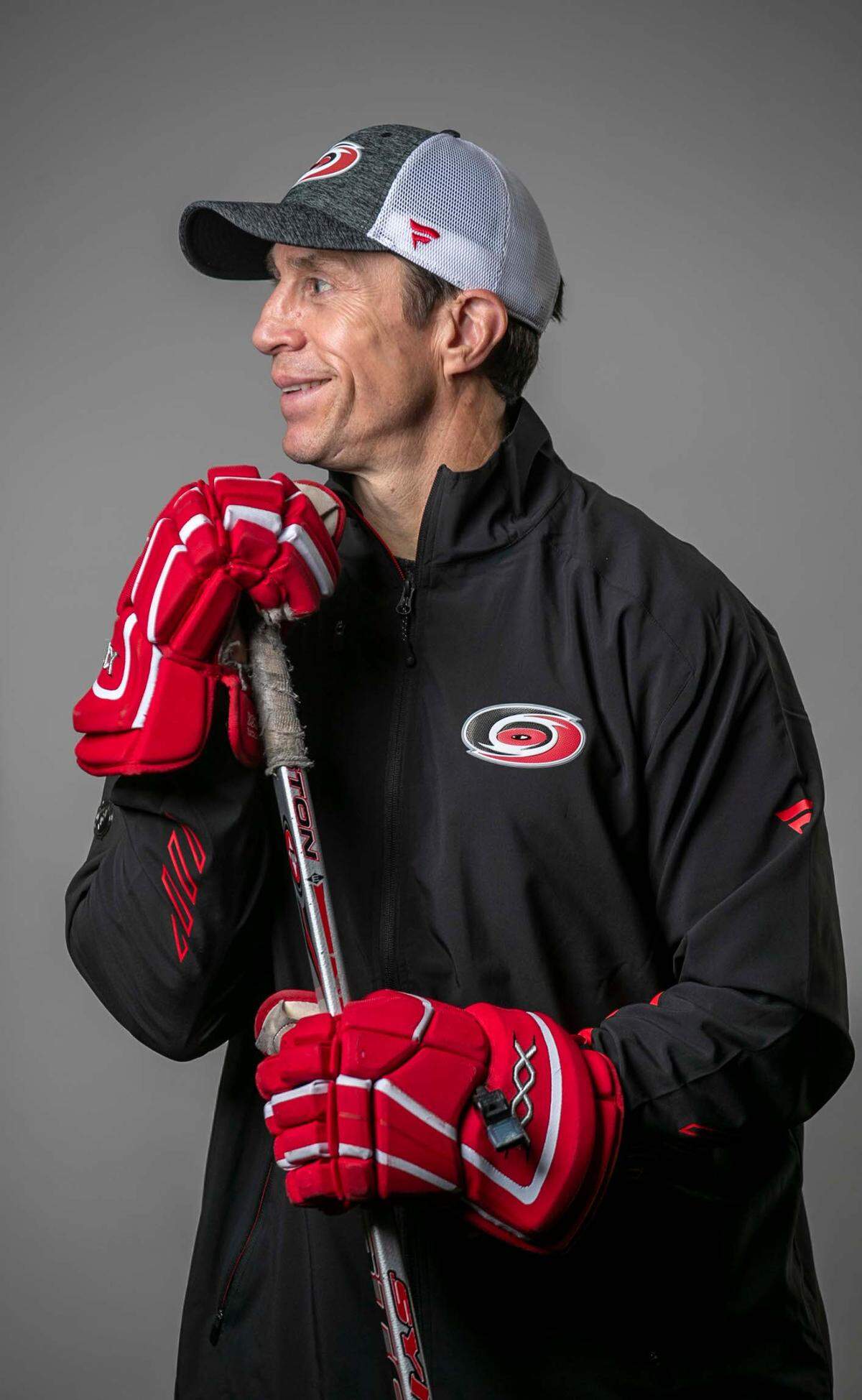
The thing is, Brind’Amour never really wanted to be a coach. If he ever got involved in hockey after his playing career, he wanted more of a say than that. He wanted to develop and instill the kind of winning atmosphere that he cultivated as a captain during his playing days. He wanted to identify and recruit players who shared the ethos of hard work and discipline that made his workout routine a meme before there were memes.
In the traditional NHL coaching model, all of those responsibilities lay elsewhere.
“Let’s see if I can help build a team, because I felt like, and I still do, that’s where you win your championships,” Brind’Amour said. “You’ve got to get the players. You’ve got to make the right moves. That was something I hadn’t done, so I thought that would be interesting to try to do. I would, on my own, go upstairs and watch video. I sat a lot with (assistant general manager) Darren Yorke. We watched video on tons of players. I would try to influence, like, who we would draft. But I wasn’t really a part of it. At all. Our team was a lot different.”
After several years behind the bench as an assistant, Brind’Amour wanted to find out if he could be a head coach. He asked then-general manager Ron Francis about taking over Charlotte (AHL) at one point. Michigan State wasn’t interested. Brind’Amour understood this, given his resume, but he also wasn’t someone who had ever lacked in self-belief.
When Dundon purchased the Hurricanes in 2018, he had very little use for the traditional NHL model of anything, for better or for worse. And he quickly identified Brind’Amour not only as a coaching prospect, but as someone who understood “culture.” That sports buzzword that can mean any number of things, but in this case meant accountability, diligence and a shared and invested identity.
Brind’Amour understood how to build it to the point where a rookie like Jack Drury can get called up from the minors, help win two games amid a COVID crisis this month and say: “The culture here is incredible and Rod drives that, through the whole organization.” When Dundon fired Peters and promoted Brind’Amour, he called it “a one-man rebranding.”
That also meant empowering Brind’Amour to have a say not only on how the team played and the lineup, but the draft, free agency, trades, everything. Which, in Dundon’s decentralized way of running the team, is true of many people, from the trainers up to the general manager. But it was exactly the kind of input Brind’Amour had always wanted.
“I love it,” Brind’Amour said. ”I can’t have a better — Tom, on every move, he’s calling me. We don’t always agree. He does his own thing at times, and that’s fine. But I feel like, holy moly, if there’s somebody we’ve got to keep or trying to get, I’m on it. On every move, I don’t know what it was like in the past, but it’s done way better, because everyone is involved. Assistant coaches. Video coaches. I don’t know why it wouldn’t ever be that way. We’re watching all these guys all the time. We’re scouting every player, every day.”
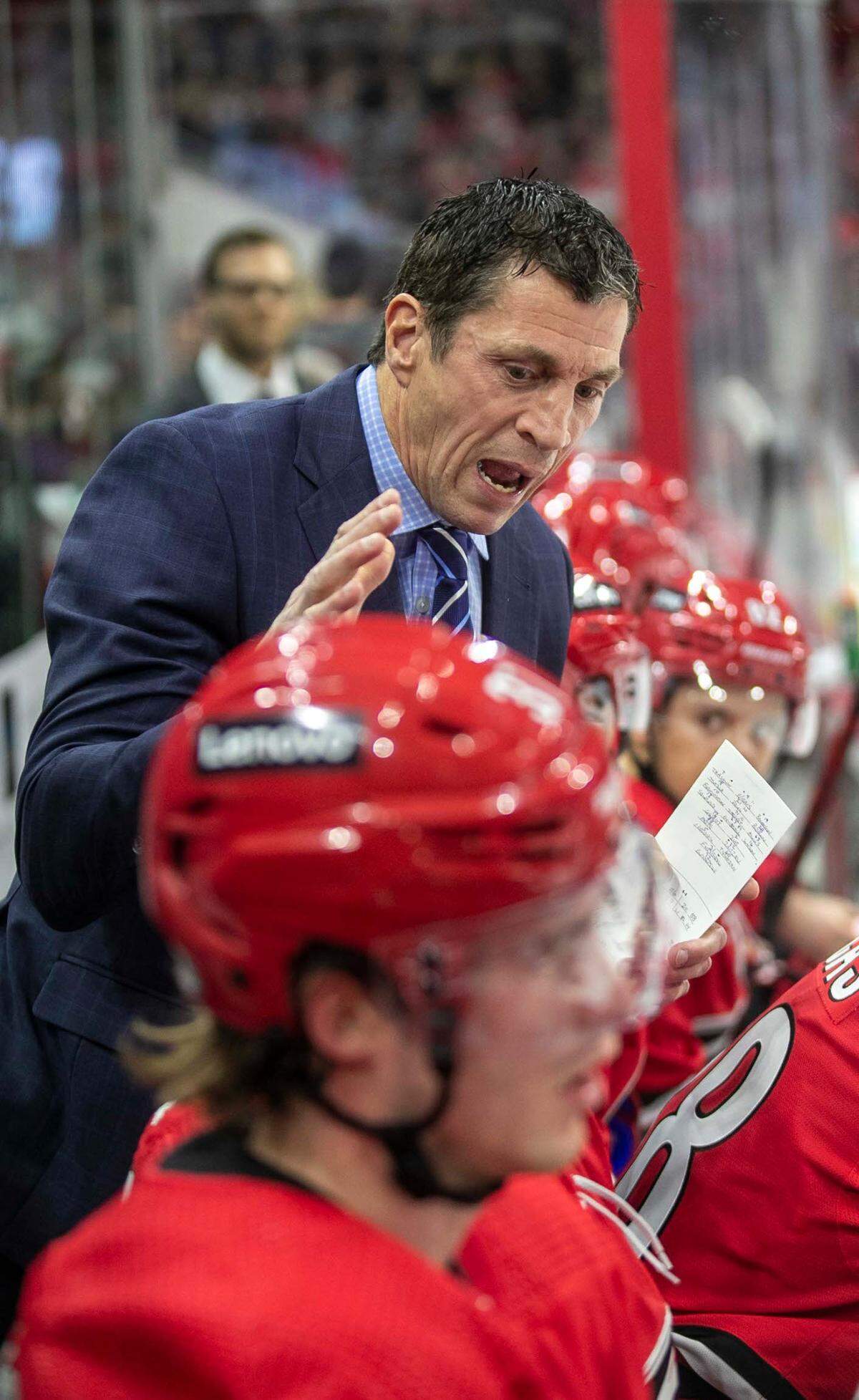
When he took over, he unleashed an attacking, aggressive philosophy that just about every NHL team has since copied: free-wheeling defensemen given the freedom to jump into the play, forwards taking risks previously considered unacceptable. There was nothing in his past as an assistant coach — or even as a player, where his defensive acumen was among the best of his generation — that suggested any of it. There are bits of several coaches embedded within his approach, from Bill Dineen and Paul Holmgren to Peter Laviolette and Paul Maurice and even Peters, for all his faults, whose teaching approach as a non-player left an impression on Brind’Amour.
“That summer, I sat for months with (video coach) Chris Huffine,” Brind’Amour said. “I get the changes we’re going to do culturally or whatever, but there’s got to be a systematic change in the way we play. I had it in my head from playing and coaching with all these guys, kind of a piece of this and piece of that. Can we put this together and can it work? It was very radical, to be honest, how we played. Nobody notices now because everybody’s doing it. But I said, we’ve got to go all-in, and we’re going to do a few little different things and we’re going to see how this goes. And I had no idea.”
Brind’Amour insisted, after an opening night loss to the New York Islanders that first season, that things were different even as they looked, in many ways, the same — the Hurricanes drastically outshooting an opponent and losing. Over the next three-and-a-half seasons, Brind’Amour has been proven utterly correct.
Which isn’t to say Brind’Amour is some unimpeachable genius of a coach. He has faults, like any other. His passion and competitiveness filter down to his roster, but they have also gotten him in trouble with the NHL. He can be blunt when a more political approach would leave a lighter touch. He’s loyal to a fault, arguing to retain mercurial goalie Petr Mrazek or hard-working if limited players like Warren Foegele and Brock McGinn even as the Hurricanes felt they had the opportunity to make upgrades. (And it now certainly appears they did.)
“If I can predict the future, that’s always going to be the tension,” Dundon said. “He understands we have a cap. We have to pay all of them. At the same time, when it’s today, thinking about that player who gives everything he’s got for you, Rod’s got the players’ backs. He always has their backs. That’s always going to be the hard part, the thing that creates interesting conversations. He’s the person in the room who knows what that person means. He’s super-loyal. It’s part of why he’s so good at this.”
Those challenges may still lie ahead. But the difference between the way things are now and the way they were when Brind’Amour took over is striking. The things that are accepted now as givens. The effort level. The structure. The expectations.
“The expectations were, when we took over, to be the best team,” Brind’Amour said. “I know it’s like, really? But nothing’s changed for us as far as expectations. I think now, everybody’s expectations have caught up to where we had them from the start. Nothing’s really changed.”
2. Nina King, Duke athletic director
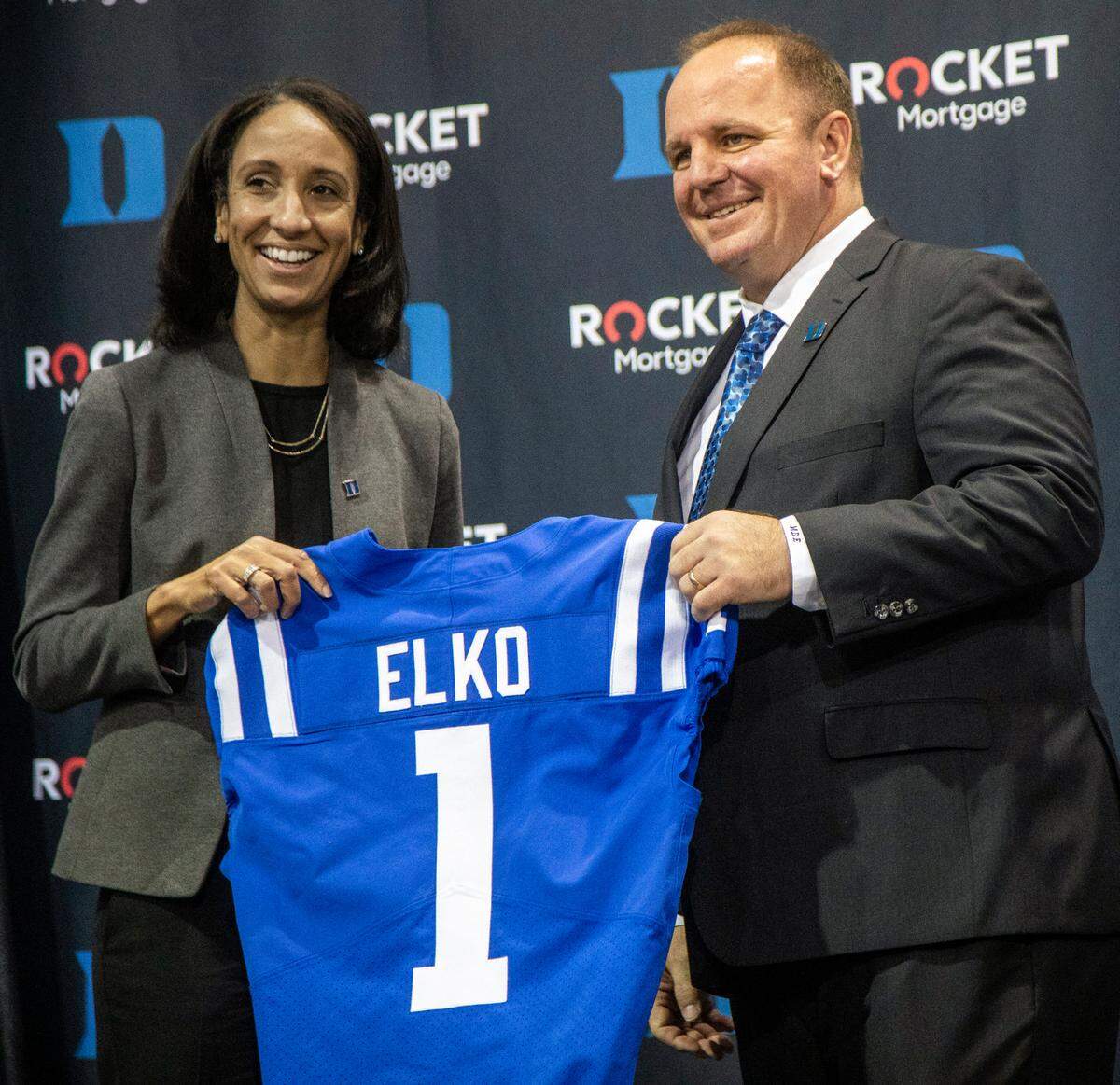
Already in such a prominent role at 43, King has a chance to help set the future course of not only Duke athletics but the ACC and college sports in general. In less than a year on the job, King oversaw the elevation of Jon Scheyer as the eventual replacement for Mike Krzyzewski as basketball coach, fired football coach David Cutcliffe and hired Mike Elko as his replacement. If Scheyer was a fait accompli in many ways, she’s staking her reputation on Elko, a first-time head coach.
That’s a lot, and her next task is raising the money for a desperately needed upgrade of Duke’s football locker room and office complex. Nationally, she has also been a pivotal figure in the NCAA’s gender-equity debate as chairperson of the women’s basketball committee and this month was able to get women’s referees the same pay for tournament games as the men.
3. Erin Matson, UNC field hockey star
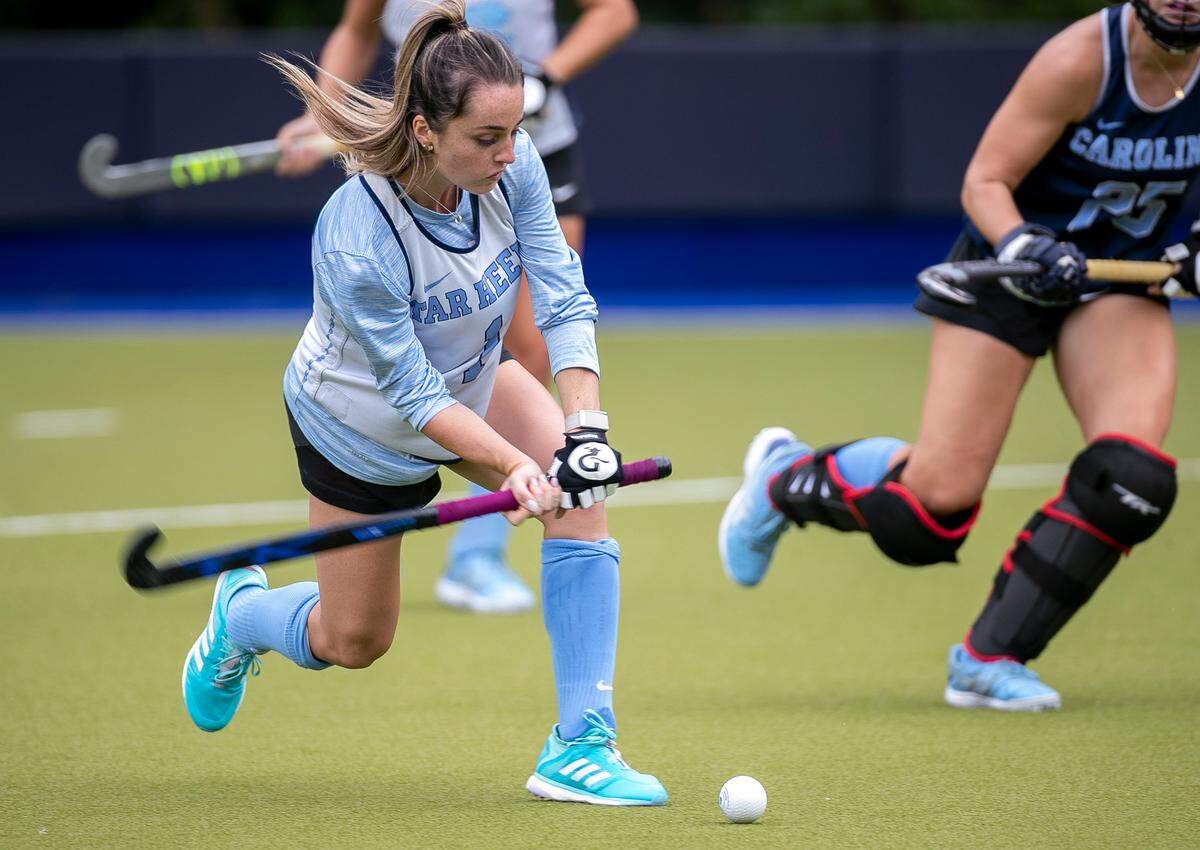
Matson has a chance to exit North Carolina as not only the best field hockey player in UNC history but the best athlete in UNC history, period. A two-time national player of the year and four-time ACC offensive player of the year, her record of accomplishment is unmatched. Matson was named one of the top 10 female athletes in ACC history before her career was even finished. And she’s not done yet.
The Tar Heels failed to make the Final Four for the first time in Matson’s career this fall — they won the NCAA championship in her first three seasons — and Matson was beat out for national player-of-the-year honors, but she’s coming back for a fifth season with something to prove for the first time in a long time (and several endorsement deals). After that: helping the United States get back to the 2024 Olympics after a catastrophic failure to qualify for Tokyo.
4. Meghann Burke, NWSLPA executive director
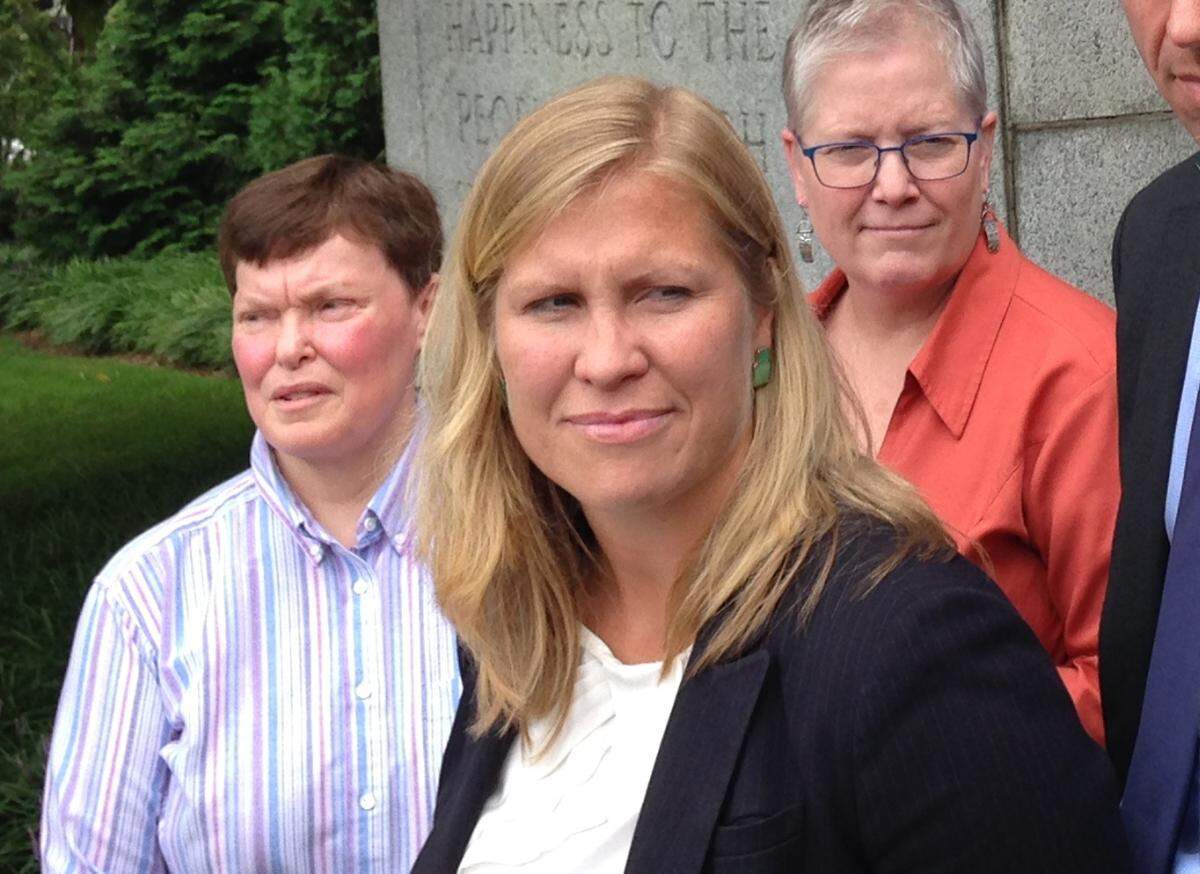
The shocking revelation in September that NC Courage coach Paul Riley had been accused of inappropriate sexual behavior at a previous coaching stop and continued to coach in the NWSL sparked outrage everywhere, but particularly among NWSL players, some of whom had tried to report the abuse to commissioner Lisa Baird, who failed to take action.
Burke, the executive director of the NWSL Players Association and a member of the original version of the Courage two decades ago, stepped into the leadership void. The players’ anger was ably channeled into action by Burke, who reshaped the league amid a new balance of power after Baird was fired, with players on equal terms with owners. Based in Asheville, no one had a bigger impact on the Courage and the NWSL in 2021 than Burke.
5. Hubert Davis, UNC men’s basketball coach
There was more to Davis’ promotion to replace Roy Williams than staying within the Carolina family, even if that was of the utmost importance to that family. Davis has been tasked with recalibrating and modernizing a basketball program that slipped a bit in the final years under Williams, who said upon retirement that he felt like he wasn’t reaching the latest generation of players.
Davis is younger (51), more in tune with the current style of basketball in college and the NBA and not all that far removed from his time as an ESPN pundit. Davis’ impact really started before Williams even retired, when he made a rare speech to the team after its first-round NCAA tournament loss last March. He’s done things Williams would not, like recruiting transfers and letting his big men roam the perimeter. But he knows as well as anyone that the UNC family expects success, and there will be a very short honeymoon.
6. Claire Curzan, Olympic swimmer
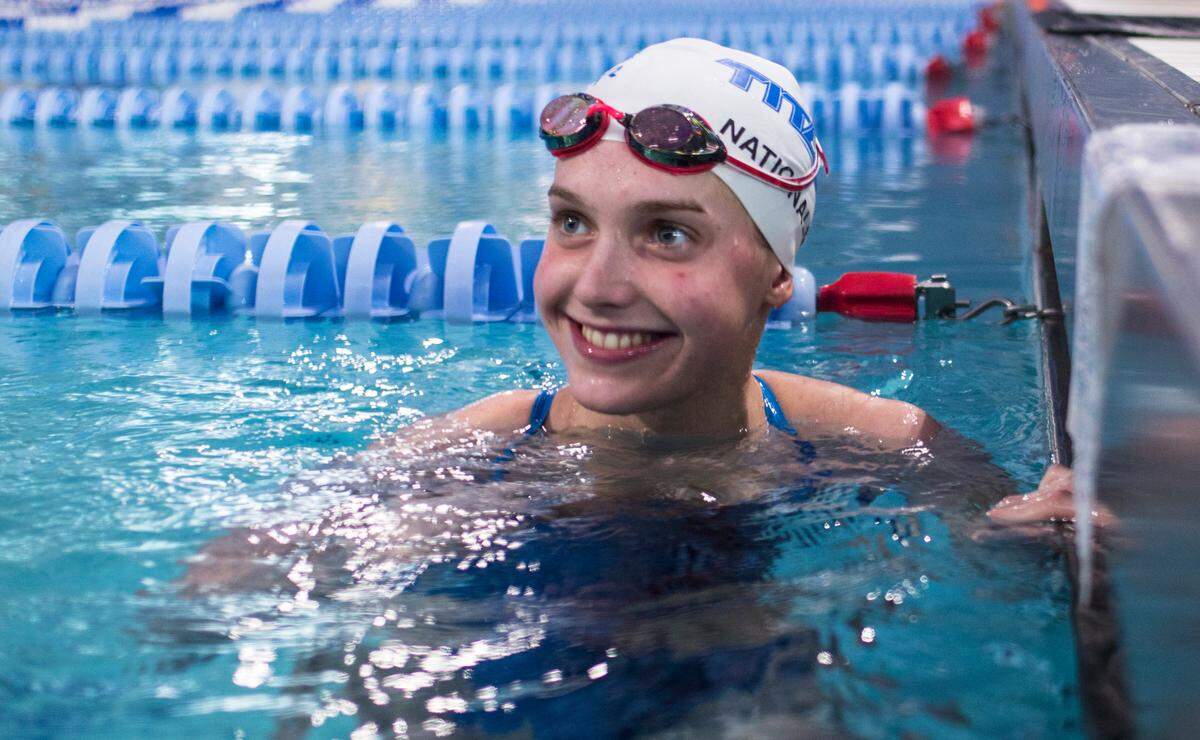
Curzan was only 16 when she qualified for the Tokyo Games in the 100-meter butterfly and 17 when she came home with a silver medal. While her individual Olympics ended when she finished 10th in her semifinal heat, the Cardinal Gibbons senior from Cary won silver by swimming the butterfly leg for the United States in the 4x100-meter medley relay.
The delay from 2020 to 2021 gave Curzan an extra year to improve and opened her Olympic window three years earlier than expected. Now her focus turns back to Paris in 2024, where she’ll be among the American medal favorites. She’ll prepare for those Olympics at Stanford, whose women’s swimming team accounted for eight U.S. medals in Tokyo and produced stars like Katie Ledecky and Simone Manuel.
7. Paolo Banchero, Duke forward
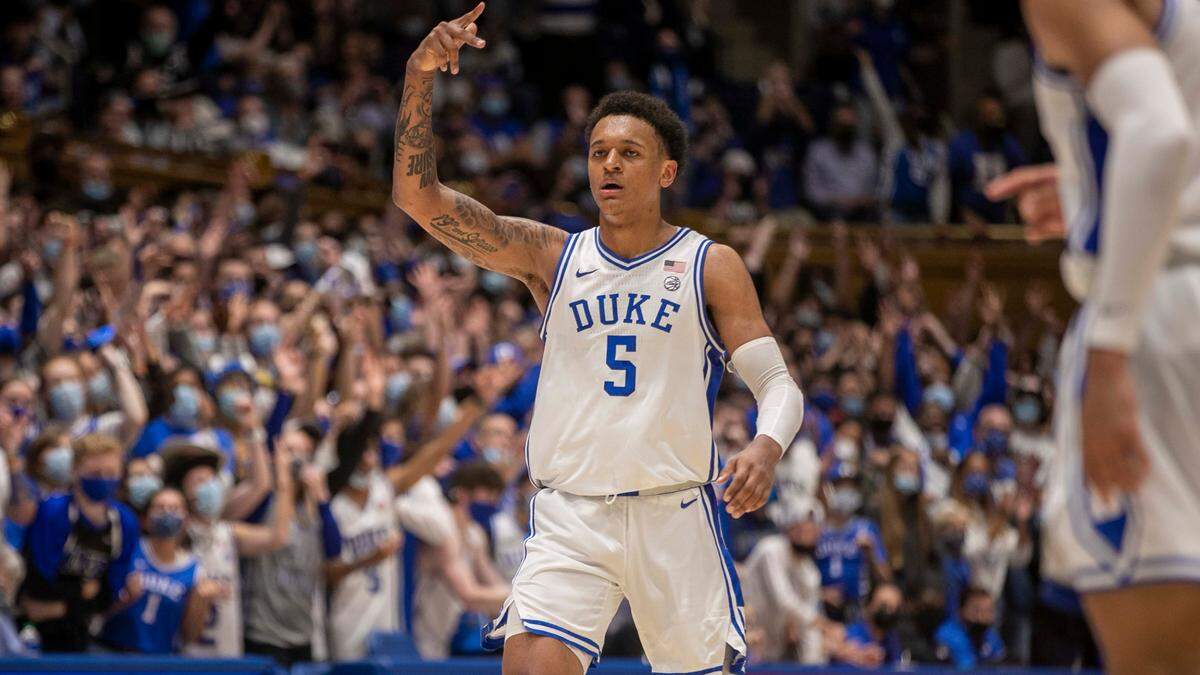
Billed as Duke’s biggest recruit since Zion Williamson and a potential No. 1 pick in the NBA draft, Banchero has been everything promised. Banchero’s advanced blend of power and polish helped the Blue Devils beat Kentucky in the Madison Square Garden opener and, briefly, lifted them to the No. 1 ranking. They remain the ACC’s only top-25 team as the first half of the 2021-22 season winds down.
It hasn’t all been smooth sailing — Banchero was in the back seat when Mike Krzyzewski’s grandson and Duke basketball player Michael Savarino was arrested for driving drunk, and he’s dealt with persistent and baffling cramping issues — but he’s been that rare freshman who has been a game-changer from the moment he stepped on the court with his ability to both pound the ball inside and hit delicate mid-range jumpers.
8. Que Tucker, NCHSAA executive director
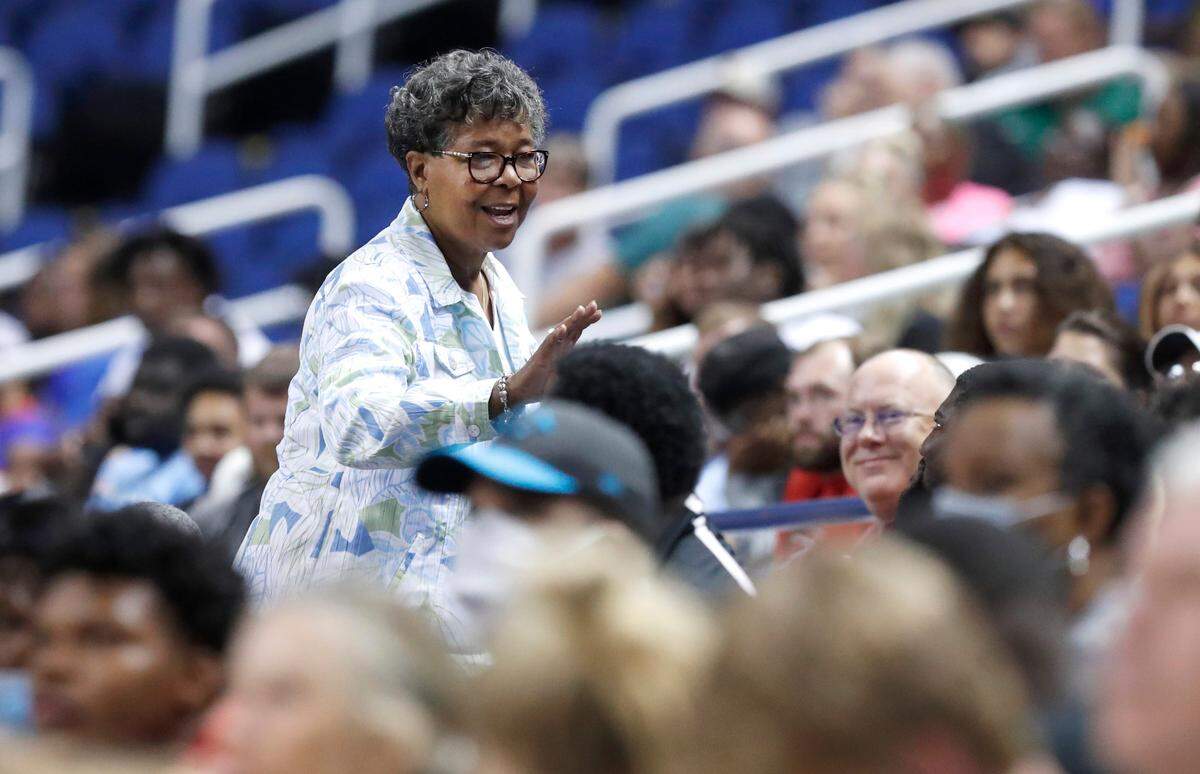
Caught up in a political firestorm, Tucker was able to navigate a tricky situation and emerge with the NCHSAA still largely independent of interference from meddling lawmakers. A bill that passed the state senate would have stripped the NCHSAA of much of its independence if not its role governing high school athletics in the state entirely.
Facing powerful political foes who cast the governing body’s $41 million endowment as profiteering instead of solid fiduciary management, the NCHSAA was able to defuse the attacks and broker a bipartisan compromise with Gov. Roy Cooper’s involvement despite lawmakers’ refusal to negotiate directly with Tucker, who has been in charge of the NCHSAA since 2015 and worked for the organization since 1991.
9. Joe Giglio and Joe Ovies, local sports radio hosts
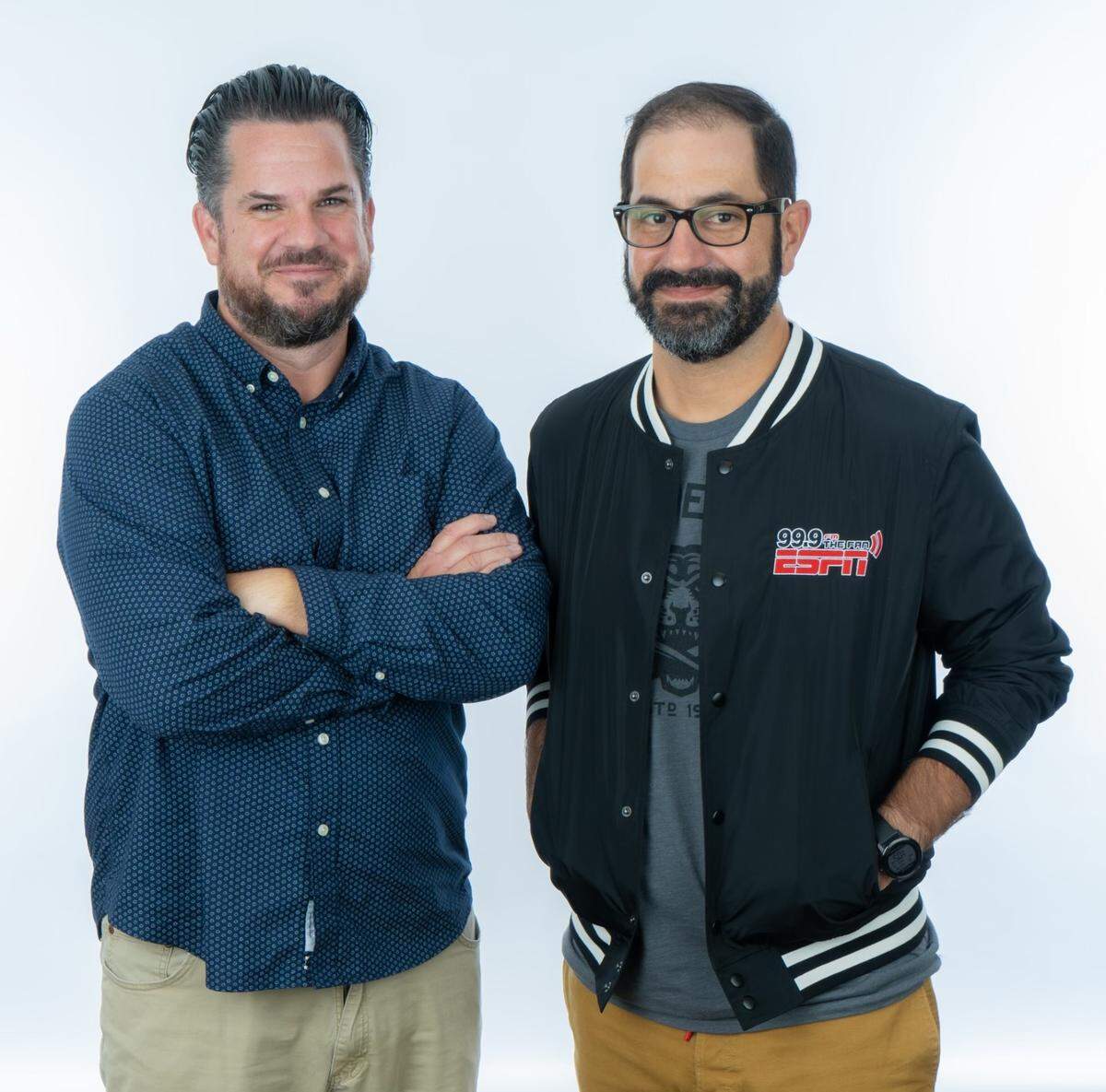
The 2020 reshuffling at WCMC-99.9 that split up longtime radio partners Ovies and Adam Gold gave both a new platform in the Triangle — and for Gold, a new platform statewide — but the addition of former N&O sportswriter Giglio gave the afternoon show an irreverent new slant. Their willingness to dispense with traditional sports-radio tropes and willingness to let listeners in on the joke is a refreshing change from the serious-as-a-heart-attack mood that prevails nationally.
They manage to entertain while tapping into some of the stranger corners of the Triangle sports zeitgeist and engage with what makes this market different without resorting to hyperbole or faux argument. Off the air, their narrative podcasts on Russell Wilson’s departure from N.C. State and Roy Williams’ career were required listening even for fans of the opposite schools.
10. Laurie Henes, N.C. State women’s cross-country coach
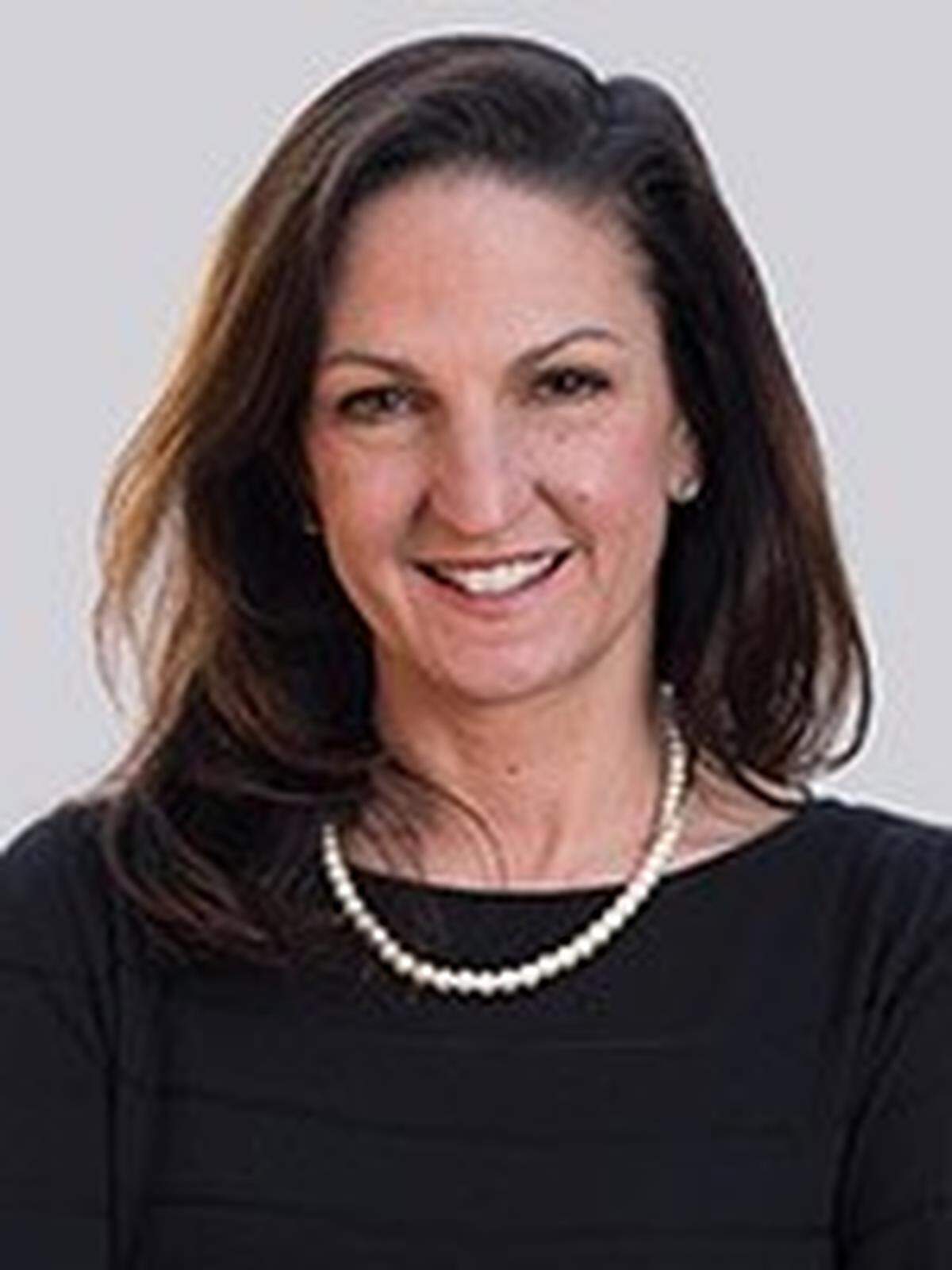
Henes won an NCAA championship as a Wolfpack runner in 1991 and three decades later recruited and coached a powerful cross-country team that in October won the school’s third NCAA title in any sport, joining the two in men’s basketball in 1974 and 1983. (N.C. State also won AIAW national championships in cross-country in 1979 and 1980 before the NCAA sponsored women’s sports.)
All five Wolfpack runners whose scores counted earned all-America honors and Henes was named the national coach of the year. The title was the culmination of a prolonged period of N.C. State success in the sport. The Wolfpack has won six straight ACC titles and finished second nationally in 2020-21. Expectations will be high again next fall: Kelsey Chmiel and Sam Bush are juniors and Katelyn Tuohy a sophomore.
Five to watch in 2022
1. (tie) Jon Scheyer, Duke basketball coach-in-waiting, and Mike Krzyzewski, retiring Duke coach
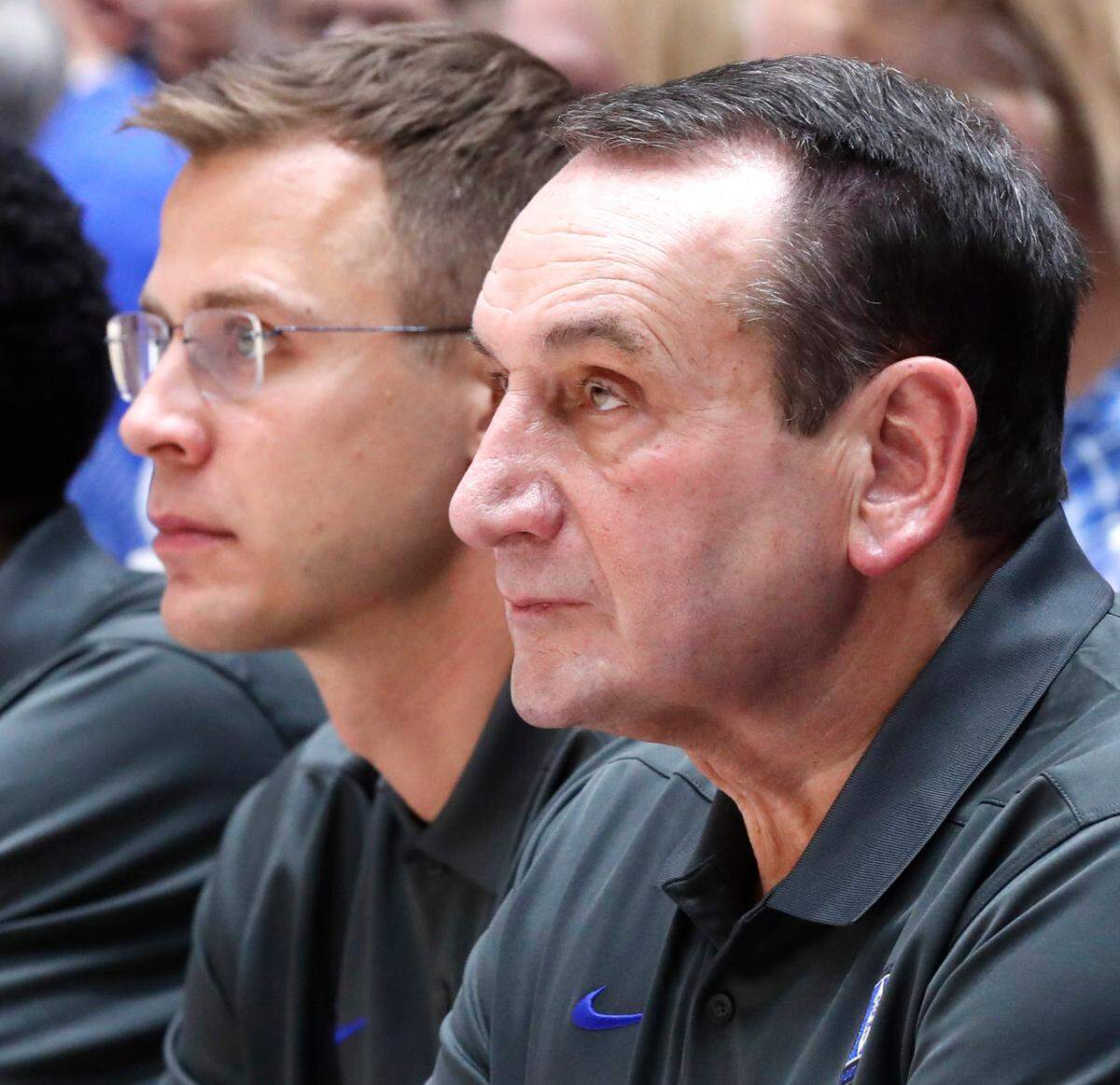
Scheyer has the almost unprecedented task of replacing not only a legend when Krzyzewski retires at the end of the season but doing it as a first-time head coach. Perhaps the only true apples-to-apples comparison: 27-year assistant Holly Warlick took over for Pat Summit at Tennessee but was fired after seven seasons without a Final Four appearance. A more optimistic view: George Seifert won two Super Bowls with the 49ers after taking over for Bill Walsh.
Krzyzewski is keeping his office high above Duke’s campus and plans to play an important executive role over the basketball program and within the athletic department. The question is, what will that look like? He’ll still have his finger on millions in basketball funding through the Legacy Fund but says he’ll give Scheyer space to coach and won’t watch games where anyone can see him, while being available as a resource as needed.
2. Philip Isley, Centennial Authority chairman
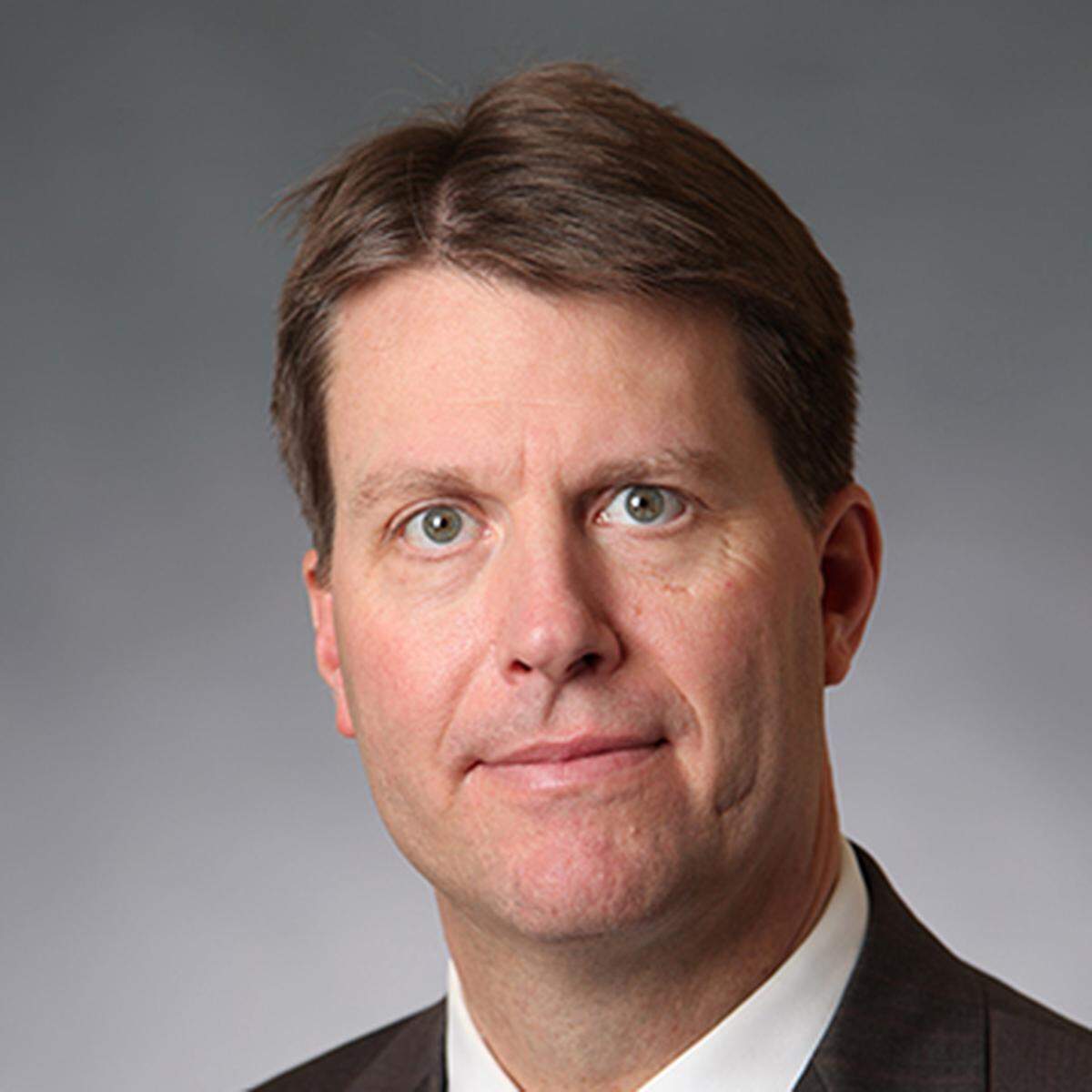
Isley, a lobbyist and former Raleigh city councilman, is the new chairman of the Centennial Authority that oversees PNC Arena. His predecessor for the past 12 years, Tom McCormick, successfully finalized a five-year lease extension with Hurricanes owner Tom Dundon and fought off the Downtown South stadium proposal among other suitors to secure the arena’s tranche of tourism tax money in the latest round of funding. Isley’s mandate now is to determine the future of a 22-year-old arena that has good bones but is, understandably, increasingly dated.
Dundon is interested in developing the vast expanse of empty parking lots that still surround it two decades later into a shopping, dining — and gambling? — entertainment destination and willing to make that investment, but it will require a delicate do-si-do among the arena authority, the Hurricanes and N.C. State. Isley, a legislative appointee who has served on the authority for more than a decade, will call the tune.
3. Dereon Seabron, N.C. State guard
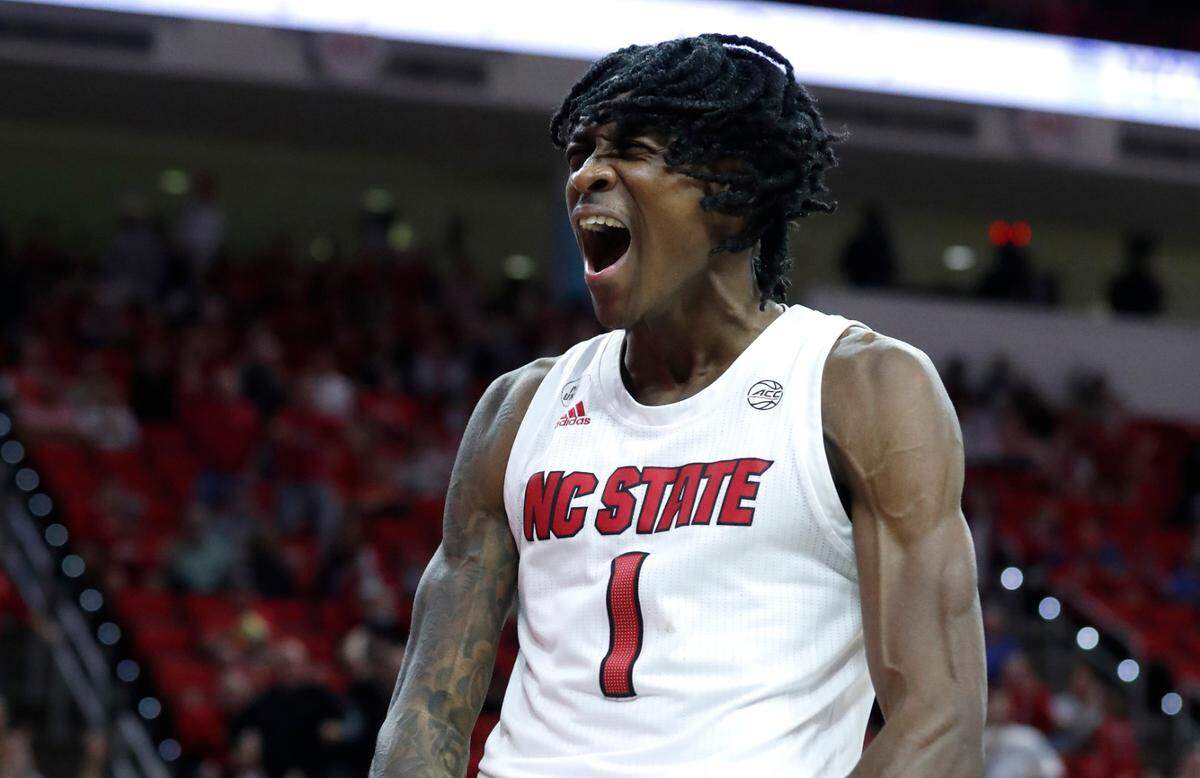
An occasionally used reserve last season as a freshman, Seabron has blossomed into N.C. State’s most aggressive and confident player as a sophomore, fearless plunging into the lane at 6-foot-7 but still quick enough to attack effectively from the outside on ball screens.
There’s potential on this Wolfpack roster with sophomores Seabron and Cam Hayes and freshman Terquavion Smith. Translating that into production this spring and in the future will be the challenge, but at least the threat of NCAA sanctions is no longer hanging over the Wolfpack for the first time in Kevin Keatts’ tenure.
4. Jim Phillips, ACC commissioner
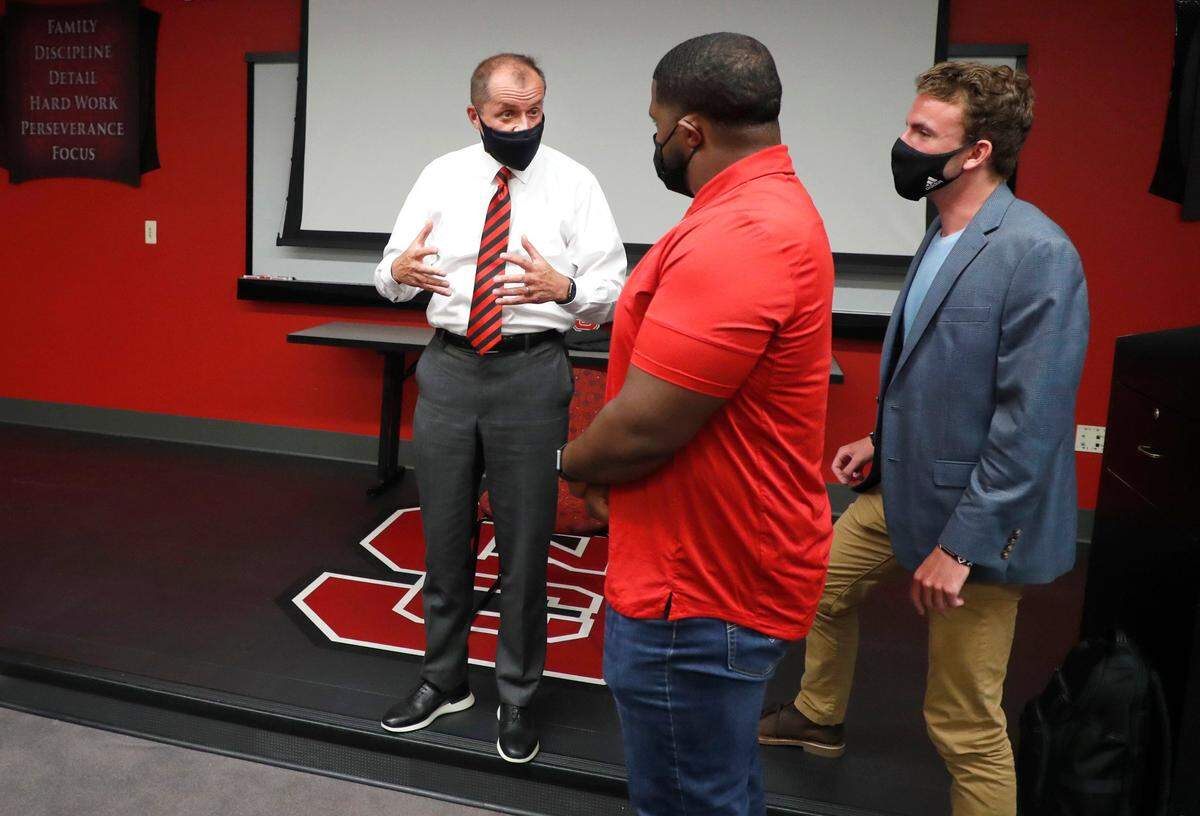
What does this new ACC-Big Ten-Pac-12 “alliance” mean, anyway? Will the College Football Playoff expand to eight or 12 teams? Will the ACC office move from Greensboro to Charlotte? Should it? Will Notre Dame ever join the ACC for football, especially after being left out of the CFP this season at 11-1? Can the ACC close the revenue gap with the Big Ten and SEC any other way? Can anything be done to restore the primacy of ACC basketball amid yet another down season? Why are there so many TacShaver and spurtle ads on the ACC Network?
None of those questions have easy answers, but it’s Phillips’ job to answer them during his first full calendar year as commissioner.
5. Wes Moore, N.C. State women’s basketball coach
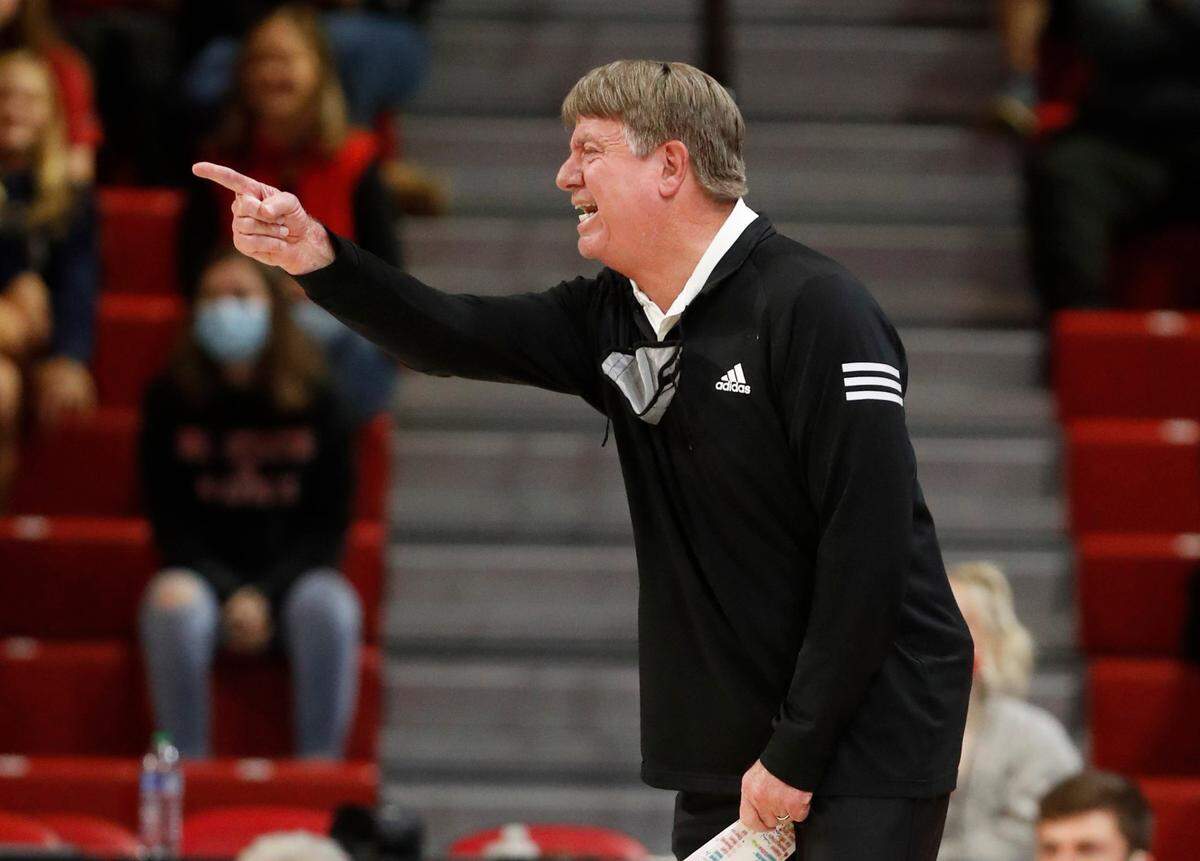
Can Moore -- who over the past two-and-a-half seasons has had the best overall program in the ACC, eclipsing powerhouses like Louisville and Notre Dame — and star center Elissa Cunane get to a Final Four for the first time since 1998? Win a national title? That’s what has to be next for the Wolfpack, which has won two straight ACC titles to end a seven-year Triangle drought.
N.C. State missed out on a chance to prove itself in 2020 and lost in the Sweet 16 as a No. 1 seed in 2021. The Triangle started this women’s basketball season 27-1, and after changing coaches, Duke and North Carolina are starting to close the gap on N.C. State. If the Wolfpack is going to get over the top, now is the time.
The 2020 Triangle 10
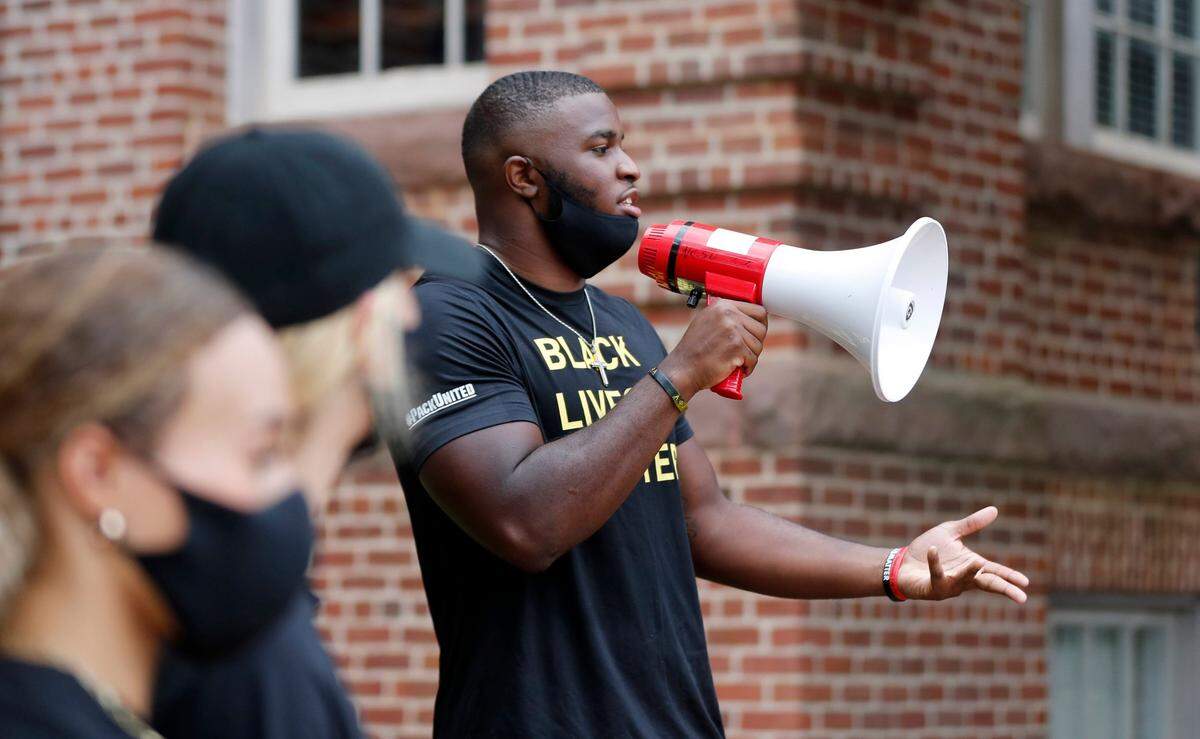
1. College athletes, including N.C. State linebacker Isaiah Moore
2. Jim Phillips, ACC commissioner
3. Nolan Smith, Duke men’s basketball director of operations
4. Dr. Mandy Cohen, NC secretary of Health and Human Services
5. Andrei Svechnikov, Carolina Hurricanes forward
6. Vincent Price, Duke president
7. LeVelle Moton, N.C. Central men’s basketball coach
8. Elissa Cunane, N.C. State center
9. Debinha, NC Courage midfielder
10. Chad Price, MAKO Medical CEO
The 2019 Triangle 10
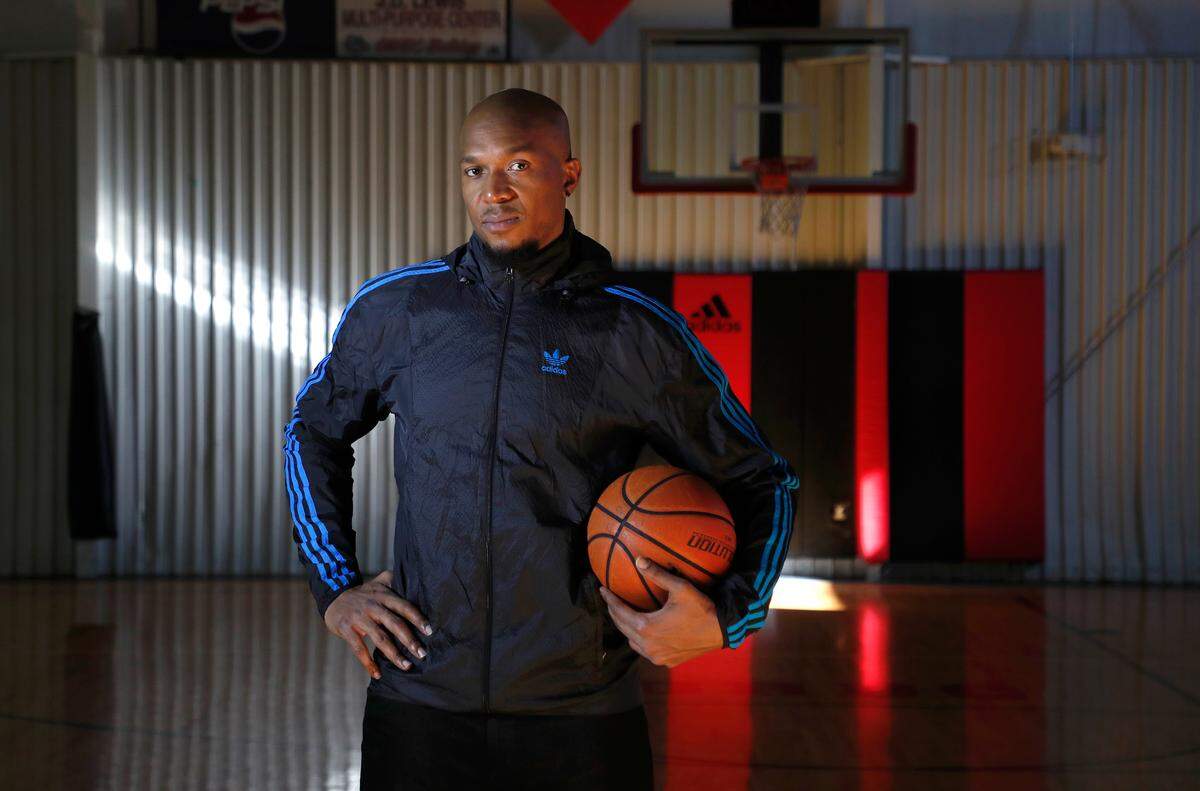
1. David West, HBL chief operating officer
2. Mack Brown, North Carolina football coach
3. Heather O’Reilly, recently retired soccer legend
4. Mike Krzyzewski, Duke men’s basketball coach
5. Sebastian Aho, Carolina Hurricanes center
6. Karen Shelton, UNC field hockey coach
7. Terrence And Torry Holt, entrepreneurs and philanthropists
8. Akshay Bhatia, teenage professional golfer
9. Wes Moore, N.C. State women’s basketball coach
10. North Carolina politicians (really!)
The 2018 Triangle 10
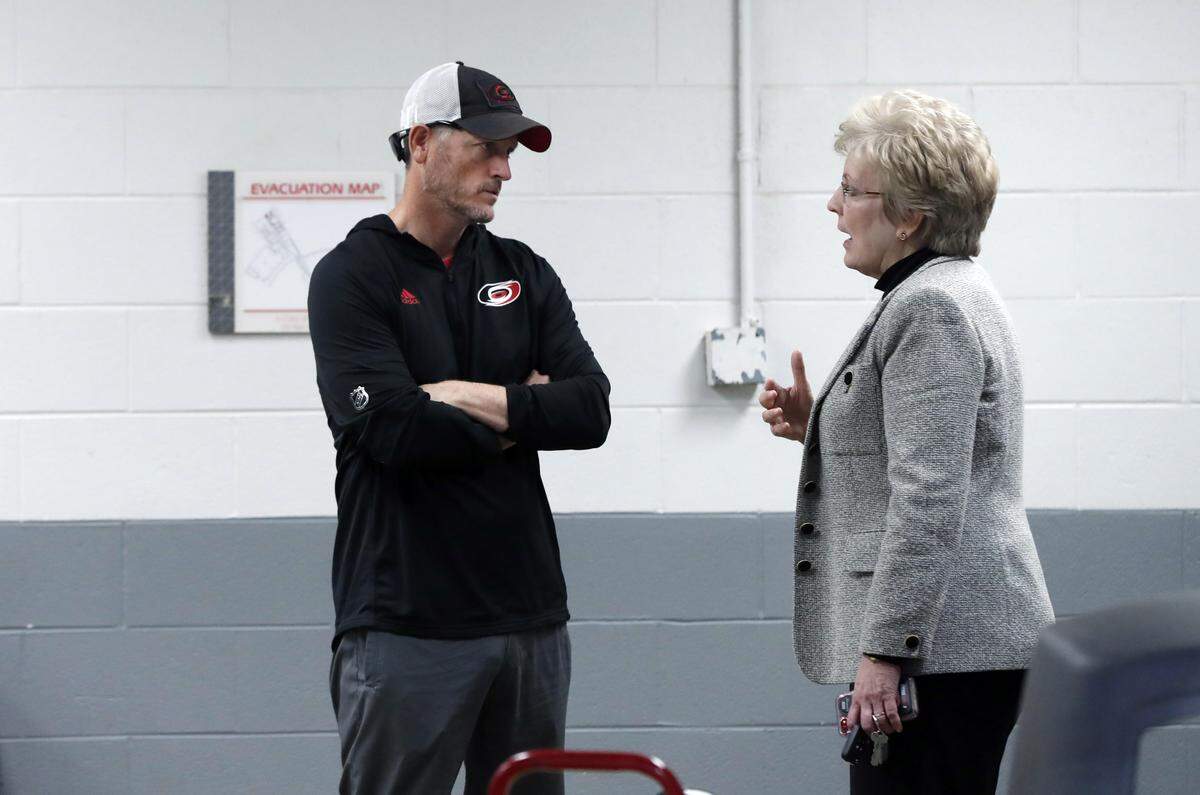
1. Debbie Yow, N.C. State athletic director
2. Jordan Bazant, agent
3. Zach Maurides, Teamworks founder
4. Zion Williamson, Duke basketball player
5. Tom Dundon, Carolina Hurricanes owner
6. Ezra Baeli-Wang and 292 (and counting) other UNC athletes
7. Nina King, Duke deputy athletic director
8. McCall Zerboni, NC Courage midfielder
9. Mack Brown, North Carolina football coach
10. Que Tucker, NCHSAA commissioner
The 2017 Triangle 10
1. Scott Dupree, Greater Raleigh Sports Alliance executive director
2. Rick Evrard, Bond, Schoeneck & King lawyer
3. Kevin White, Duke athletic director
4. George Williams, St. Augustine’s athletic director and track coach
5. Stephen Malik, North Carolina FC/NC Courage owner
6. Mike Krzyzewski, Duke men’s basketball coach
7. Ingrid Wicker McCree, N.C. Central athletic director
8. Thomas Dundon, prospective Carolina Hurricanes owner
9. Debbie Yow, N.C. State athletic director
10. Dwayne West, Garner Road Basketball Club executive director
This story was originally published December 26, 2021 at 6:00 AM.