From athletes to activists, the 10 most influential people in Triangle sports in 2020
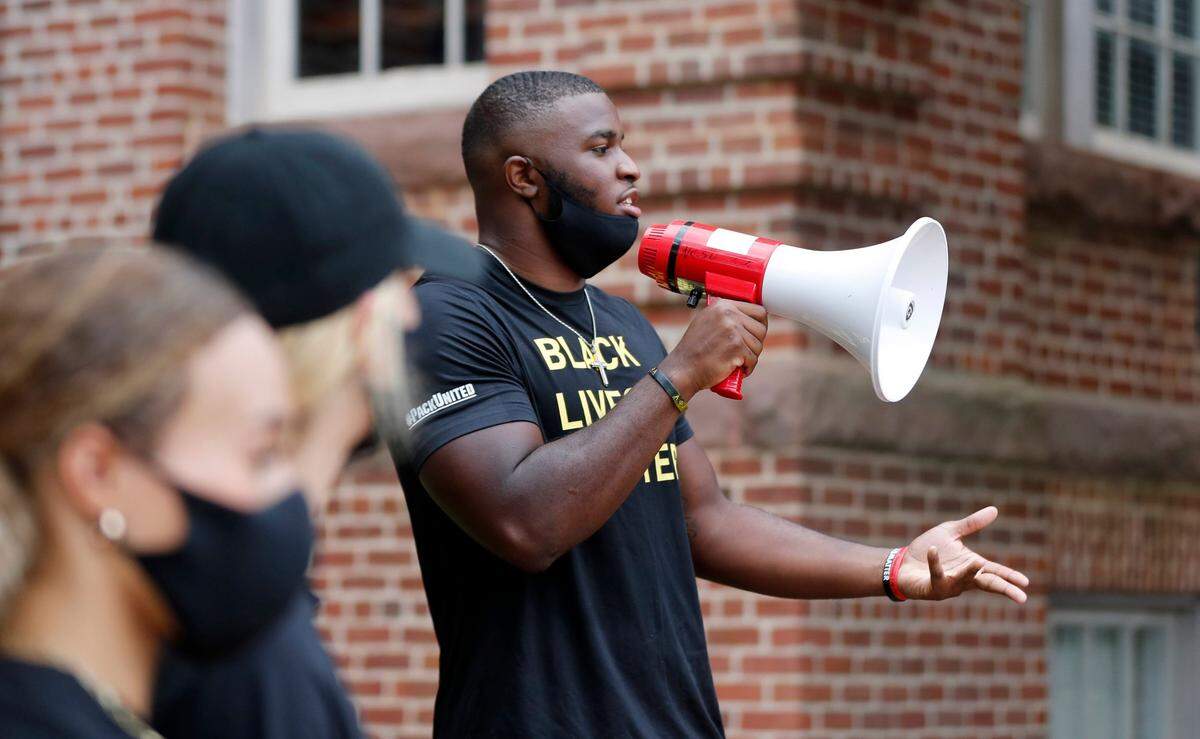
At one point over the summer, N.C. State linebacker Isaiah Moore found himself on a group text with hundreds of other college football players who were engaged in a fervent and robust debate. Moore doesn’t know or remember, exactly, how he was added, but it became compelling theater.
Clemson quarterback Trevor Lawrence and running back Darien Rencher represented those who wanted to play in the face of the COVID-19 pandemic. There were players from the Pac-12 and Big Ten who were threatening a boycott if their concerns about inequity in college athletics weren’t addressed. Moore, who earlier in the summer had organized a protest of N.C. State athletes against racial injustice in the wake of the George Floyd killing, was enthralled.
Moore had not been afraid to step forward and lead when he felt that events had made it necessary, but as he watched those conversations happen in real time, Moore for the first time realized how much clout he and his collegiate peers really commanded.
“People just kind of fed off each other, at UNC and Duke and with us, and you see that across the country,” Moore said. “The athlete has realized the power we have, with the platform we have, is immense. With the number of followers we have and the people who will listen to us, it’s our responsibility to stand up and speak out.”
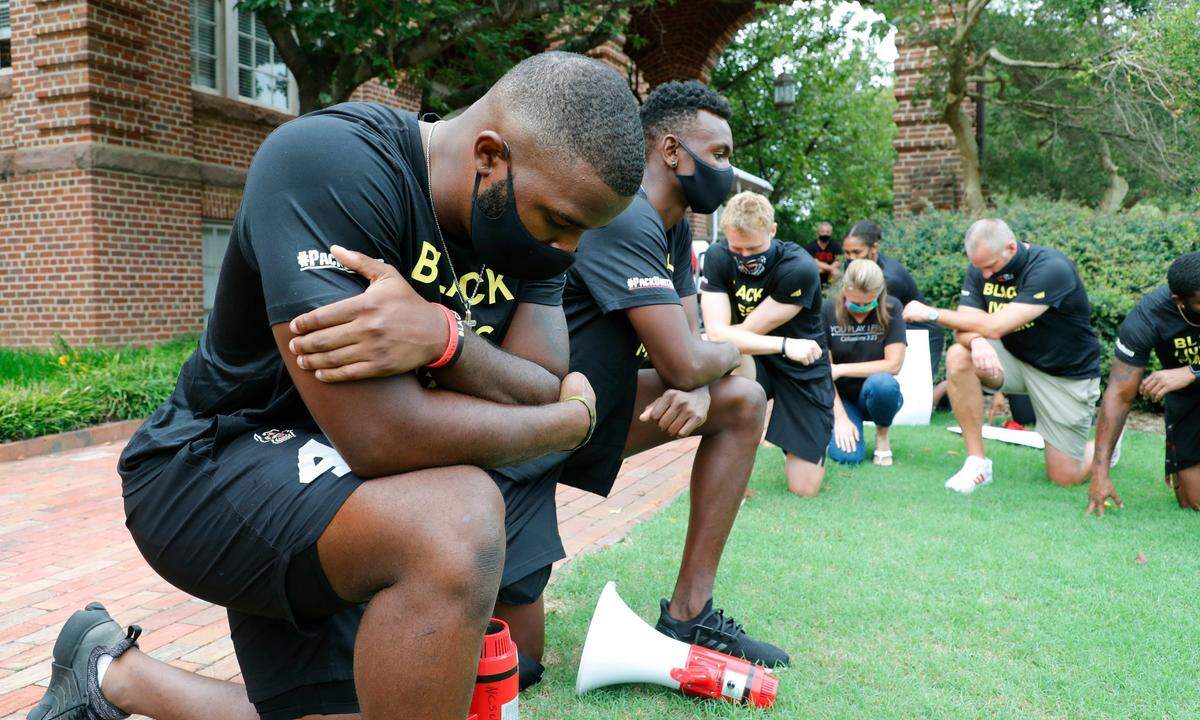
Collectively, the college athletes of the Triangle found their voice in 2020, earning them the top spot in this year’s Triangle Ten, the News & Observer’s annual ranking of the 10 most influential people in sports in the Triangle.
The athletes and their peers across college athletics are joined this year by new coaches, new stars and new leaders, among others, in this list compiled by N&O sports columnist Luke DeCock with input from other staff members, focusing on impact in 2020 specifically.
1. College athletes
It wasn’t just the football players, who would eventually issue a joint statement that brought the disparate platforms together. It was happening across the country and across the Triangle.
Clayton’s Asia Todd abruptly transferred from Liberty, where she had made the Sun Belt all-freshman team in women’s basketball, in protest of the racial climate at that school. Her video announcing why she was leaving went viral; she’s now at Central Florida.
North Carolina track athletes Nicole Barnes and Lauryn Hall organized a march down Franklin Street in August that drew hundreds of other UNC athletes, including stars and even coaches from the men’s basketball team. Duke athletes rallied outside Cameron Indoor Stadium, with freshman Henry Coleman III giving remarks that went viral. North Carolina football players replaced the names on their jerseys with messages like “peace” and “equality” for a national TV appearance against Notre Dame.
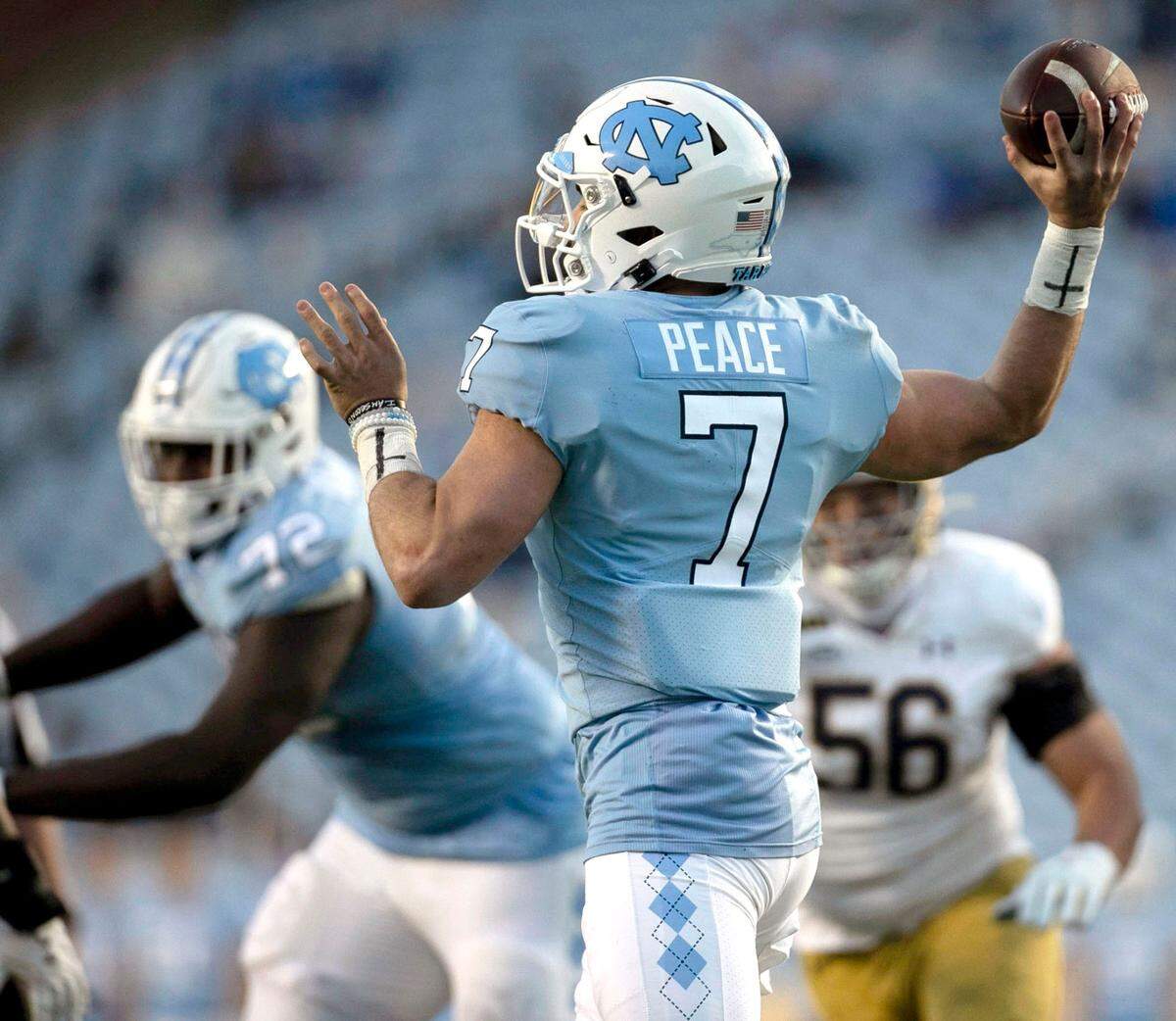
In a year defined by a pandemic, their willingness to stand up for what they believed was right rose above the noise as they made themselves heard.
“We have a generation of students and student-athletes who want to be heard and who want their voices to be heard,” Moore said. “It’s great. At one point, it wasn’t like this. It’s all about creating the conversation. That’s the biggest thing we’ve been trying to do, just continue to have the conversation.”
Athletes have always dabbled in activism, from John Carlos and Tommie Smith on the medal stand in 1968 to Colin Kaepernick, but instances of organized dissent have been rarer in college athletics, until now.
North Carolina football players memorably (and successfully) demanded the creation of a Black cultural center on campus in 1992, Missouri football players threatened a boycott in 2015 and hundreds of UNC athletes signed a petition demanding the removal of Silent Sam in 2018, but this summer was notably different.
There were two reasons for that: social media and the changing climate on campus.
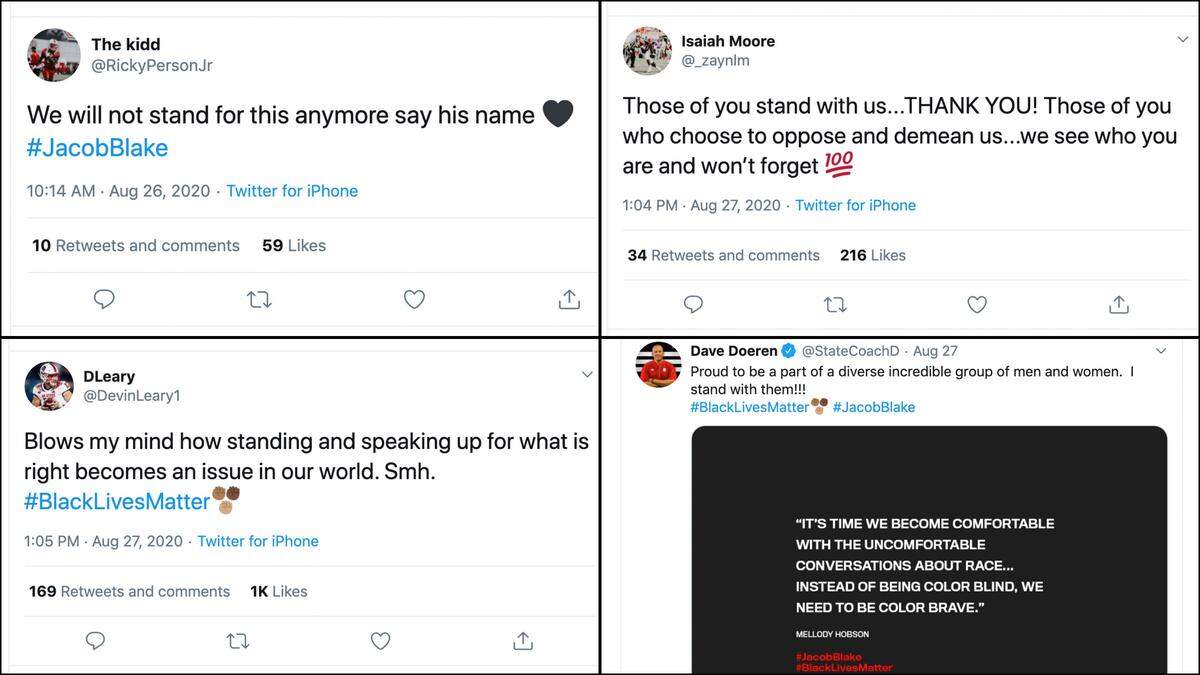
Social media has brought college athletes together across sports and schools and geographical bounds in a way they never have been before. The conversations that started on Twitter and Instagram over the summer between players who barely knew each other, if they did at all, blossomed into organized action.
As for the climate, at all three of the Triangle’s ACC schools, the newfound activism of their athletes was tacitly, if not openly, encouraged by their universities. Coaches and ADs made sure they were seen participating in the protests their players organized. The NCAA allowed football teams to wear a patch representing social justice initiatives on their jerseys this year, and all three did. Moore helped design N.C. State’s, a black fist with the words education, action and awareness around it.
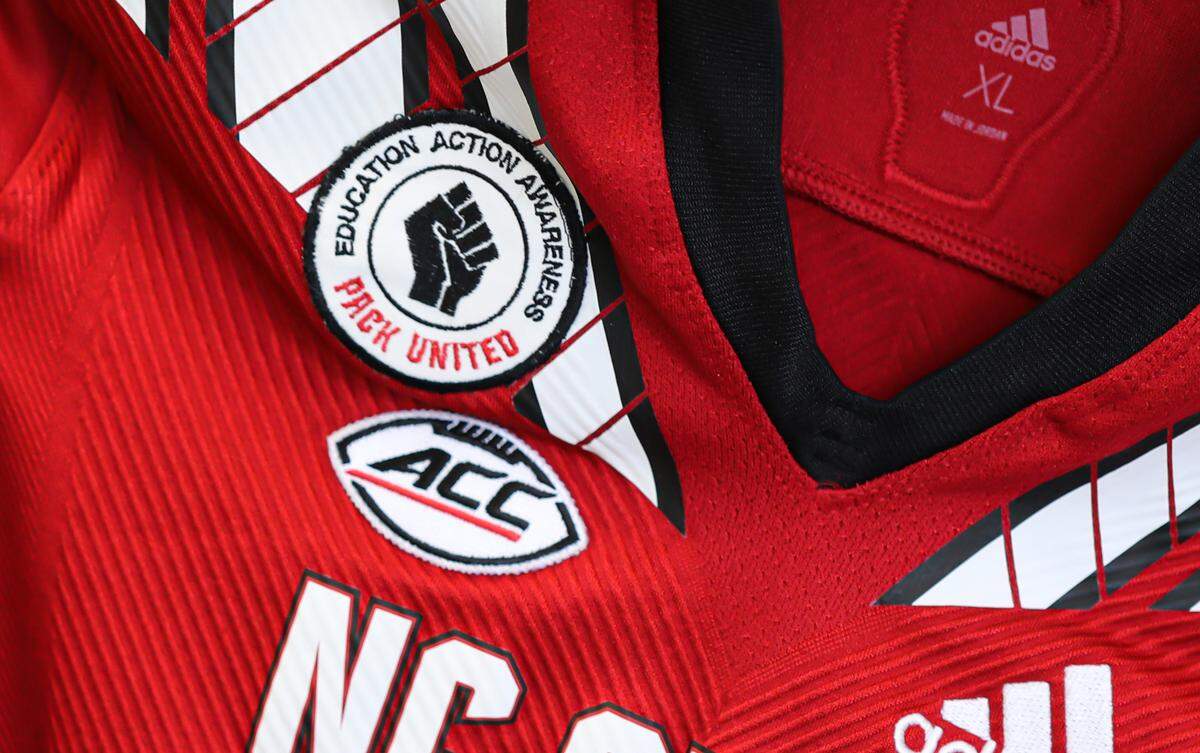
So much of athletes’ activism in the past had been in opposition to the powers that be on campus, under the threats of vindictive coaches or angry boosters. In 2020, the world has changed to the point where universities really had no choice but to acknowledge the power their athletes had. And that those athletes are just starting to realize they have.
Meanwhile, they’re following the example of pro athletes like LeBron James, who responded to criticism that he should “shut up and dribble” by pointing out he was more than a basketball player. Today’s college athletes want to make the same point.
“This generation of student-athletes, and this generation of college students in general, is more empowered to speak out,” said Nolan Smith, the former Duke star and current director of basketball operations who organized the August rally that included not only Duke athletes but basketball coaches Mike Krzyzewski and Kara Lawson.
“They obviously have more outlets than ever, more than what even I had when I was coming through college -- social media, Instagram, Twitter. Across the board, they have so many platforms to make their voice heard. And then they’re not afraid to speak out. When I was in college, I was always aware of what was going on in America but I was not vocal like they are. They’re built different from how we were.”
Or as Martin Jarmond, the UCLA athletic director from Fayetteville, put it, “They don’t see things the same way we do. And that’s cool.”
Jarmond was confronted by members of his football team with a list of COVID-19-related health and safety demands in June, only a month after taking the job. He said talking to them was as much an education for him as it was an administrative task. He could sense the momentum they had behind them.
“In certain ways, they’re finding their voice when it matters the most,” Jarmond said. “In our environment right now, where our country is, it’s been a tumultuous year -- politically, social justice, the pandemic. It’s been a chaotic year. We need true leadership and authenticity. From that perspective, I was proud to see our student-athletes stand up and use their voice and talk about some of the things that are important to them. As an administrator, I learned. Admins and ADs, we learned a lot this year.”
2. Jim Phillips, next ACC commissioner
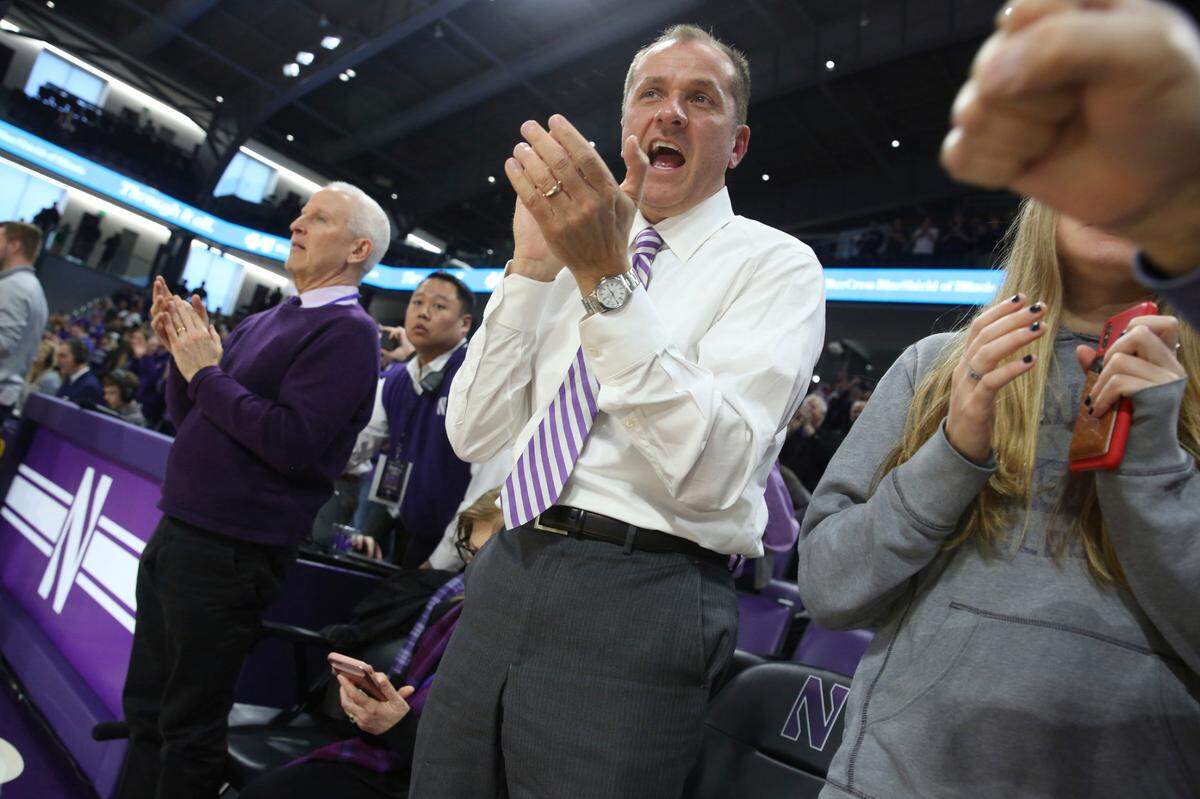
The commissioner’s office may be in Greensboro (for now) but given the importance of the three ACC schools to the Triangle -- and the importance of those schools to the ACC -- it might as well be here. Phillips is the Northwestern athletic director whose only tie to the league is a stint at Notre Dame under Duke athletic director Kevin White.
He will face the dual challenges of navigating the financial and medical impact of COVID-19 on the ACC as well as a changing NCAA landscape, from a potential Power 5 breakaway to the liberalization of athlete rights through name, image and likeness.
A top candidate for the Big Ten commissioner opening in 2019 that went to Kevin Warren and a leader in NCAA governance -- he had been in line to serve as chairman of the men’s basketball committee in 2022 -- Phillips will have a lot on his plate from Day 1.
Notably, he’s the first ACC commissioner whose background is primarily in basketball.
3. Nolan Smith, Duke men’s basketball director of operations
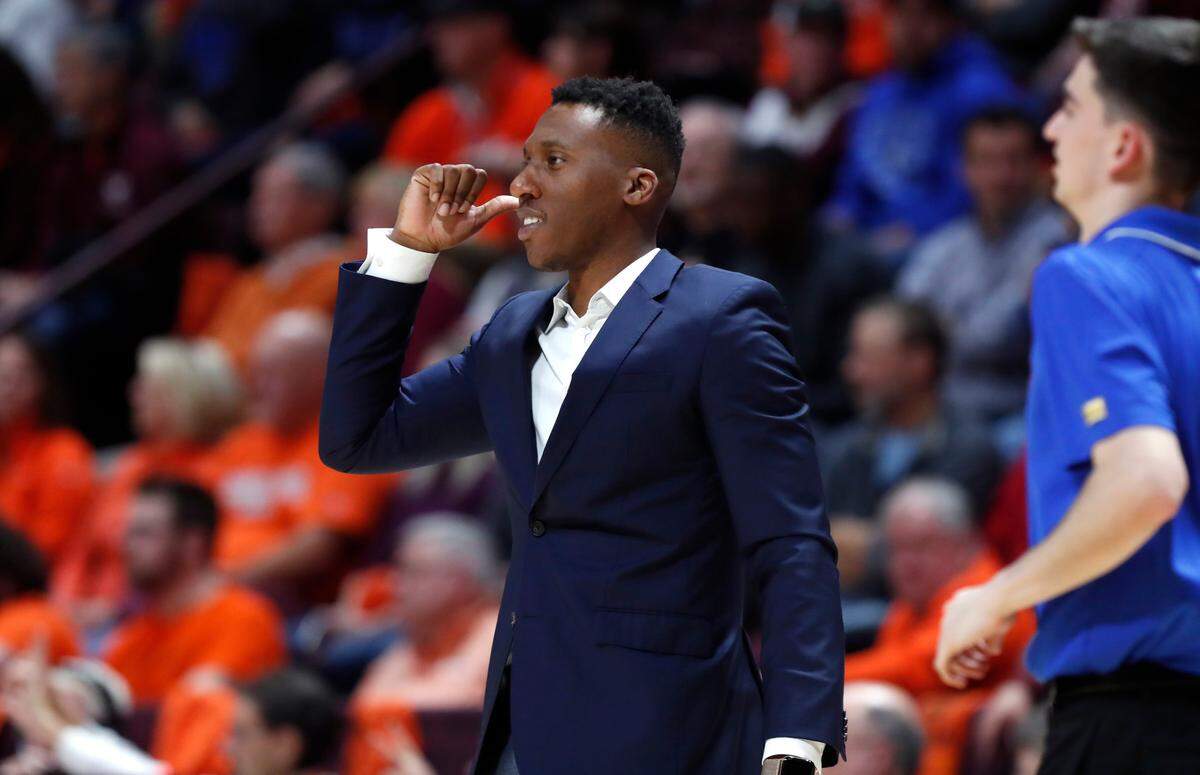
If college athletes have discovered a new voice, people like Smith have helped them find it. Only a decade removed from his own career at Duke, the basketball staffer has been a force for change within the program, on campus and in Durham.
Smith organized the August rally on campus in the wake of the Jacob Blake shooting, giving Duke athletes a chance to speak. He was named a George H.W. Bush Points of Light Inspiration honoree in September for his work away from the court, he was the N&O’s Tar Heel of the Month in October and his profile both at Duke and in Durham continues to grow.
Smith was among the community leaders who demanded a sit-down with the Durham police chief and sheriff in June; if he’s not a college head coach someday, it may be because he chose to follow that path instead.
4. Dr. Mandy Cohen, NC secretary of Health and Human Services
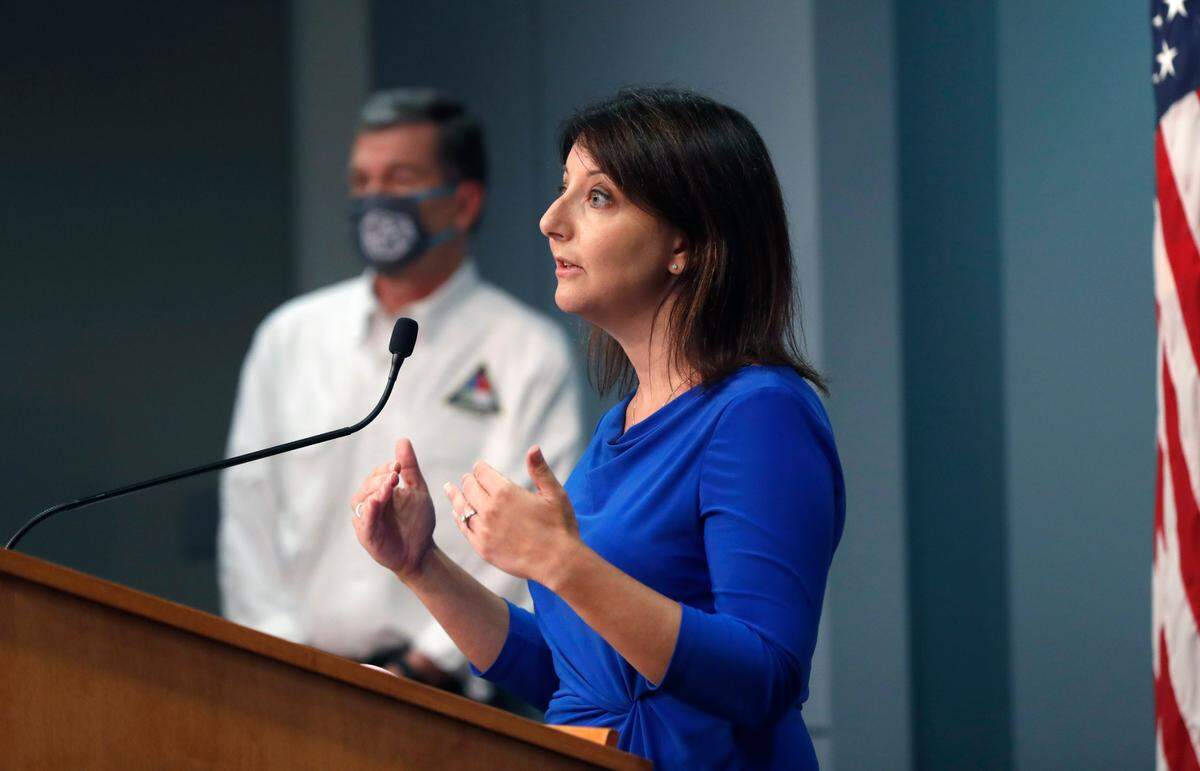
No one outside the world of sports has had a bigger impact on life inside it than Cohen, the point person on the state’s response to COVID-19 and now a household name after nine months of public briefings alongside Gov. Roy Cooper.
Her decisions have had a massive influence on how sports have been conducted during the pandemic at every level in the Triangle and in the state, from whether they are played to whether fans are allowed, from youth and high schools up through college and professional teams.
Sports is obviously a small part of her portfolio, but her opinion carries enormous weight there, as it does in so many areas of life in North Carolina in 2020. Cohen is the Tar Heel of the Year.
5. Andrei Svechnikov, Carolina Hurricanes forward
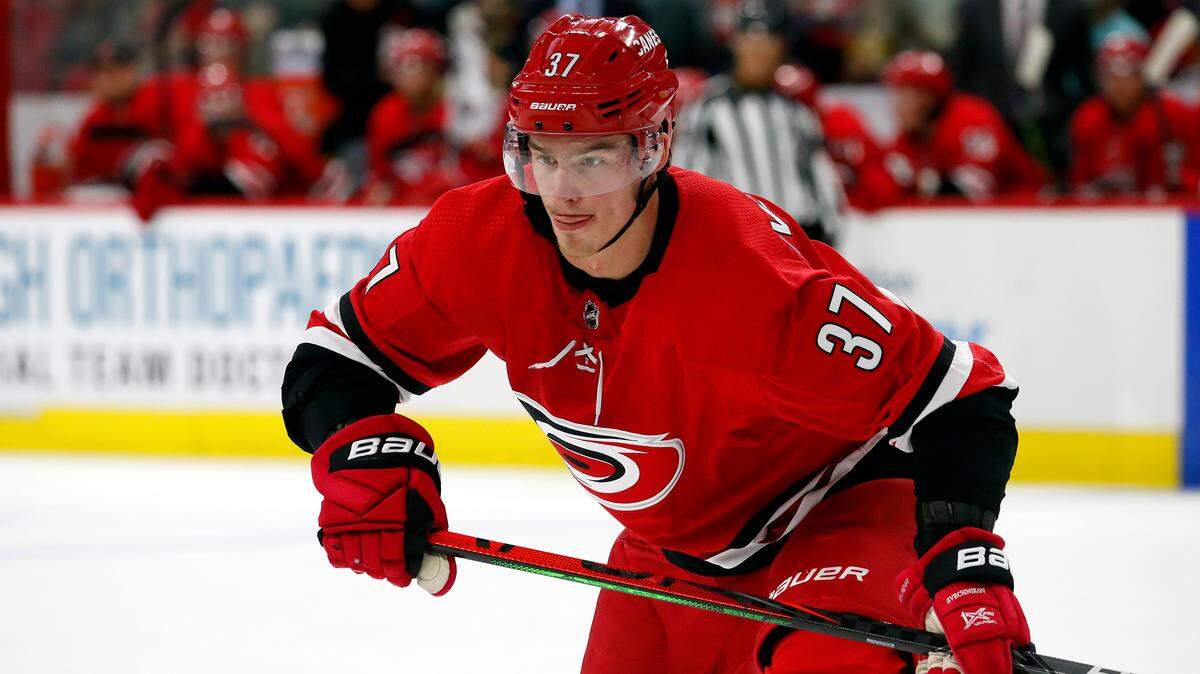
With not one but two lacrosse-style goals last season -- picking the puck up on the blade of his stick while behind the net and tucking it over the goaltender’s shoulder -- Svechnikov not only announced his presence to the NHL but got his own animation in the NHL 21 video game.
One of the NHL’s best young players, Svechnikov was far more productive in his sophomore season with expanded opportunities on the power play. Even better should lie ahead for the gifted Russian goal-scorer, who is still only 20.
With Svechnikov and Sebastian Aho, the Hurricanes have two of the NHL’s best young players, and when Svechnikov’s next contract is settled, two of the most expensive.
6. Vincent Price, Duke president
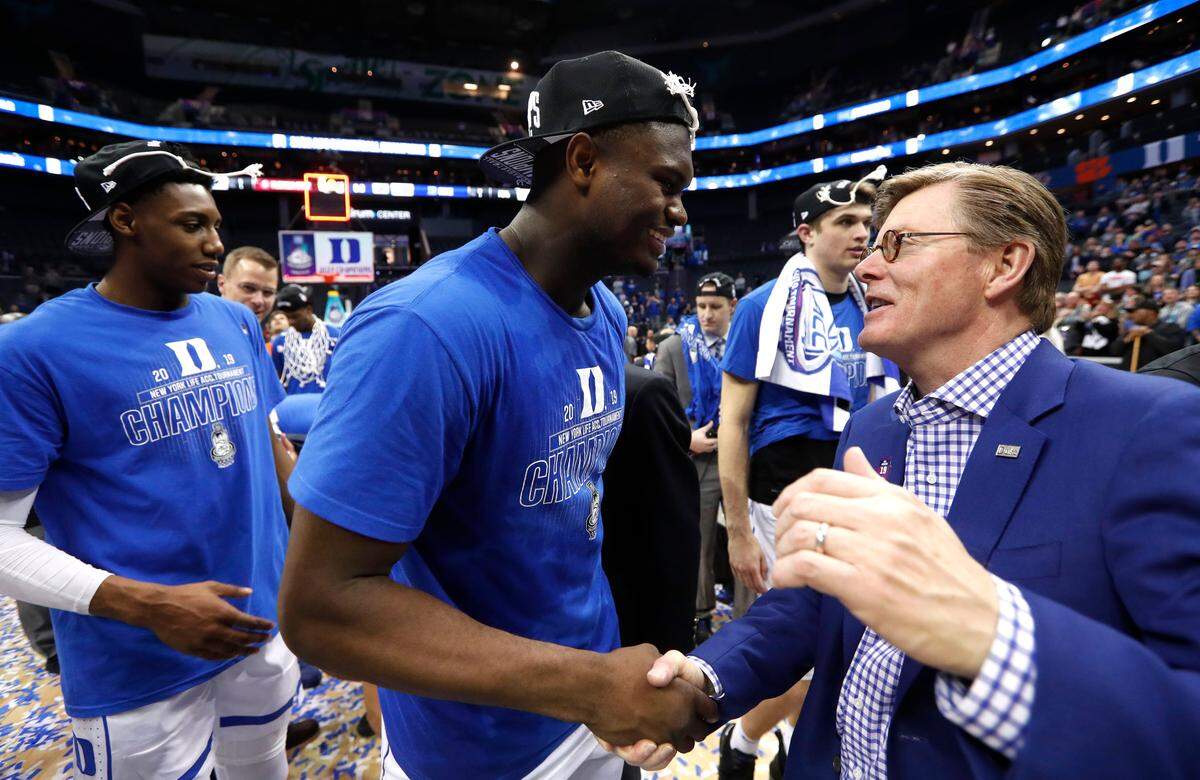
When the ACC seemed determined for its basketball tournament to play on in Greensboro as the novel coronavirus swept across the country, and soon-to-be-outgoing commissioner Swofford waffled publicly on the morning of the quarterfinals, Price finally stood up and filled the leadership vacuum.
His decision to suspend Duke’s intercollegiate athletics ahead of the Duke-N.C. State game saved the conference the embarrassment of the Big East, which had to stop a game at halftime. It also had the potential at the time to cost Duke a shot at a national title, if the NCAA hadn’t quickly followed suit.
Duke has remained a leader not only within the ACC but nationally in terms of keeping both students and athletes safe from COVID-19.
7. LeVelle Moton, NC Central men’s basketball coach
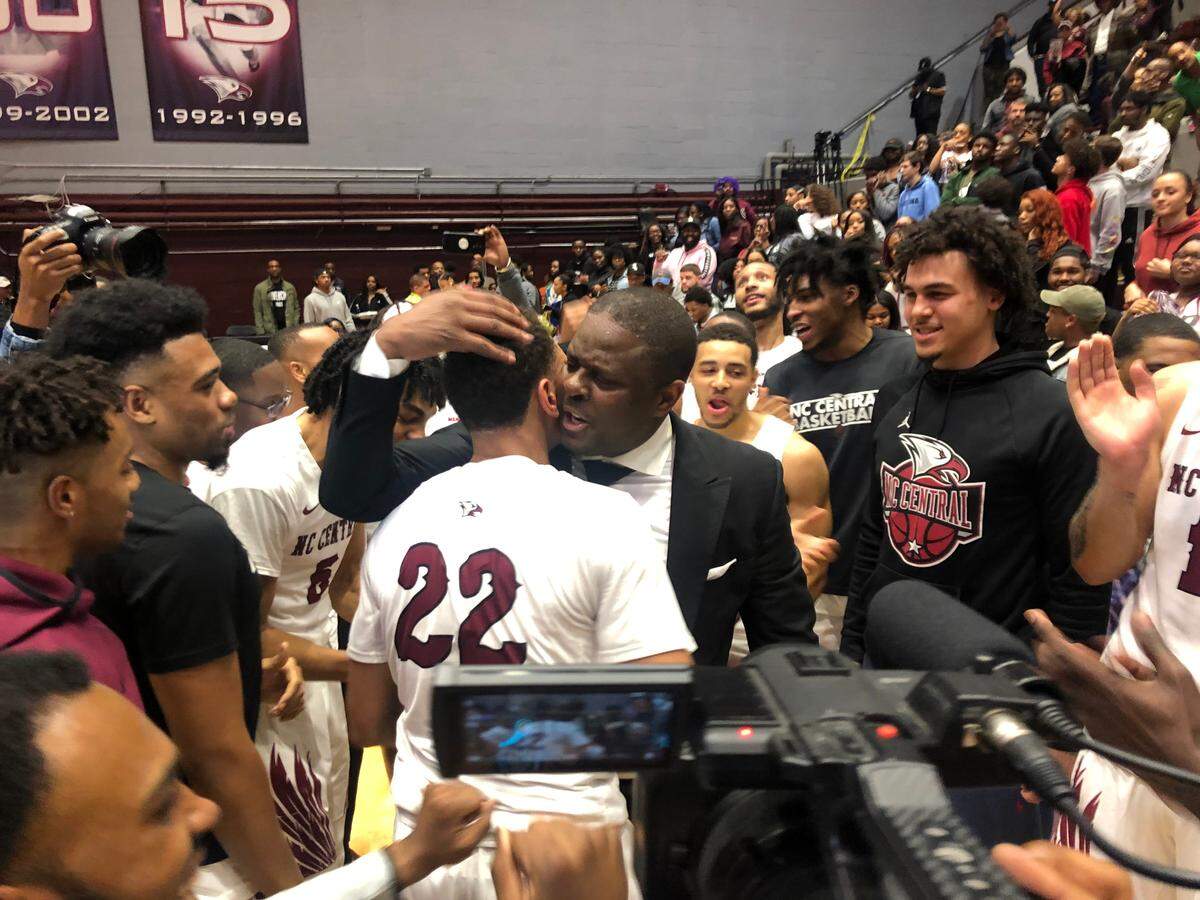
When not building a MEAC powerhouse at his alma mater that won its fourth regular-season title in seven years last spring, Moton has long served as a mentor to an entire generation of young basketball stars growing up in the Triangle, from John Wall to Rodney Purvis and beyond.
But even as he continues to be overlooked for bigger jobs, his national profile as a thought leader within the game continues to rise. With more elite recruits more willing to consider HBCU programs -- including the class of 2023’s Mikey Williams, who has N.C. Central on his early list -- Moton may be in a position to capitalize.
Meanwhile, Moton’s real-estate development firm earlier this month became a partner in the controversial Downtown South proposal in Raleigh.
8. Elissa Cunane, NC State center
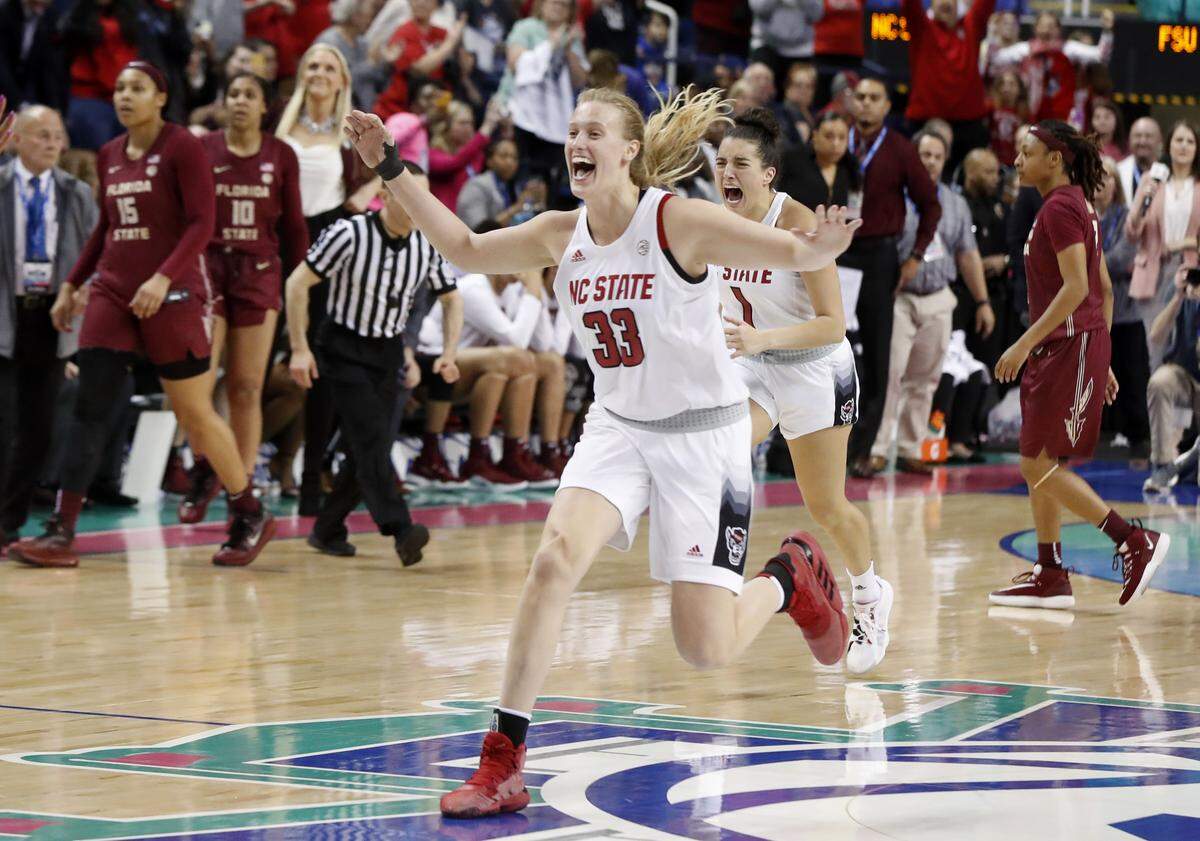
The 6-foot-5 junior has been the keystone of N.C. State’s revival under coach Wes Moore. As a sophomore, she was the only ACC player to average a double-double and helped N.C. State win its first ACC title since 1991.
A national player-of-the-year candidate, she outdueled South Carolina star Aliyah Boston as the Wolfpack knocked off the No. 1 team in the country earlier this month. A top recruit out of Summerfield in Guilford County, her decision to stay home helped change the trajectory of the program. Her emergence as one of the best players in the country continues to fuel its growth.
9. Debinha, NC Courage midfielder
.JPG "NWSLThornsCourageSoccer (4).JPG")
As the ongoing departure of superstars-- Sam Mewis, Crystal Dunn -- and opt-outs from the NWSL’s fall series have exposed cracks in the Courage’s longstanding NWSL superiority, Debinha continues to be one of the most dangerous attackers in the game, both as a creator and a scorer.
The Guardian ranked her the 13th-best player in the world in 2020, ahead of Mewis (15th) and Dunn (21st); current Courage teammates Lynn Williams, Abby Dahlkemper and Denise O’Sullivan also made the top 100. The nimble 29-year-old Brazilian is increasingly the fulcrum of the Courage offense -- and will have to excel in that role for the club to meet its own lofty standards.
10. Chad Price, MAKO Medical chief executive officer
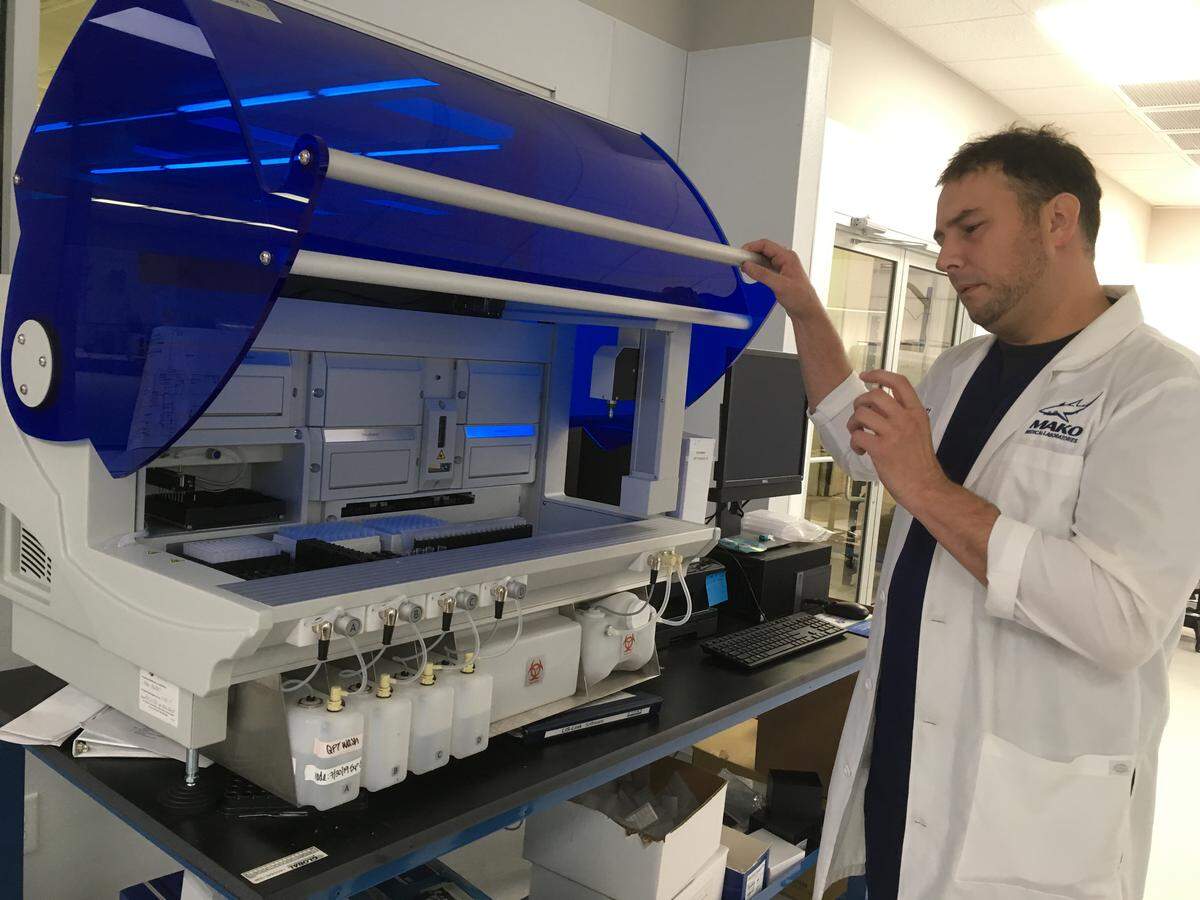
Price has been in the news this year for, uh, other reasons -- a falsified resume and questions about campaign donations -- but the medical testing company he founded has played a pivotal role in the ACC and others being able to return to play.
MAKO has processed more than 30,000 COVID tests on short turnarounds in its Henderson facility for ACC schools to meet the conference’s thrice-weekly testing protocols for football and basketball. MAKO also served, curiously enough, as the title sponsor of impromptu season-opening basketball tournaments at Duke, N.C. State and Wake Forest.
Five to watch in 2021
1. Kara Lawson and Courtney Banghart, women’s basketball coaches
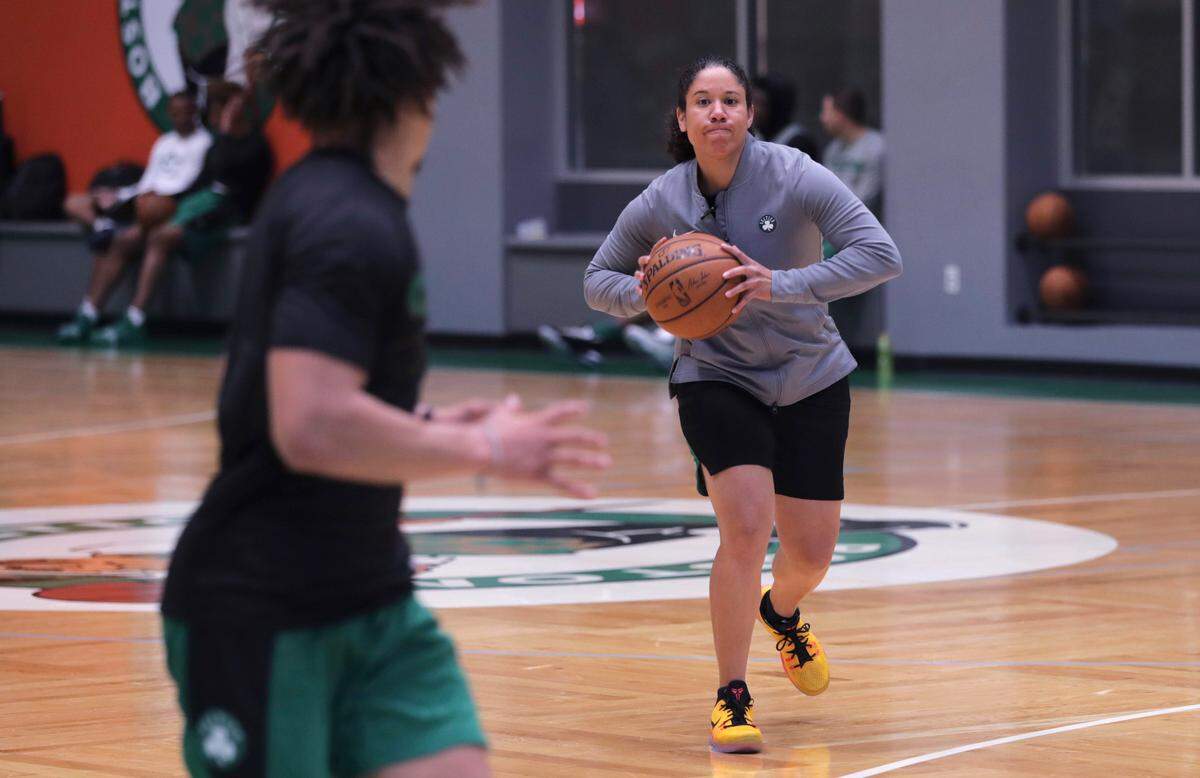
The two new coaches -- Lawson, 39, is in her first season at Duke; Banghart, 42, in her second at UNC -- have taken over programs that once dominated the ACC but both saw standards slip among accusations of poor treatment of players. The addition of Notre Dame and Louisville changed the balance of power in the ACC, so Lawson and Banghart will have a tougher climb to national relevance than their predecessors ... but N.C. State has managed it. They come at it from different angles: Banghart built an Ivy League powerhouse at Princeton, while Lawson is one of the biggest personalities in the game but a first-time head coach.
2. Leon Krapf, NC State goalkeeper
It’s a little misleading to call Krapf a future leader, because the native of Germany is already at the front of just about every opportunity current athletes have to influence the direction of college athletics: he served as the chairman of N.C. State’s athlete advisory group, the ACC representative to the NCAA’s athlete advisory council and one of five athletes on the ACC’s 20-person search committee entrusted with picking a replacement for Swofford.
3. Akshay Bhatia, teenage professional golfer
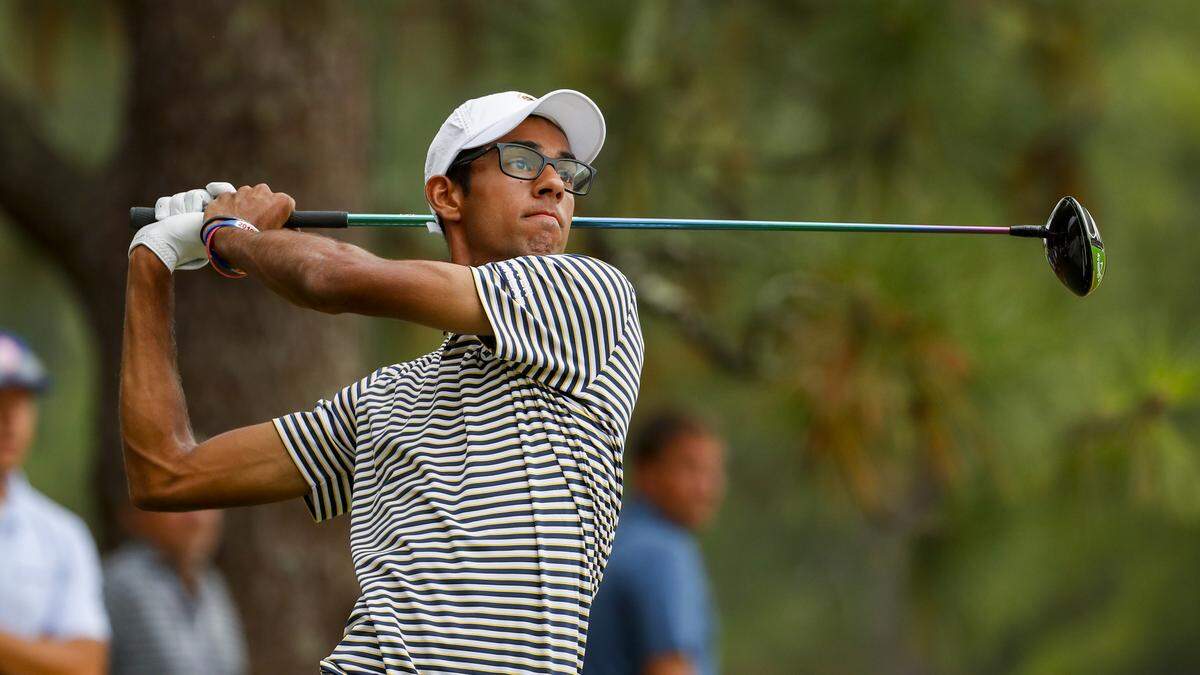
The Wake Forest teenager’s first year on the PGA Tour didn’t go as planned but he cashed his first paycheck at the Safeway Open in September and briefly contended in the Mayakoba Golf Classic earlier this month after playing his way in through a Monday qualifier. Bhatia, who turns 19 in January, has the game to compete at the highest level and his breakthrough could come at any time. With his Callaway sponsorship deal, he’s already moving in elite circles. He shared a private jet to a tournament in Saudi Arabia with another left-hander: Phil Mickelson. Still, he’s got a long way to keep up with Triangle pros Webb Simpson, Brendon Todd, Doc Redman, Grayson Murray and Chesson Hadley, who combined for more than $10 million in winnings in 2020.
4. Larry Perkins, PNC Arena vice president
Always in demand nationally for his experience and expertise in arena safety and security, where he has been one of the country’s foremost experts on the subject for decades, Perkins is helping not just the Hurricanes and N.C. State but teams across the country figure out how to get fans back into arenas safely, whenever that time comes. Whatever the protocols end up being along the path toward a return to full attendance, Perkins will have a strong voice in determining them, and not just at PNC.
5. John Forslund, unemployed (for now) hockey announcer
Forslund’s awkward departure from the Hurricanes’ TV booth after three decades on the air left big shoes for the amiable Mike Maniscalco to fill, and Maniscalco did a good job charting his own course in the playoffs. With Mike “Doc” Emrick retiring as NBC’s lead hockey announcer, could Forslund be the next voice of hockey in the United States? It’s a distinct possibility -- with even bigger shoes to fill. American hockey fans would be lucky to have him, just as Hurricanes fans were for so long.
The 2019 Triangle 10
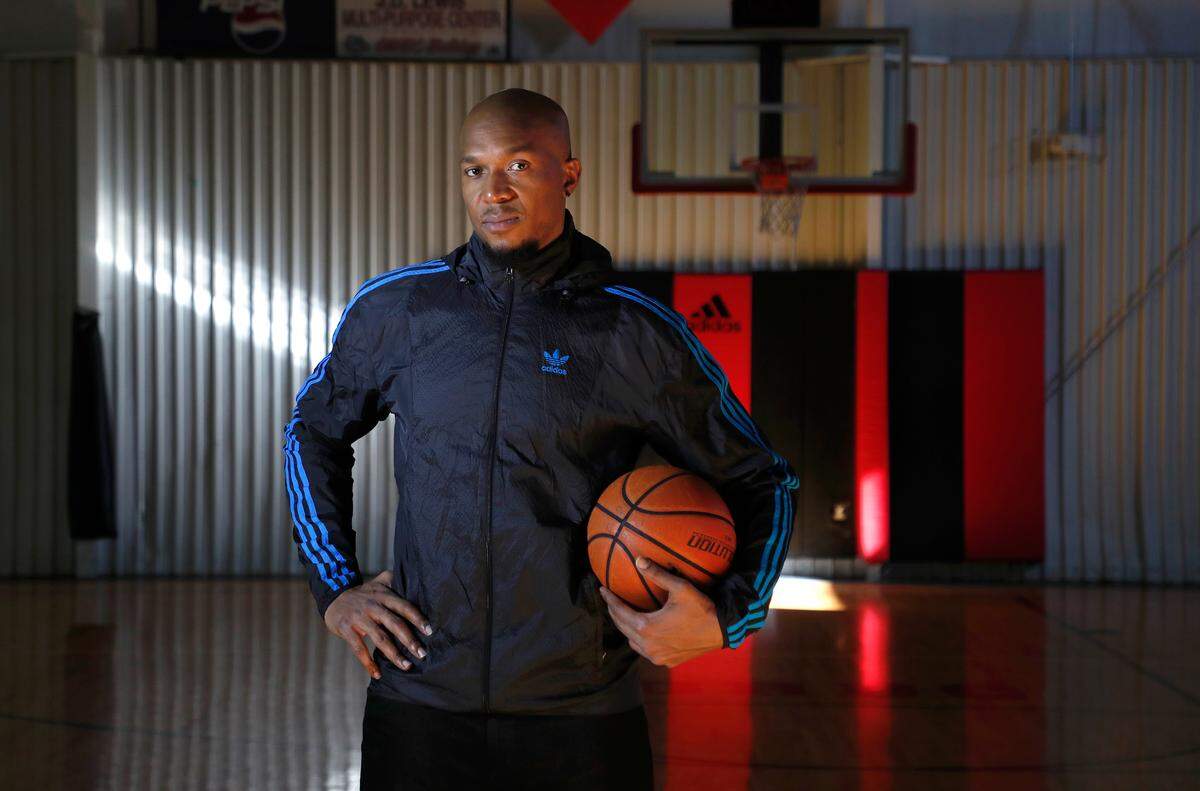
1. David West, HBL chief operating officer
2. Mack Brown, North Carolina football coach
3. Heather O’Reilly, recently retired soccer legend
4. Mike Krzyzewski, Duke men’s basketball coach
5. Sebastian Aho, Carolina Hurricanes center
6. Karen Shelton, UNC field hockey coach
7. Terrence And Torry Holt, entrepreneurs and philanthropists
8. Akshay Bhatia, teenage professional golfer
9. Wes Moore, N.C. State women’s basketball coach
10. North Carolina politicians (really!)
The 2018 Triangle 10
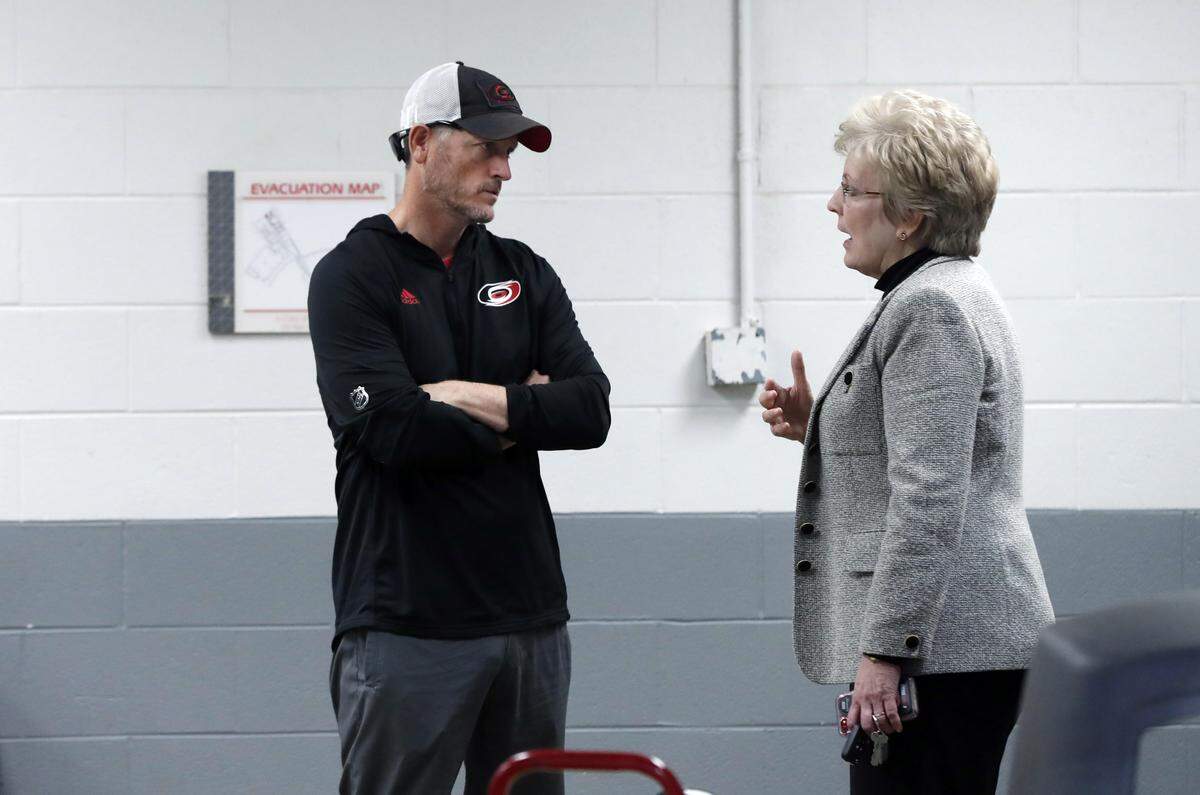
1. Debbie Yow, N.C. State athletic director
2. Jordan Bazant, agent
3. Zach Maurides, Teamworks founder
4. Zion Williamson, Duke basketball player
5. Tom Dundon, Carolina Hurricanes owner
6. Ezra Baeli-Wang and 292 (and counting) other UNC athletes
7. Nina King, Duke deputy athletic director
8. McCall Zerboni, NC Courage midfielder
9. Mack Brown, North Carolina football coach
10. Que Tucker, NCHSAA commissioner
The 2017 Triangle 10
1. Scott Dupree, Greater Raleigh Sports Alliance executive director
2. Rick Evrard, Bond, Schoeneck & King lawyer
3. Kevin White, Duke athletic director
4. George Williams, St. Augustine’s athletic director and track coach
5. Stephen Malik, North Carolina FC/NC Courage owner
6. Mike Krzyzewski, Duke men’s basketball coach
7. Ingrid Wicker McCree, N.C. Central athletic director
8. Thomas Dundon, prospective Carolina Hurricanes owner
9. Debbie Yow, N.C. State athletic director
10. Dwayne West, Garner Road Basketball Club executive director