Reese Brantmeier was only 16 and had no idea where she would eventually end up going to college when her battle with the NCAA began.
As she advanced through qualifying for the U.S. Open that summer, she knew if she wanted to remain eligible to play in college, she would only be able to keep enough of the money she won to cover her expenses. So her mother bought a receipt scanner to track everything they spent and avoid running afoul of the rules.
A year later, when she was wrestling with the NCAA over her eligibility as a freshman at North Carolina — a frustrating, opaque and infuriating process — the NCAA identified several items it deemed not to be “actual and necessary” expenses. The receipt scanner, purchased specifically to try to follow NCAA guidelines, was one of them.
She knew from the start she wasn’t going to be able keep all of the $49,000 she won, but she also had to make a $5,100 donation to charity at the NCAA’s behest just to be eligible for the spring semester of her first season at UNC — and helped the Tar Heels win the national title after an epic, year-long battle with N.C. State.
So when a team of lawyers approached Brantmeier last spring to see if she’d be willing to be the lead plaintiff in a lawsuit against the NCAA to change that rule and allow athletes like her to keep the prize money they win in non-NCAA events, there wasn’t much hesitation on her part.
“It was definitely scary at first, but I very firmly believe that this is something that needs to get changed, because I know how frustrating the process can be and how much it negatively impacted me,” Brantmeier said. “Losing that semester was so difficult. So if I can help one person that comes behind me not to have to go through that, that would be amazing. I know for a fact it would be a lot more than one, and across all sports, too.”
For both her tennis prowess and legal courage, Brantmeier claims the top spot in the Triangle Ten, the News & Observer’s annual list of the most influential people in Triangle sports, compiled by N&O sports columnist Luke DeCock with input from other staff members, focusing on impact in 2024 specifically.
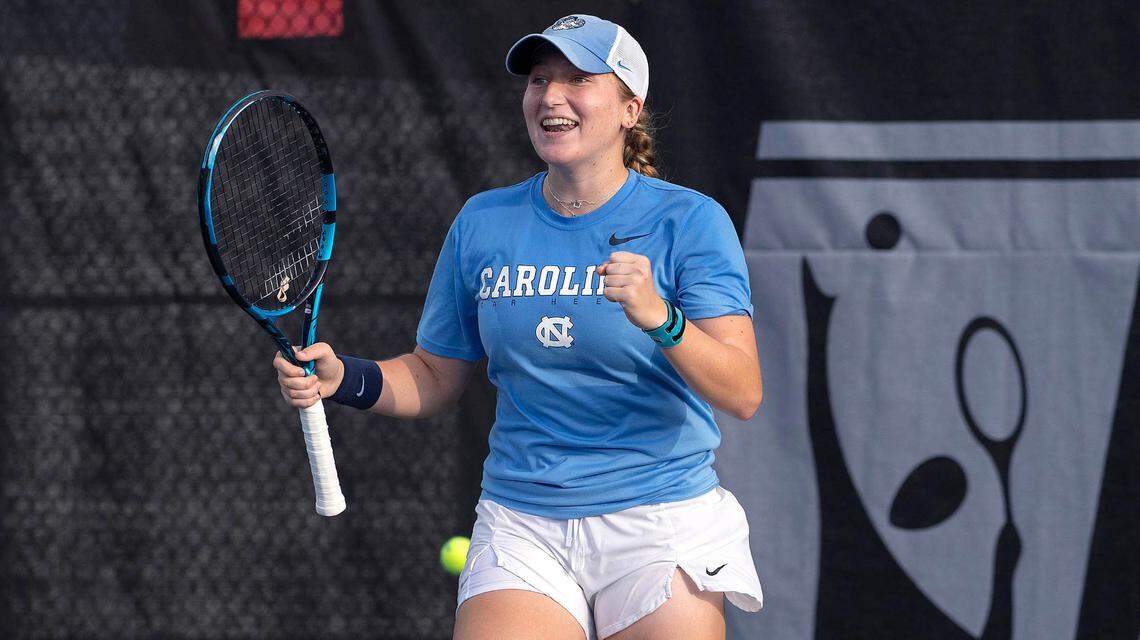
University of North Carolina women’s tennis player Reese Brantmeier. Jeffrey A. Camarati UNC Athletic Communications
It’s a rule that doesn’t seem to make a lot of sense at a time when schools themselves will be paying athletes millions of dollars and Olympic athletes are allowed to keep medal bonuses without compromising their eligibility, but the NCAA seems determined to fight for this anachronism when it has let others go.
And if losing a semester to NCAA bureaucracy wasn’t bad enough, Brantmeier tore cartilage in her right knee in February and has undergone two surgeries over the past eight months. After winning the fall ITA national championships in singles and doubles, Brantmeier didn’t get a chance to help defend UNC’s team NCAA title or pursue individual glory last spring — although her name is the latest on the lengthy list of North Carolina all-Americans that hangs over the practice court.
“I definitely felt like I was at my peak in college,” Brantmeier said. “I was part of the No. 1-ranked doubles team. I was ranked No. 2 in singles. I was really feeling like I was in a good spot to help the team. It was definitely frustrating.”
She’s hoping to be healthy this spring, and if she can recapture her form of a year ago when she returns to the court, she’ll have as good a chance as anyone to win a national title — and that may not even be the biggest fight she’s facing.
Brantmeier’s career has been defined by her battles with the NCAA. Her initial eligibility was held up not only over the receipt scanner, but NCAA objections to things like her mother’s half of the hotel room they shared and having her racket restrung, adding insult to the injury of having to give back the money she won. She said she got no help from the NCAA when she was 16, trying to navigate complex rules that could affect her college career.
Tennis players who have yet to enroll in college can keep $10,000 in prize money per year, but beyond that, the only information the NCAA would give her was a copy of the relevant bylaw — and then held that lack of knowledge against her when she enrolled at North Carolina and was declared ineligible.
“It was not very supportive of the athlete,” Brantmeier said. “It seemed like it was more of an interrogation than something that they wanted you to be able to succeed at. ... I was willing to sacrifice a lot of prize money because I was very much committed to going to college. There was no part of me that would have wanted to sacrifice that. So the fact that I had that willingness, and we were asking for guidance and not getting any, and then being penalized for it, was frustrating. It’s crazy.”
All of it seemed like an artifact of a bygone era of amateurism. If she could get paid for doing advertisements or giving lessons and retain her eligibility, if the school could share revenue with her under the terms of the House settlement, why should she have to forgo money she fairly earned?
A better question may be, in the wake of NIL and Alston and House and all the NCAA’s other legal losses, why is it fighting this one so vigorously?
A quick resolution seems unlikely. The NCAA this fall successfully beat back her request for an injunction and her attempt to make the lawsuit a class action representing all college athletes. The suit was re-filed in November on behalf of tennis players along with a new co-plaintiff, Texas’ Maya Joint, and the two sides are negotiating a trial calendar that stretches into 2026.
The NCAA already allows Olympic athletes to accept medal bonuses from their national governing bodies, in some cases in the millions of dollars. In the NIL era, nickel-and-diming a tennis player or golfer over their parents’ travel expenses seems like the old bureaucracy gone wild. It’s especially pertinent during this glorious era of Triangle tennis, when Brantmeier’s former UNC teammate Fiona Crawley and N.C. State’s Diana Shnaider both had to forfeit prize money as well.
NCAA president Charlie Baker declined a request to comment. The NCAA provided this statement instead:
“The NCAA believes change in college sports is long overdue and is implementing significant reforms, such as, the expansion of core guaranteed benefits for student-athletes that include health insurance, scholarships, academic counseling, mental health support and career preparation. The Association is also advancing a landmark settlement that will allow schools to deliver direct financial benefits to student-athletes. However, there are some issues the NCAA cannot address alone, and the Association looks forward to working with Congress to make needed changes in the best interest of all student-athletes and college sports.”
If it seems like there’s been a wave of lawsuits against the NCAA, it’s because it’s apparent that’s the only way to get an organization paralyzed by indecision to change. The NCAA’s inability to adapt has left the aggrieved no other option.
All of the initiative for change continues to come from outside the NCAA. State legislatures pushed NIL onto the NCAA. The House settlement, to resolve a lawsuit brought by former college athletes, will force schools to share profits with the athletes who generate them. A Canadian major-junior hockey player sued over the rule that made those players ineligible for NCAA hockey because some players in those leagues had signed NHL contracts, and the NCAA buckled and changed the rule before going to court.
“It’s unfortunate that lawsuits seem to be the way to resolve things now, as opposed to other ways that we’ve done things in the past,” North Carolina athletic director Bubba Cunningham said. “But whether it’s conferences, schools, individuals, lawsuits are the way people get things done. When I was at Tulsa, there was a guy in the law school I got pretty friendly with, and he said there’s two ways to change things. One is through legislation, the other is litigation. And we’re seeing much more litigation now than legislation.”
Brantmeier will almost certainly be a professional by the time anything is decided in her case, but she knows from her own experience how valuable that prize money might be to other athletes. It could help someone pursue a pro career who might not otherwise have the finances, or support charitable endeavors like Brantmeier’s own — to restore two dilapidated tennis courts in her small Wisconsin hometown of Whitewater after she had to drive an hour each way, every day, to practice, on her way to becoming the No. 1 tennis recruit in the country. The Reese Brantmeier Project has raised a little more than half of the $200,000 needed.
“I kind of knew going in that this was probably not something that was going to be changed by my time in college, so I had completely embraced that before I even started this process,” Brantmeier said. “I definitely believe that it will continue hurting tennis players and people in other sports that are earning money. As long as it takes, I’m going to stay in it.”
There is certainly a valid argument that the last divide between college and professional sports is being paid for winning an event. As the NCAA’s response to Brantmeier’s lawsuit argued, “the actions of the NCAA do not unreasonably restrain trade, but are lawful, justified, and pro-competitive by preserving the distinction between college and professional sports.”
But that distinction also seems hopelessly idealistic and shockingly hypocritical at a time post-House when colleges themselves will be compensating athletes for their services, as much as $23 million per school per season.
“At this level of athletics,” Brantmeier said, “nothing is truly amateur.”
If a college tennis player or golfer or bowler is good enough to compete successfully at the professional level, why ask them to give up their eligibility to collect their winnings when Brantmeier’s own university committed to $13 million in direct payments to football players to entice an NFL coach to run a self-described “professional program?”
Why financially penalize some athletes for being being good at their sport when their classmates are being rewarded for it by their own school?
What distinction is actually being preserved?
That’s the question Brantmeier is asking. The NCAA won’t, or can’t, answer.
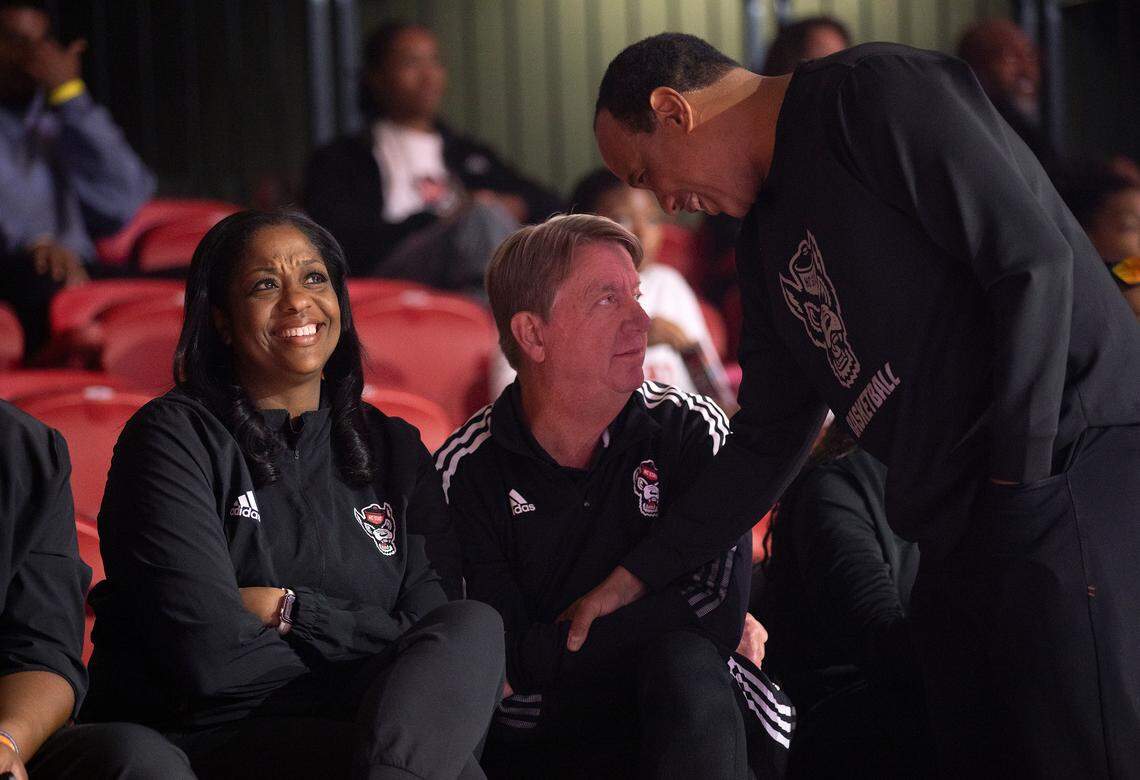
N.C. State men’s basketball head coach Kevin Keatts, right, has a word with women’s basketball head coach Wes Moore during the Primetime with the Pack preseason event on Friday, Oct. 25, 2024, at Reynolds Coliseum in Raleigh, N.C. Kaitlin McKeown kmckeown@newsobserver.com
2. (tie) Kevin Keatts and Wes Moore, NC State basketball coaches
At a school that treasures its basketball tradition, Keatts and Moore became the first coaches to live up to the standards set by their beloved predecessors, Jim Valvano and Kay Yow. Keatts led the men’s basketball team on a historic run, not only winning five games in five days for N.C. State’s first ACC championship since 1987, but following that with a run to N.C. State’s first Final Four since 1983, beating North Carolina and Duke (twice) along the way. An up-and-down regular season led to an unforgettable postseason.
Moore already had three ACC titles to his credit and came within a road overtime of the Final Four in 2022, but he got over the hump for the first time since Yow in 1998 with a team that entered the season without the lofty expectations of the recent past yet finally delivered that long-awaited Final Four trip, making N.C. State the first school to send both basketball teams to the third weekend since 2014. It’s been a rougher fall for both teams, but the banners aren’t coming down either way.
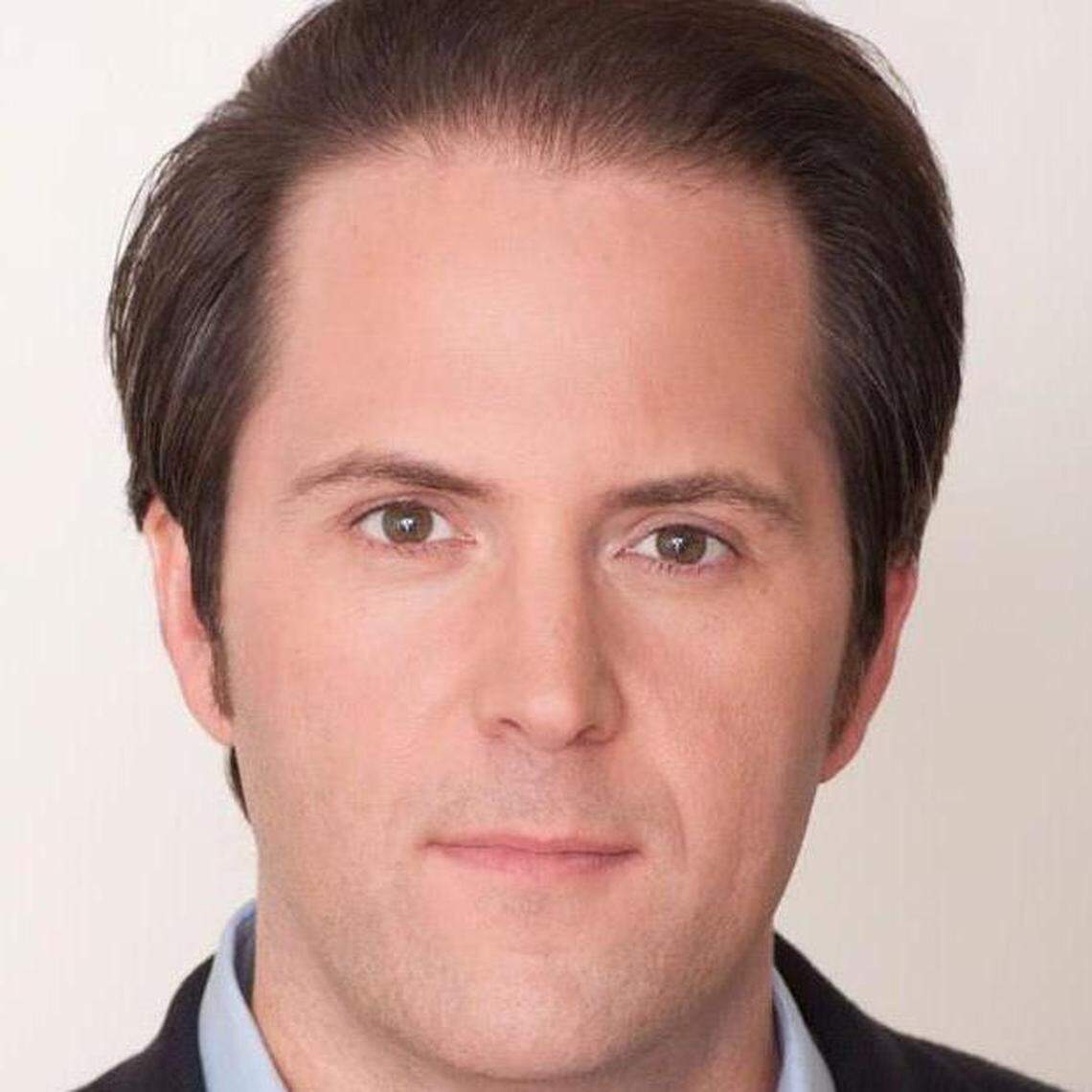
Carolina Hurricanes general manager Eric Tulsky addresses media questions at press conference June 19, 2024, at PNC Arena. Chip Alexander
4. Eric Tulsky, Hurricanes general manager
Tulsky was placed in a difficult position when Don Waddell departed for the Columbus Blue Jackets. Not only was the former research chemist the first analytics guru promoted into the big chair in the NHL, no small matter in a league that’s still being dragged into the 21st Century, but expiring contracts and salary-cap concerns portended a tumultuous offseason.
But Tulsky invested wisely and hit on all of his free-agent acquisitions, launching the Hurricanes into the new season without missing a beat. The goaltending situation remains a concern, but the state of the roster is far better at this point than anyone might have envisioned in June, a credit to Tulsky’s preparation for the job.
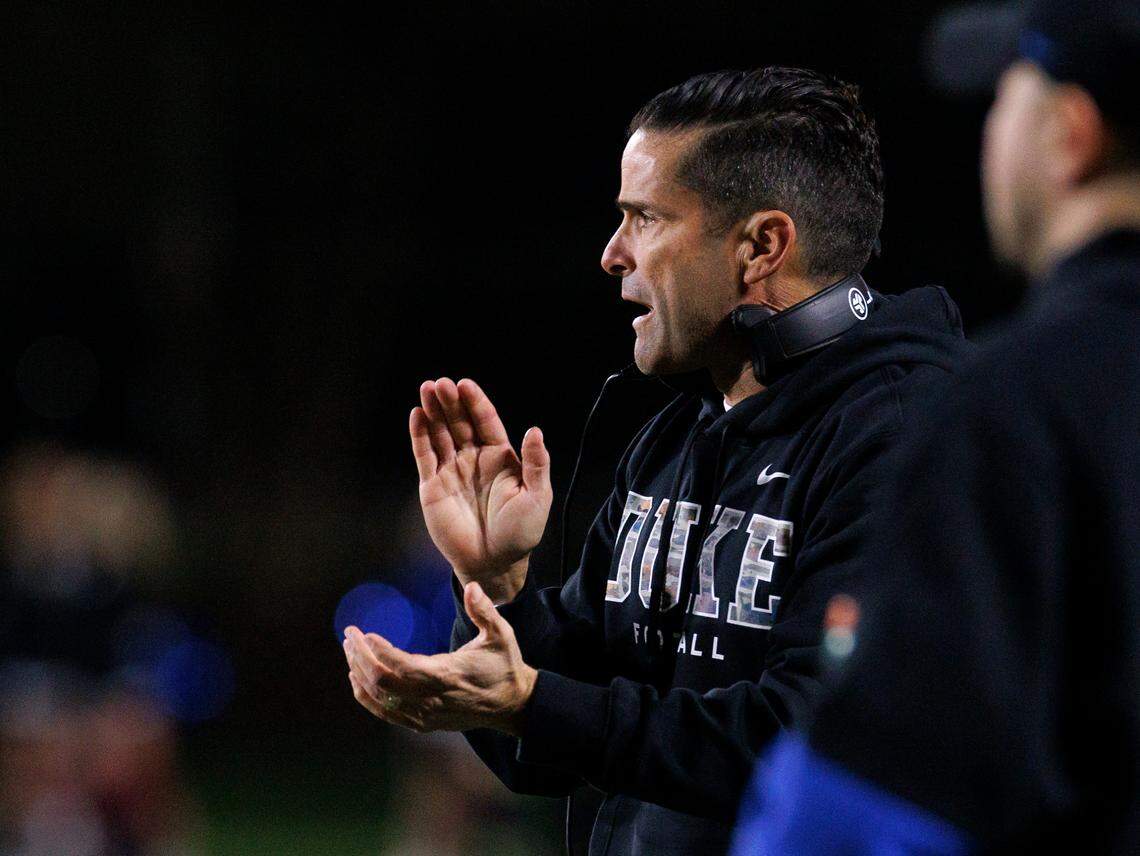
Duke head coach Manny Diaz gives instructions from the sidelines during the first half of the Blue Devils’ 23-16 win over Florida State on Friday, Oct. 18, 2024, at Wallace Wade Stadium in Durham, N.C. Kaitlin McKeown kmckeown@newsobserver.com
5. Manny Diaz, Duke football coach
Unlike Mike Elko, Diaz didn’t inherit a bunch of talent that just needed to be coached up and pushed in the gym. (And take nothing away from what Elko did with that talent.) Diaz found a lot less to work with when he arrived and somehow in his first season took Duke football to heights even Elko did not.
It was a masterful coaching job, from massaging the portal — even getting a former junior-college player into Duke — to building a defense that nearly made up for any weaknesses on offense. The Blue Devils won the state title and were a play or two away from beating SMU. No one in the ACC did a better job than Diaz this fall.
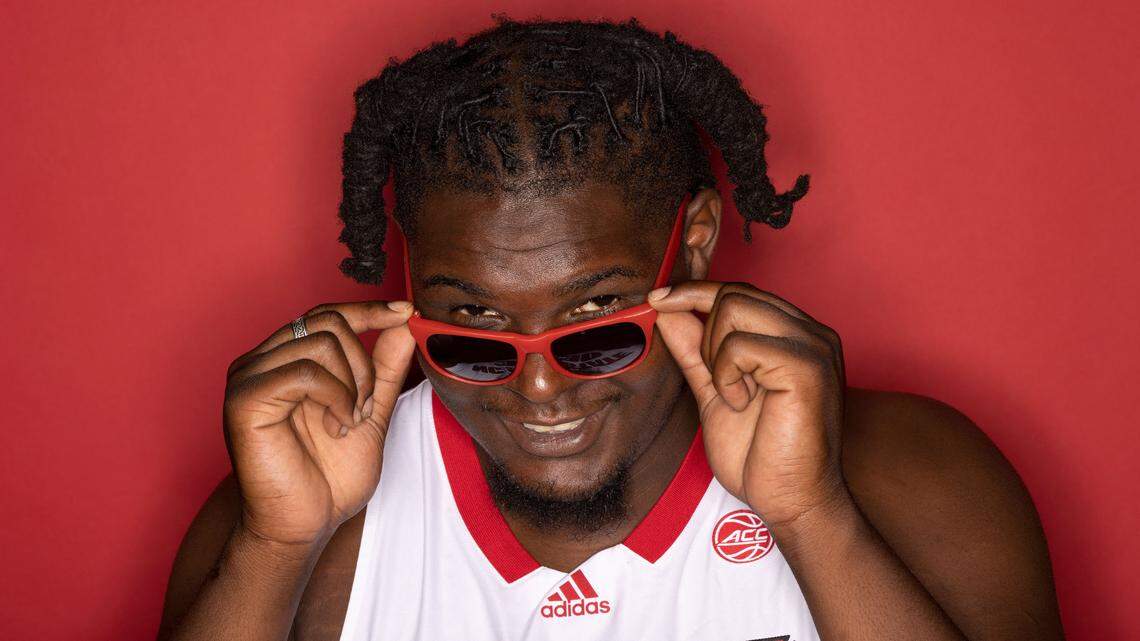
N.C. State’s D.J. Burns poses for a portrait during the Wolfpack men’s basketball media day on Thursday, Sept. 21, 2023, in Raleigh, N.C. Kaitlin McKeown kmckeown@newsobserver.com
6. DJ Burns, NC State basketball star
Over the space of five weeks in March and April, Burns went from occasionally frustrating big man to Biggest Man on Campus. In better shape and brimming with confidence, Burns became the unstoppable fulcrum of the Wolfpack offense during its run to the ACC title and Final Four, posting up and backing down opponents from the 3-point line and slinging passes to open teammates while embracing the celebrity that enveloped him. A big dude with a big personality, Burns shined in the limelight.
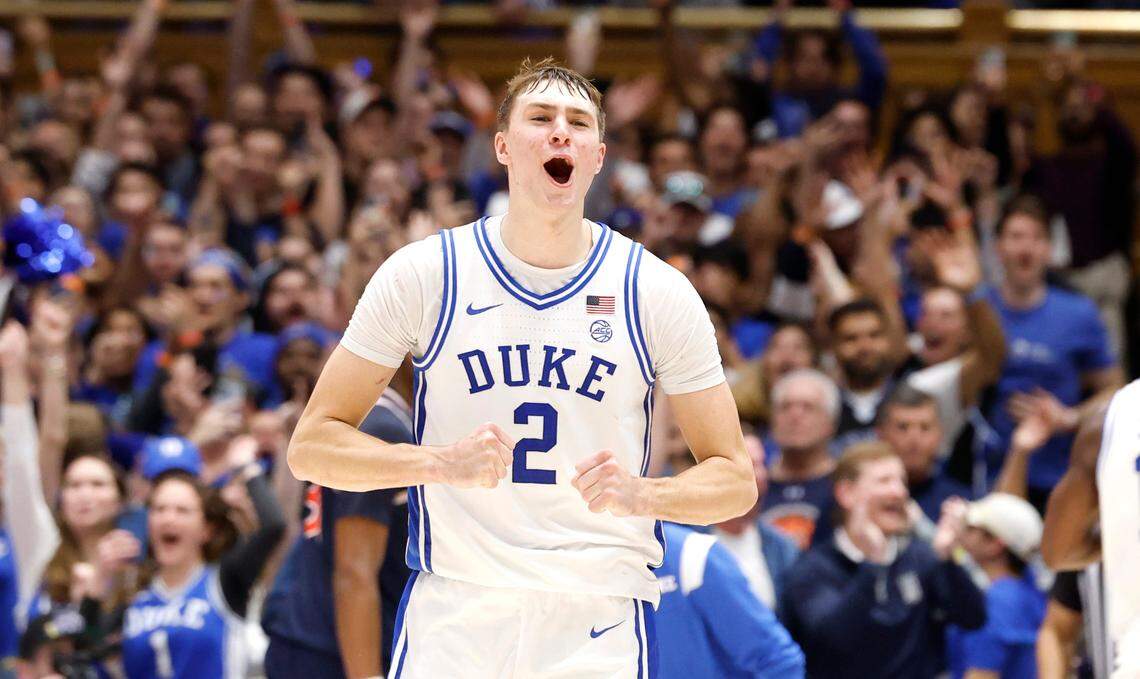
Duke’s Cooper Flagg (2) celebrates as time runs out in Duke’s 84-78 victory over Auburn at Cameron Indoor Stadium in Durham, N.C., Wednesday, Dec. 4, 2024. Ethan Hyman ehyman@newsobserver.com
7. Cooper Flagg, Duke basketball star
Of all the one-and-dones who have done a basketball internship at Duke en route to the NBA, none came in with this kind of hype or their own (non-Nike) shoe deal or their own agency and marketing team. Flagg is the epitome of the modern college-basketball star, fully marketed and branded, prepackaged for the NBA, squeezing every nickel out of college basketball in an inversion of the way it’s been for decades.
His gifts may be a little too subtle to shine at this level, without the explosiveness of a Zion Williamson or the bucket-getting prowess of a Paolo Banchero, but NBA teams know they’re getting an elite passer and defender who should grow into the rest of his game.
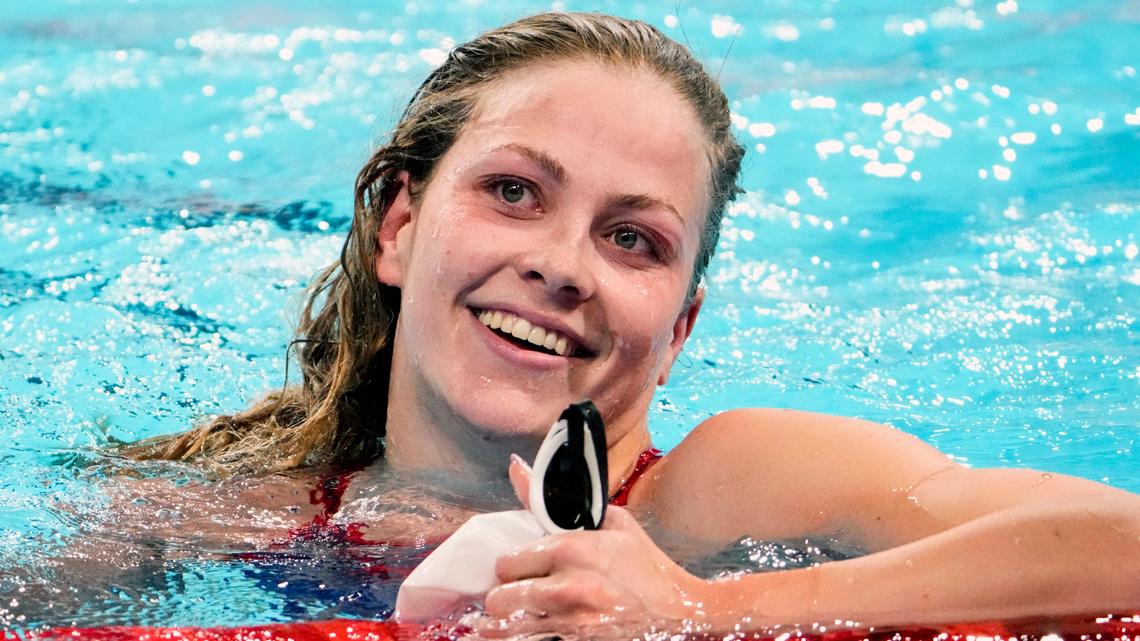
Katherine Berkoff in the women’s 100-meter backstroke preliminary heats during the Paris 2024 Olympic Summer Games at Paris La Défense Arena. Rob Schumacher USA TODAY Sports
8. Katherine Berkoff, NC State swimmer
After missing the U.S. team for the Tokyo Olympics by fractions of a second, Berkoff left no doubt for Paris and became the first female Wolfpack swimmer to medal at the Olympics when she claimed bronze in the 100-meter backstroke before adding gold in the 400-meter medley relay.
Berkoff closed out her N.C. State career with her fifth straight ACC title in that event and also won one other ACC title, three NCAA championships and was a 30-time all-American. She joined former Wolfpack swimmer Ryan Held — who won his second relay gold medal — on the podium in Paris.
On Location chief operating officer Scott Jernigan runs what has become the world’s top sports hospitality company, selling ticket, hotel and VIP packages to the Super Bowl, Final Four, Olympics and 2026 World Cup. Courtesy On Location
9. Scott Jernigan, On Location COO
Under various names — Go Tickets, Premiere Global Sports, PrimeSport and now On Location — and through several acquisitions, Jernigan has run one of the top providers of hospitality packages (tickets, hotels, VIP experiences) to big sports events out of Raleigh for more than 20 years. Already the primary hospitality partner for the Super Bowl, Olympics, Final Four, Ryder Cup and many other global events, On Location was selected by FIFA in June to sell packages to the 2026 World Cup, to be held in the United States, Mexico and Canada.
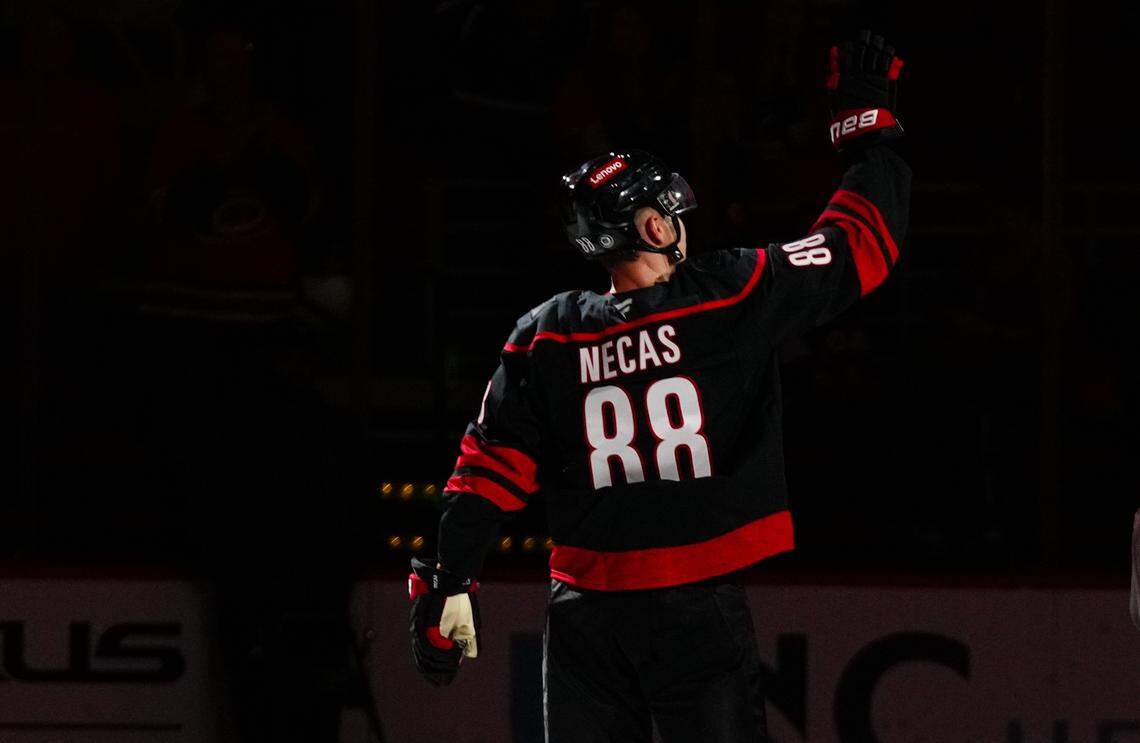
Nov 5, 2024; Raleigh, North Carolina, USA; Carolina Hurricanes center Martin Necas (88) comes out onto the ice after their victory against the Philadelphia Flyers at Lenovo Center. Mandatory Credit: James Guillory-Imagn Images James Guillory James Guillory-Imagn Images
But after winning a world championship with Czechia over the summer, Necas hasn’t looked back, becoming the first Hurricanes player to lead the NHL in scoring at any point in the season in 18 years. The 25-year-old was always capable of this, and he’s a big reason why the Hurricanes haven’t missed a beat.
Five to watch in 2025
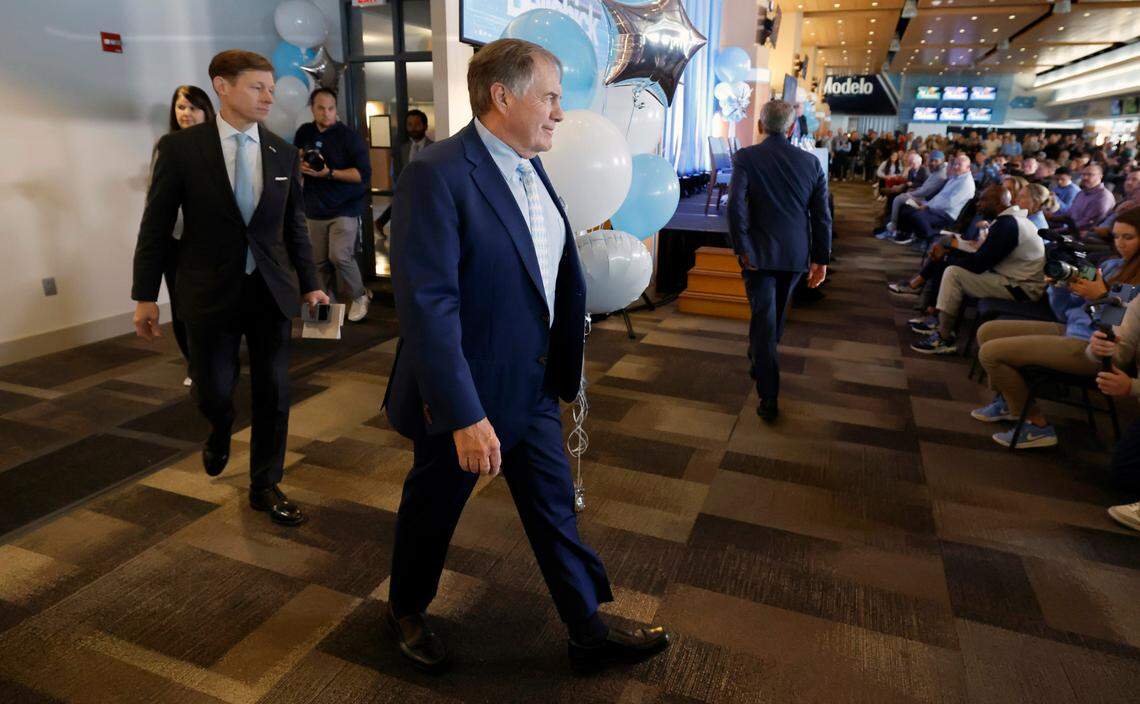
New North Carolina head football coach Bill Belichick enters the press conference room at the Loudermilk Center for Excellence at UNC in Chapel Hill, N.C., Thursday, Dec. 12, 2024. Ethan Hyman ehyman@newsobserver.com
“It’s a huge risk,” athletic director Bubba Cunningham acknowledged, as North Carolina increases its investment in football by 30 percent to more than $60 million, with the additional money going to coaches, staffing — including a general manager making $1.5 million a year — and players. The hope is that a more competitive, more compelling football program will offer the return on investment needed to support every other athletic program in an era when athletes will benefit from revenue-sharing. Belichick, famously focused on football, is actually carrying an entire university on his shoulders.
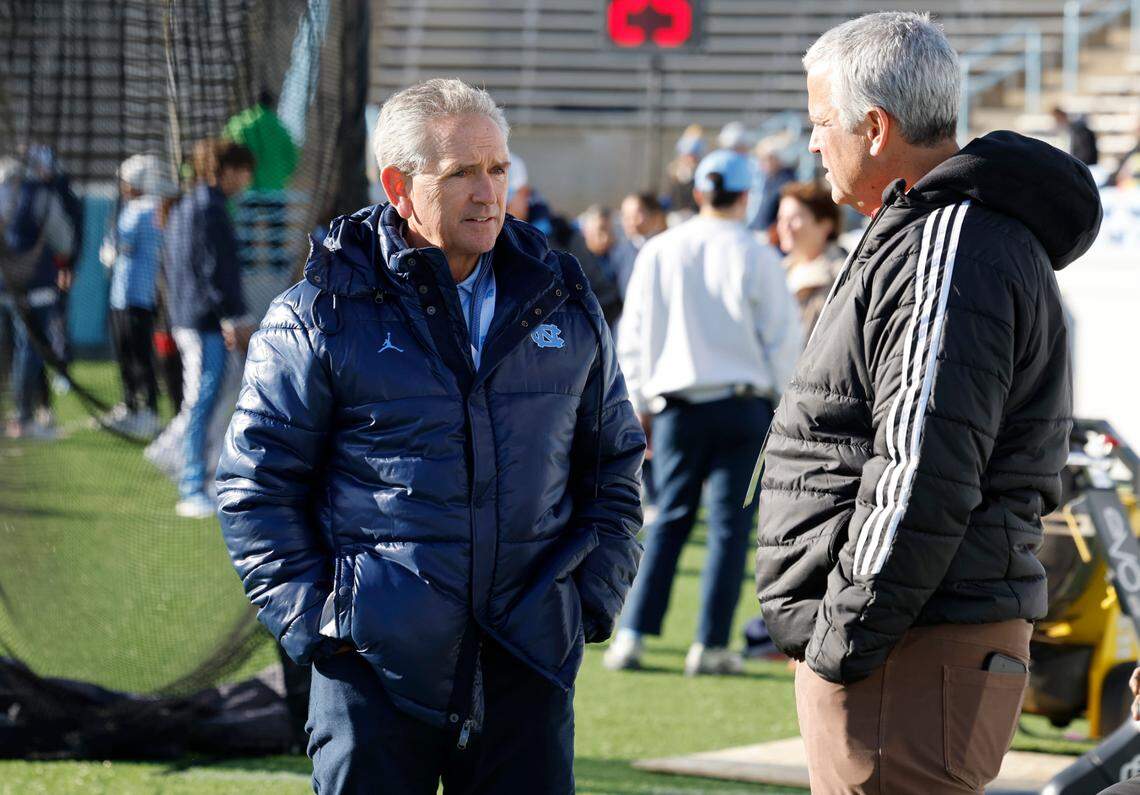
North Carolina athletic director Bubba Cunningham talks with N.C. State athletic director Boo Corrigan before N.C. State’s game against UNC at Kenan Stadium in Chapel Hill, N.C., Saturday, Nov. 30, 2024. Ethan Hyman ehyman@newsobserver.com
2. Bubba Cunningham, UNC athletic director
Football and Belichick aside, as chairman of the powerful NCAA men’s basketball committee, Cunningham will be the one on CBS on Selection Sunday defending the field, and he’s already used his time in charge to make significant — and important — changes to the metrics used in the selection process.
At UNC, in addition to the Belichick experiment, he continues to explore options for the future of the Smith Center. But the real question is this: With all the criticism and backseat driving from UNC trustees, is he just hanging on to finish his term on the basketball committee before skipping town?
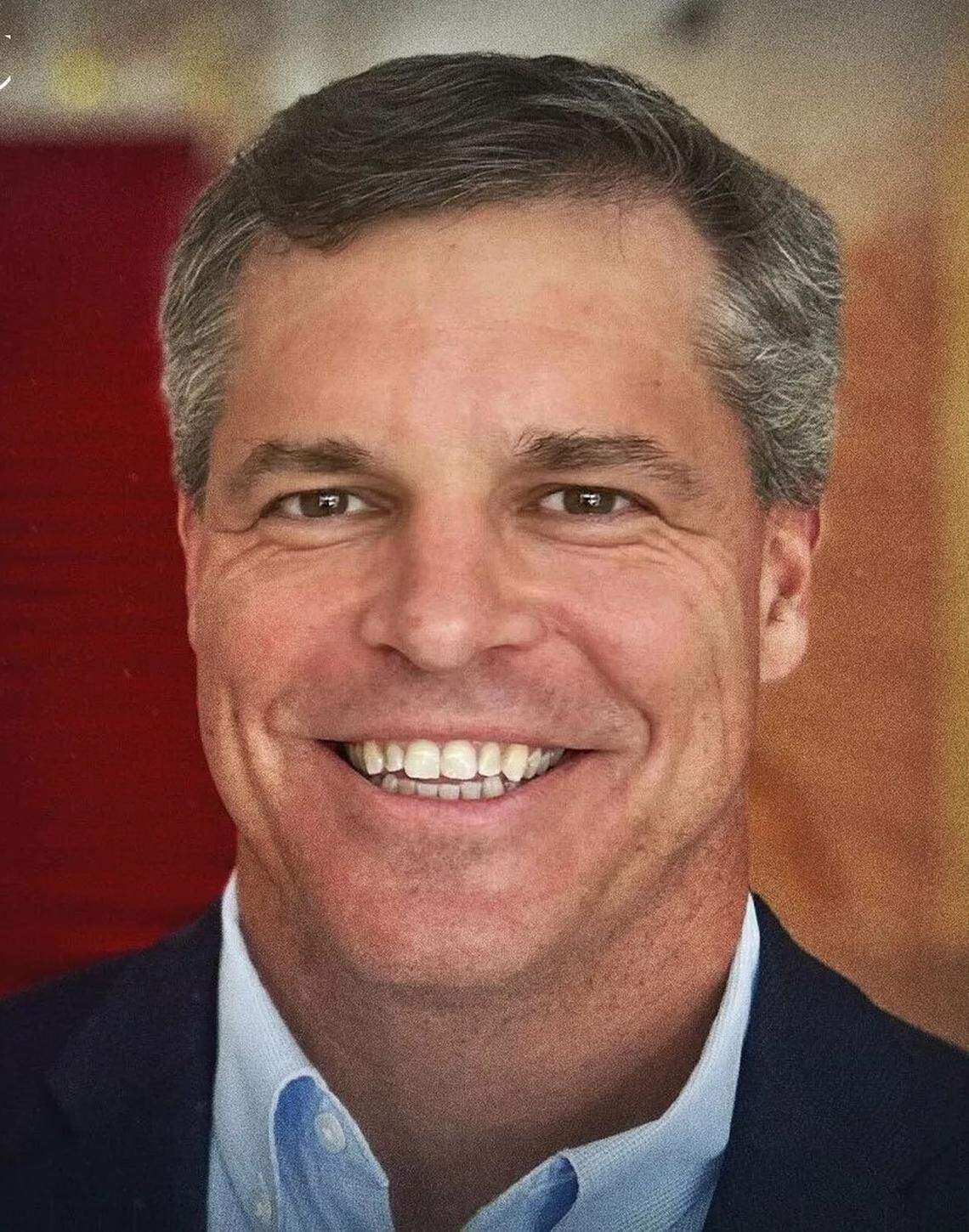
Brian Fork was named CEO of the Carolina Hurricanes in July. As CEO, Fork will help supervise all business units of Hurricanes Holdings, LLC, including the Hurricanes, PNC Arena, the mixed-use real estate development, planned sportsbook and other business interests of the company. Courtesy Carolina Hurricanes
3. Brian Fork, Hurricanes CEO
A former chief of staff for N.C. Senate leader Phil Berger who grew up in Raleigh, Fork arrived on Edwards Mill this summer at a time when the hockey team and its business operations are both in good shape. That will allow him to focus on bigger ambitions: Hurricanes owner Tom Dundon’s 80-acre, $1 billion multiuse development around the Lenovo Center, scheduled to break ground on the first phase in December 2025, the $300 million renovations to the arena itself and Dundon’s pursuit of an MLB franchise in North Carolina, whether that’s in Raleigh or Charlotte. Fork’s political connections should serve him well in all three endeavors.
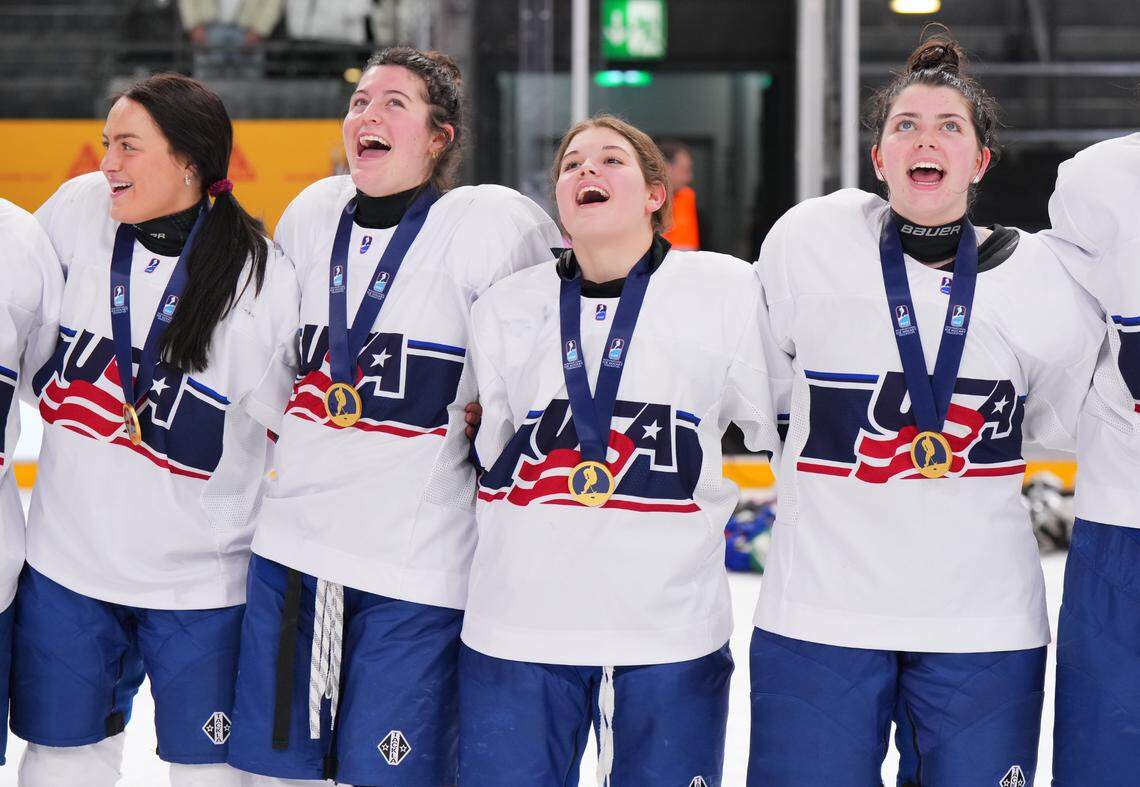
Mary Derrenbacher, second from right, sings the national anthem with USA Hockey teammates, from left, Kendra Distad, Kassidy Carmichael and Alanna Devlin after winning the gold medal over Czechia at the 2024 IIHF U18 Women’s World Championship in Switzerland in January. USA Hockey/IIHF
4. Mary Derrenbacher, hockey phenom
The youngest player on last winter’s World Women’s Under-18 champions at 15, Derrenbacher had shoulder surgery in June and hasn’t played this fall. But she tried out and made this year’s Under-18 team in a no-contact jersey, and expects to be a key player on the team again next month in Finland when the United States looks for a repeat.
If Derrenbacher can regain the momentum she had last spring, when she led Shattuck-St. Mary’s, her Minnesota prep school, to a USA Hockey national title, the sky remains the limit.
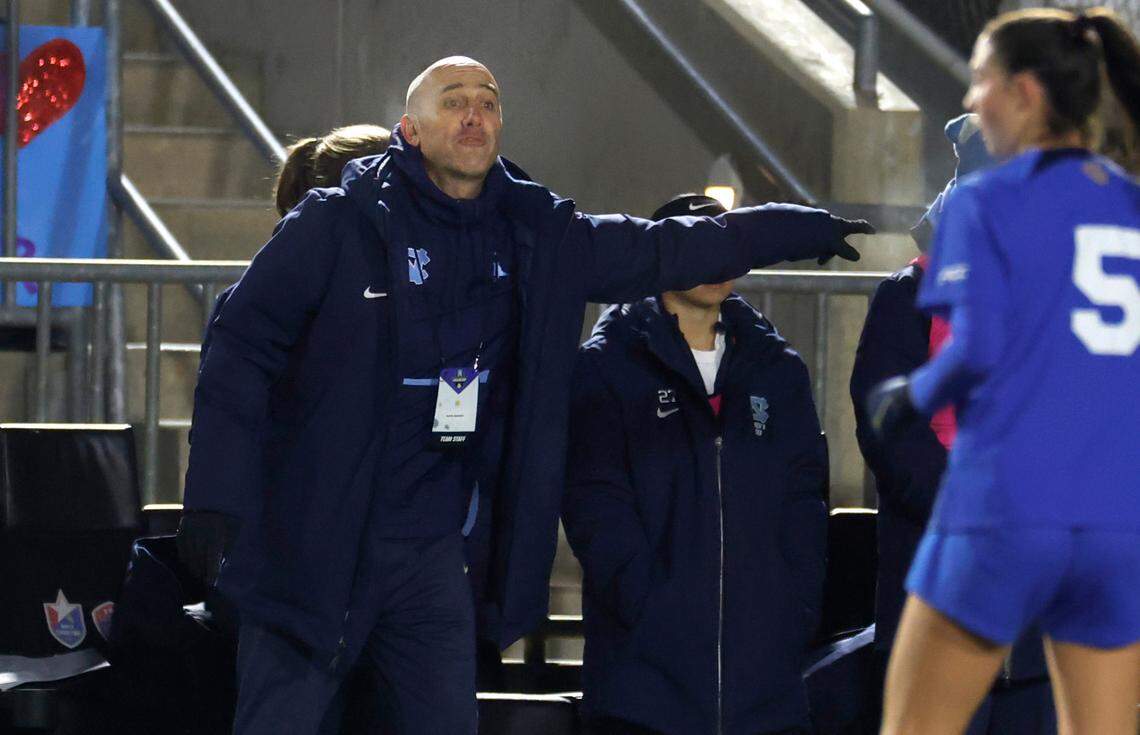
North Carolina interim head coach Damon Nahas instructs his team during the second half of UNC’s 3-0 victory over Duke in the semifinals of the 2024 Women’s College Cup at WakeMed Soccer Park in Cary, N.C., Friday, Dec. 6, 2024. Ethan Hyman ehyman@newsobserver.com
5. Damon Nahas, (no longer interim) UNC women’s soccer coach
It’s OK to say it: The Tar Heels, the most successful program in the history of the sport, had been slipping in Anson Dorrance’s final years, passed by Florida State as the ACC’s standard-setter.
Pushed into the job in August as interim coach with Dorrance’s sudden retirement, Nahas not only restored North Carolina’s usual standards, he led the Tar Heels to their first national championship in 12 years — and 23rd overall. He’s the second rookie North Carolina coach to win an NCAA title in as many years, following Erin Matson in field hockey. The “interim” on his title didn’t last long.
The 2023 Triangle 10
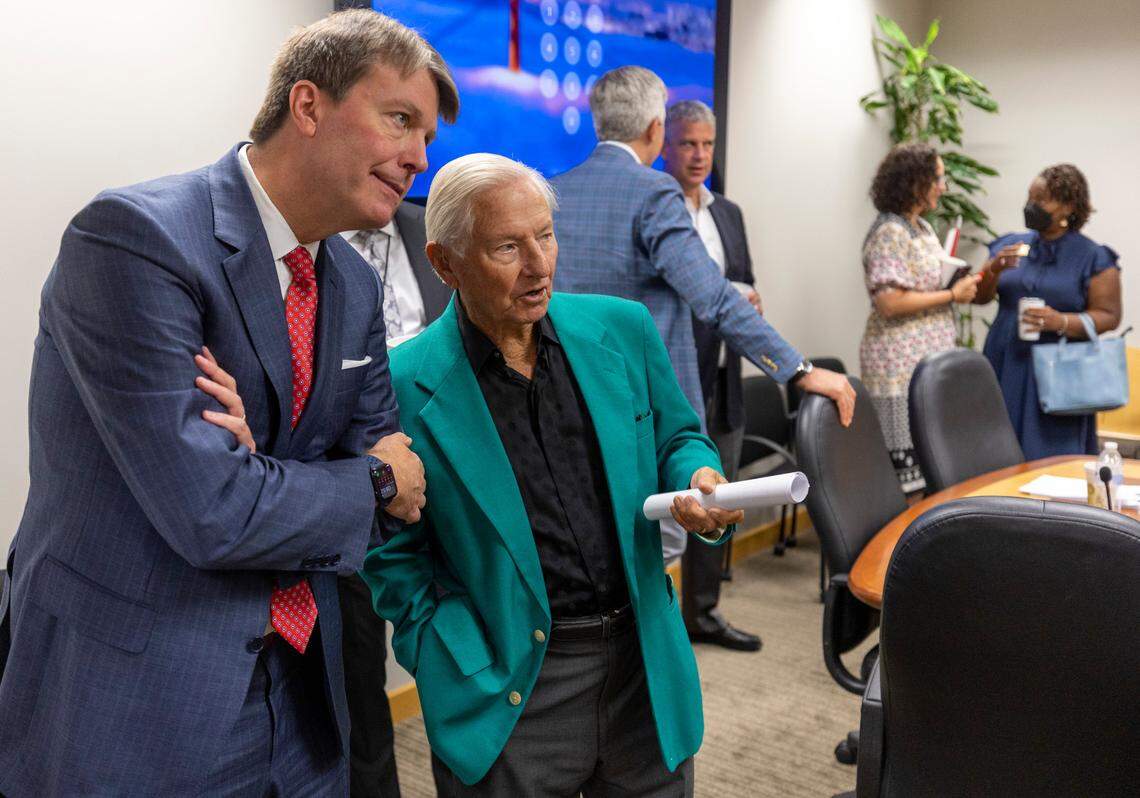
Centennial Authority Chairman Philip Isley talks with board member Wendell Murphy following their meeting on Tuesday, August 15, 2023 at PNC Arena in Raleigh, N.C. The Centennial Authority approved two agreements securing the long-term future of the Carolina Hurricanes in Raleigh, and development of the property around PNC Arena and Carter-Finley Stadium that would include housing, a hotel and a music venue. Robert Willett rwillett@newsobserver.com
9. Joe Giglio and Joe Ovies, local sports radio hosts
10. Laurie Henes, N.C. State women’s cross country coach
The 2020 Triangle 10
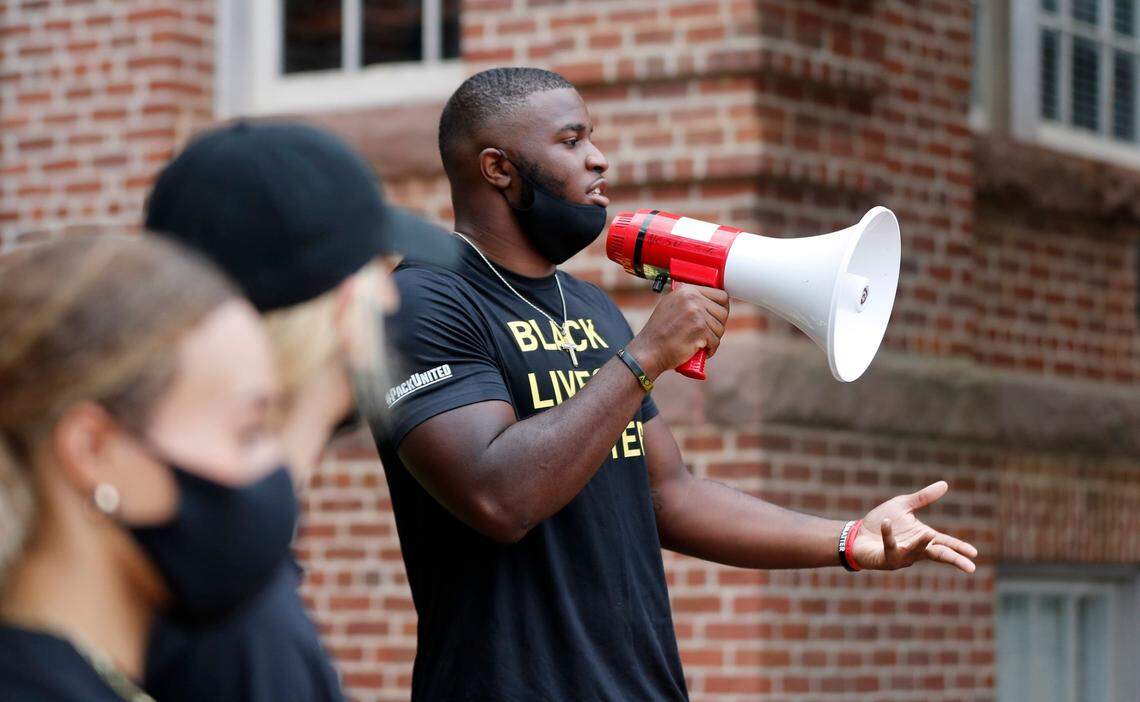
N.C. State’s Isaiah Moore speaks during a #PackUnited peaceful protest against racial and social injustice outside Holladay Hall on the campus of N.C. State Saturday, Sept. 12, 2020. Ethan Hyman ehyman@newsobserver.com
3. Nolan Smith, Duke men’s basketball director of operations
4. Dr. Mandy Cohen, NC secretary of Health and Human Services
5. Andrei Svechnikov, Carolina Hurricanes forward
6. Vincent Price, Duke president
7. LeVelle Moton, N.C. Central men’s basketball coach
8. Elissa Cunane, N.C. State center
9. Debinha, NC Courage midfielder
10. Chad Price, MAKO Medical CEO
The 2019 Triangle 10
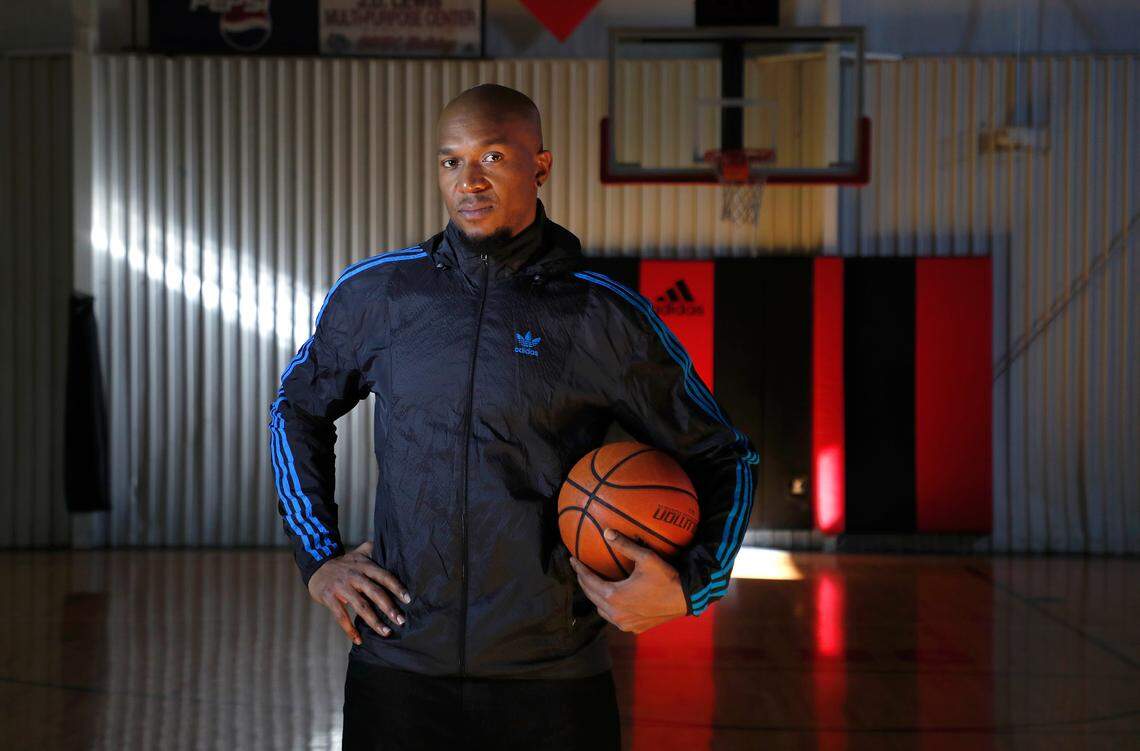
David West poses in the gym at the JD Lewis Center in Raleigh, N.C., Friday, Dec. 20, 2019. West is the chief operating officer and chief recruiter of the HBL, which starting in 2021 plans to create a collegiate-aged path to the NBA completely separate from the NCAA, Ethan Hyman ehyman@newsobserver.com
7. Terrence and Torry Holt, entrepreneurs and philanthropists
8. Akshay Bhatia, teenage professional golfer
9. Wes Moore, N.C. State women’s basketball coach
10. North Carolina politicians (really!)
The 2018 Triangle 10
N.C. State athletic director Debbie Yow, right, tops the 2018 Triangle Ten as the most influential person in sports in the Triangle. Carolina Hurricanes owner Tom Dundon, left, is fifth. Ethan Hyman ehyman@newsobserver.com
6. Ezra Baeli-Wang and 292 (and counting) other UNC athletes
7. Nina King, Duke deputy athletic director
8. McCall Zerboni, NC Courage midfielder
9. Mack Brown, North Carolina football coach
10. Que Tucker, NCHSAA commissioner
The 2017 Triangle 10
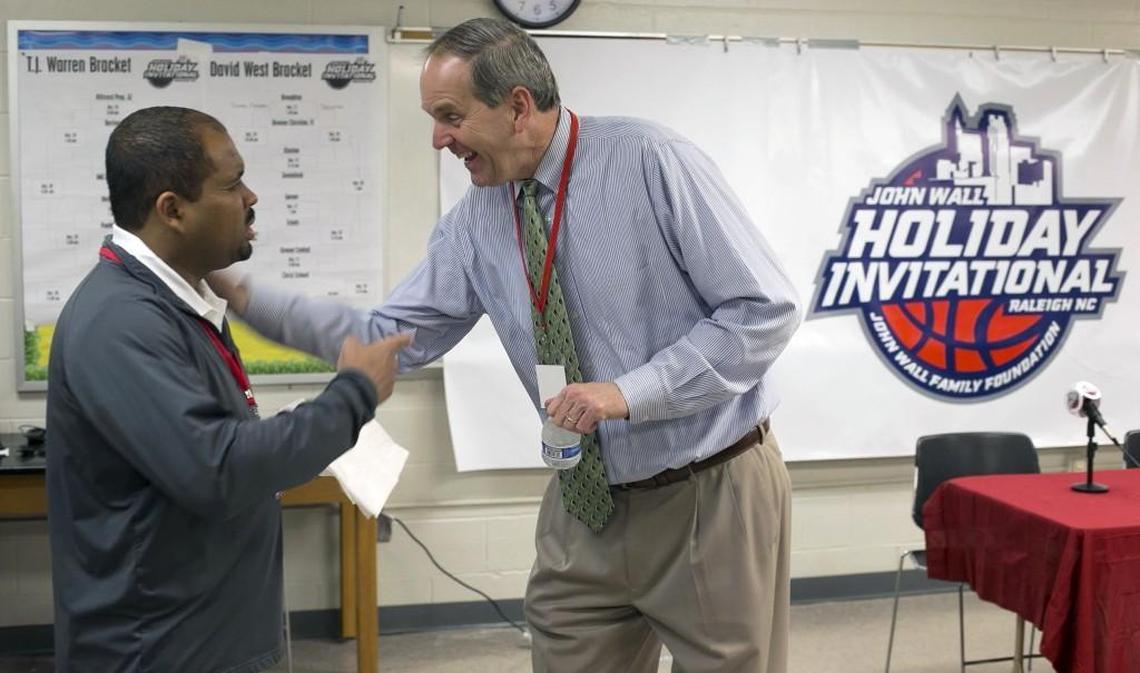
Scott Dupree, right, the executive director of the Greater Raleigh Sports Alliance, laughs with Alex Bass the sports information director for Cardinal Gibbons High School at the John Wall Family Foundation Holiday basketball tournament on Wednesday. Robert Willett rwillett@newsobserver.com