Part 3: The whirlwind and windfalls within Cary’s Epic Games as Fortnite lifted off
Fortnite ignites
The University of Maryland Baltimore County Retrievers had just shocked everyone. In the history of the NCAA men’s basketball tournament, a No. 16 seed had never defeated a No. 1 team. Then in March 2018, the Retrievers toppled the heavily favored University of Virginia Cavaliers by 20 points.
The Maryland players credited the upset to belief and teamwork. And to the most popular game on the planet.
“Before our (conference) championship game, we were playing Fortnite in the hotel,” one player said in an ebullient post-game interview. With teammates congregating in the locker room, another blurted out the team had also played the video game prior to tipoff that day.
“It’s in our blood,” the main interviewee added. Then he flashed his favorite Fortnite celebration.
Fortnite Battle Royale begins with players jumping out of a bus in the sky, but for months — if not years — after its release on Sept. 26, 2017, the North Carolina-made game didn’t come back to Earth.
It thoroughly permeated culture. Students performed popular Fortnite dances across school cafeterias and playgrounds. A livestream of rappers Travis Scott and Drake and NFL wide receiver Juju Smith-Schuster battling with the Fortnite internet personality Ninja smashed an audience record on the platform Twitch with 628,000 concurrent views. At trade shows domestic and international, Cary’s Epic Games was the star.
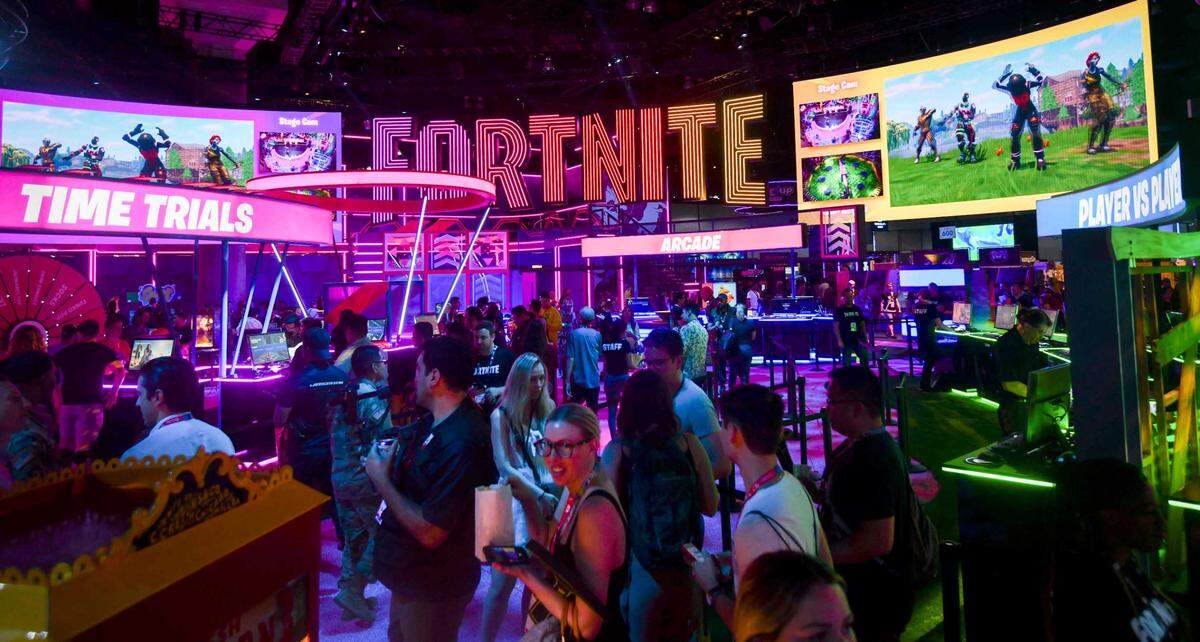
“It’s all kind of a blur, but every single show that we did was ridiculous,” said Ellen Liew, who as experientials director was tasked with expanding Epic’s global events strategy. “The booths were just always packed. We gave away T-shirts and beer, which was unheard of. We went from penny pinching to being told, ‘Just do whatever you need.’”
Fears the public might reject another battle royale game following PlayerUnknown’s Battlegrounds smash 2017 debut never materialized. On Nov. 6, six weeks after Battle Royale came out, Epic released a trailer celebrating Fortnite having 20 million players.
“I had never seen a game that was just constantly growing,” said Ed Zobrist, Epic’s head publisher. “By the end of the first week, it dawned on me that this was an unusual pattern.”
“We had a big TV in the (Fortnite) war room, and we started putting on random streamers playing it,” said Nick Cooper, a former Epic programmer who was then working at the company as a consultant. “There were a lot of really big ones jumping onto it and praising it pretty hard.”
When did Epic employees realize Fortnite would be different? Several pointed to the initial embrace by celebrity streamers. Others spoke of moments when their work stretched beyond the Cary headquarters.
“I saw a group of kids, probably in their early teens, talking to each other about a (Fortnite) minigun I helped design,” Cooper said. “OK, this is wild. Everywhere I go, I’m hearing about work.”
“At swim meets for my kids, you’d see Fortnite dances,” said Carlos Cuello, an engineering director at Epic. “It’s just surreal. Nothing prepares you for that kind of success.”
In November 2018, Epic confirmed that Fortnite had reached a staggering 8.3 million concurrent players. The game demanded a new level of attention, something the gaming journalist Charlie Hall never predicted when the original Fortnite: Save the World left him physically sore.
“It went from a game that I had reviewed and walked away from to a game where we had to dedicate weekly, if not daily, resources to covering,” said Hall, who writes for the website Polygon. “And to do otherwise would have been to ignore where our readership’s interests lie.”
Epic notches a victory royale
What ignited Fortnite?
Many highlight its digestible length. Battle rounds typically last about 20 minutes, making it ideal for both playing and viewing. “There’s kind of that aspirational element,” Cooper said. “It’s fun to watch someone be really good at a game, but then also being able to try some of that stuff on your own.”
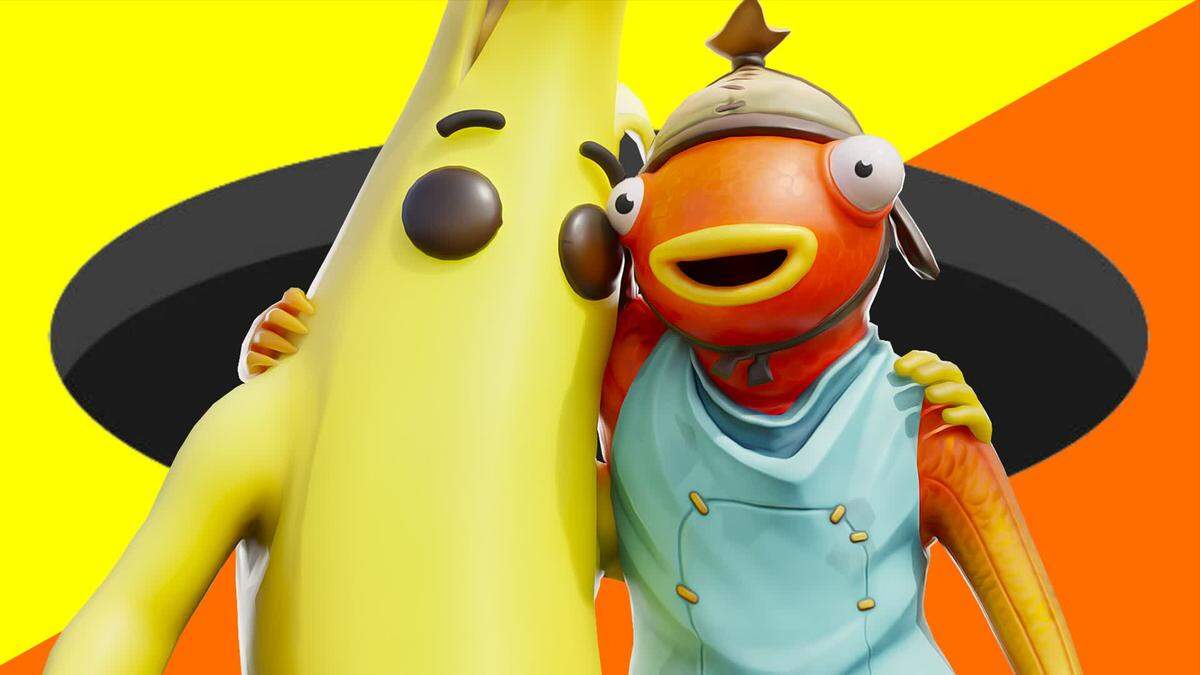
As a format, battle royale was trendy — PUBG and “The Hunger Games” were new and popular. Players entered each 100-person round on their own or teamed as a squad. When it came to violence, the game struck a balance by refracting legitimately forceful actions like shooting, axing and grenade tossing through a more colorful, irreverent lens. A player can wield a machine gun one moment and add shield protection by squeezing a mushroom the next.
The setting of Fortnite is stimulating, a diversity of environments contained on a 5.5 square kilometer map. Gameplay is kinetic with opponents erecting barriers in seconds to block incoming bullets flying in at all angles.
Plus, Fortnite Battle Royale was free to play, simple to load, and had a clear end point. When the second-to-last player is eliminated, a banner flashes with confetti declaring “Victory Royale.”
“It really opened up its audience to a younger generation of gamers by making the gunplay and the violence really cartoon-focused,” said Andrea Rene, a content creator and host of the video game podcast What’s Good Games. “Parents didn’t necessarily need to worry about the violence that you get in games like Call of Duty.”
Inside its North Carolina headquarters, Epic executives kept employees updated on this emerging success. In the fall of 2017, the entire staff was still small enough to pack into the company’s atrium to hear CEO Tim Sweeney speak.
“Those were always incredibly exciting times because you would hear directly from the horse’s mouth,” said material artist Bradford Smith. “It’s those moments when they’re finally announcing like concurrent players or retention numbers, and then eventually revenue and profit sharing, that was when you realized, ‘OK, there has been a seismic shift in the company and its focus and its future.’”
“(Tim) recognized that we’re onto something that was suddenly exploding at a really, really rapid pace, and he basically repurposed most of the company to get onto Fortnite,” Zobrist said.
Almost overnight, the Fortnite art department grew fivefold. When reassigning current employees wasn’t enough, the company hired across several teams. Nearly every week, Epic sent an email with the names of new employees that filled an entire page.
“They doubled, tripled the size of the HR department and recruiting and just got more people involved,” Zobrist added.
“At the start, we were just frantically working on the features for the next week, and there was no down time,” Cooper said. “I was doing a last-minute bug fix for this minigun, and on Facebook I see an ad for the minigun that I’m working on saying, ‘Coming in a few days.’ I was like, ‘No pressure or anything.’”
Keeping pace with Fortnite took a psychological toll on some workers. In an April 2019 article, a dozen Epic employees told Polygon they had routinely worked more than 70 hours a week after Fortnite’s release. In the video game industry, such intense overtime work is called “crunch.”
“Contract staff in Epic’s quality assurance and customer service departments spoke of a stressful and hostile working environment in which working overtime — while officially voluntary — was an expected service to the company,” Polygon reported.
In an email interview with the outlet, an Epic spokesperson acknowledged, “People are working very hard on Fortnite and other Epic efforts. Extreme situations such as 100-hour work weeks are incredibly rare, and in those instances, we seek to immediately remedy them to avoid recurrence.”
Most of the employees who spoke to The News & Observer were one-time Epic staff, and on the topic of crunch, they described demanding stretches of work as common across the industry. They said Epic was mindful of their workload and were internally motivated to keep going. But in contrast to contractors, these full-time employees had more personal and financial investment in Fortnite’s success.
“I think that a lot of people will talk about the long hours of work crunch that may have happened,” Zobrist told The News & Observer. “It’s hard for people that aren’t inside of a company like that to get the feeling for what it’s like when something explodes that fast, that rapid. It was so hot but also super exciting to work on. And to some degree, we had this feeling like, ‘Well, we’re kind of letting players down if we don’t do everything we can do to keep improving the game.’”
Fresh Prince, John Wick and Thanos
Whether they were working or overworking, doing so out of passion or pressure or both, Epic employees in Cary began turning out in-game products for Fortnite’s swelling global fanbase to buy. Fortnite Battle Royale debuted with no way to generate revenue, so in the subsequent months, Epic introduced an assortment of cosmetic items like outfits (known in the industry as skins) and dance celebrations (called emotes).
Staff were directed to create cosmetics, create a lot of them, and do so fast. Some ideas were outside the box, like a pink teddy bear head on a female body. Called the Cuddle Team Leader, it became one of the game’s best-known outfits.
And the dances?
Epic liberally drew inspiration from pop culture. The company was later sued by multiple individuals who had previously performed the dances that appeared in the game (though judges have generally sided with Epic). One lawsuit, later withdrawn, came from “The Fresh Prince of Bel-Air” actor Alfonso Ribeiro whose famous dance “The Carlton” was introduced as a Fortnite emote called “Fresh.”
In the beginning, Epic experimented with pop culture references in Fortnite without direct licensing. Take the outfit called The Reaper: With his jet-black beard and suit, he looks strikingly like the eponymous hired assassin in the John Wick movie franchise. The Reaper, like Wick, is a white man with a grave look who is prone to shoot.
But as Fortnite matured, Epic sought to incorporate authentic intellectual property. The Reaper remained, but in 2019, the company reached an agreement with the movie studio Lionsgate to debut an official John Wick character.
The first major IP collaboration in Fortnite had come the previous year, when Disney contacted Epic Games chief operating officer Donald Mustard about a partnership ahead of the upcoming Marvel movie, “Avengers: Infinity War.”
“(Disney) had kept trying to pitch us about, ‘Let’s collaborate. Let’s do something together. You’re hot, we’re hot. We have ‘Infinity War.’ You’re the hot new game,’” Zobrist said.
Disney marketing and strategy executives arranged a high-level conference call to pitch the video game company. Held on a Friday, the meeting seemingly didn’t go great for the House of Mouse.
“What Donald Mustard told them in a meeting is, ‘We only want to surprise Fornite players. We have no interest in being just another Happy Meal promotion,’” Zobrist said. “So, I’m thinking we’re done. We’re not going to do anything with Disney. Then that Monday, I get a phone call from Donald saying, ‘Ed, Ed, we’re going to do an “Infinity War” collaboration.’”
What changed? According to Zobrist, “Infinity War” director Joe Russo had called Mustard over the weekend to brainstorm a collaboration. Russo said he played Fortnite with his child and convinced the chief creative officer they had a shared vision for the partnership.
A few months later, “Avengers: Infinity War” hit theaters and the movie’s villain, Thanos, entered the Fortnite universe. By the following year, intellectual property collaborations in Fortnite were the norm.
‘Those were really good times’
In December 2017, Epic introduced another item for Fortnite players to purchase. Called a Battle Pass, it permits players to earn cosmetic upgrades as they progress through the game. To buy Battle Passes and individual cosmetics, Epic created a Fortnite in-game currency, called v-bucks, which parents could gift to children.
And with the holidays approaching in 2017, the North Carolina game company was in line for a windfall.
“The first bonus checks came out that December after launch, and I think generally speaking, they were five to 10 times more than what everyone was expecting,” Cuello said. “It was just like a feedback loop.”
Sweeney was known to be generous with game profits. One senior employee remembered having to take a seat after learning the size of that first quarterly bonus. A manager-level employee recalled a bonus of around $250,000. Others knew of people who earned double or quadruple that amount. Soon, the Cary headquarters parking lot was the scene of new exotic cars: Porsches, Ferraris, Lamborghinis and McLarens.
In 2018, Fortnite generated $2.4 billion in digital revenue, according to a Nielsen report, more than any other free-to-play game ever. Propelled by its flagship title, Epic Games took in $5.6 billion overall that year, later court records show.
“Those were really good times,” Liew said. “It was popular in France. It was popular in Germany. (Trade shows) were pretty much like the Disneyland experience with grandparents bringing their kids.”
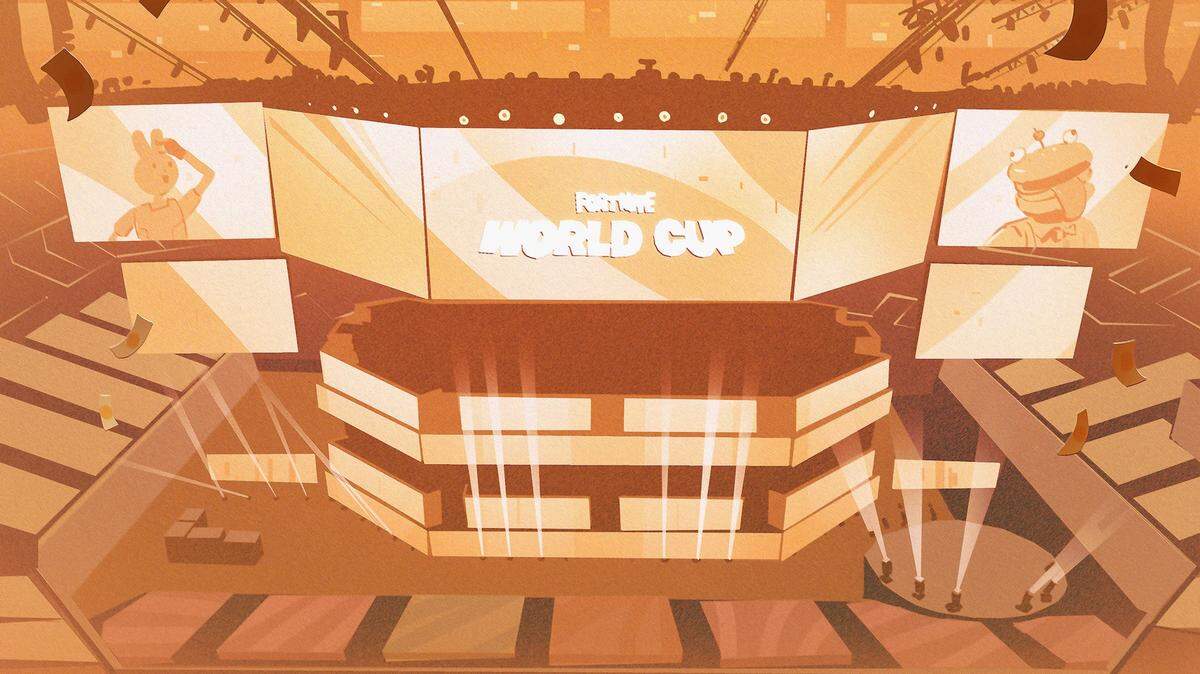
Though revenue dipped in 2019, Fortnite upheld its cultural relevance. That July, Epic hosted the Fortnite World Cup at Arthur Ashe Stadium in Queens, site of the U.S. Open tennis tournament. Around 40 million players vied to qualify for the three-day event and its $3 million first-place prize.
The average finalist was 17 years old, with the oldest player only 24. Each received $50,000 just for making it to the finals.
“It took a week to build out,” Liew said. “We needed a lot of space because not only do you need 100 PCs on stage, you need a practice area too with 100 PCs.”
“For me personally, it didn’t hit how big the game was until the Fortnite World Cup,” Cuello said. “I grew up in New York City, so it was being on the train to where the World Cup was and seeing everything plastered with Fortnite.”
Heading into the tournament, Epic reported 250 million registered Fortnite players worldwide. Of the 100 top players competing that weekend in Queens, a 16-year-old boy from Pennsylvania claimed the title.
In Fortnite, Epic had notched its own victory royale. Going forward, the company wouldn’t, couldn’t, be as it was. Creating the biggest game opened up too many possibilities. New acquisitions. New legal battles. A new headquarters. And a new metaverse.
Next: Epic Games won with Fortnite. What’s followed hasn’t been a clear victory.
This story was originally published October 16, 2024 at 5:00 AM.