Part 4: Tim Sweeney’s metaverse quest, and the shaping of Epic Games’ soul through Fortnite

More powerful than God on earth
In 1998, North Carolina’s Epic Games achieved its first big hit with Unreal, a first-person shooter game set on the alien planet Na Pali. Unreal featured dynamic gunplay and pioneering 3D graphics. Yet, nearly a quarter-century later, what Epic CEO and founder Tim Sweeney wished to highlight about the game was a conversation.
Ahead of Unreal’s release, Epic inserted code that enabled players to exist in the world of Unreal without needing to follow its overarching survivalist plot.
“I remember a moment where folks in the community had created a grotto map with no combat and were standing in a circle chatting,” Sweeney tweeted in June 2021. Minutes later, he concluded his point, writing, “We’ve had metaverse aspirations for a very, very long time.”
Coined by author Neal Stephenson in his 1992 science fiction novel “Snow Crash,” the concept of a shared digital space, or metaverse, enthralled Sweeney long before Fortnite afforded him the platform and dollars to achieve it. Sweeney wanted to create video games that didn’t exclusively revolve around standard objectives like go faster, kill first or score more. He wanted to make games where the social element could also be a draw.
“You can see that Tim and Epic at large have been working towards the metaverse for decades,” said Matthew Ball, author of the 2022 book “The Metaverse.”
To Sweeney, the metaverse is something egalitarian and grand — a virtual representation of the ideologies he frequently espouses. A space where users can bring their avatars across games, spanning different intellectual properties, brands and experiences. “This Metaverse is going to be far more pervasive and powerful than anything else,” he told an interviewer in 2016, the year before Fortnite debuted. “If one central company gains control of this, they will become more powerful than any government and be a God on earth.”
Around Epic’s North Carolina headquarters, employees often spotted Sweeney in casual dress with his eyes glued to his phone and a Big Gulp in hand. At 53, he has receded gray hair, glasses and a furrowed, searching gaze. He harbors unwavering convictions, which former staff say he’ll sometimes express in blunt outbursts.
Sweeney forged Epic’s early culture, Epic workers say, building its reputation as a generous and responsive studio — a place where workers were well compensated and could clear ideas with bosses in the hallway.
“This autonomy and this agency, where it was just this highly collaborative group of folks really set loose to do what they do best,” said Bradford Smith, a material artist at Epic.
Sweeney is single, never married, and has no children. “I lead a fairly simple life,” he told The Wall Street Journal in 2019. “I love going off the trail and finding things that I think nobody’s ever seen before.”
Over the past 15 years, he has become one of the largest private landowners in North Carolina, pledging to conserve wide swaths of land before they can be developed.
But it is his pursuit of a new virtual real estate that has driven the modern Epic Games.
Building the metaverse one game (and concert and brand) at a time
To many the metaverse remains a nebulous construct. A “third place” outside home and school or work where young people can play, shop, watch and generally hang out.
“It was always kind of assumed that (the metaverse) was the long-term goal at Epic, whether it was through Fortnite or it was something else,” said Carlos Cuello, a former engineering director at the company.
Soon after Fortnite took off in late 2017, Epic began to adapt it into a platform. The first major step came in December 2018, when the company launched Fortnite’s “Creative Mode,” a tool that allowed players to create their own game islands where they could battle friends.
“To me it shows how early, even amidst truly unprecedented success, Tim and the rest of the company were saying this can and should be a platform,” writer Matthew Ball said.
“In that moment, you begin to see in a way the master plan,” said Charlie Hall, a journalist at the gaming outlet Polygon. “And that master plan is, they weren’t making a game. They were making a platform, and that platform can be used to do different things.”
On Feb. 2, 2019, more than 10 million people watched live as the American DJ Marshmello performed a 10-minute set in the world of Fortnite. He was displayed as an avatar, complete with his patented marshmallow mask. Attendees appeared as their Fortnite outfits, bouncing and whirling to the beat.
“You could do things that you can’t do in a normal concert setting, like throw everyone up in the air and have them float for like five minutes,” Cuello said.
The tech outlet Wired called this first Fortnite concert “the Future of the Metaverse.” The next year, over 13 million digitally attended a Fortnite concert by the rapper Travis Scott. A video from this show has gone on to be viewed 225 million times on YouTube.
“There really is nothing else like it,” Hall said. “You don’t see folks showing up for a live concert in any other video game. Like that’s just unheard of.”
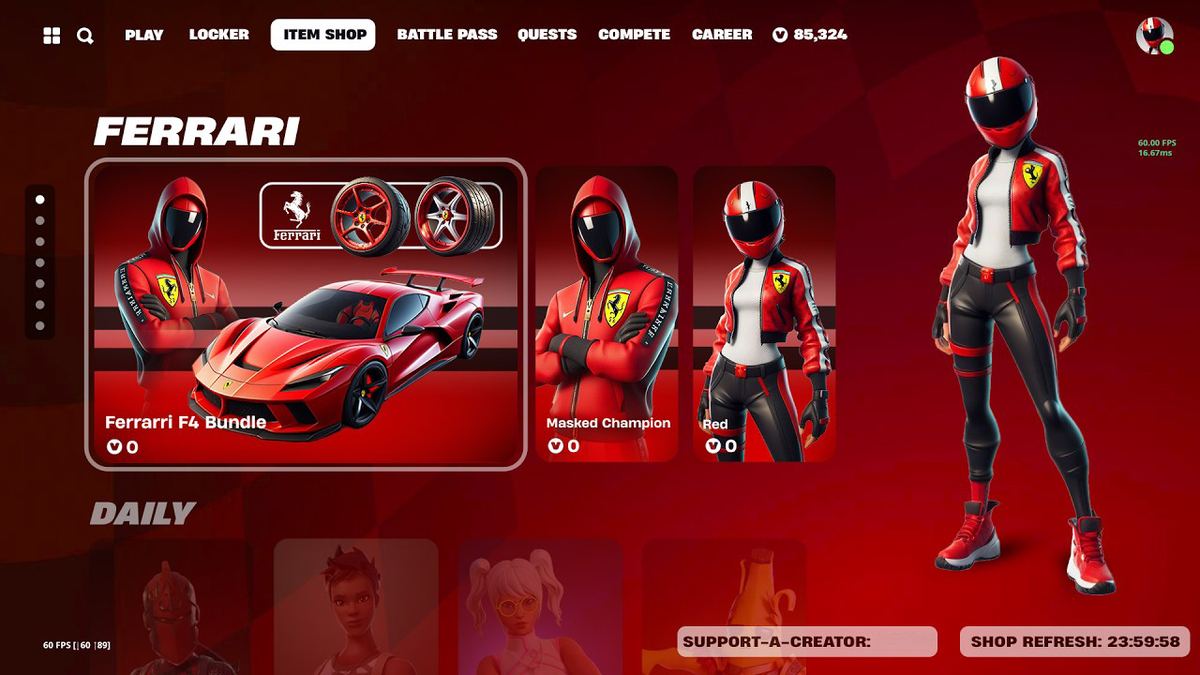
Epic continued to add new experiences to Fortnite. Once gun shy about pairing its prized game with external intellectual property, the Cary company announced Fortnite partnerships with the NFL, FIFA, HALO, Disney, Nike and the fashion brand Balenciaga. A collaboration with Ferrari allowed users to not merely see a car, but virtually drive it around.
Two factors enabled Epic’s advancements toward a metaverse. First was technology. By the late 2010s, more powerful GPUs and servers allowed higher numbers of avatars to share the same virtual space. Second was money. In 2019, Tim Sweeney became the wealthiest self-made newcomer on the Forbes magazine list of the richest Americans. His net worth that year, $4.5 billion, made him the second richest North Carolinian after SAS Institute founder and CEO Jim Goodnight.
Epic Games made more than $5.5 billion in profit across 2018 and 2019, financial records show. This income bankrolled Sweeney’s effort to take on two technology industry titans he viewed as standing in the way of an ideal metaverse.
“Apple has outlawed the metaverse,” he posted on Twitter, now called X, in early August 2020. A week later, Epic sparked parallel lawsuits against Apple and Google over their respective app store rules, which Epic alleged were anticompetitive.
The federal judge who presided over the Apple case concluded that Epic partly acted out of financial interests in this fight, while also acknowledging the lawsuit was a way “to challenge the policies and practices of Apple and Google which are an impediment to Mr. Sweeney’s vision of the oncoming metaverse.”
The cost of Sweeney’s dream
Whether it’s noble, prudent or quixotic, Sweeney’s push toward the metaverse hasn’t been cheap.
In September 2023, Epic Games announced it was laying off roughly 16% of its global workforce, around 830 employees. In a memo to staff, Sweeney explained Fortnite’s profit margins had fallen since Battle Royale “took off,” with new growth propelled by creator content that is subject to revenue sharing. He also discussed mounting costs, writing, “For a while now, we’ve been spending way more money than we earn, investing in the next evolution of Epic and growing Fortnite as a metaverse-inspired ecosystem for creators.”
To build up its inventory of games for a metaverse, Epic went on a spending spree. Prior to 2018, the company had made one acquisition, according to the business database Tracxn. Between 2019 and 2021, Epic completed 17. These included the game developers Psyonix, Harmonix and Mediatonic, and the online audio platform Bandcamp. (An Epic Games spokesperson called Tracxn’s figures inaccurate but declined to share how many acquisitions the company made during this time period.)
Many of these deals were made with a unified digital platform in mind. In March 2021, Epic acquired Tonic Games Group, makers of a popular game called Fall Guys. “It’s no secret that Epic is invested in building the metaverse and Tonic Games shares this goal,” Sweeney said at the time.
Some former Epic employees pointed to the Fall Guys purchase as a misstep, describing it as an appealing game without staying power. On the positive side, several praised Epic for buying Psyonix, maker of the popular driving sports game Rocket League.
Epic has incurred additional costs that aren’t linked to the metaverse.
On the last day of 2020, Epic Games spent $95 million to buy the former Cary Towne Center, a former large mall the company announced would become the site of its new headquarters. Little progress has been made. And in December 2022, Epic reached a record $520 million settlement with the Federal Trade Commission over complaints the game maker violated children’s privacy law and induced unintended purchases through deceptive designs in Fortnite.

In a statement following the settlement, Epic Games spokesperson Candela Montero did not acknowledge any wrongdoing but said the company “accepted this agreement because we want Epic to be at the forefront of consumer protection and provide the best experience for our players.”
Epic’s push toward a metaverse continued in March 2023 when it unveiled its successor to Fortnite Creative Model. Called Unreal Editor for Fortnite, or UEFN, the platform allows creators to use aspects of the Unreal Engine to construct experiences and games within Fortnite.
Yet after a period of sharp growth, the value of Epic appears to have slid. Between 2020 and 2022, the private company secured three separate major investments. Following each announcement, Epic publicized its rising valuations — $17.3 billion, $28.7 billion and $31.5 billion. (To show just how much Fortnite bolstered Epic’s value, the Chinese conglomerate Tencent had acquired 40% of the company in 2012 for only $330 million.)
However, this past February, when Disney announced it would buy a $1.5 billion equity stake in Epic to further both companies’ ambitions of a “persistent universe,” Epic declined to state its latest valuation. In an article published the day after the Disney announcement, The Information cited “a person familiar with the matter” who said the two sides valued Epic at $22.5 billion, a 28.5% decline from two years ago.
Could Epic make Fortnite today?
Several former employees marked the departure of Epic President Paul Meegan in June 2019 as a turning point for the company. More than one referred to him as “the Tim whisperer,” capable of translating Sweeney’s ambitious goals into practical action.
Others noted a shift at Epic around this time as spontaneity and creativity were replaced by a more corporate and bureaucratic culture. Fewer ideas were born from passion as quantitative analysts and spreadsheets dictated what would make Fortnite successful.
“You’re just cranking out another widget and with probably less autonomy and agency than you had before,” said the artist Bradford Smith. “It’s not for everybody. And in the circles of folks that I was in, I think that was the biggest hit to morale.”
Subsequent decisions like purchasing Fall Guys and buying Cary Towne Center raised more eyebrows internally.
“It’s a cautionary tale of success,” said Ellen Liew, Epic’s former director of experientials who was among 170 local employees to lose their jobs in last year’s layoffs. “Tim is very trusting, and he just needed a really good businessman there to be like, ‘Hold up. We need to pull the brakes.’”

There lies an irony in the trajectory of Fortnite. The game originated 13 years ago when a group of Epic developers grew tired of making the company’s then-franchise hit Gears of War. They launched an alternative project, which after six years of stops and starts, became the biggest game on Earth.
At Epic today, there exist fewer ways to escape its shadow. Internal game jams, the collaborative brainstorming events that helped birth Fortnite in 2011, are no longer routine. And Epic has prioritized creative platforms like UEFN that encourage non-employees to develop the next big game and share in its profits.
So, while some were forced out during the 2023 layoffs, others chose to leave Epic.
Even those whose enthusiasm toward their former employer has dimmed spoke of a distinct, egalitarian spirit at Epic, stemming from a founding culture molded by Sweeney’s worldwide.
Can Epic spearhead the creation of a vast, open, profitable metaverse? Can it create another hit game? Pulling off either isn’t easy, but the game maker has defied expectations before.

This story was originally published October 16, 2024 at 5:00 AM.