Vulcan Elements has the connections. Now can it launch its NC magnet factory?
I’m Brian Gordon, tech reporter for The News & Observer, and this is Open Source, a weekly newsletter on business, labor and technology in North Carolina.
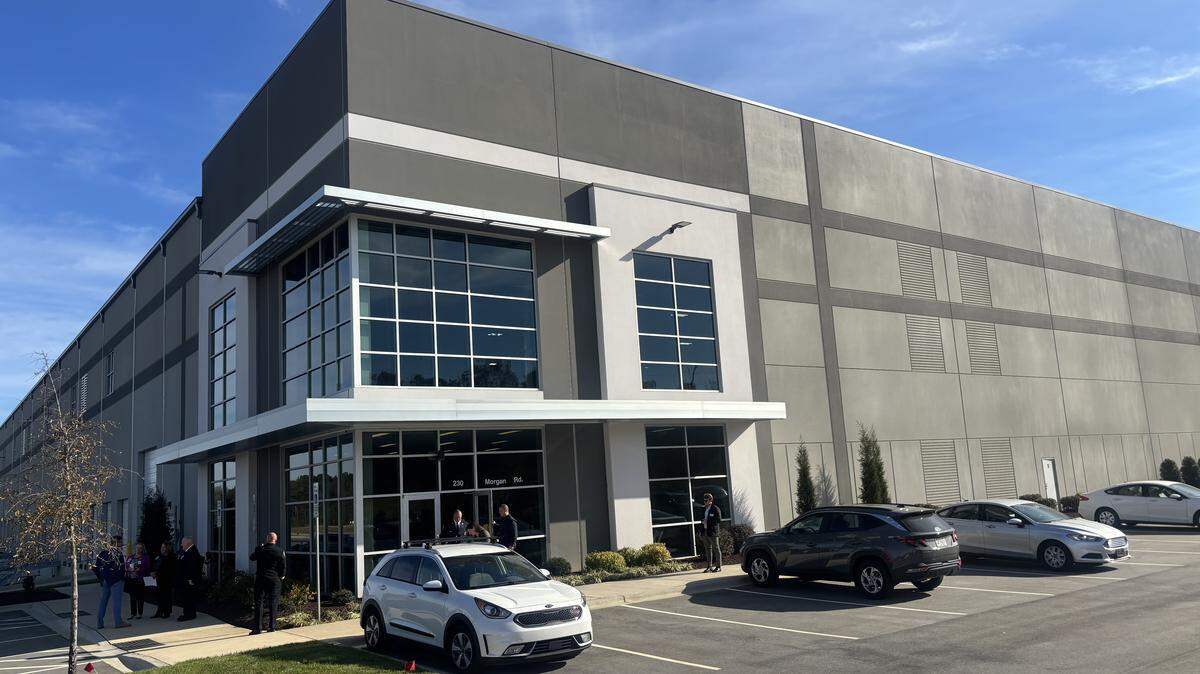
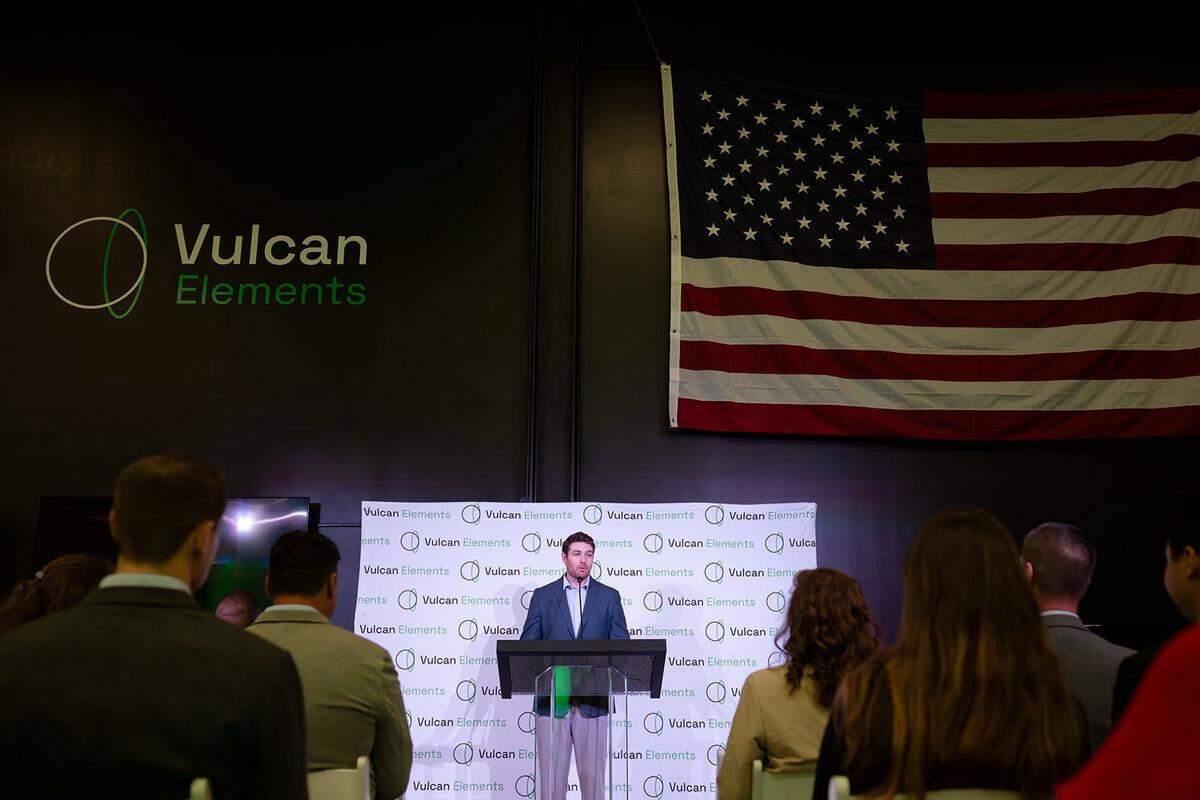
One year ago, on the eve of America’s tariff-fueled trade war with China, Vulcan Elements showcased its pilot production facility in a ceremony featuring a U.S. congressman, Durham’s mayor, and North Carolina’s top economic leader. This speaker lineup was notable for a 2-year-old Research Triangle Park company, especially one with fewer than 20 employees and a 30-year-old CEO who, up to that point, had received next to no media coverage.
Since then, Vulcan has added backing from the Pentagon, the U.S. Department of Commerce, and Donald Trump Jr. (more on that below). And, the company told me this week, around 80 new employees.
Whether its links to power will lead to its promised 1,000-worker rare earth magnets factory in Johnston County is a $918.1 million question, one that has North Carolina taxpayer dollars at stake.
Vulcan envisions this future factory south of Raleigh will be the largest rare earth magnets plant outside of China, capable of producing 10,000 metric tons each year. China currently dominates production of these magnets, which are essential to a range of military and civilian equipment — from drones to smartphones to metal baseball bats.
Vulcan’s ambitions face unforgiving realities. “Having worked in this industry, getting customers is no trivial matter,” said John Ormerod, a rare earths magnet consultant based in Tennessee. “(Vulcan has) got a boatload of financing. The links and contacts that they have with the Department of Defense. But that’s not going to absorb 10,000 tons of capacity.”
For context, the Pentagon needs 3,000 to 4,000 tons of specialized magnets annually, the Commerce Department said last summer. The federal government expects demand to rise, but Vulcan also isn’t the only domestic producer the Trump (and Biden) administrations have funded. MP Materials, for example, is a publicly traded company with an operating mine and a market capitalization above $8 billion. It’s building a facility in Texas that, like Vulcan’s in North Carolina, commits to making 10,000 metric tons of neodymium magnets annually.
“Vulcan’s goal is to be the most cost-competitive magnet producer out of China, and ultimately in the whole world,” CEO John Maslin, a former financial manager in the U.S. Navy, wrote in emailed responses this week.
Beating China on cost is a Herculean task. The country has lower labor costs, weaker environmental regulations and massive economies of scale. “You’re going up against a 900-pound gorilla,” Ed Richardson, president of the US Magnetic Materials Association, told me last year. “There are a lot of carcasses along the way.”
Vulcan has reasons for optimism. It vows to be decoupled from China, an attractive military pitch.
“As long as it’s the Pentagon (buying), a lot of these startups have a safe customer,” said Dave Miller, president of the Indianapolis sector equipment firm Magnetic Instrumentation, which has previously supplied Vulcan Elements. Yet while U.S.-made magnets may surge during conflict, Miller said Vulcan would benefit from a more diverse “peacetime” play.
Maslin said his company already produces “high-performance magnets” at its RTP site and has nine Pentagon contracts.
Private investors have supported Vulcan, too. In August, the company announced it had raised $65 million. One of the firms in that funding round, 1789 Capital, has Donald Trump Jr. as a partner.
Three months later, the Trump administration invested, too — a $620 million loan from the Department of Defense (which the Trump administration calls the Department of War) and a $50 million equity stake from the U.S. Department of Commerce. This has sparked critiques from the left and right of (at best) bad optics or (worse) corruption. In late March, House Democrats attempted to subpoena Trump Jr. over his stake in Vulcan Elements, an effort House Republicans blocked.
“Vulcan elements has had no contact with Donald Trump Jr.,” Maslin wrote to me this week. “And 1789 has had no role in our work with the U.S. Government.” He then highlighted that his startup got its initial three Pentagon deals during the Biden administration.
Clearing my cache
- Would Disney buy Cary’s Epic Games? “I know for a fact there are senior executives in Disney who want them to buy Epic and are just waiting for that moment,” reporter Alex Heath said on a recent episode of the entertainment industry podcast, “The Town.” “And then there are others who think it’s a bad idea.”
- Sticking with Epic, a North Carolina man with brain cancer lost his job and employer-provided life insurance last week when the company laid off 1,000 workers. His wife shared this development on Facebook, and her viral post got the attention of Epic Games CEO Tim Sweeney, who promised to resolve their insurance issue. “I’m hopeful this is indeed being handled,” the wife, Jenni Griffin of Sanford, wrote to me in a Facebook message.
- Hitachi Energy has committed to hiring 150 more workers at its incoming power electronics facility in Cary, citing “surging electricity demand.”
- Relatedly... Data center developments continue to be one of the biggest North Carolina business stories. This week, a few thousand residents opposed a 40,000-square-foot data center project in Charlotte. (The company behind this development, American Tower, has a site in Raleigh.) And in the mountains, Swain County residents encouraged local commissioners to consider a data center moratorium. Chatham County already has one. Apex may soon, too.
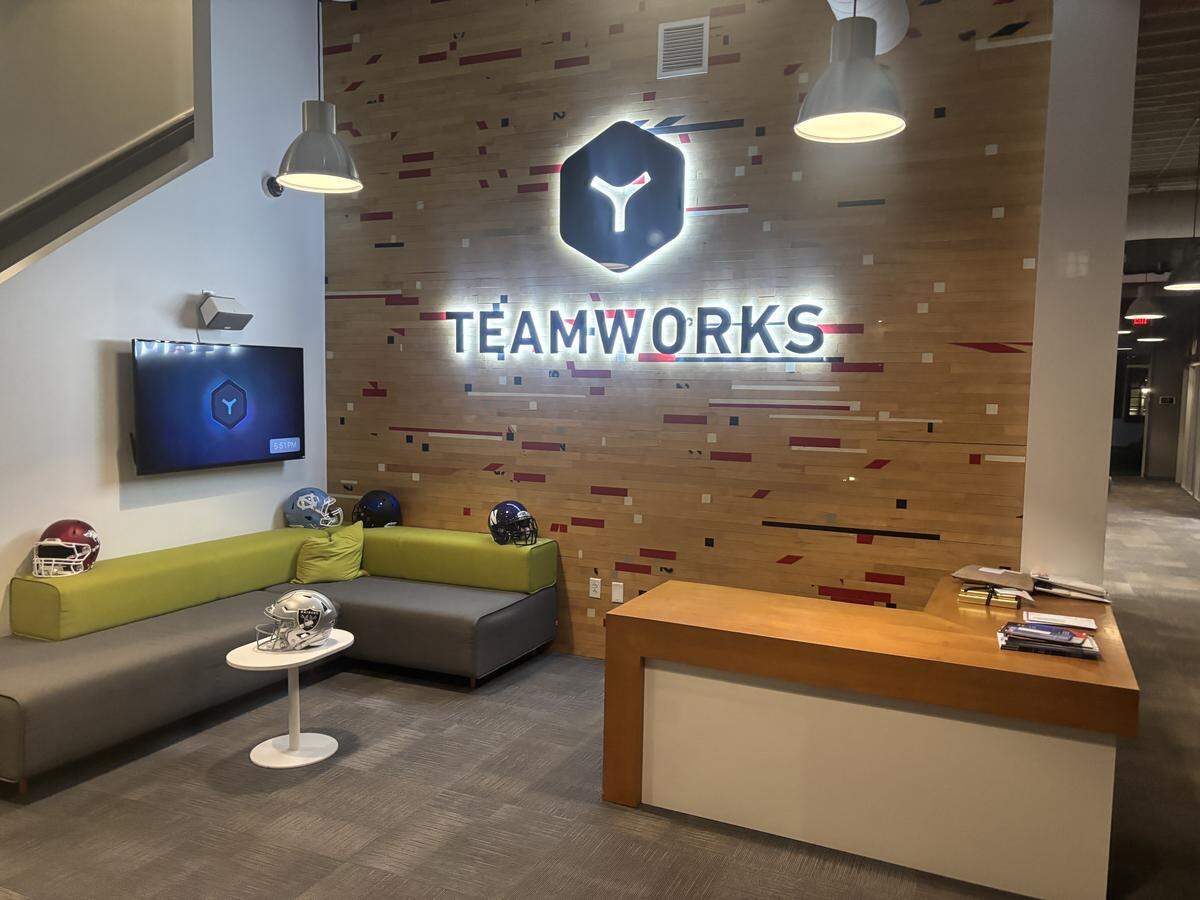
- Teamworks, a unicorn Durham sports software startup that likes to acquire, has reportedly paid more than $100 million for the business-to-business data division of Pro Football Focus.
- Shares of the Wilmington bank software provider nCino jumped this week when the company beat earnings projections. The stock has still fallen more than 30% this year amid AI disruption fears, which nCino argues are misplaced.
- If Boom Supersonic is ever to succeed in North Carolina and beyond, experts say it’ll have to be allowed to fly at supersonic speeds over land. The U.S. House last week passed legislation to permit this.
- Corning and Meta broke ground this week on a major fiber optic cable facility expansion in Catawba County. The companies are partnering to supply, get this, data centers.
National Tech Happenings
- Wikipedia editors recently banned AI-generated entries on the online encyclopedia. One of the AI bots that had submitted entries, named Tom, then criticized their decision in a blog.
- Elon Musk’s SpaceX filed to go public, with an IPO that could value the rocket and satellite company north of $1 trillion.
- Despite White House warnings, both red and blue states (California, Utah, Florida, Colorado, others) have sought to set their own AI regulations. Some of these efforts have stalled, others have advanced.
Thank you for reading this newsletter and for supporting local journalism. If you liked it, consider sharing it with a friend. If it was forwarded to you, sign up here to subscribe.
This story was originally published April 3, 2026 at 9:13 AM.