Few child sex abuse survivors seize chance to sue in NC. Time is running out.
READ MORE
Where are the lawsuits?
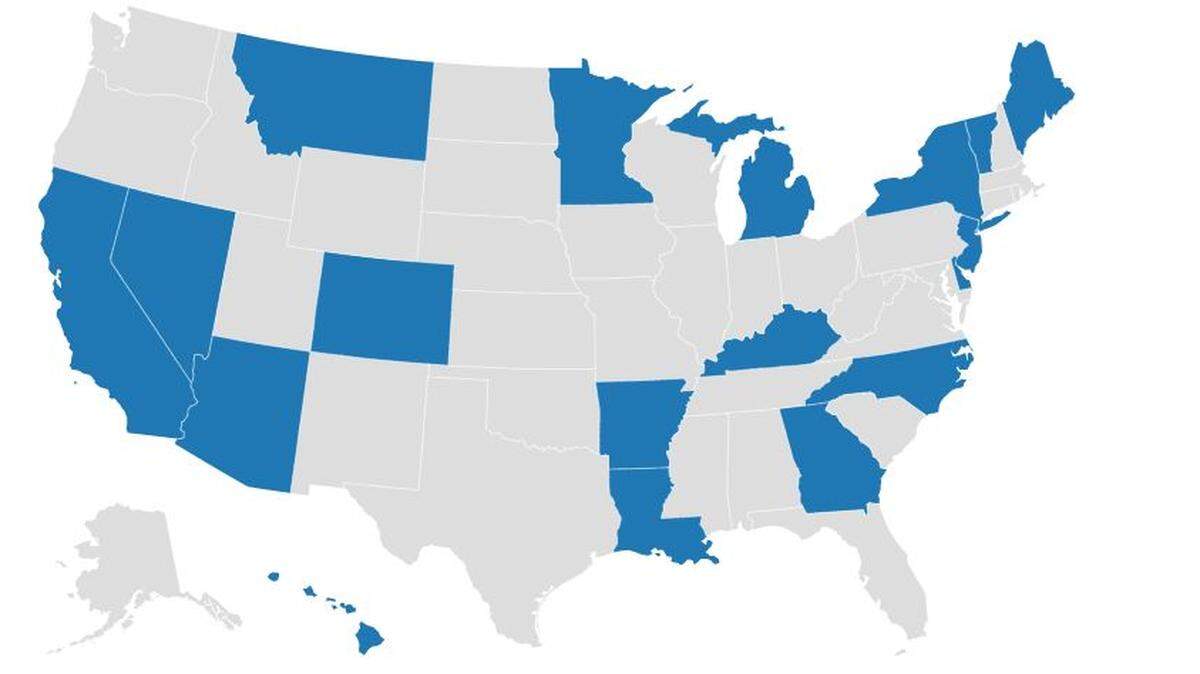
In 2020, NC became the first Southern state to open a temporary window for child sexual abuse survivors of any age to file civil lawsuits. But fewer are filed here than in other states. Here’s The News & Observer’s special report.
Expand All
Four years passed before Katie Trout revealed how a youth leader at her evangelical megachurch had targeted her.
In 2004, she told her parents, and then police, how the 39-year-old employee started cornering her and groping her in the Charlotte church building when she was 15.
At first she muffled any anger at her church, where leaders stressed forgiveness and members didn’t check on her after she spoke up, she said.
But a decade later, Trout concluded that the institution that employed her abuser should shoulder some responsibility. She asked an attorney to help her file a lawsuit.
“I realized that God is angry for what happened to me, he’s angry that this person chose to do this. He’s angry at the response,” she said. “And I have a right to be angry, too.”
By then it was too late. Until recently, most survivors of childhood sexual abuse had only until age 21 to sue institutions that enabled abuse in this state.
That was true even though it can take years, decades sometimes, for survivors to disclose their stories. In one study, the average age of women and men who reported childhood sex abuse at institutions was 52.
In 2020, North Carolina became the first Southern state to open a temporary window for child sexual abuse survivors of any age to file civil lawsuits against institutions, no matter how long ago the abuse occurred.
But three months before the window snaps shut, an expected gush of lawsuits has not materialized here.
Unlike New York, which logged over 10,000 lawsuits before its window closed in August, North Carolina’s state court system is not tracking the lawsuits.
The state attorney general knows of just a dozen filings. Through interviews with attorneys and a review of court records, The Charlotte Observer and News & Observer identified an additional 10, with more expected before the window closes on Dec. 31.
The modest response to date leaves some legal observers wondering: Is the South different? Can a public cultural reckoning on child sexual abuse occur here?
Shifting responsibility
At 19, Trout felt vindicated when her abuser pleaded guilty to indecent liberty with a minor and was listed on the sex offender registry. That spared her the daunting prospect of testifying and the risk of a not-guilty verdict in court.
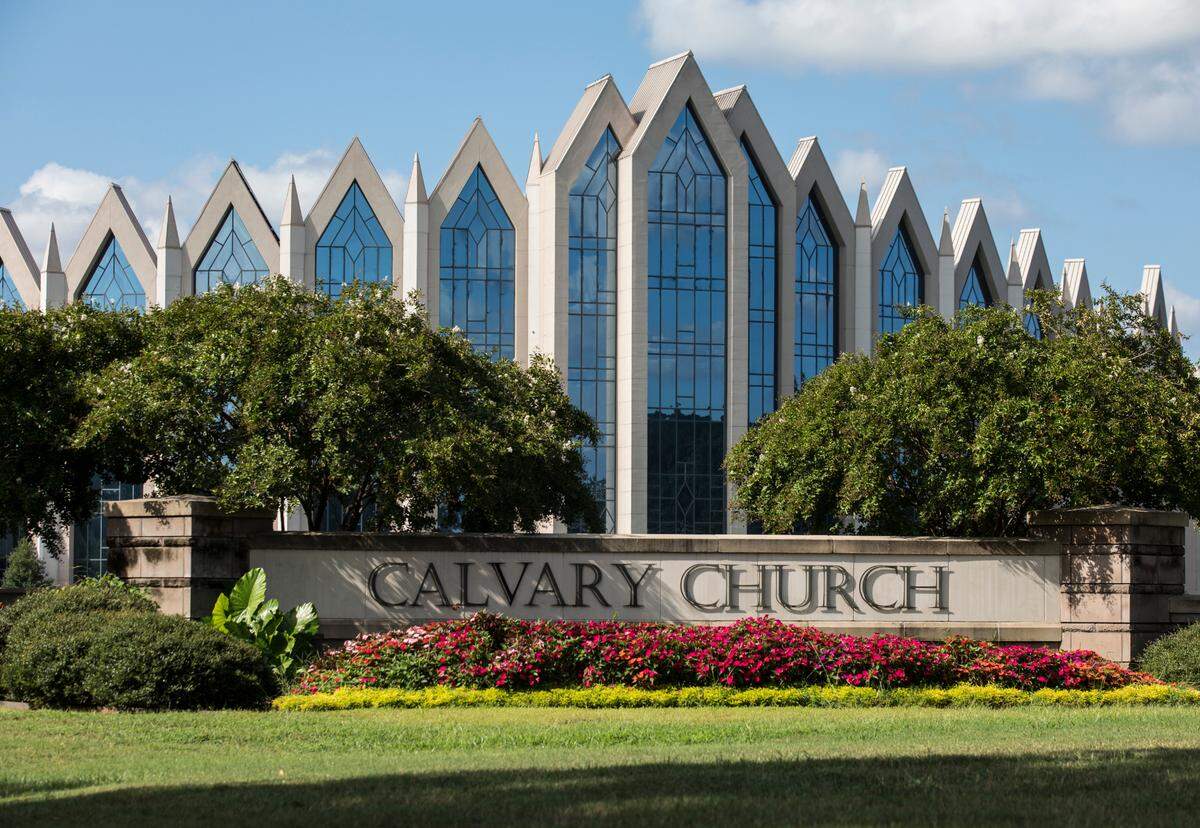
Judge William Bell forbade James Edward Baker from contacting Trout and stopped him from working with children at the church, which police records list as Calvary Church.
But the process was harrowing, especially when church members did not reach out to Trout to show support. At least one wrote to Bell on Baker’s behalf when he tried to get off the registry.
Trout remembers her parents telling her that church leaders warned them that suing would be too stressful for their daughter.

Around age 30, Trout concluded that church leaders did too little to prevent abuse or support survivors. This happened as she watched other abuse survivors come forward and American public opinion shift in response.
There were waves of such scandals in the Catholic Church. And the Boy Scouts. And USA Gymnastics.
“It’s wrong when others who haven’t been part of what happened try to limit time for someone’s trauma. I get to live with this for the rest of my life,” she said.
In 2019, Trout learned that North Carolina lawmakers were drafting the SAFE Child Act. It would temporarily allow survivors of child sexual assault, no matter their age, to sue people who assaulted them and institutions that failed to protect them.
It would also extend how long survivors had to file lawsuits past age 21.
Trout called state Rep. Dennis Riddell, an Alamance County Republican who had championed that provision, and volunteered to lobby for the bill.
Passing the SAFE Child Act
Riddell, a former Christian school history teacher turned business owner, had been trying for at least three years to pass legislation that would give North Carolina survivors more access to civil courts.
He had concluded that the state’s restrictions on legal filings “aided and abetted the perpetrators” who knew they had to keep their victims silent only so long, he said.
The earliest and most expansive laws of the type Riddell was proposing emerged in places where Democrats controlled both the legislature and the governor’s office, an analysis by the Raleigh News & Observer and Charlotte Observer shows.
But increasingly, GOP lawmakers, especially in the South, have taken up the cause.
Despite his party favoring tort reform — the campaign to reduce civil lawsuits and damages paid when people win them — Riddell doggedly pursued what he saw as an important tool for unmasking abusers and prompting better protections for children.
Child sex abuse is pervasive. Experts estimate that at least 25% of girls and 8% of boys in the U.S. have been sexually abused, and some perpetrators harm dozens of children.
Riddell’s quest for research-based reform got new traction when North Carolina Attorney General Josh Stein, a Democrat, also began paying attention.
After a counterpart in Pennsylvania issued a damning grand jury report on abuse in the Catholic Church and after the U.S. Supreme Court struck down a North Carolina law intended to protect kids from online predators, the attorney general ordered his staff to review related state laws.
The result was 2019’s SAFE Child Act, a sweeping bill that included, among other changes, a requirement that clergy, coaches and camp counselors report suspected child sex abuse to law enforcement. Folded within was the expanded access to lawsuits Riddell wanted for survivors.
Stein’s proposal gave people who experienced child sex abuse until age 50 — instead of 21 — to bring civil lawsuits. It also included a temporary window to allow survivors of any age to file suit.
Riddell was thrilled. “Child sexual abuse is probably one of the few crimes where the victim feels guilt and the perpetrator does not,” he said.
Getting other legislators’ support wasn’t easy. It took work to ease concerns that survivors’ memories were unreliable, that a flood of lawsuits would overwhelm state courts and that false accusations could sink North Carolina’s churches, schools and summer camps.
Part of Riddell’s strategy was to marshal evidence from early adopters around the country. During a June 19, 2019, hearing in the House, he listed seven states that had abolished the statute of limitations on all civil proceedings.
“Can anyone tell me where the wheels have come off their justice system because they have been inundated with false accusations?” he asked. “The answer is no. It has not happened in other states where this has been done, where the statute of limitations has either been eliminated altogether for civil suits or it’s been extended.”
The final bill’s provisions weren’t as far-reaching as Riddell, Stein and other advocates had wanted.
Negotiations among lawmakers whittled the proposed age cutoff for filing civil court claims from 50 to 28. The lookback window was set for two years.
About half of U.S. states give survivors longer to sue people and organizations they implicate in their child sexual abuse than North Carolina does, according to data compiled by CHILD USA, a think tank that studies and promotes legal reform related to child sex abuse. And nine have done away with any age cutoffs for filing, CHILD USA data says.
“We are still out of the mainstream,” Stein said in an interview. “The majority of states allow a victim of child sex abuse more time to come to terms with that victimization, and then go to court.”
But even the watered-down law was progress.
Looking back, Riddell gives most of the credit for its passage to survivors, both citizens and legislative staff who shared personal stories.
That included Trout, who brought a photo of her teenage self with her abuser to the General Assembly to add a child’s face to the statistics and legal questions in play.
Trout and other survivors watched in person when the General Assembly voted on the SAFE Child Act on Halloween in 2019.
She didn’t get her hopes up as the House and Senate cast their votes. Both would decide unanimously.
When Trout saw the vote board light up as all green, she was shocked.
“I just couldn’t even like hardly breathe,” she said.
.jpg "XGR-NE-090821-RTW_12 (1).jpg")
In NC, lawsuits trickle in
The legal documents that flowed into California courts after that state opened one of the country’s first lookback windows in 2003 identified more than 300 accused abusers, according to CHILD USA’s data. Courts there received about 1,150 filings over the course of a year, the data shows.
In California and the 18 states that have passed similar legislation since, the Catholic Church and Boy Scout groups were frequent defendants. Others included The Salvation Army, The Church of Jesus Christ of Latter-day Saints and The Seventh-day Adventist Church.
No state has seen more lawsuits than New York. Data collected by that state’s Unified Court System revealed that religious organizations, individuals and youth-serving groups were the most frequent defendants there, according to CHILD USA.
Among 22 known North Carolina cases, defendants include the University of North Carolina School of the Arts, National Council of YMCAs, the Roman Catholic Diocese of Charlotte, the Western North Carolina Conference of the United Methodist Church, and several public and private high schools.
Several factors, including distinctive traits of Southern states, could be influencing the relatively low count here, legal experts say. They include a smaller Catholic Church presence, laws that make suing the government more difficult, and strong cultural conservatism, said Michelle Simpson Tuegel, an attorney who specializes in sex abuse litigation and has worked in both Texas and New York.
“I think it’s harder in Southern states for survivors to feel supported sometimes and to feel like they could be successful and their cases worth bringing,” she said.
Tuegel also suspects that some survivors don’t know a window opened here.
In New York, news media covered the window legislation extensively and lawyers advertised it. But early coverage of the N.C. SAFE Child Act didn’t focus on the window provision, and advertisements haven’t reached many.
Plaintiffs’ attorneys stayed quiet until the law was passed, not wanting to influence conservatives who distrust their profession, personal injury lawyer Lisa Lanier said. Once the legislature voted, her firm ran a few ads.
New leverage
Laws like the SAFE Child Act give survivors new clout both inside and outside courtrooms, lawyers and insurance executives said.
Some survivors seek private settlements to avoid the uncertainty and stress of going to trial, said Basyle Tchividjian, a Florida attorney who specializes in abuse cases against Protestant churches. Half of his four recent North Carolina clients struck agreements instead of filing.
“It’s usually more pragmatic than ideological,” Tchividjian said. Trials can take several years, and plaintiffs can’t be sure juries will side with them.
In addition, potential defendants and their insurers know courts now have fewer reasons to throw out these lawsuits. And jurors are more likely to issue multimillion-dollar verdicts, contributing dramatically to the value of claims.
Settlements can earn survivors enough money to pay for therapy and other medical care and offer less publicity for the institutions that offer payouts.
Some national experts worry that settlements allow too many culpable organizations to shirk accountability by keeping abuse allegations out of the public record. Among them is Marci Hamilton, founder and CEO of CHILD USA.
“These lawsuits are the only way to find out what are the actual safety possibilities for my child,” Hamilton said. “From the perspective of protecting children, that’s really the smartest approach.”
But some survivors see it differently.
After all her activism to win the legal right to sue, Trout never filed a lawsuit. Instead, she negotiated a settlement in late 2020 with her former church in Charlotte. The agreement lets her continue speaking about her abuse, but without naming the institution.
Being able to pay for therapy while continuing to tell her story publicly has done more for her healing than a second stressful trial would have, she decided.
“I’ve been able to redefine what the word accountability means,” Trout said. “The institutions know that it is Pandora’s box, that if you acknowledge one, you’re empowering another person to come forward, and you are going to have to deal with it.”
Resisting liability in NC
Right now, North Carolina survivors have additional motivation to settle: uncertainty about whether courts will reject the temporary window.
Attorneys for the Roman Catholic Diocese of Charlotte and the National Council of YMCAs have asked judges to dismiss cases against them, arguing that it’s unconstitutional for plaintiffs to leverage the window in cases against them.
A Utah court struck down that state’s window, saying it violated defendants’ rights to rely on previous statute of limitation defenses. Other state supreme courts dismissed the same argument, saying suspending the limitations corrects injustice without violating due process laws.
Stein is defending North Carolina’s window. In July, his office filed an amicus brief in a case against the Roman Catholic Diocese of Charlotte. Civil statutes of limitations are procedural rules, not fundamental rights, and are subject to change, it says.
Efforts to take away survivors’ ability to sue chill Trout.
“For it to be an option, and then to suddenly be taken away, it’s like another part of you being turned down or invalidated,” she said. “That glimmer of ‘maybe I’ll get justice this time’ disappears.”
Trout’s hope that the lookback window would be extended due to obstacles related to the pandemic has already been dashed.
New York pushed back its deadline last year. But North Carolina lawmakers who finalized a COVID relief bill in May dropped a similar provision Riddell had added.
“We extended deadlines for so much else, it seemed to me very fair,” Riddell said. “All I was told was that was a stopping point.”
Trout wrote to state Sen. Brent Jackson, a Sampson County Republican and one of the relief bill’s sponsors, criticizing him for slicing out the extension.
“I’m writing to express my disappointment with your decision to remove a provision from H196 that would have extended the lookback window for victims of childhood sexual abuse to bring civil cases against their abuser and/or the institution that enabled it,” she wrote.
His terse response: “How long do you need to file a claim?”
This story was originally published October 3, 2021 at 6:00 AM.


.JPG)