NC is home to lots of creepy spiders, but only 2 that can harm you. How to spot them.
READ MORE
Flying and crawling pests in NC
More stories about creepy-crawly (or buzzing) pests and what to do about them.
Expand All
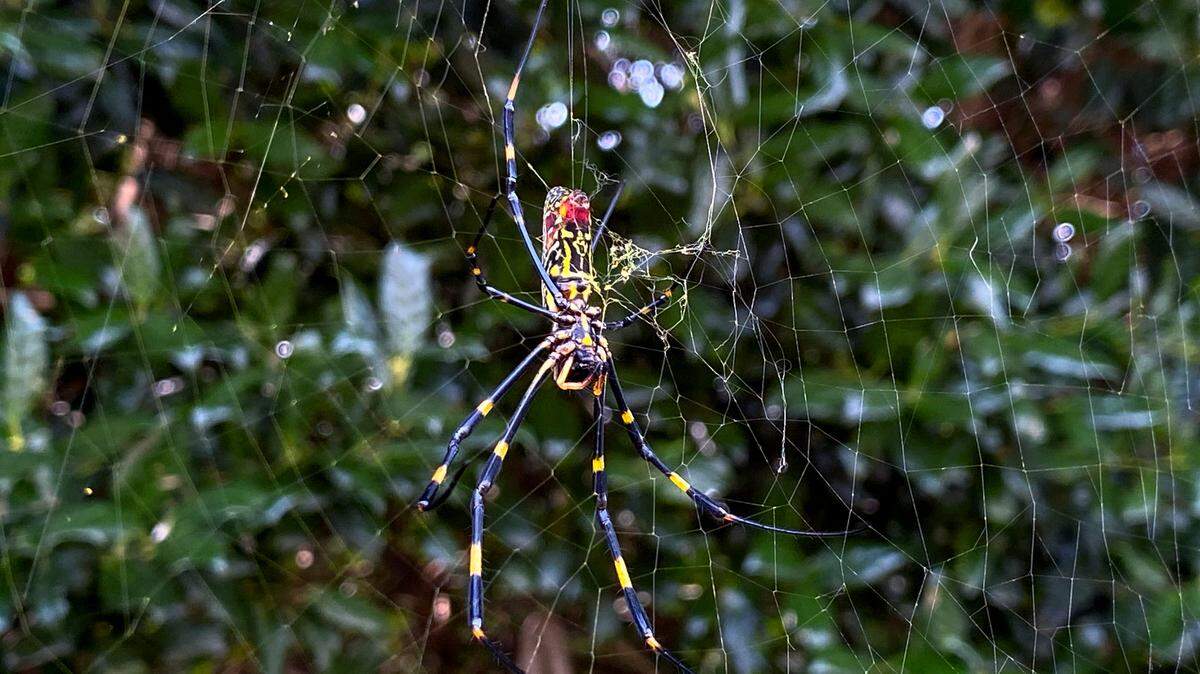
Perhaps no species frightens people more than the spider.
The eight-legged arachnids is so universally terrifying that some scientists believe humans possess a natural fear of them.
Even though our brains know that most spiders are harmless — even beneficial, thanks to the insects they eat — one look at those legs, especially the hairy variety, and we turn to jelly.
The good news is that in North and South Carolina, nearly all spiders pose no threat.
Only two types of spiders in the Carolinas can do humans any harm, and both of them avoid people.
Here is a quick primer on these venomous creepers.
Black Widows
The saving grace of this ominous-looking spider, with its oversized, balloon-shaped abdomen, is its antisocial nature.
Black widows avoid humans, building their webs in tight spaces close to the ground. They favor wood piles and the underside of porches, but can be found in other locations.
While they’re known for the red hourglass marking on their hind parts, not all black widows sport the red emblem, and not all of them are black.
North Carolina even has a variety that prefers to hang its webs in high places with heavy bug traffic, especially around porch lights.
Even their name, derived from the female’s tendency to eat its mate after mating, is somewhat undeserved, as this form of arachnid cannibalism is rare.
What it does: When the widow bites, especially the female, its venom is far more powerful than a rattlesnake’s juice.
Still, the tiny spider injects so little of its poison that bites rarely do lasting harm and almost never lead to death. Muscle pain and fevers are common effects.
How to avoid them: Wear gloves at the wood pile or when reaching into dark spaces. Shake off anything you pull from the attic. Empty out shoes when they’ve been outside.
Brown Recluse
Because so many spiders are brown, tales of flesh-eating venom have mythologized this creature into an eight-legged terror.
But in all likelihood, you’ve never seen one.
Matt Bertone, an entomologist at N.C. State University, wrote in 2013 that he hadn’t encountered a brown recluse in a decade.
While a handful have crept into the state, probably tucked inside traveling humans’ belongings, they are extremely scarce. Even in houses where they do set up shop, they rarely cross paths with humans.
What it does: While death from the recluse bite is unusual and often misdiagnosed, it happens. In 2002, an 82-year-old retiree in Raleigh died that way, according to a News & Observer story. Rare or not, their bites can be traumatic if left untreated, turning to festering sores and splitting open.
Mostly, though, they heal with care and time.
How to avoid them: Same as with the black widow. Wear gloves when reaching into dark spaces where spiders might make a home. Shake off anything you pull from the attic or garage and check your shoes if they’ve been outside.
How to identify a brown recluse: This is a tougher one because lots of spiders are brown.
But according to the University of California Riverside: “A brown recluse has a dark brown violin shape on the cephalothorax (the portion of the body to which the legs attach). The neck of the violin points backward toward the abdomen.” The UC Riverside suggests you study the eye pattern of the brown recluse, if you dare get that close. The brown recluse has 6 eyes in pairs with a space separating the pairs, while most spiders have 8 eyes in two rows of four.
This story was originally published March 16, 2022 at 1:21 PM.