‘Building a rainbow out of bricks’: NC woman’s push for breast cancer research is personal
READ MORE
The News & Observer Tar Heel of the Month
The News & Observer’s Tar Heel of the Month honors residents who have made significant contributions to the Triangle, North Carolina and beyond. At the end of the year, a Tar Heel of the Year is named. Do you want to nominate someone? Email metroeds@newsobserver.com.
Expand All
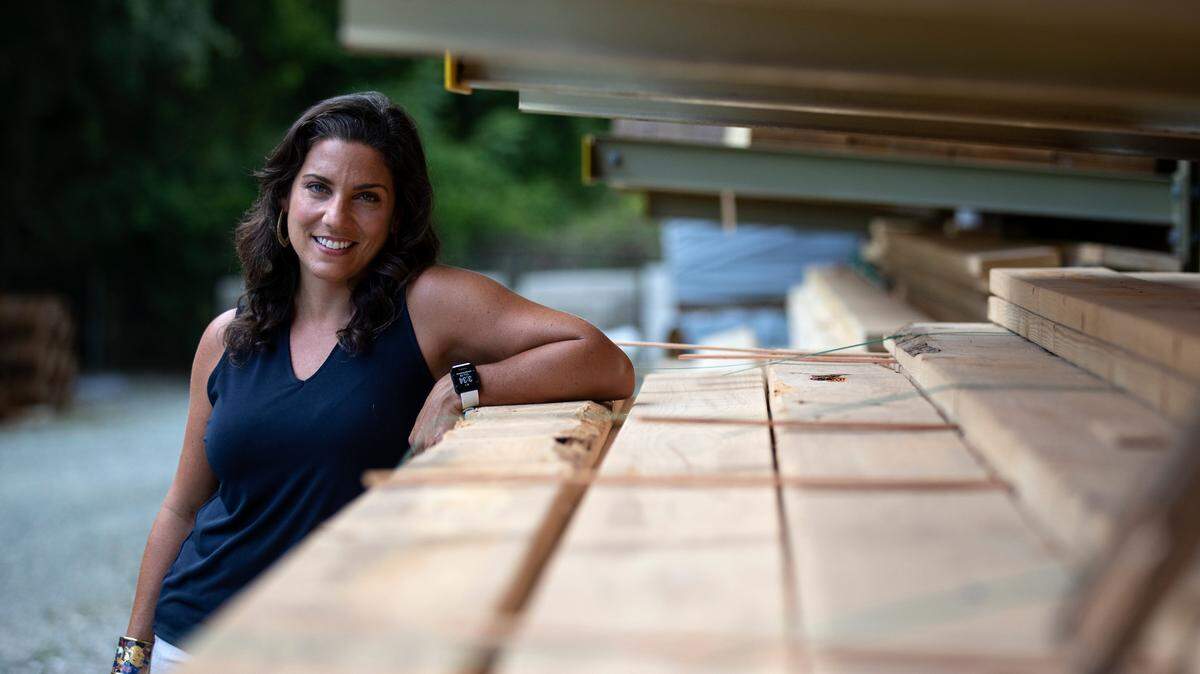
People thought Pam Kohl was crazy.
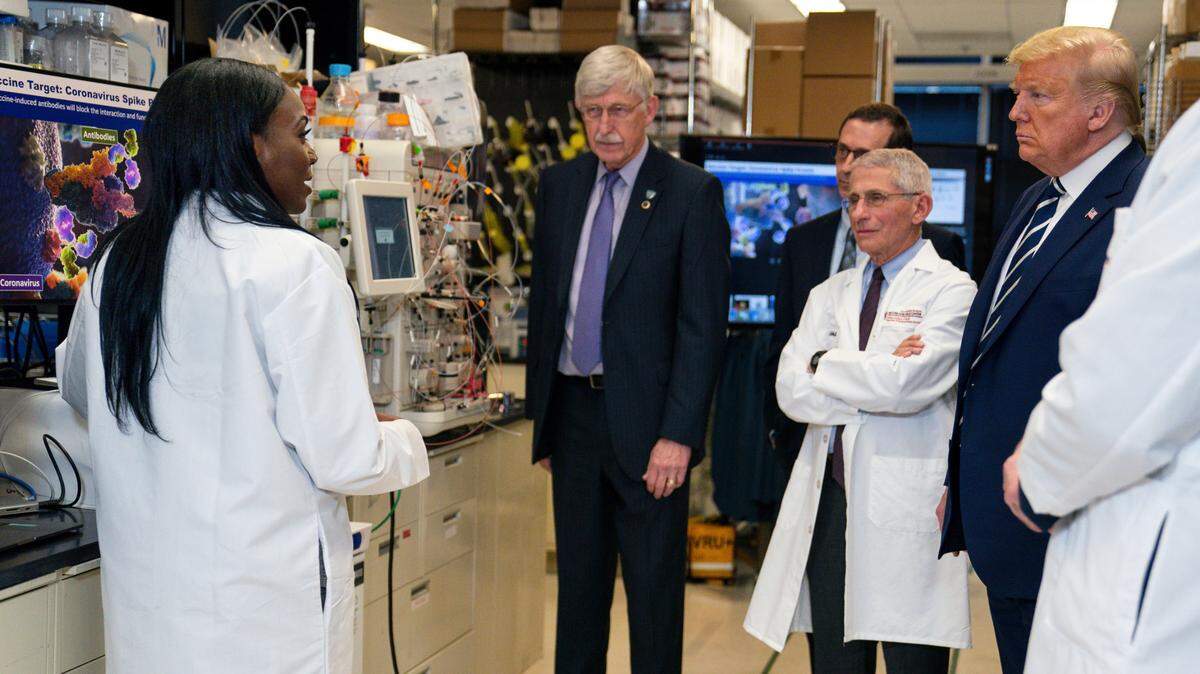
Kohl, known for bringing people together for an array of causes, this time wanted UNC-Chapel Hill and Duke University to come together to accelerate the development of treatments for people with metastatic breast cancer. The idea of two of the country’s foremost cancer research centers — and athletic rivals — sharing information in the race to cure and treat breast cancer seemed impossible.
But Kohl, as usual, was more than up for the challenge, undaunted by the amount of money she would need to raise to make the partnership happen. She raised $1.5 million to establish the Komen MBC Collaborative Research Initiative, an ongoing team effort that launched in 2020 between Susan G. Komen, the Duke Cancer Institute and UNC Lineberger Comprehensive Cancer Center.
“That understanding and valuing what both institutions bring to the table, I just thought, this is a way to reach people who care about breast cancer as you care about research in a whole different way,” said Kohl, founder of the initiative.
For Kohl, the partnership is about more than just another fund-raising mission. It’s personal. She was diagnosed with breast cancer in 2009. After doctors said she was cancer-free, she was diagnosed again with cancer in 2016, becoming metastatic breast cancer in 2017. Doctors gave her only two-and-a-half years to live.
As she continues her own battle with metastatic breast cancer, the most advanced stage of breast cancer, she is determined to help bring about the next cure, even if it comes too late for her.
For her lengthy career in government, nonprofit work and patient advocacy, Kohl is The News & Observer’s Tar Heel of the Month, which honors people who have made significant contributions to North Carolina and the region.
In an interview with The News & Observer, Kohl discusses her introduction to the feminist movement, her own cancer diagnosis and her love of Bruce Springsteen. This conversation has been lightly edited for clarity.
Q: What did you want to be when you grew up?
A: Well, I remember having a conversation with my mother saying, “I don’t know what I want to do. I Just know I want to talk to people.”
You know, I graduated college in 1974 and started working for the Y (YWCA) that summer. And we organized the very first women’s battered women’s shelter in North Carolina, and organized the rape crisis center, all these things that are just taken for granted. We were brand new in 1975. And I was a young college graduate who had never done work like that. And the YWCA was just so amazing. And I was so fortunate to get to work and be mentored by such powerful engaged women.
So then I moved to Raleigh and worked in state government and working with young people and getting them involved in politics. So I’ve just always been passionate about public policy, but my real passion has always been women’s issues itself.
Q: What drew you to this type of work?
A: I’d worked for decades as director of Planned Parenthood and then the Post Center for Health Education, and then worked for N.C. Congressman Brad Miller. When I was at a Post Center, one of our directors of education was dealing with breast cancer. So I was dealing with it every day with her and I learned so much about how difficult it is and started participating in the Race for the Cure, because she had helped start it.
This kind of common position came up and it just felt like the right fit. I had been diagnosed with breast cancer maybe three years before I started, and I was diagnosed with early-stage cancer. And then was diagnosed later with metastatic breast cancer.
Q: You were surrounded by all of these inspiring women who really helped launch your career. How do you see your role in your community?
A: Well, as a catalyst. That’s the role that I like best. And then, you know, getting people together in a room and sort of thinking, here is a problem: How do we solve it? What are the strategies? Who do we need at the table? I’m definitely someone who likes to create, be a catalyst.
I’m not the world’s best maintenance person. Once we get something off the ground, and everything’s going well, like, OK, what’s the next thing we need to tackle? And I love working with young, early-stage career folks and getting them inspired, so that they can make a difference. And we all can in our own way.
Q: So what does leadership mean to you? Clearly, this has taken on a lot of forms in your life, and you’ve had a lot of experience with it.
A: It means finding a way to solve problems, and bringing people together. Probably 25 to 30 years ago, I was working in state government and I bought a beautiful poster print. It’s a painting of children on a scaffold, building a rainbow out of bricks. And it just totally spoke to me back then. I don’t think I could have articulated what it meant in the way that I do now. And I’ve taken that print everywhere I’ve ever worked and had it in my office.
Because it’s bringing people together to make something real and sustainable. I can’t do that alone. I may have the initial idea. But I may not have all of it. It takes so many people to make the commitment if you want to make it sustainable. And there were people who just were amazing mentors for me. And that’s what I hope I’ve been able to do on a one-to-one personal leadership.
Q: In terms of those mentors, the people who have helped you along the way, who would you say is your role model or your inspiration?
A: There’s so many. Hillary (Clinton). She is a person who has big ideals, but also would, you know, dig in the dirt to make it happen. You know she was a strategist and not just global dreaming. She could really make it happen. But there were so many women choices.
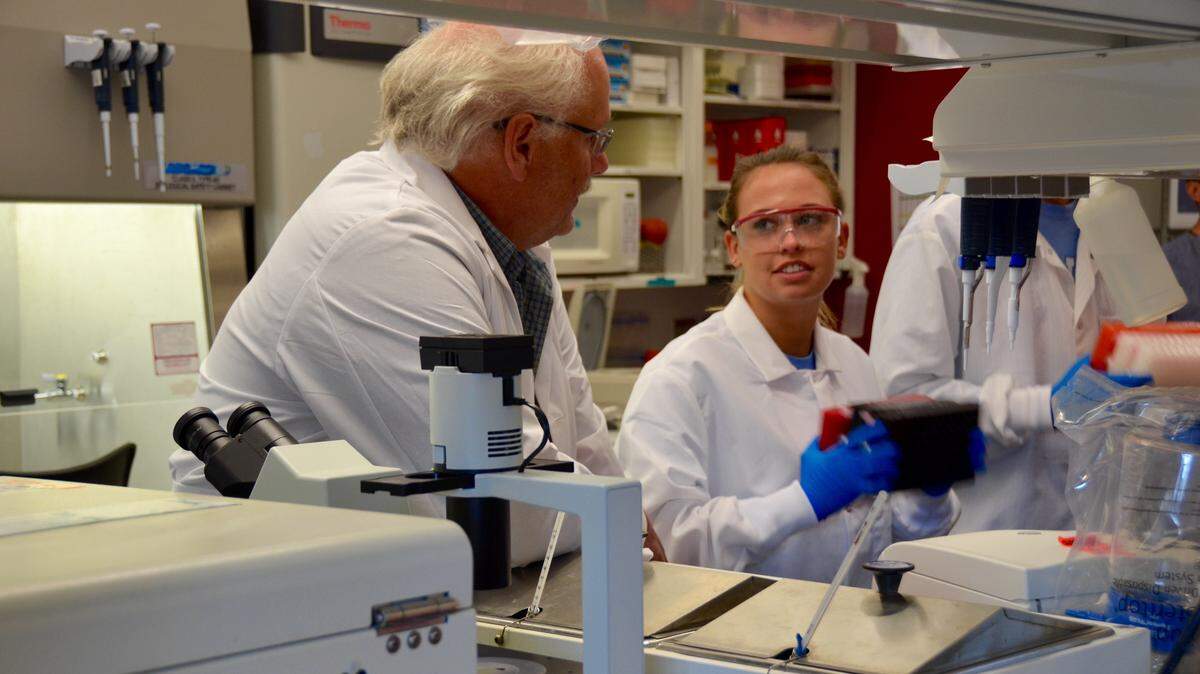
And now when I think of the work that the researchers at Duke and UNC are doing, some of these people go to labs every day. And you know, without windows or any accolades, they’re just every day digging to create actionable treatment.
And for me, when I was diagnosed, I was told I had two to three years to live. And I’m now five-and-a-half years out, and I know the treatment that I’m on now is going to fail. They all fail, eventually. And I’m going to need the next treatment. And the next treatment, though, is personal for me.
Q: What achievements are you most proud of?
I’m most proud of the MBC Collaborative Research Initiative. Trying to get Duke and UNC (together).
I’ve lived in North Carolina my whole life and became a Tar Heel basketball fan in the third grade. But I was treated at Duke. So I’m a perfect example.
We have to focus our research on metastatic breast cancer if we’re going to save people’s lives. Of course, we just went about doing it, and we raised a million and a half dollars. And last October, a year ago, we announced three $500,000 research grants to three different collaborations at Duke and UNC and metastatic breast cancer. I mean, that’s amazing.
Q: What would you say is a turning point in your life that helped define where you are today, that really set you on this path to doing this specific type of work?
A: Gosh, you know, I’m 70. So I was aware and in high school when the contemporary feminist movement started. My sister, who’s older than me, was in college. And she was at Guilford College, and she was going to one of the first consciousness-raising groups, and she took me and there were these women talking about women’s issues
I had a professor who was chairing the first mayor’s Committee on the Status of Women in North Carolina. And that was in 1973. And she asked me if I wanted to serve on one of the subcommittees, and I said yes, and I was able to get academic credit for it, and serve on the subcommittee that was studying employment for women in Greensboro, North Carolina. Just being able to be part of it, and I was a kid, and to let me just walk in and be part of it. That made a huge difference. And then going from there to the YWCA, and watching the kinds of things we were doing.
Unfortunately, now, it’s kind of heartbreaking to see that many of the fights that we won are now having to be refought. And I’m just hopeful, hopeful, hopeful that my daughter and her friends and that generation is going to step up, continue to step up in a big way.
Q: While we’re reflecting on this early introduction to the feminist movement, what would you say to your younger self, in a situation like that, or about what the future had in store for you?
A: Vigilance, resilience and collaboration. Collaboration, you can’t do it on your own. And you need to bring people to the table to help you to be resilient when you have losses, which you do at anything that you do, and to always find a way to learn from those. And vigilance is you got to keep your eyes open all the time and continue to work.
My husband gives me grief. He said, “I thought you were retired.” And I said, “You know I don’t have hobbies.” This is what has always given me energy. This is what I’m passionate about. It’s just that now I get to choose every day what I’m going to be involved in and choose the time of day. When you’re 70, and when you’re living with metastatic breast cancer, I take cues from my body of what I need. Absolutely. Vigilance, resilience and collaboration.
Q: You have a very substantial body of work to look back on now. What do you hope is your legacy?
Well, I keep going back to the sustain, building the dream, the rainbow out of bricks.
I keep thinking probably the scariest thing I ever did — or the stupidest thing I ever did — was when I was the director of Planned Parenthood, and we were outgrowing the clinic. And so I brought together a lot of different people to think about, well, what do we need? How many offices do we need? How many clinician rooms?
To make a long story short, we raised money to purchase Dr. Annie Louise Wilkerson’s OB-GYN clinic. And this was during the Reagan years. These were not easy years just to be director of Planned Parenthood, and to think about purchasing a building and trying to raise $2 million to do this. When I think about that, I can’t believe I was that stupid, and tenacious. Wow. Some of us laugh about it now. What were we thinking? I’ll tell you, every time I drive down Boylan Avenue, and I see that clinic, it’s pretty amazing. It still fills my heart.
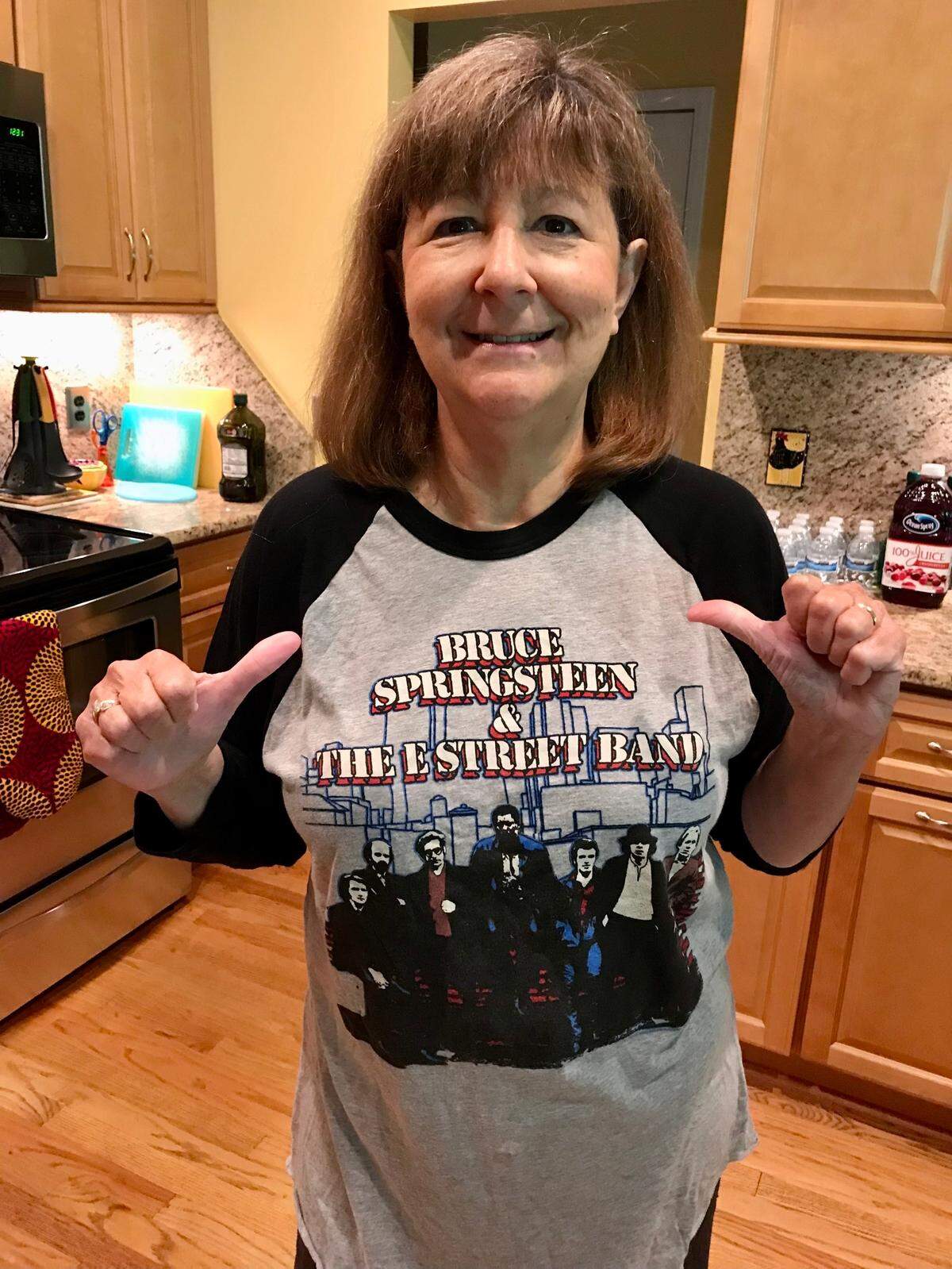
Get to know Pam Kohl
What’s the last book you read? I’m reading Steven Van Zandt’s autobiography. He’s part of the E Street Band — Bruce Springsteen.
In fact, when I think on it one of the biggest challenges of my life, I was beginning to think was getting tickets to the 2023 Springsteen tour. We got tickets for the Greensboro tour and we got tickets for our kids. It’ll be the first time we’ve taken them. We also got tickets for the show in Cleveland, but my husband and I will go to that. His autobiography? Excellent. And I had no idea how politically involved Stevie was especially in South Africa issues. Really amazing.
Who is your favorite musical artist? Well, Bruce Springsteen I’ve listened when I go in (for treatment). I mean, I’ve had a ton of radiation. I had cryoablation. And so when they say what kind of music do you want? I always say, Bruce Springsteen. My theme song right now and for the last few years, that’s his song called “Badlands.”
When I was gonna have my first cryoablation, I was really scared about it, and I posted on Facebook and send emails to all my friends and said, ‘OK, at one o’clock, turn on ‘Badlands’ as loud as you can turn it up, because I just need to know everybody’s focused on finding a way out of these Badlands.
This story was originally published October 27, 2022 at 4:35 PM.