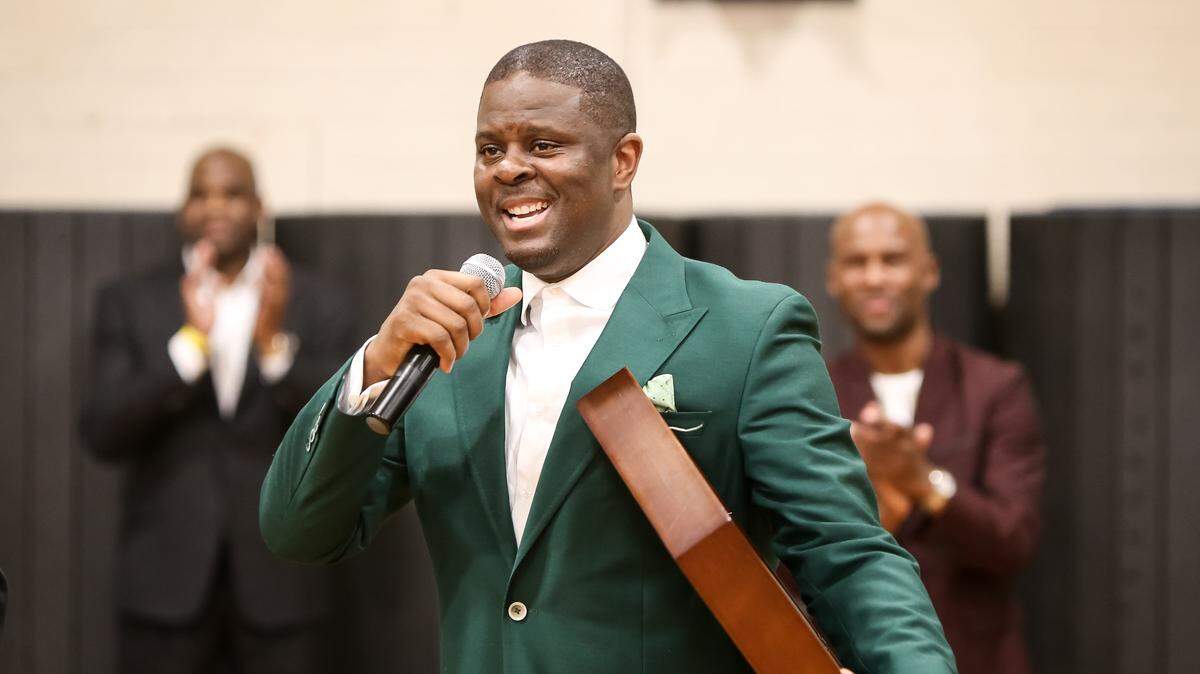
UNC’s Ralph Baric has long been a leader in virus research. Now, the world is listening.
READ MORE
The News & Observer Tar Heel of the Month
The News & Observer’s Tar Heel of the Month honors residents who have made significant contributions to the Triangle, North Carolina and beyond. At the end of the year, a Tar Heel of the Year is named. Do you want to nominate someone? Email metroeds@newsobserver.com.
Expand All
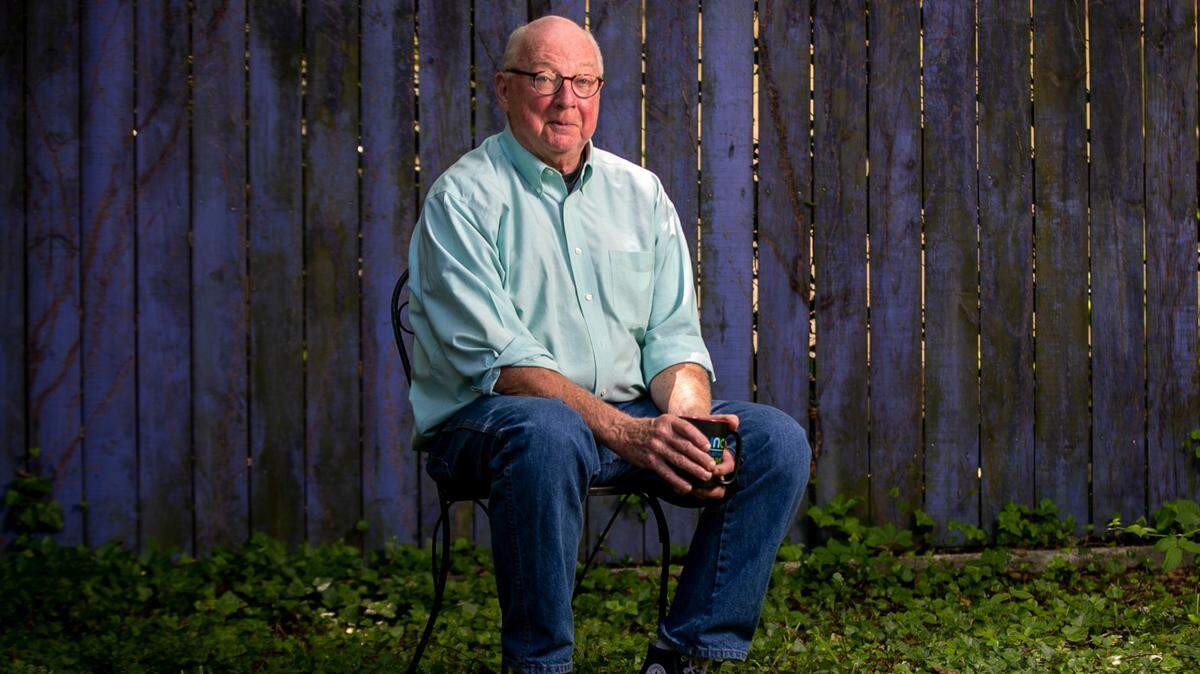
For years Dr. Ralph Baric studied viruses that hardly anyone was paying attention to. Now, as the world faces the coronavirus pandemic that’s taking hundreds of thousands of lives, it is looking to him and his research as the basis for treatments and a vaccine.
Baric, 66, a distinguished researcher and professor in the department of epidemiology and department of microbiology and immunology at UNC-Chapel Hill, saw this crisis coming. He has spent three decades studying coronaviruses. from the minute details of how they replicate to identifying strains in other species that could jump to humans to testing drugs that could treat patients during a future outbreak.
“It’s certainly not a position I expected to be in,” Baric said. “Sometimes it’s a little overwhelming, but you get up the next day and you keep going. It’s never ending, and it’s immediate. And it’s life and death for people.”
Baric is The News & Observer’s Tar Heel of the Month, which honors people who have made significant contributions to North Carolina and the region — and in this case the world.
Dr. Mark Denison, professor of pediatrics and pathology, microbiology and immunology at Vanderbilt University and a longtime collaborator with Baric, said preparing for a pandemic has driven a lot of their coronavirus research over the years. He compared it to a hurricane hitting the North Carolina coast.
Denison said you don’t know whether the storm is coming directly at you, whether it’s going to be a Category 5 or whether it’s going to veer off course and go somewhere else.
“You know it will happen, you just don’t know when,” Denison said. “And that’s the message that [Baric] has been conveying all this time.”
Baric’s research has laid the groundwork for COVID-19 treatments, including the drug remdesivir, and gets him invited to Zoom calls with U.S. and foreign health officials.
He said it’s rewarding to know that he’s helping people. An email from someone that says, ‘Thank you, remdesivir saved my life,’ makes the exhaustion worth it.
“I don’t know how to tell you what that means,” Baric said. “It’s indescribable. At a very fundamental emotional level. I’m delighted to be here to make the best difference that I can make.”
Baric’s lab fighting COVID-19
Baric starts his day around 5 a.m. He considers it a good day when he’s reading and writing papers and grants related to his team’s work on coronaviruses.
A bad day is when he has 10 Zoom conference calls lined up. However, those calls are essential to his team’s involvement in developing vaccines to be ready for human trials by the fall.
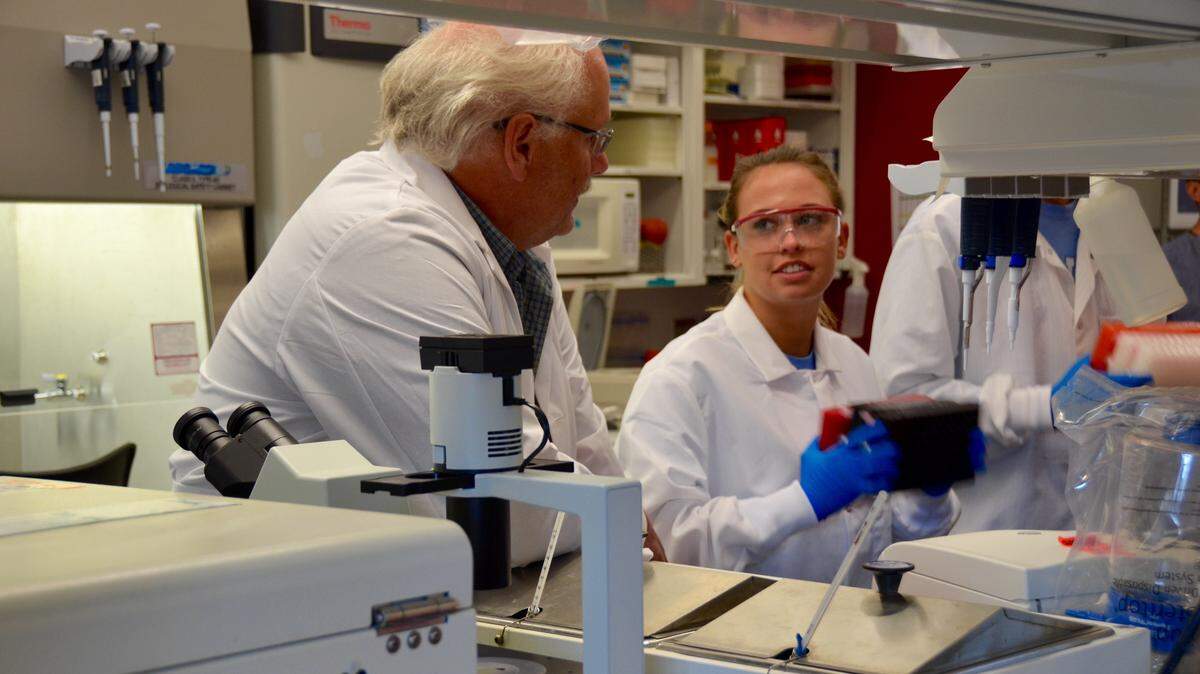
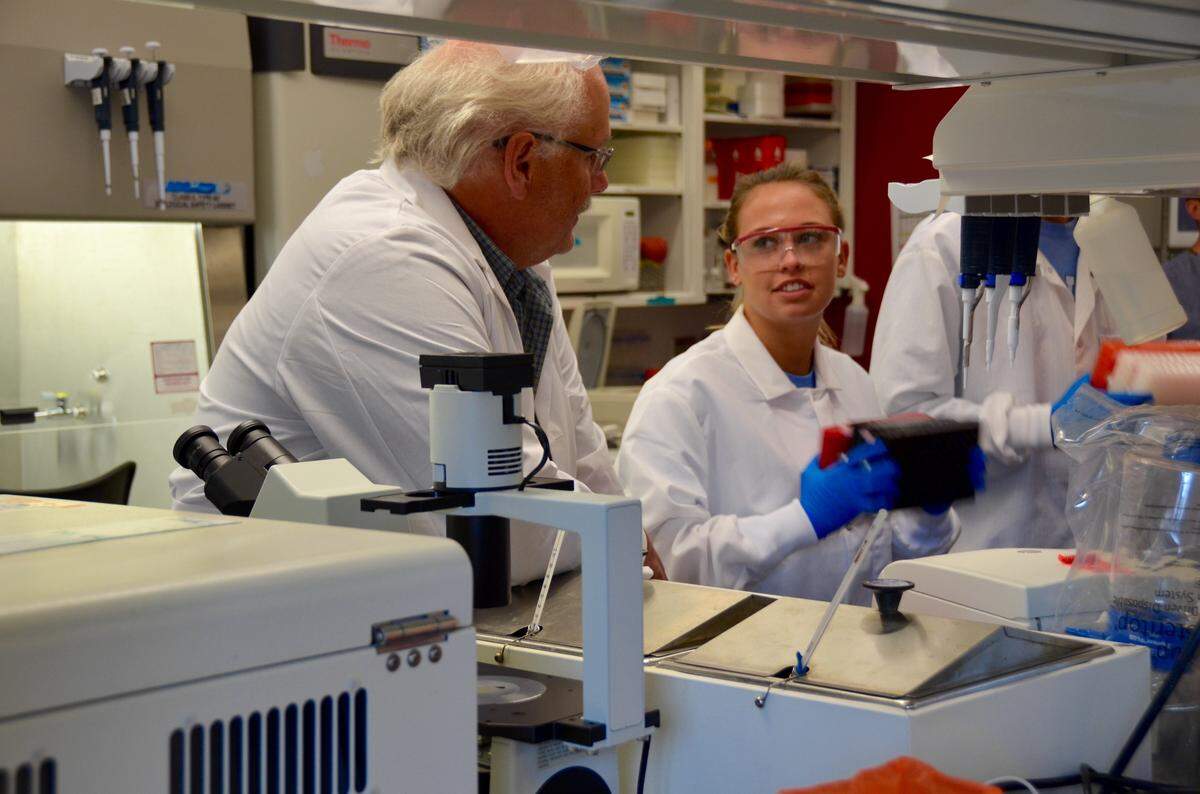
Baric goes to the lab on UNC’s campus about three times a week, where he joins his colleagues who are all working 12 hours a day at a minimum. About 16 researchers are working in the high containment facility while wearing hooded Tyvek suits and using portable breathing apparatuses to protect them from exposure to the virus.
His lab was one of the first places in the U.S. to receive a sample of the novel coronavirus earlier this year and has been conducting tests on it since. The lab’s goals have been to get drugs into human trials and approved for treating patients and to understand how the virus is replicating and spreading. They’re also looking at the consequences of that spread and how to mitigate those harmful effects.
“There are distinct timelines that need to be done for getting these vaccines into human cohorts by a specific time,” Baric said. “If we don’t meet those metrics as a group, then vaccines will get delayed and not rolled out very quickly and people will die.”
A lifelong love of science and discovery
Baric was both nerdy and athletic as a kid, growing up in Carneys Point, New Jersey, a small farm town in the southern part of the state.
One of his favorite books was “The Biological Time Bomb,” which predicted things like monoclonal antibodies and recombinant DNA in the 1960s. Those ideas of treating infections with antibodies cloned out of a human who had a viral infection, then combining genetic material from different sources to create DNA molecules in a lab, stuck with him.
He also spent his childhood days exploring the outdoors and ended up in the doctor’s office quite a bit. He was fascinated by the doctor’s handiwork stitching up his injuries and the process of healing the human body. Before HIPAA regulations, Baric would also sit in the physician’s office where his mother worked as a nurse and watch the doctor work with patients and listen to their conversations.
Baric took as many science courses as possible in high school and decided to study at N.C. State University, where he earned his bachelor’s degree in zoology.
But it wasn’t just his interest in microbiology and virology as a teenager that brought him to N.C. State. Baric was an elite long-distance swimmer and earned a full athletic scholarship. His colleagues and mentors say the determination, focus and discipline it took to compete at that level carries into his coronavirus research.
After doing research in a virology lab as an undergraduate, Baric continued that work and earned his doctorate in microbiology from N.C. State. Then, he moved across the country to do his postdoctoral work at the University of Southern California.
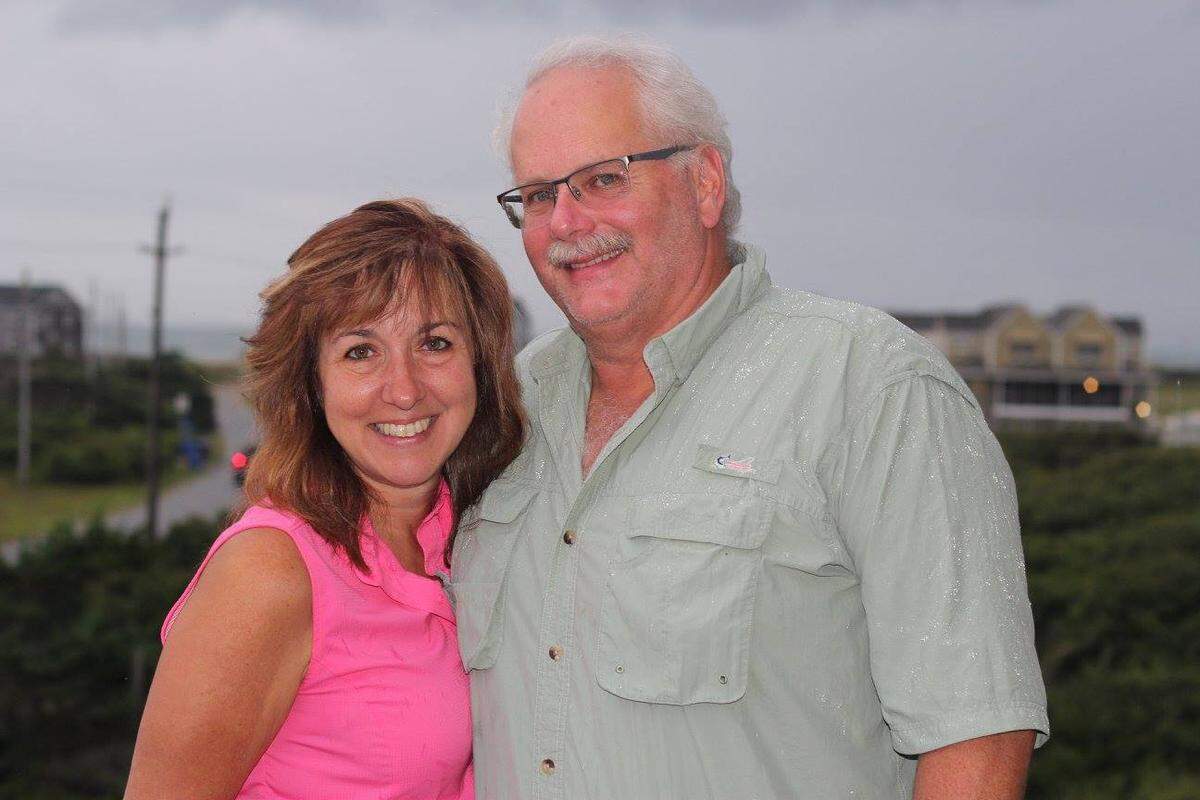
That’s where he was introduced to two of the great loves in his life: his wife, Toni, and coronaviruses. Toni being the more important one, of course.
At the time, people didn’t know much about coronaviruses, what they looked like, how they worked or how they replicated. Baric decided that seemed like a “pretty cool” thing to figure out, and he has spent the next 35 years becoming a global expert on the virus.
Research predicting a coronavirus pandemic
“We would be much less well-positioned to respond to this outbreak ... if Ralph hadn’t done all the work that he’s done,” said Dr. Mark Heise, a professor in the department of genetics at UNC. “It has implications not just in drug development, but also in understanding how this virus causes disease.”
In the late 1990s, Baric was doing experiments to understand how coronaviruses would adapt to different cells. He published a study that showed they are emerging viruses and can adapt and jump between species and cause outbreaks in humans.
In 2002, the severe acute respiratory syndrome (SARS) outbreak occurred, as he predicted. At that point, his lab developed a way to manipulate the genetics of the virus genome and then study the impact of that change on how the virus replicated or caused disease.
His lab conducted similar research during the Middle East respiratory syndrome (MERS) outbreak. Around 2012, they focused on trying to identify one or two drugs that could be put on a shelf so that when an epidemic occurred they could be used immediately. He did all of this work warning about the threat of coronaviruses in collaboration with researchers at UNC and other universities.
“In all of his presentations and grants and papers it’s a driven message, a consistent message,” Denison said. “It’s like a prophet.”
That commitment and expertise is what led to the quick trials and widespread use of remdesivir and other compounds, including a pill called EIDD-2801, when the SARS-CoV-2 virus emerged. Remdesivir has reduced recovery time for patients with COVID-19 up to four days and has been distributed to several North Carolina hospitals.
Baric wasn’t the only person doing this research, but he was a leader in the field globally, said Bob Johnston, Baric’s mentor at N.C. State and former colleague at UNC-Chapel Hill. Johnston is a professor emeritus of microbiology and immunology at the UNC School of Medicine and the executive director of the nonprofit organization Global Vaccines Inc.
“If we have a vaccine within a year and a half from now that will be in large part to the basic work that Ralph did on a little virus that nobody cared about years ago,” Johnston said.
Challenges with funding
Coronavirus research in the U.S. almost dried up in the 1990s, according to Baric, and his own lab was about a month or two away from closing down. Funding wasn’t a priority because there were no major human coronavirus pathogens at the time. There were also no genetic tools that researchers could use to understand how the virus replicated or caused disease.
Funding at the National Institutes of Health and other institutions dropped below 10%, Baric said, which made it really difficult to get money to support their work.
So, Baric threw a Hail Mary.
His lab took five years of funding to develop strategies to be able to genetically manipulate coronavirus genomes, which the field desperately needed, he said.
“I was either going to do it or fail, and then I was going to be out of academic science,” Baric said. “It was a formidable task.”
They “got lucky” and managed to do it just before that five year mark, Baric said.
Baric’s work has been a reliable source during this pandemic and that’s a reflection of his commitment to doing the science correctly and rigorously.
“I think he’s a genius. He does things that few people would even try,” said Aravinda de Silva, a professor of microbiology and immunology at UNC. “The methods and techniques that he and his lab have developed, very few other labs in the world can do it.”
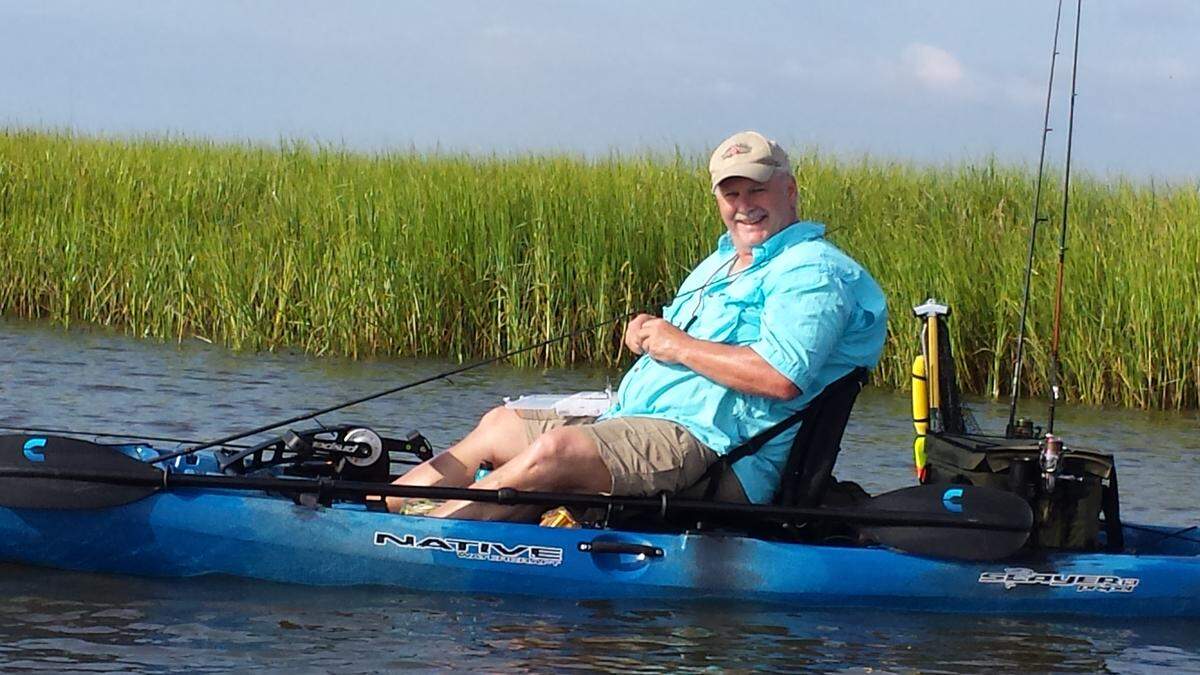
The man outside the lab
One of the things people find most impressive about Baric is how he balances being an innovative, successful scientist with being a genuine, hilarious friend.
Between the experiments and grant writing, there’s laughter among these scientists and no one is afraid to make fun of each other. They tease about stealing ideas from each other and how crazy proposals will never work. It’s all part of the friendship that ultimately drives their success and collaboration.
“He’s a bit of a celebrity in the virology community,” said Nat Moorman, associate professor of microbiology and immunology at UNC. “People don’t expect him to be so approachable and so friendly and engaging.”
This man who’s running a world-renowned research program also dressed up as Santa Claus for his grandson. He’s made new discoveries about the genetic mechanisms of deadly viruses and coached a year-round swim team full of kids between 5 and 7 years old. He consults with international health officials but he’ll also chat with a new graduate student at a bar on Franklin Street. And while working around the clock to stop a global pandemic, he makes time to go bird watching with his wife.
“We love to go out and just be in nature,” Toni Baric said. “It’s so calming ... and we tandem kayak and still end up married when we get back to shore.”
Baric never let his work get in the way of spending time with his four kids, his wife said. He coached each of them and their friends in competitive swimming for years and would get up early to write papers or plan his lectures late at night once they’d gone to bed.
“He really sacrificed himself in order to have quality time with the kids,” Toni said.
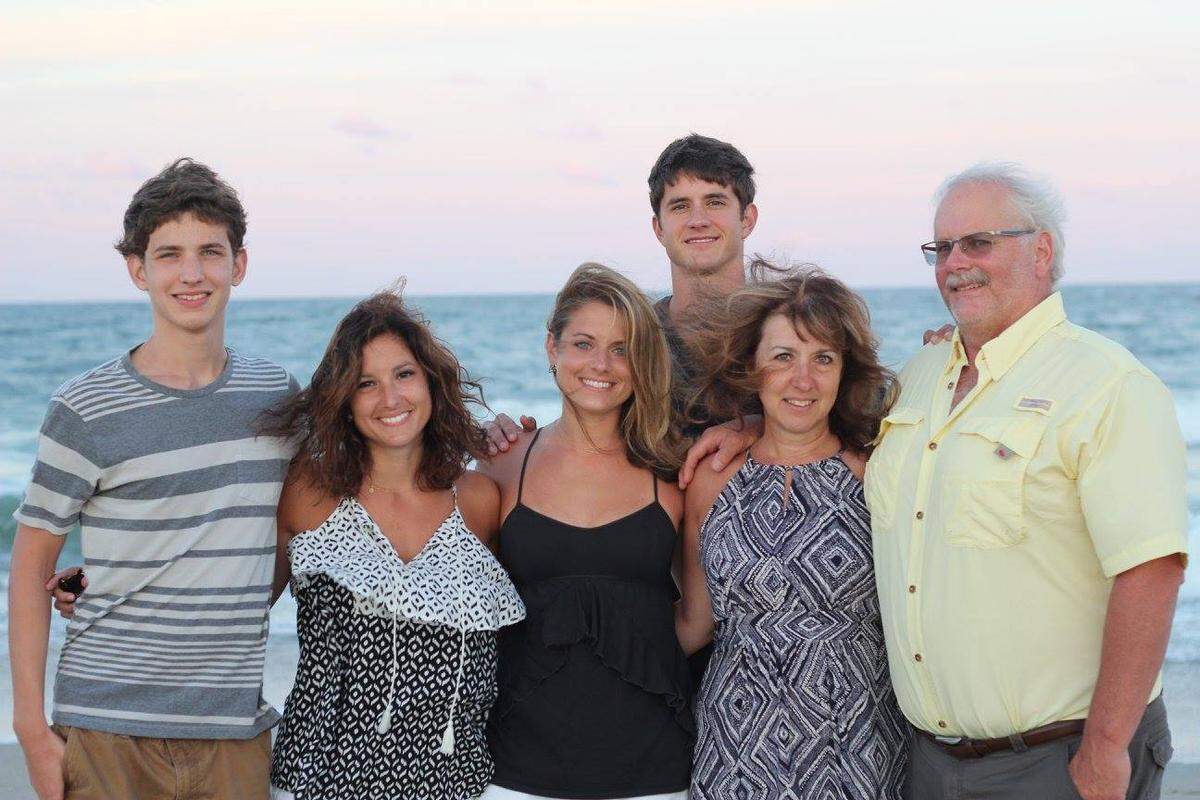
Swimming stayed a part of Baric’s routine even after coaching, right up until the gyms closed due to the coronavirus.
“I love getting in the water and just having the water close down all the sensory inputs,” Baric said. “So I just get to be.”
That calmness and escape is needed during this time, but it’s hard for Baric to unplug. And he’s under a lot of stress.
“He’s kind of getting hit not just by trying to do good science but all kinds of other negative things he has to deal with, with conspiracy theories,” Toni said.
False claims that COVID-19 was created in Baric’s lab started spreading this spring and one UNC-CH alumna received a death threat over the false accusation.
“I know it’s going to pass, but it’s really hard to see him have to deal with it,” Toni said. “There’s no truth to any of it. If you’re criticizing his science that’s one thing, but when you’re making stuff up … that’s hurtful because he would never hurt anybody.”
Baric said he tries to focus on the good he’s doing.
“I prefer to think of it that the vast majority people know that we’ve been at the forefront of coronavirus research for 35 years,” Baric said. “And that the things that we’ve done have led to therapies that have saved lives and that have positioned us to respond in a positive way against this new outbreak.”
Baric isn’t a household name outside of the scientific community. But he might be in history books one day as a key part of the global response to the coronavirus pandemic, the treatment of COVID-19 and a vaccine.
This story was originally published May 28, 2020 at 6:18 PM.