Eastern NC voters sue to block GOP-drawn Senate map, arguing it dilutes Black voting power

READ MORE
North Carolina redistricting
Expand All
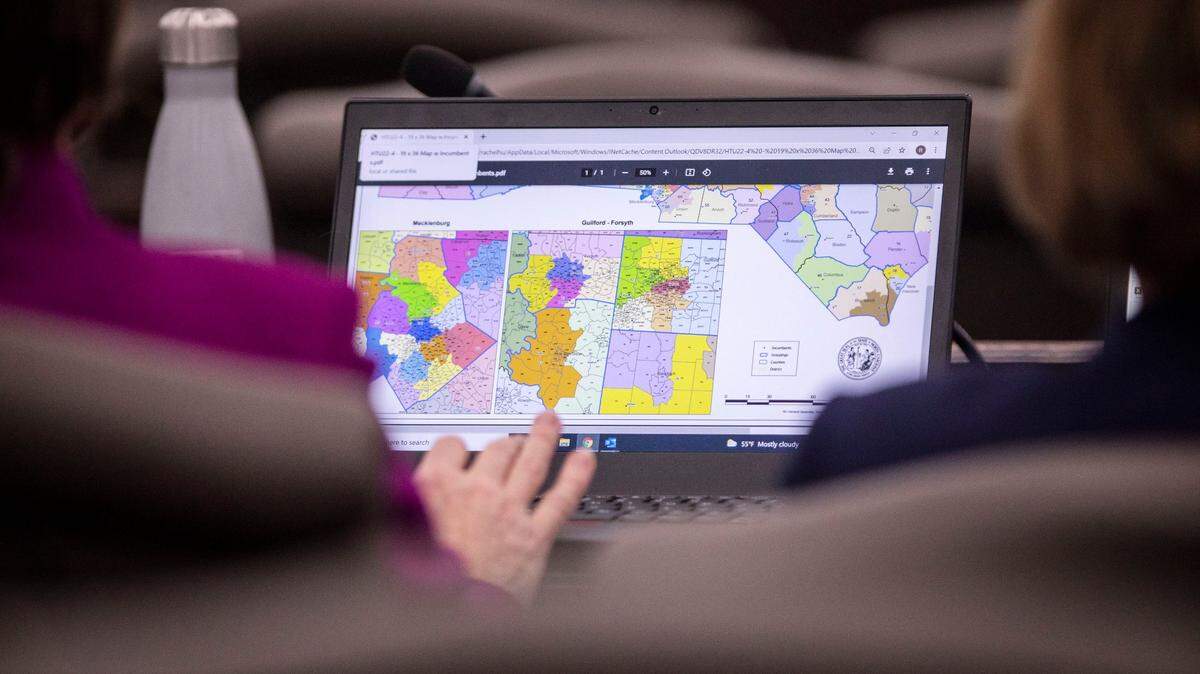
Two voters in Eastern North Carolina are challenging the state’s new map of state Senate districts in federal court, arguing that it dilutes the voting power of Black residents.
The plaintiffs have requested that the court decide whether to block the new map from taking effect by Dec. 1, three days before candidates can begin to file to run in the 2024 elections.
The lawsuit argues that Senate districts 1 and 2 violate the Voting Rights Act by “cracking” groups of Black voters between the two districts.
“The plan enacted by the General Assembly in late October splits, cracks, and packs black voters to dilute their votes and blunt their ability to fully participate in the democratic process,” Sen. Dan Blue, the leader of the Democratic minority in the Senate, said in a statement on Monday.
“For example, there are eight counties in North Carolina that are majority Black in population, and they are all in eastern North Carolina (Bertie, Hertford, Edgecombe, Northampton, Halifax, Vance, Warren and Washington). The map enacted by the General Assembly divides these eight counties among four separate districts. This is ‘cracking’ on steroids.”
Republican legislative leaders did not immediately respond to a request for comment on Monday.
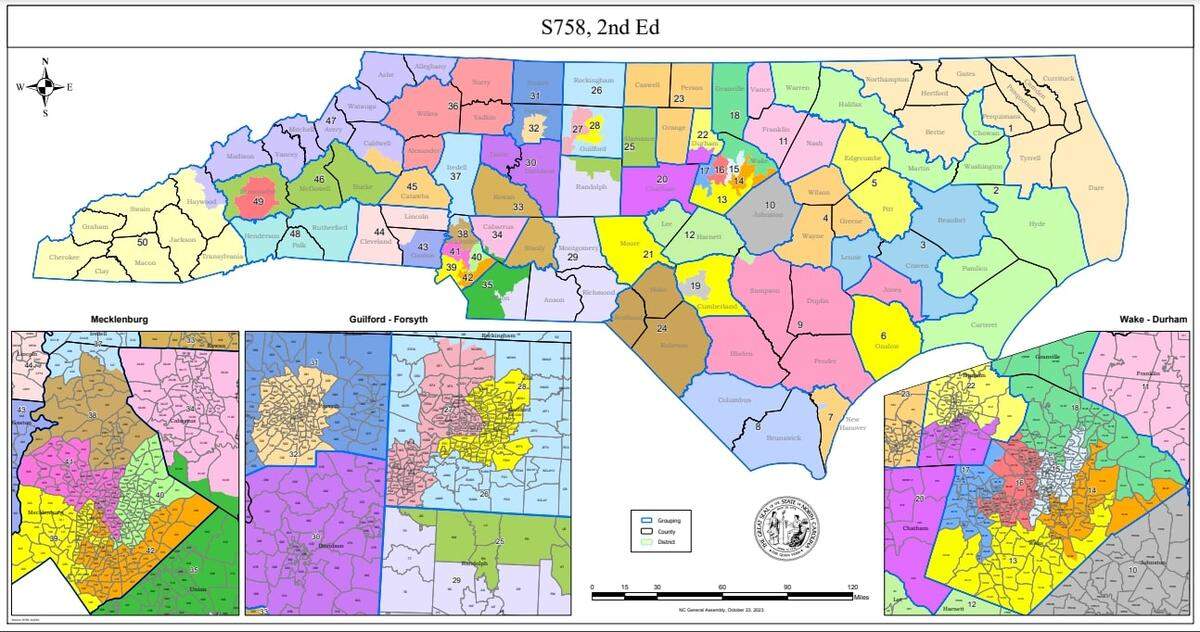
The lawsuit is likely to disrupt candidate filing, which is set to begin on Dec. 4.
“When the VRA violation is as obvious as this, and the remedy is so limited and straightforward, the General Assembly should not be entitled to conduct one election under an illegal map just because they waited until the election season was drawing near to enact the map,” plaintiffs argue in court filings.
The two plaintiffs in the case are Rodney Pierce, of Halifax County, and Moses Matthews, of Martin County. Both men are Black and would live in Senate District 2 under the new map. They argue that it places them in a majority-white district that weakens the power of their votes.
Districts 1 and 2 are currently represented by Republican Sens. Norman Sanderson and Jim Perry. In the new map, Republican Sen. Bobby Hanig is placed in District 1, Sanderson in District 2 and Perry in District 3, likely leaving Perry unaffected by any potential changes brought about by the case.
Before the legislature passed this map, the Southern Coalition for Social Justice sent a letter to Republican leaders arguing that the Senate districts in question violate the Voting Rights Act.
Sen. Ralph Hise, chair of the Senate Redistricting Committee, emphasized throughout the redistricting process that racial data was not used to craft the new maps. The coalition argued that lawmakers should have used race to ensure that Black residents did not have their votes illegally diluted.
After seeing the coalition’s letter, Hise said, “The chairs made the determination that nothing in the data we saw required the additional drawing of those maps specifically on the basis of race.”
How did it get here?
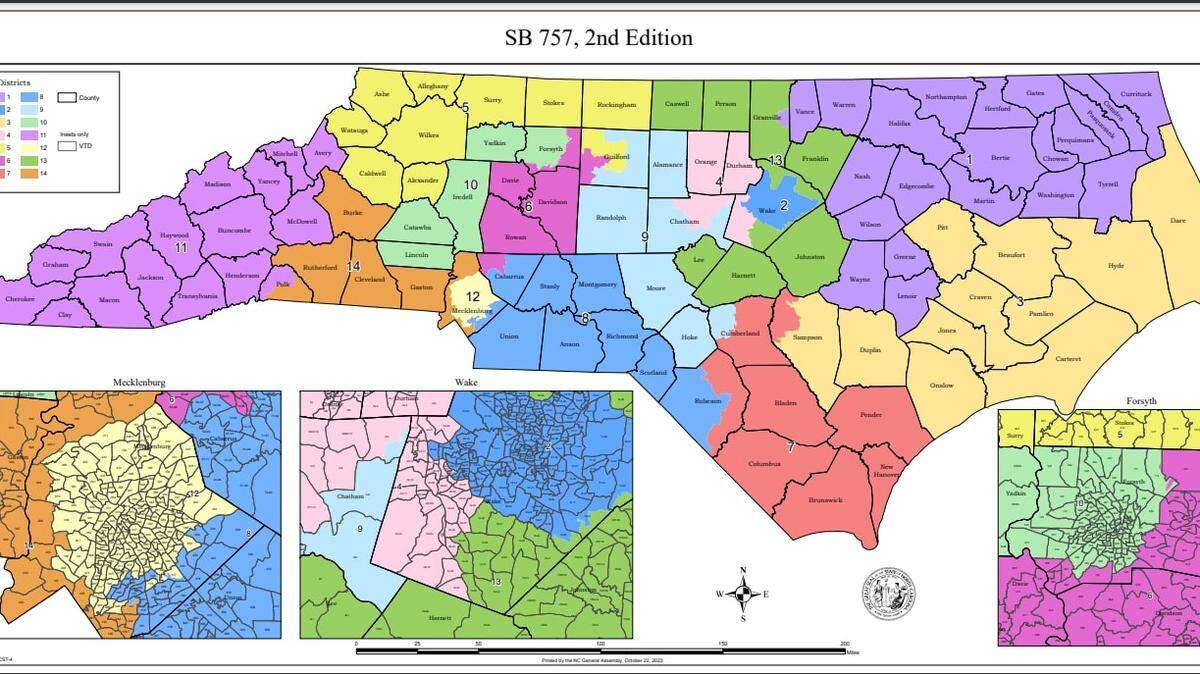
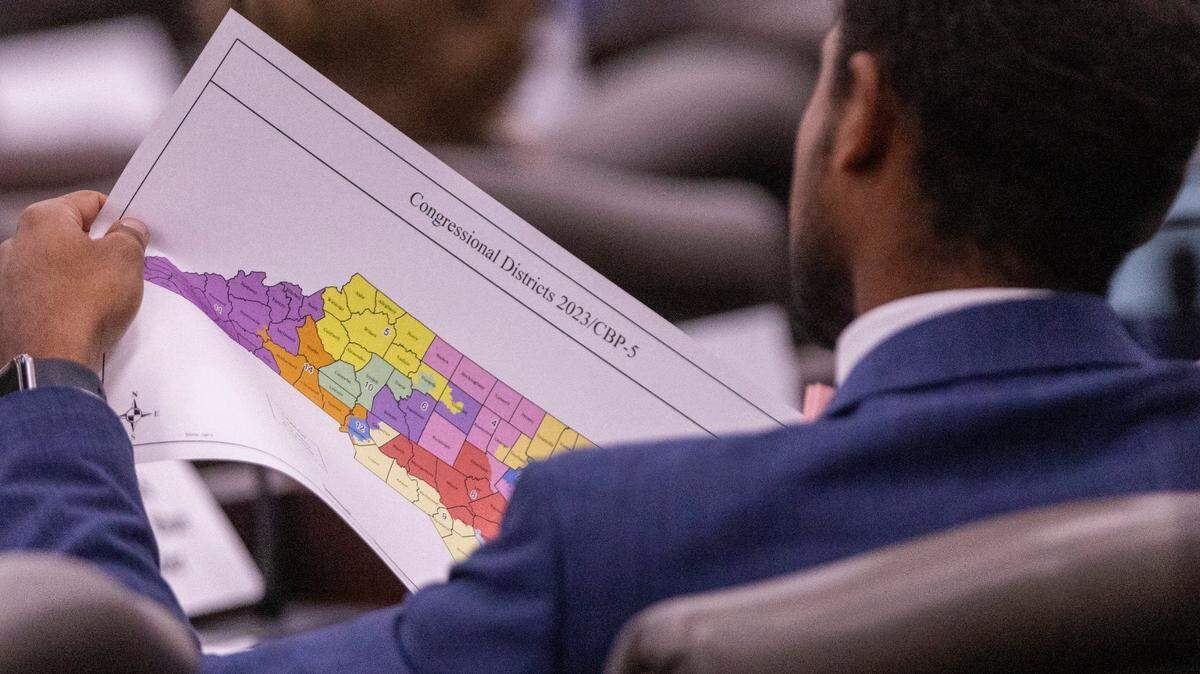
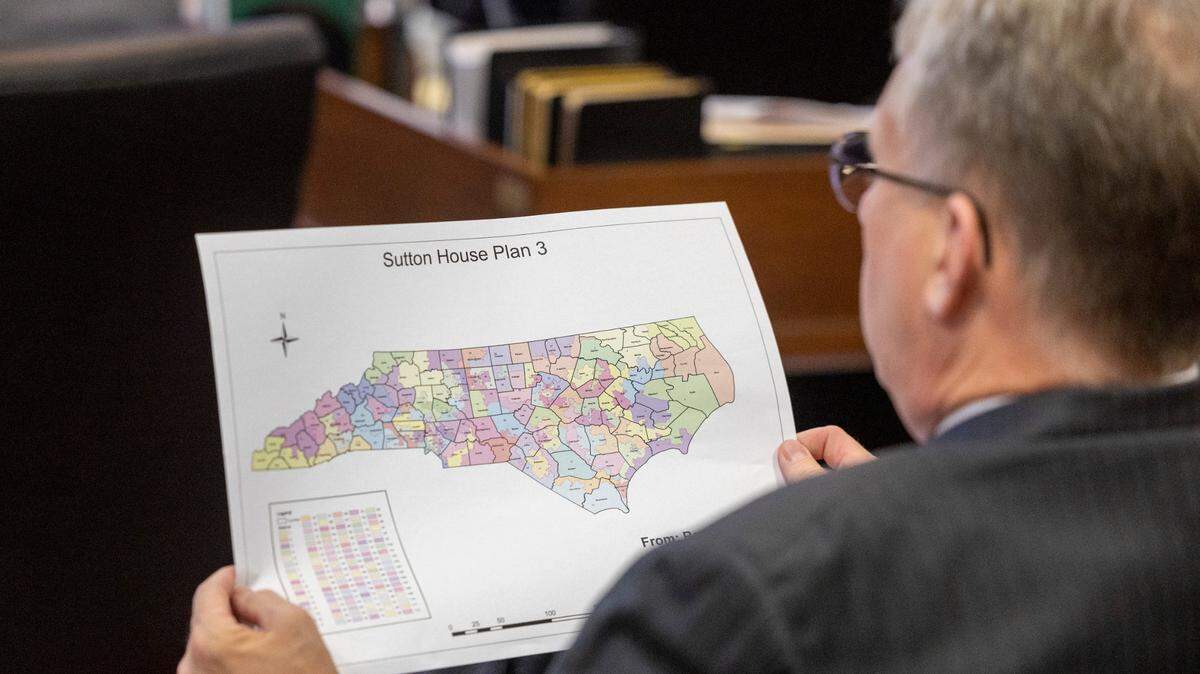
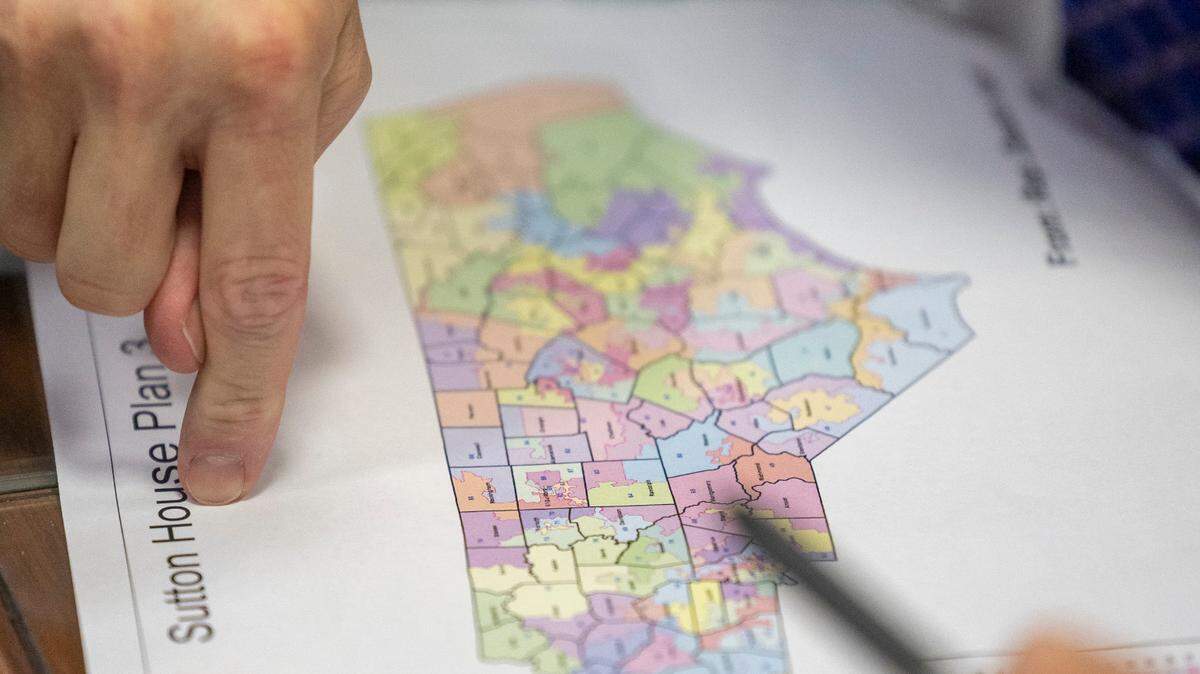
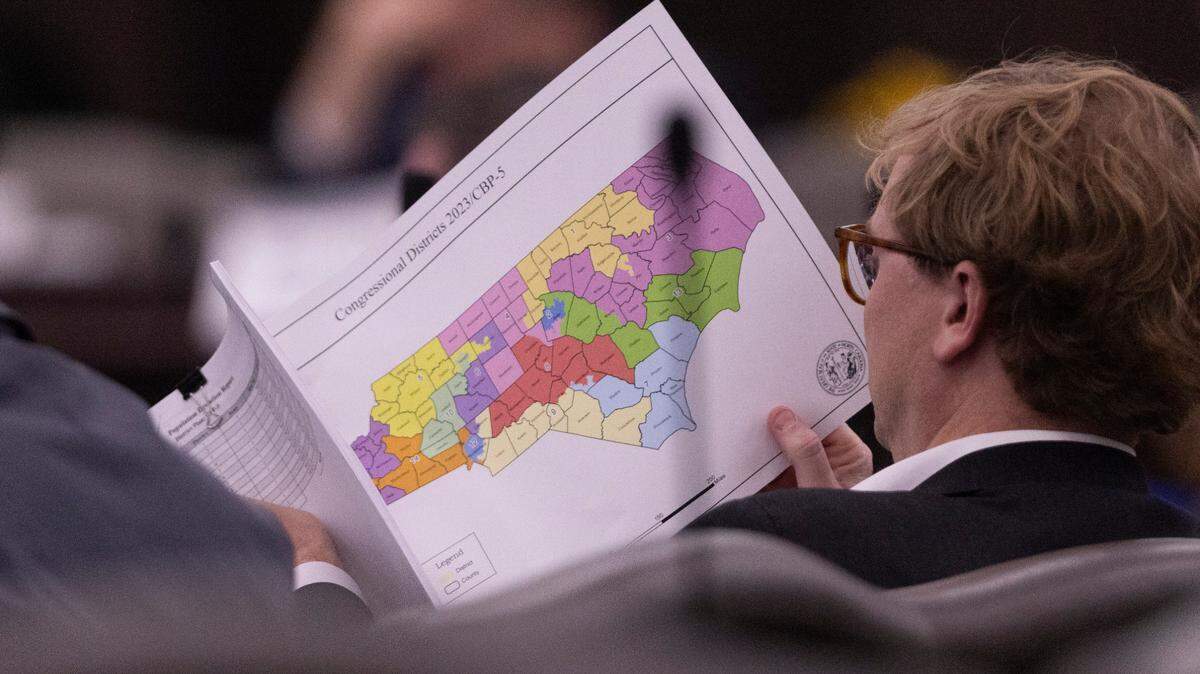
Lawmakers passed new legislative and congressional maps last month amid fierce opposition from Democrats, who claimed the maps gerrymander Republicans into more power.
The congressional map used in the 2022 elections was drawn by a bipartisan group of “special masters” after the state Supreme Court ruled that Republican leaders had unconstitutionally gerrymandered the maps to give themselves an advantage. The court-ordered map resulted in seven Democrats and seven Republicans getting elected to the U.S. House.
Republicans also won a majority on the state Supreme Court in 2022, after which they swiftly reversed the court’s earlier decision on maps and ruled that the court no longer has jurisdiction over claims of partisan gerrymandering. This allowed Republicans in the legislature to draw new congressional and legislative maps and seemingly give themselves as much partisan advantage as they pleased without facing legal repercussions.
While courts likely won’t rule on partisan gerrymandering, racial gerrymandering remains a valid grounds for a legal challenge. The federal Voting Rights Act prohibits any election law that discriminates based on race, and the U.S. Supreme Court has recently agreed with plaintiffs in Alabama who argued that the state’s electoral maps unlawfully diluted the votes of Black residents.
While the lawsuit focuses on the state Senate, Democrats have raised concerns about potential racial gerrymandering in the congressional map as well.
The 1st Congressional District, which covers most of Eastern North Carolina, has historically been a district with large portion of Black voters. In the new maps, several white-majority communities are added to the district, making the Democratic-leaning area much more competitive.
This story was originally published November 20, 2023 at 4:49 PM.












.JPG)