
At the worst time, North Carolina nursing home residents lost key protections

A nationwide struggle to hire and retain caregivers is causing North Carolina nursing homes to reach a crisis point — a trend that endangers thousands of residents, our investigation has found. An influx of for-profit nursing homes and fewer regulations during the pandemic are compounding the crisis. So what should families do to protect their loved ones?
- Part 1: ‘People can die.’ Staffing crisis endangers thousands inside NC nursing homes
- Part 2: Do some for-profit NC nursing homes cut corners on staffing and quality?
- Part 3: Need to find a high-quality nursing home in North Carolina? Here are some tips
- Part 4: At the worst time, North Carolina nursing home residents lost key protections
- Part 5: She didn’t have to die, her son says. Was short-staffed nursing home to blame?
- Part 6: Troubled NC nursing home failed to protect residents from abuse, investigation finds
- Part 7: ‘You just can’t give good care.’ Nursing home aides struggle with daunting caseloads
- Part 8: ‘Outside the box’ solutions helped this nursing home excel, despite staffing challenges
- Tell us your thoughts: What have you experienced or witnessed inside NC nursing homes?
When the pandemic descended on North Carolina’s nursing homes, it took a toll on tens of thousands of vulnerable residents — and not just those who got sick.
Virtually every resident lost key protections. Routine inspections of nursing homes dropped precipitously. Family members — often first to spot problems inside facilities — were blocked from visiting for months. And state legislators passed a law shielding nursing homes from most legal claims related to COVID-19.
All of this happened as the state’s nursing homes were wrestling with severe staffing shortages, particularly among the front-line caregivers whom residents depend on for help with basic needs, including bathing, eating and toileting.
It all added up to a “wild, wild West” climate, in which nursing homes face few consequences for negligence, says Olivia Smith, a lawyer with the Wallace and Graham law firm in Salisbury.
“When there’s no one holding people accountable for their negligence, what is the incentive to not be negligent?” she asked. “ It makes it easier for nursing homes to cut corners.”
Missing inspectors
In March of 2020, as the pandemic began its assault on the nation’s nursing homes, the federal Centers for Medicare and Medicaid Services temporarily suspended routine inspections of the facilities, directing state regulators to focus their efforts on infection prevention and control instead. North Carolina legislators also passed a law suspending those regularly scheduled inspections in 2020.
But the pace of inspections in North Carolina still hasn’t caught up with pre-pandemic levels, data show.
In a typical year, inspectors evaluate more than 400 of the state’s 425 nursing homes. In 2020, state regulators conducted just 93 standard inspections, according to federal data. They completed only 257 in 2021.
Federal rules call for regulators to conduct in-depth inspections — known as “standard surveys” — at each nursing home at least once every 15 months. But as of May 31, 2021, more than three quarters of North Carolina nursing homes had gone longer than 15 months without a standard survey, according to the U.S. Department of Health and Human Services Office of Inspector General.
Many homes are still operating without the usual scrutiny. As of January 2022, nearly half of NC nursing homes had gone without a standard inspection for more than 15 months, despite the federal requirement, the Charlotte Observer found.
North Carolina’s 96 nursing home inspectors needed to focus much of their attention on infection control inspections over the past two years, according to Dave Richard, Deputy Secretary for Medicaid for the state Department of Health and Human Services.
The department conducted more than 2,000 infection control inspections in 2020 and 2021, and had to do that work without any increase in inspectors, Richard said.
The state nursing home association notes that the overall number of inspections at nursing homes — including those focused on infection control — increased from 2019 to 2020. But infection control inspections are much less comprehensive than standard inspections, a former inspector said. They usually last about a day, while a standard inspection typically requires four inspectors and four days.
Richard said the department made the “right response” during the pandemic, but acknowledged that the state is still trying to catch up with standard inspections.
Bill Lamb, a leader of a group that advocates for nursing home residents and their families, is most concerned about the for-profit companies that own more than 80 percent of North Carolina’s nursing homes. Their facilities, on average, earn lower scores for staffing and quality than nonprofits, according to an Observer analysis.
“If you lack public oversight, a private provider is going to behave in a way that is most profitable to them,” said Lamb, a board member and former chair of Friends of Residents in Long Term Care.
‘You never know what is happening’
Even in the years before the pandemic, occasional state inspections were no substitute for the sharp eyes of residents’ family members. Relatives have often been the first to inform nursing homes about problems that could endanger the vulnerable people in their care.
But starting in March 2020, CMS instructed nursing homes to close their doors to visitors. It was a decision aimed at protecting elderly residents who were vulnerable to COVID-19.
DHHS lifted most restrictions on visits to N.C. nursing homes in March 2021. But some homes continued to limit visits. In 2021, state regulators issued citations to 21 nursing homes for failing to comply with visitation requirements, according to the state Department of Health and Human Services.
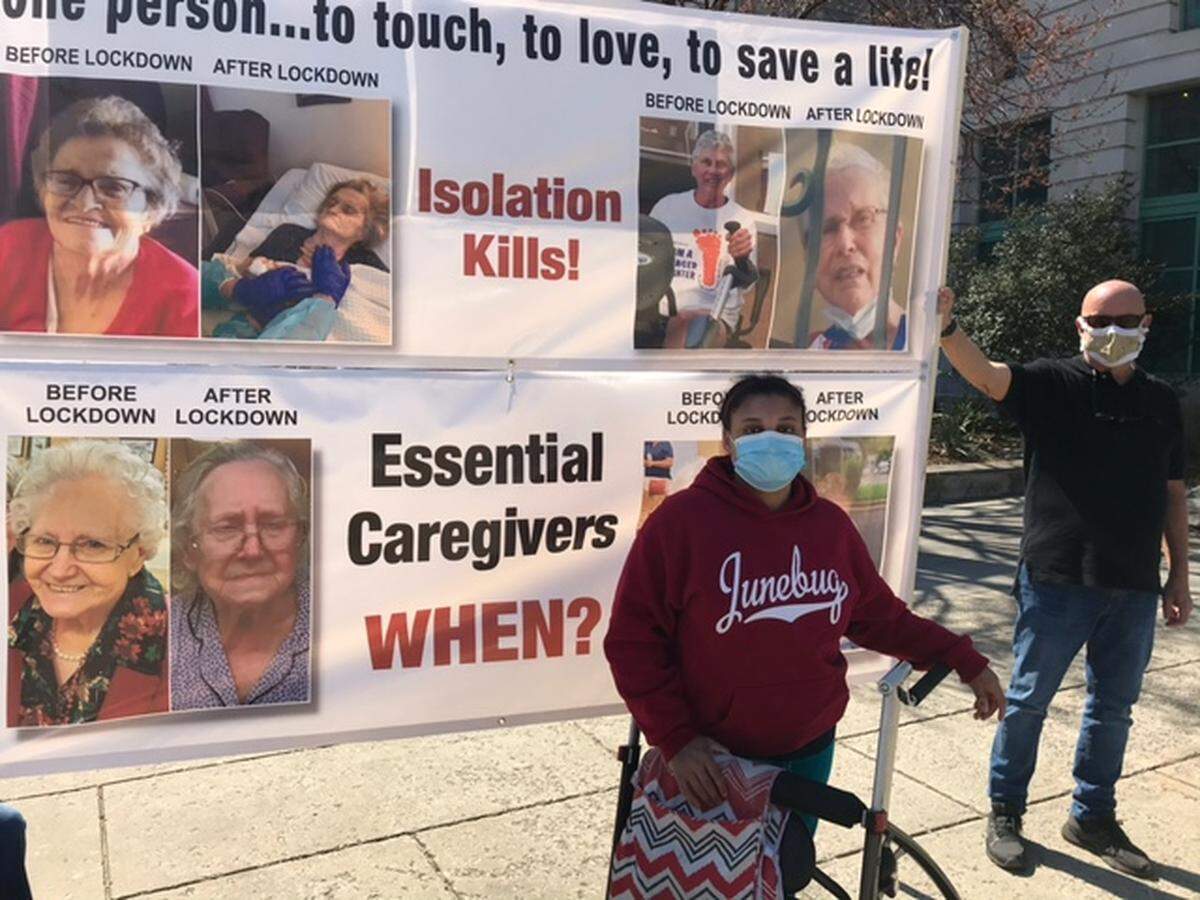
At the Oaks at Whitaker Glen-Mayview in Raleigh, for instance, administrators limited families to two 20-minute visits per week, according to a July 2021 inspection report. They were required to schedule visits and could only see loved ones in designated indoor and outdoor areas, inspectors found, meaning they saw little of the facility while there.
Charles Keller, whose 83-year-old mother was admitted for rehabilitation at that nursing home during the summer of 2021, was initially told he would have to visit her in the nursing home’s lobby, he said. Because his mother was recovering from a fractured pelvis, getting her to the lobby would have been difficult and painful.
After Keller notified the state, he was allowed to visit her room and was shocked by what he saw inside: peeling plaster and cockroaches on the walls, he said.
PruittHealth, the for-profit company that owns the Oaks at Whitaker Glen, said the company changed its visitation policy in July 2021 to begin allowing unscheduled visits for all COVID-19-negative patients. Now, the company said, it welcomes unscheduled visits for all residents at all times.
“As public health guidance evolved, so did our visitation policies,” the company said in a written statement.
Keller said he wonders whether such restrictions were motivated in part to avoid scrutiny — particularly from “families who are a little savvy and know how to advocate.”

Other advocates for nursing home residents suspect the same.
“If you can’t put your eyes on your loved ones, you never know what is happening to them in facilities,” said Raleigh lawyer Steve Gugenheim, who represents families who have sued nursing homes for negligence. “People don’t find out why something happened — or that something happened — until they get a call that their loved one is dead or in the hospital.”
Does immunity let homes dodge accountability?
On May 4, 2020, Gov. Roy Cooper signed a bill that gave nursing homes a powerful legal shield. It protects health care providers from liability for decisions or activities “directly or indirectly” related to the COVID-19 pandemic.
As of June 1, 2021, North Carolina was among 38 states that had issued executive orders or passed legislation allowing for immunity for long-term care facilities, according to a review by Consumer Voice, a national group that advocates for residents in long-term care.
But several plaintiff’s attorneys say North Carolina’s law has had an unintended consequence: blocking families’ efforts to hold nursing homes accountable for actions and negligence that have nothing to do with COVID-19.
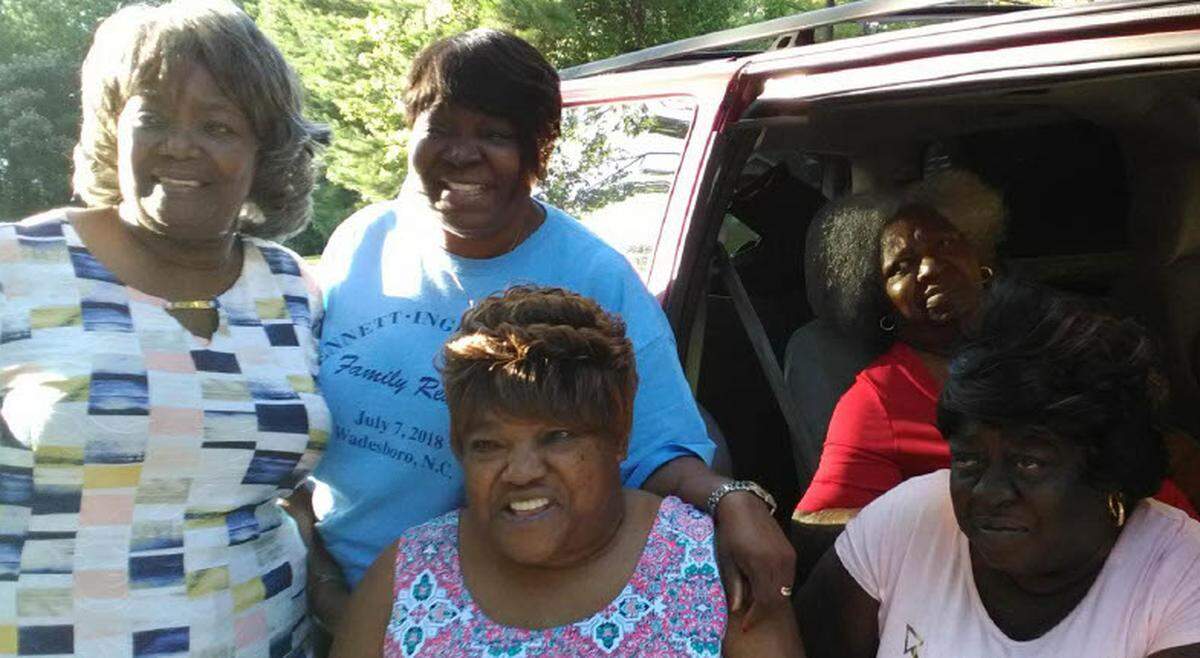
Charlotte lawyer Elizabeth Todd points to the case of Palestine Howze, a 71-year-old nursing home resident who died at a Durham nursing home for reasons that she says are completely unrelated to COVID-19.
In December 2019, Howze developed a bed sore near her tailbone. The wound later became severely infected. In phone conversations in early April 2020, her daughters asked the nursing home’s staff to send her to the hospital at least three times, but the nursing home repeatedly refused to do so, according to a lawsuit that Todd filed on behalf of the family.
Howze died at the nursing home on April 14, 2020. She died from sepsis caused by the infected bed sore — not from COVID-19, according to the lawsuit.
But a lawyer representing the nursing home, Treyburn Rehabilitation Center, asked a judge to dismiss the case, contending that the COVID-19 immunity law shielded the home from all claims alleged in the lawsuit.
Durham County Superior Court Judge Orlando Hudson sided with the nursing home, dismissing the case in February 2021. Howze’s family has appealed and is now awaiting a decision from the N.C. Court of Appeals.
The immunity law does not protect nursing homes in cases involving “gross negligence, reckless misconduct, or intentional infliction of harm.” Christopher G. Smith, a Raleigh lawyer who is representing Treyburn, noted that while the Howze lawsuit accuses the nursing home of ordinary negligence, it does not allege gross negligence.
“The law is there because it’s needed to give the health care community some grace and breathing room during these unusual times,” Smith said. “...We don’t want nurses to have to meet with lawyers during the plague when we need them to deliver health care.”
Todd, who has handled dozens of lawsuits against nursing homes in her work for the James Scott Farrin law firm, contends the immunity law does nothing to protect nursing home residents.
“It protects the bottom lines of the nursing homes,” she said. “When there’s no way to hold these facilities accountable, there’s no way to encourage them to give better care.”
Largely as a result of the immunity statute, lawsuits against nursing homes have slowed to a trickle, lawyers say.
In a typical year before the pandemic, Gugenheim’s firm filed 20 lawsuits against long-term care facilities, he said. Since the pandemic, they’ve filed just three due to “the uphill battle” caused by the immunity statute.
“There are many legitimate claims that this industry is attempting to block, using the broad immunity statute,” Gugenheim said. “And people are suffering because of that.”
Observer Data Reporter Gavin Off contributed.
This story was originally published March 28, 2022 at 6:00 AM with the headline "At the worst time, North Carolina nursing home residents lost key protections ."
.JPG)