
‘You just can’t give good care.’ Nursing home aides struggle with daunting caseloads

A nationwide struggle to hire and retain caregivers is causing North Carolina nursing homes to reach a crisis point — a trend that endangers thousands of residents, our investigation has found. An influx of for-profit nursing homes and fewer regulations during the pandemic are compounding the crisis. So what should families do to protect their loved ones?
- Part 1: ‘People can die.’ Staffing crisis endangers thousands inside NC nursing homes
- Part 2: Do some for-profit NC nursing homes cut corners on staffing and quality?
- Part 3: Need to find a high-quality nursing home in North Carolina? Here are some tips
- Part 4: At the worst time, North Carolina nursing home residents lost key protections
- Part 5: She didn’t have to die, her son says. Was short-staffed nursing home to blame?
- Part 6: Troubled NC nursing home failed to protect residents from abuse, investigation finds
- Part 7: ‘You just can’t give good care.’ Nursing home aides struggle with daunting caseloads
- Part 8: ‘Outside the box’ solutions helped this nursing home excel, despite staffing challenges
- Tell us your thoughts: What have you experienced or witnessed inside NC nursing homes?
Much as she’d like to, Venice Sanders can’t forget the day about six years ago when she and another nurse aide at a Durham nursing home had to do the impossible: care for 80 residents all by themselves.
“I walked in the bathroom. I prayed,” the 53-year-old Durham resident recalled. “And I cried because I was angry. I cried because I was sad. I was angry that they’d put me in that position.”
Nursing homes in North Carolina are among the most short-staffed in the nation, federal data show. Initial installments of Left Alone, a Charlotte Observer investigation, showed that the shortages endanger thousands of residents, causing some to wait hours for help, miss crucial medications, and develop life-threatening infections.
But patients aren’t the only ones hurt by the staffing crisis. The burden can be crushing to nurse aides like Sanders.
In interviews with half a dozen aides with nursing home experience, the Observer heard a common theme: Front-line caregivers frequently are asked to care for too many residents, a situation that exhausts them and leaves vulnerable patients in danger of neglect.
“You just can’t give good care,” Sanders said. “You’re always short-cutting it.”
It’s a reality that has pushed many aides to search for new jobs, an exodus that is making an already severe staff labor shortage worse.
Barrier to quality care
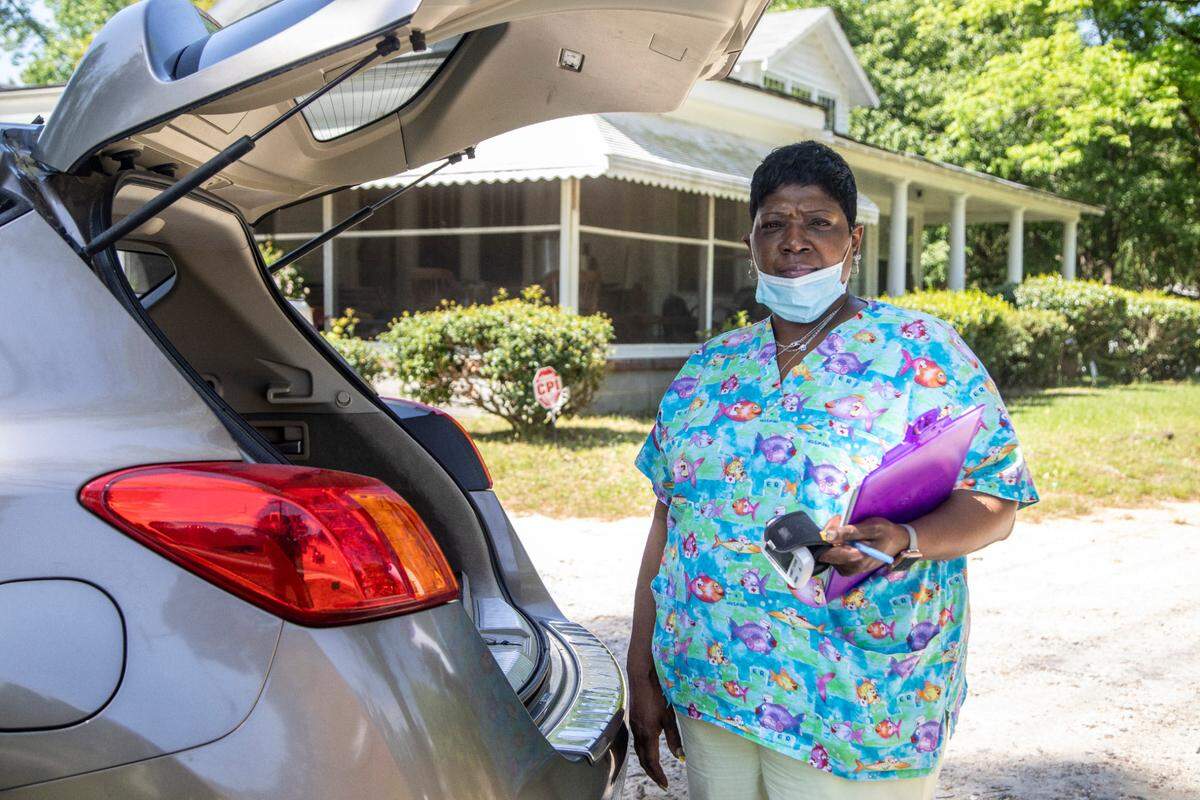
A good nurse aide can adequately care for five to eight residents in a shift, said Diondre Clarke, 58, a Charlotte resident who has worked as a certified nursing aide in North Carolina nursing homes since 2013.
But Clarke recalls a morning in 2020 when she and another CNA were required to care for all 60 residents inside a Charlotte nursing home by themselves.
“It was just impossible,” she said. “You don’t have enough time.”
When nurse aides are overwhelmed, residents suffer, Clarke said.
“When it’s understaffed, you have to rush, rush, rush and you can’t give them the quality of care they deserve,” she said. “The residents deserve better. Period.”
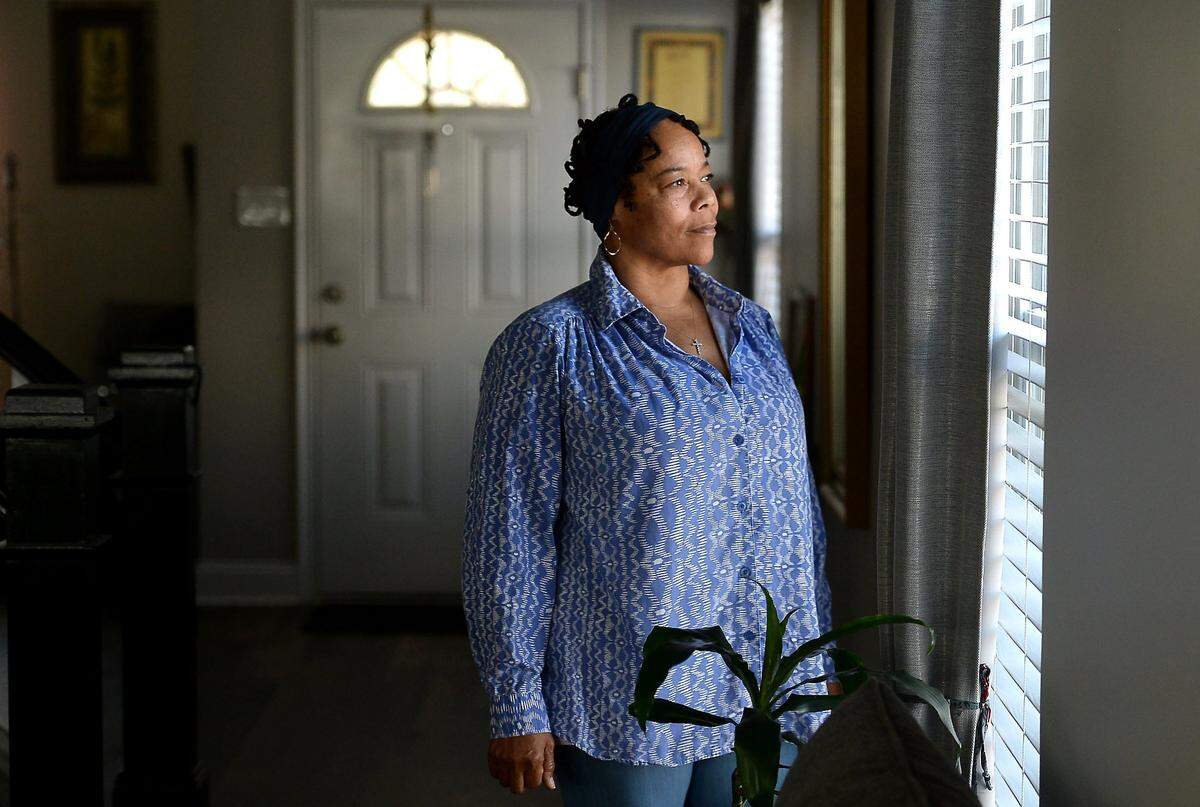
Sanders, the nurse aide from Durham, previously worked in nursing homes in New York. There, she said, she typically had to care for about eight to 10 residents. But when she moved to North Carolina about a decade ago, she regularly had to care for twice that number.
North Carolina, unlike New York and most other states, has not set minimum staffing requirements for nursing homes.
“It was a rude awakening,” she said.
State nursing home inspection reports confirm that crushing workloads have overwhelmed some nurse aides:
▪ At the Citadel Mooresville nursing home, one aide told inspectors she was the only one there to care for the more than 50 residents on two hallways. One resident waited nearly six hours for her soiled adult diaper to be changed. Another received no wound care, inspectors found. “There was just not enough of us to do everything that needed to be done,” the aide told inspectors.
▪ At the Citadel Salisbury, one nurse aide told inspectors in March that staffing was so “horrible” some days that she couldn’t help residents out of bed or give them showers. A nursing director, meanwhile, reported that staffing was so thin that she sometimes worked 22 hours straight — and still “things fell through the crack and she could not keep up.”
The Citadel is now on the federal government’s list of worst-performing facilities. Because of its many health and safety violations, it was notified in early May that it will soon lose its Medicare and Medicaid funding.
▪ And at Pine Ridge Health and Rehabilitation Center, a nursing home in Thomasville where just three staff members were left to care for 98 residents during a January storm, one overwhelmed nurse aide suffered a panic attack, according to a state inspection report. After a resident called 911 for help at around 8 pm, police officers found two residents dead and two others in critical condition inside the for-profit nursing home. A nurse told officers that residents hadn’t been served a meal since breakfast that day.
Low pay, injuries, insults
Even in facilities with adequate staffing, nursing home work exacts a heavy physical toll on CNAs. At the start of the coronavirus pandemic, nurse aides faced a heightened risk of developing COVID-19 due to high infection rates among nursing home residents.
But the dangers of the job didn’t start or stop there. Nursing assistants are three times more likely to get hurt on the job than the typical worker, according to a 2018 research brief by PHI, a New York-based nonprofit pushing for good jobs and high quality in long-term care. The exertion of lifting and repositioning residents leaves many with sprains, strains and muscle tears.
Chantel Hedge also previously worked as a nurse aide in New York, where she was usually asked to care for about 10 residents. But when she took jobs at nursing homes in Charlotte last year, she often had to care for 16 people or more. On some occasions, she was assigned 30 residents.
“It’s very hard. You’re overworking your body,” she said. “If I’m not healthy, how am I going to be able to take care of them?”
CNA Tara Moore, 49, used to work in nursing homes until last year, when the job became too demanding. Now she cares for people in their homes.
“I can’t tell you how many times I’ve strained my shoulder or my back,” she said. “You wind up banging yourself up just to get the job done. And you can’t even get a day off to get checked out (by a doctor.)”
More than nine out of 10 direct care workers inside North Carolina nursing homes are women, according to U.S. Census data. About 12% have associate’s degrees or higher degrees. Forty nine percent are Black, and 3% are Hispanic.
It’s probably no coincidence that pay is so low in a field dominated by women of color, according to Julia Wolfe, an analyst at the Economic Policy Institute, a nonpartisan think tank that focuses on the needs of low- and middle-income workers.
“Racism and sexism cause us to undervalue the people involved in this work,” she said.
Moore said she loves helping people who can’t help themselves. “I like walking into a room and people appreciate you,” she said.
But at times, she said, the work can be thankless. Some nursing home residents spit on aides or make racist and insulting remarks, she said.
And the money’s not great. CNAs in North Carolina nursing homes typically earn less than $16 an hour — less than the minimum wage at Costco, the Observer found. Some work two or three jobs to make ends meet.
The pay is so low that 37% of direct care workers in North Carolina nursing homes rely on public assistance, including food stamps and Medicaid, according to an analysis of Census data by PHI.
Some nursing homes provide health insurance, Sanders said, but to get it, nurse aides sometimes have to shell out more than a quarter of their take-home pay. In North Carolina, just 55% of direct care workers in nursing homes get health insurance through their employer or union, according to the data compiled by PHI.
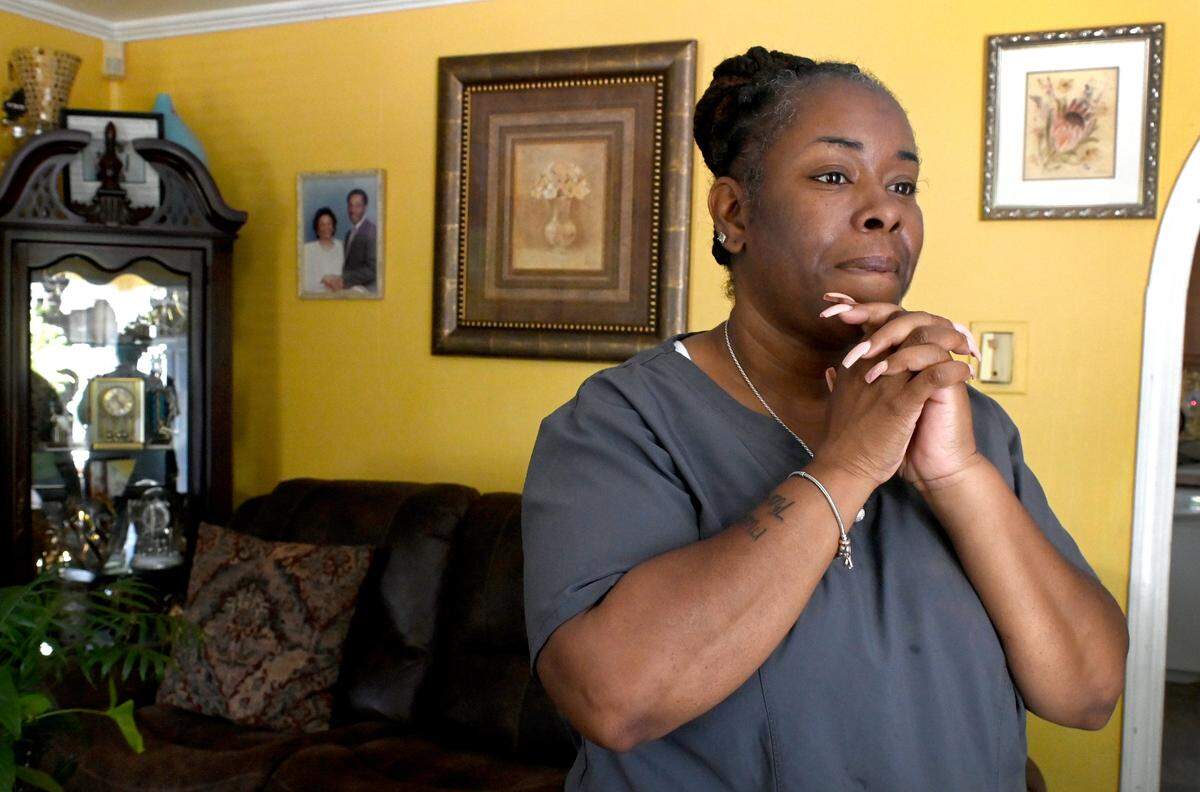
Said Moore: “We’re underpaid. Overworked. Disrespected. And under-appreciated.”
So it’s not surprising that nursing homes lose many of their employees to other jobs where the pay is higher and the work is less demanding. Sanders, for example, hasn’t worked inside a nursing home since mid 2021. She has opted instead for the less stressful work of caring for elderly residents inside their homes.
Turnover among the nursing staff – including CNAs and registered nurses – inside North Carolina nursing homes is 54%, slightly higher than the national average, federal figures show.
“We’ve seen higher and higher levels of burnout in individuals who decided they may want to pursue a different career,” said Adam Sholar, president of the North Carolina Health Care Facilities Association, the group that represents most of the state’s 425 nursing homes.
One day, 23,000 steps
Despite the frustrations, some nursing home CNAs love the work. But that doesn’t mean it’s easy, even in settings where staffing is adequate and aides have time to do their job well.
On a typical work day, Anna Foster reports to her job at the Trinity Oaks nursing home in Salisbury at 7 a.m. She usually remains on her feet for the next eight and a half hours.
Congenial and animated, Foster is constantly up and down the nursing home’s halls, helping residents dress and shower, delivering meals, cutting food, removing meal trays and responding to call bells.
There’s a reason the 35-year-old CNA wears tennis shoes on the job. As her Apple Watch shows, she routinely puts in more than 10,000 steps a day. On one of her busiest days — a 12-hour shift in 2020 — she logged 23,000 steps, or more than 11 miles.
With so many interactions, Foster typically washes her hands 40 times a day.
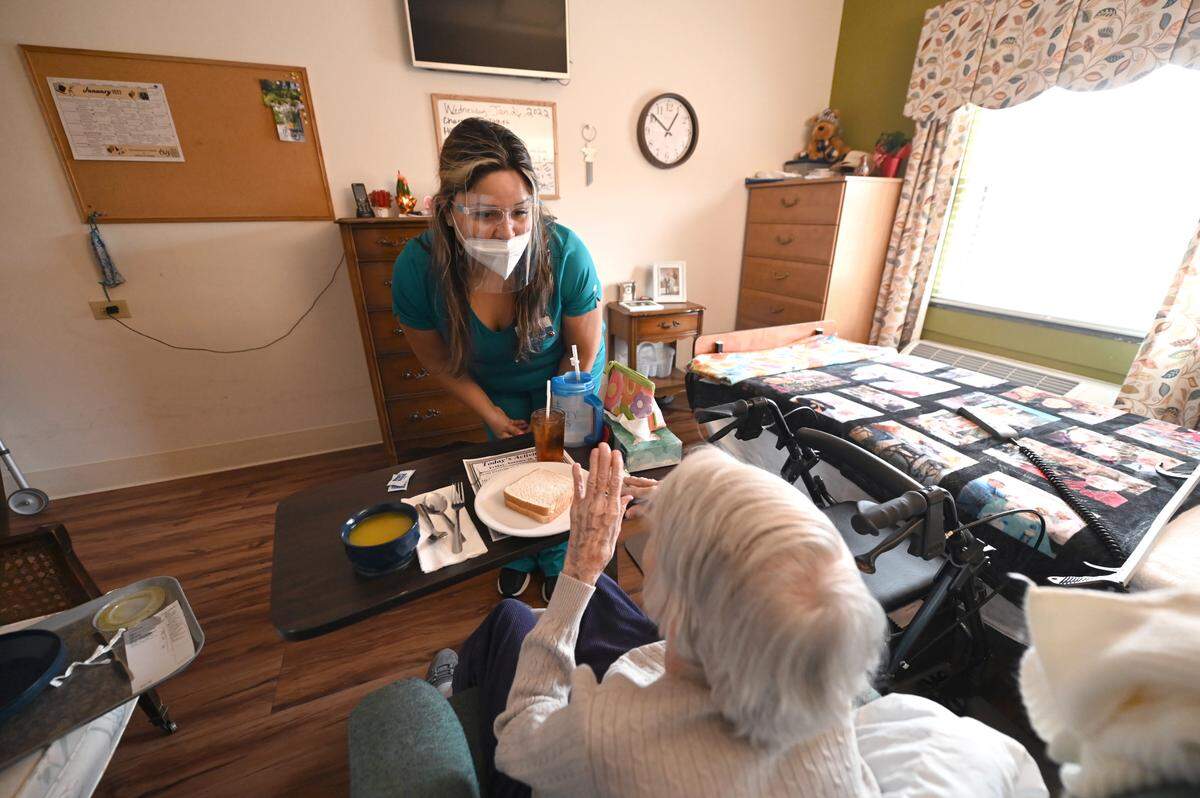
Foster typically cared for six to eight residents each day when she started working at Trinity Oaks 16 years ago. It was a pace that made work enjoyable. Today, on her busiest days, she takes care of 12 residents.
One day in January, Foster was one of four CNAs working a 42-bed hallway. She was responsible for 10 residents that day, and she maintained her cheerful disposition with each one.
“It’s good to see your smiling face,” she said to a petite white-haired woman who wanted to know when lunch was coming.
But if Foster had more time with each resident, she said, she’d be able to provide more of the attention that she knows they crave.
“I don’t have time to sit down and read clips in the newspaper to them. I’d like to be able to do that,” she said.
“I’d love to be able to give them more time.”
This story was originally published June 9, 2022 at 6:00 AM with the headline "‘You just can’t give good care.’ Nursing home aides struggle with daunting caseloads."
.JPG)