This ‘secretive’ NC snake eats copperheads. What it looks like & where it lives
AI-generated summary reviewed by our newsroom.
- A species of non-venomous snake with a chain-like pattern can eat venomous copperheads.
- Eastern kingsnakes live across NC but are rare in high mountains and urban places.
- Experts say Eastern kingsnake population numbers may be declining.
A North Carolina snake is non-venomous — but that’s not the only reason you may want it in your yard.
The snakes also eat venomous copperheads, and their population numbers are likely on the decline. For these reasons, people are urged to not capture or kill the creatures — called Eastern kingsnakes.
“I always say, admire them from a distance,” Falyn Owens, a wildlife biologist with the N.C. Wildlife Resources Commission, previously told The News & Observer. “Just enjoy the experience, because they’re just neat snakes to have around.”
Here’s what to know about Eastern kingsnakes, including how to identify them, where to find them and how they’re able to eat venomous reptiles.
What the snakes look like
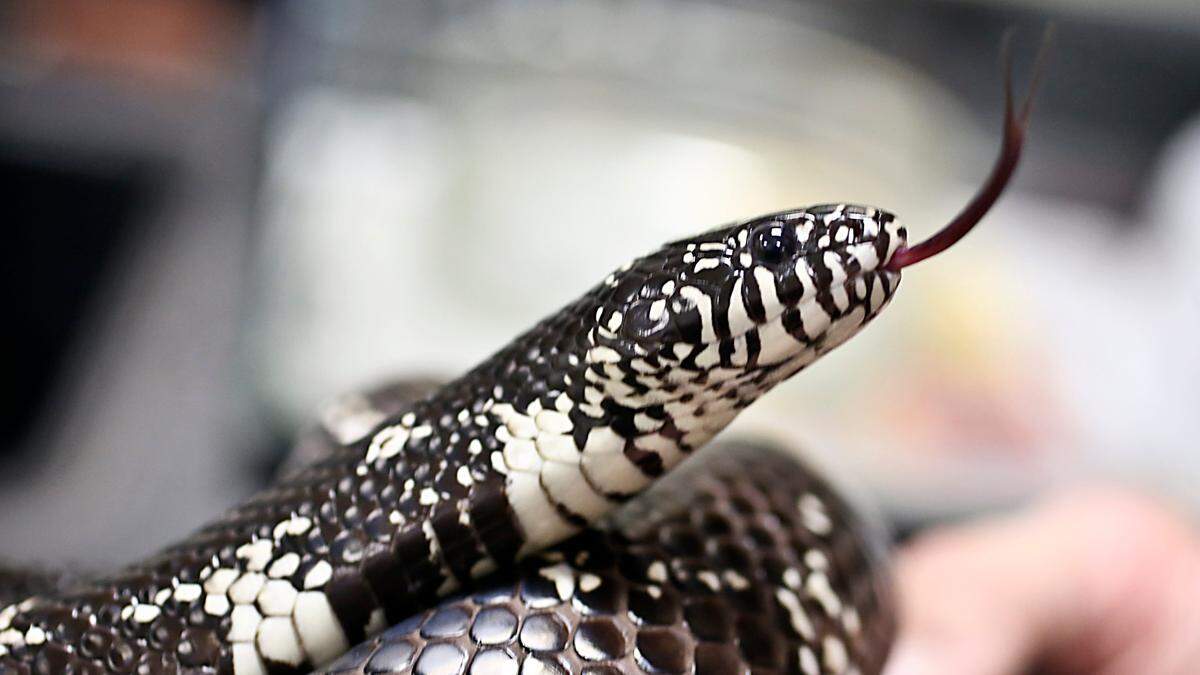
Eastern kingsnakes are black with yellow or white lines arranged in a pattern that looks like a chain. They can grow to be more than 6 feet long and are most active in the daytime and during the spring and summer., according to the wildlife commission and N.C. State Parks websites.
“The kingsnakes found on the Outer Banks are usually brown rather than black and have light speckles between the chain-like pattern,” the N.C. Museum of Natural Sciences in Raleigh wrote in a 2018 Facebook post. “In the western-most mountains of North Carolina, the kingsnake’s chain-like markings are usually broken up into tiny spots.”
What to do if you see one
The “fairly secretive” snakes often hide under logs or rocks, according to UNC-Charlotte’s website. But if you manage to see one, it’s best to stay away.
“With any snake, my advice is always to give it space, so that it feels comfortable, so that you’re not putting yourself at risk of making it feel like it has to defend itself,” Owens previously told The N&O.
Where do the snakes live?
Eastern kingsnakes are found throughout North Carolina, but they’re rare at high elevations and in urban settings. While the snakes are “especially common near ponds, streams, swamps and other water bodies,” they also have been spotted in fields, near forests and in other habitats, state park officials wrote.
“They’re not the most common snake, even though they’re found across the state,” Owens previously told The N&O.
And their numbers may be dwindling.
“We do not have that sort of data for North Carolina to specifically say that, but it does appear that in the Southeast that species has declined,” Jeff Hall, statewide herpetologist with the wildlife commission, told The N&O in a May 8 phone interview. “And so it’s certainly a possibility that that’s the case in North Carolina.”
Experts have said it’s difficult to monitor year-to-year trends for species. So, animal populations need to be tracked over time.
“Eastern kingsnakes hatch by early fall, resulting in a temporary increase in numbers. But it takes several years for the snakes to reach sexual maturity, when they can reproduce,” The N&O previously reported, adding that some snakes die in the meantime.
The number of snakes could be going down due to disease or lack of prey. Another factor is believed to be human-caused habitat loss.
“Most animals just don’t do well when their habitat is covered with pavement and vehicles are driving through it,” Jeff Beane, collections manager for herpetology at the natural sciences museum, previously told The N&O.
Eastern kingsnakes eat copperheads
Eastern kingsnakes “generally are harmless to humans and pets,” but they eat lots of other creatures, state park officials wrote.
The snakes are constrictors, meaning they squeeze their prey to death. They can eat snakes, birds, frogs, lizards, turtle eggs and rodents. But it’s important to note that their diets may vary depending on where they live, according to experts.
The Eastern kingsnake “gets it name from the fact that it eats other snakes and is immune to the venom of copperheads, rattlesnakes and other pit vipers,” the wildlife commission wrote in a Facebook post.
A photo the commission shared online in 2013 shows one of the snakes chowing down on a copperhead, a species known for having hourglass-shaped bands on their bodies.
Copperheads are found throughout North Carolina and are estimated to cause more than 90% of the state’s venomous snake bites. Though some other species stay far from humans, copperheads are comfortable living near people. Still, the snakes often mind their own business, The N&O previously reported.
Do other snakes eat snakes?
The Eastern kingsnake isn’t the only reptile of its kind.
“There’s multiple snakes out there that sometimes, the tables get turned and one snake will eat the other one,” Hall said.
Here are some North Carolina species that can eat other snakes, Hall says, including black racer snakes and garter snakes.
Portions of this story were previously published in The News & Observer.
This story was originally published May 18, 2026 at 8:08 AM.