NC’s copperhead season has begun. What to know about the common venomous snake
AI-generated summary reviewed by our newsroom.
- Copperheads are more active when it’s warmer, such as in the spring.
- The venomous snakes commonly live near humans and should be left alone.
- If a copperhead bites you, contact poison control or call 911 for serious symptoms.
It’s feeling a lot like spring, which means more copperhead activity in North Carolina.
The copperhead is the venomous snake species you’re most likely to encounter in the state. But be careful: their bites often cause pain and could lead to more serious injury, The News & Observer previously reported.
“As the temperatures get warmer, copperheads are going to start to become active,” Falyn Owens, wildlife extension biologist with the N.C. Wildlife Resources Commission, told The N&O in a Wednesday, April 8 phone interview. “And as it stays warm, they are going to continue to be active through the summer and into the fall.”
Here’s what to know about identifying copperheads and where and when you may see them.
What do copperheads look like?
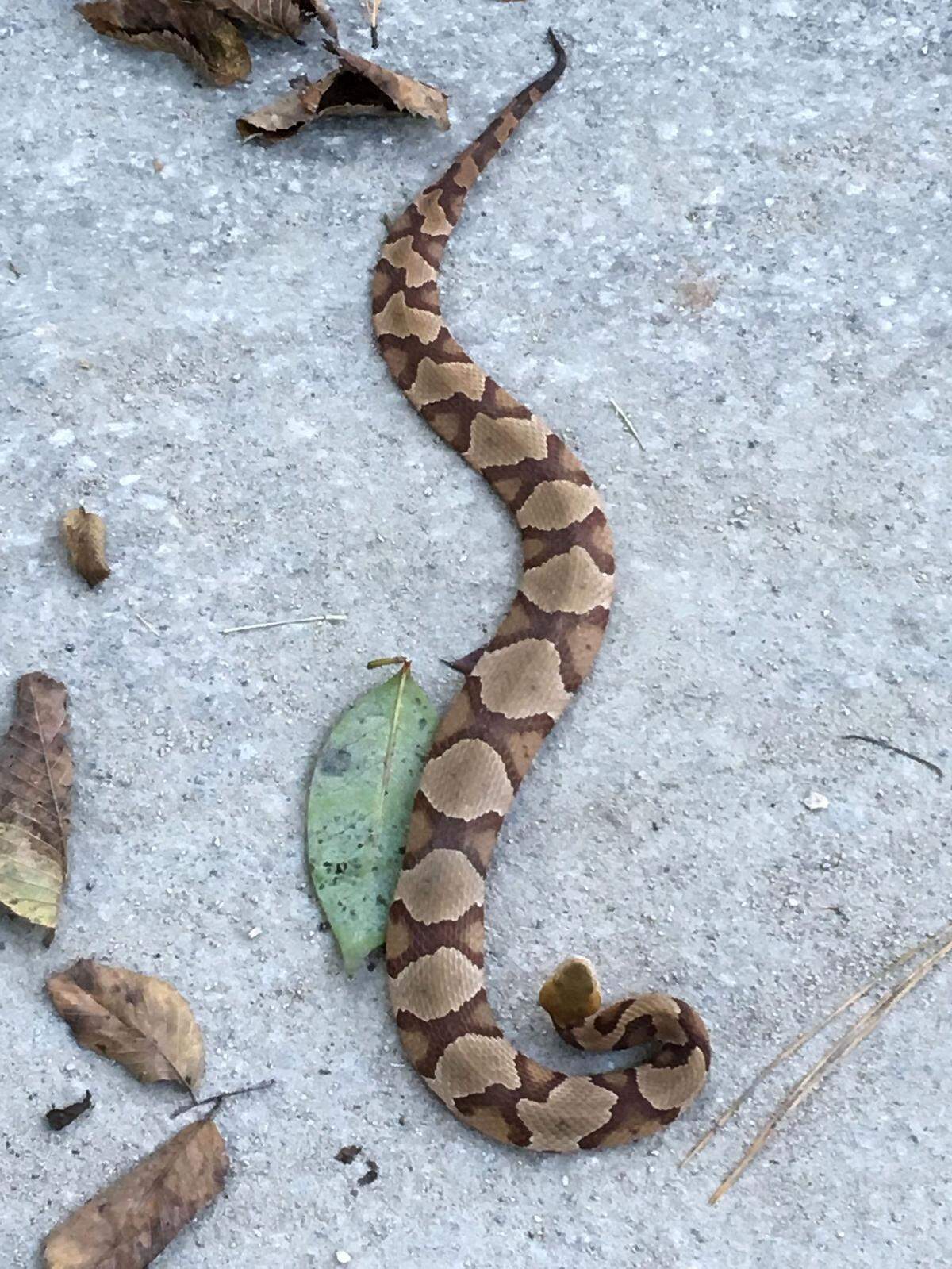
Copperheads are brown or gray, with hourglass-shaped bands on their bodies. As adults, they can be roughly 2 to 3 feet long.
“The head is somewhat triangular, quite distinct from the neck, and tan or copper in color, with a thin, dark line running from the eye to the rear of the jaw,” the commission wrote on its website. “The pupils are vertical and elliptical, and there is a heat sensory pit between the eye and nostril.”
Younger copperheads have yellow or green markings on their tails, The N&O previously reported.
When are copperheads active?
Copperheads are cold-blooded and active when temperatures are warm. The slithery creatures don’t stick to a strict calendar, but now is the time they typically start moving around more.
“The spring, when it starts to become over 60 degrees, is sort of the beginning of the time of year when snakes are going to be going about their business,” Owens said.
And people already have spotted copperheads. As of Thursday, March 26, the Raleigh-area business NC Snake Catcher received two calls about the species, the earliest ever in a snake season.
Last year, reports about bites from all species of snakes started rising in March before peaking in July. The timing makes sense because summertime is a period when snakes are active and kids are playing outside, Dr. Michael Beuhler, medical director of N.C. Poison Control, previously told The N&O.
In addition to temperatures, mating could drive an uptick in copperhead activity in the spring, summer and fall. The snakes also move around more at night, when they hunt and search for mates.
“That’s not to say that copperheads magically disappear as soon as the sun comes up,” Owens said. “They go to shelter during the daytime.”
Where do copperheads live in NC?
If you see a copperhead, it’s best to keep your distance. The species tends to mind its own business but is likely behind more than 90% of venomous snake bites in North Carolina.
Though some snakes stay far from people, copperheads “are happy to live around humans in natural and even disturbed areas around neighborhoods. Thus, copperheads are the most often encountered venomous snake species in the state,” Matt Bertone, director and entomologist at the Plant Disease and Insect Clinic at N.C. State University, previously told The N&O.
Copperheads can be found in various habitats throughout North Carolina. They may spend time under piles of brush, so people working in their yards are advised to wear gloves and look before they reach, The N&O previously reported.
“Old sawdust piles, slab piles, trash dumps and dilapidated buildings are good places to find copperheads,” the commission wrote on its website. “They are frequently encountered on roads at night.”
What to do if a copperhead bites you
If you are bitten by a copperhead, you may experience pain and swelling. Experts advise staying calm and calling poison control at 800-222-1222.
And if you have more serious symptoms such as chest pain or trouble breathing, call 911 right away. Copperhead bites can be deadly in rare situations, Beuhler previously told The N&O.
Here are more snake bite tips poison control shared on its website:
- Lift the bitten area to the level of your heart and try to keep it still.
- Wash your skin with warm water.
- Take off tight clothes or jewelry close to the bite.
- Avoid using a tourniquet or ice.
- Don’t suck or cut out the venom.
Portions of this story were previously published in The News & Observer.