
Do you need to evacuate when a hurricane is headed for NC? Here’s what to know.
.JPG "Ella Clark, left, and her family look up and wave at the news helicopters circling Nags Head as her family prepares to leave before Hurricane Irene hits on Aug. 26, 2011.")
READ MORE
Your Storm Watch Guide
June marks the beginning of the Atlantic Hurricane Season, and that means preparations are underway across the Gulf and Atlantic Coast states. In North Carolina, weather is already a big deal, but the threat of powerful cyclones marks a new level of danger. While we cannot predict the future, we do know that preparation is key. Use this guide to get ready before storms arrive.
Expand All
When a hurricane is headed for North Carolina, the storm’s impacts can be dangerous, devastating and sometimes, life-threatening.
Those impacts can be felt across the state, but are likely to be more pronounced in the eastern part of the state. That makes evacuating from the storm — rather than staying put at home or another safe location — a more likely scenario in those communities.
▪ Twenty counties in eastern North Carolina have established predetermined evacuation zones. It’s important for people who live in those areas to be prepared for possible evacuations, though people who vacation on or visit the North Carolina coast should also be aware of evacuation procedures, in case a hurricane hits while you’re there.
So, how will you know if you need to evacuate during a hurricane? How do evacuations work? And are only eastern North Carolina communities asked to evacuate during hurricanes, or could other parts of the state be instructed to do so as well?
To help you prepare for possible evacuations in North Carolina during a hurricane, we’ve compiled answers to those questions and more, using information from the N.C. Department of Public Safety (NCDPS).
Here’s what to know.
How are evacuations ordered in North Carolina?
Generally, NCDPS says, local government officials are responsible for ordering evacuations.
Under state law, though, the governor of North Carolina may also issue evacuation orders during a state of emergency, as Gov. Roy Cooper did for the state’s coastal islands during Hurricane Dorian in September 2019.
▪ Evacuations are only ordered when “the lives and safety of those in the area being evacuated will be at risk” if they do not leave the area, the N.C. Department of Public Safety says.

▪ To find out if an evacuation has been issued for your area, you can check the interactive tool available at readync.gov/stay-informed/evacuation-orders.
▪ You can also keep up with evacuation decisions by following your local government officials online, or by following local media. You can find a list of local emergency management officials, sorted by county, at ncdps.gov/our-organization/emergency-management/county-emergency-management-agencies.
When an evacuation is ordered, local officials should give directions for the evacuation, including:
▪ When the evacuation order goes into effect.
▪ Whether the evacuation is voluntary or mandatory.
▪ Which evacuation zones are being ordered to evacuate and when, if applicable.
▪ Which evacuation routes you are advised to take.
Voluntary vs. mandatory evacuations in North Carolina
When local officials issue evacuation orders, they may be voluntary or mandatory, and they may specify whether the order applied to visitors to the areas, residents or both.
The order could also start as voluntary, then transition to mandatory at a certain point.
For example: A UNC School of Government blog cites evacuation orders from Hyde County officials during Hurricane Irene in 2011. The orders began as mandatory for visitors to the area and voluntary for residents, before transitioning to mandatory for everyone at a certain point.
So, what’s the difference between voluntary and mandatory evacuations? It’s pretty self-explanatory: voluntary evacuations mean you have a choice to evacuate, and mandatory evacuations mean you are required by law to evacuate.
Under state law, anyone who is under a mandatory evacuation order and does not comply with the order is punishable by a Class 2 misdemeanor and possible arrest.
The UNC School of Government blog says “state and local officials are not likely to order the mass arrest of individuals who refuse to heed a mandatory evacuation order” — but that doesn’t mean you should ignore evacuation orders. Local officials don’t issue evacuation orders lightly, and following the orders can keep you and others safe and out of harm’s way.
How to find your hurricane evacuation zone in North Carolina
North Carolina uses a tiered evacuation system, called Know Your Zone, to highlight the areas of the state that are most at-risk of storm impacts and flooding and assign lettered evacuation zones to them.
The predetermined evacuation zones are designed to streamline the evacuation process and ease overcrowding on evacuation routes and in shelters.
Twenty counties, all in the eastern part of the state, are part of Know Your Zone and have predetermined evacuation zones: Beaufort, Brunswick, Camden, Carteret, Chowan, Craven, Currituck, Dare, Hyde, Jones, Lenoir, New Hanover, Onslow, Pamlico, Pasquotank, Pender, Perquimans, Pitt, Tyrrell and Washington.
▪ If you live in any of these counties, or will be visiting when a storm is possible, you can find your specific evacuation zone by entering your address on the Know Your Zone interactive map.
The tiered system assigns lettered evacuation zones: A, B, C, D and E.
▪ When a storm or hurricane is approaching, local officials will assess the zones that are most threatened and determine which residents should evacuate.
▪ When an evacuation is ordered, generally Zone A will evacuate first, followed by Zone B, then C and so on.
▪ All zones may not be evacuated during a storm. You should monitor local media or check online at readync.gov/stay-informed/evacuation-orders to see which zones near you are being ordered to evacuate.
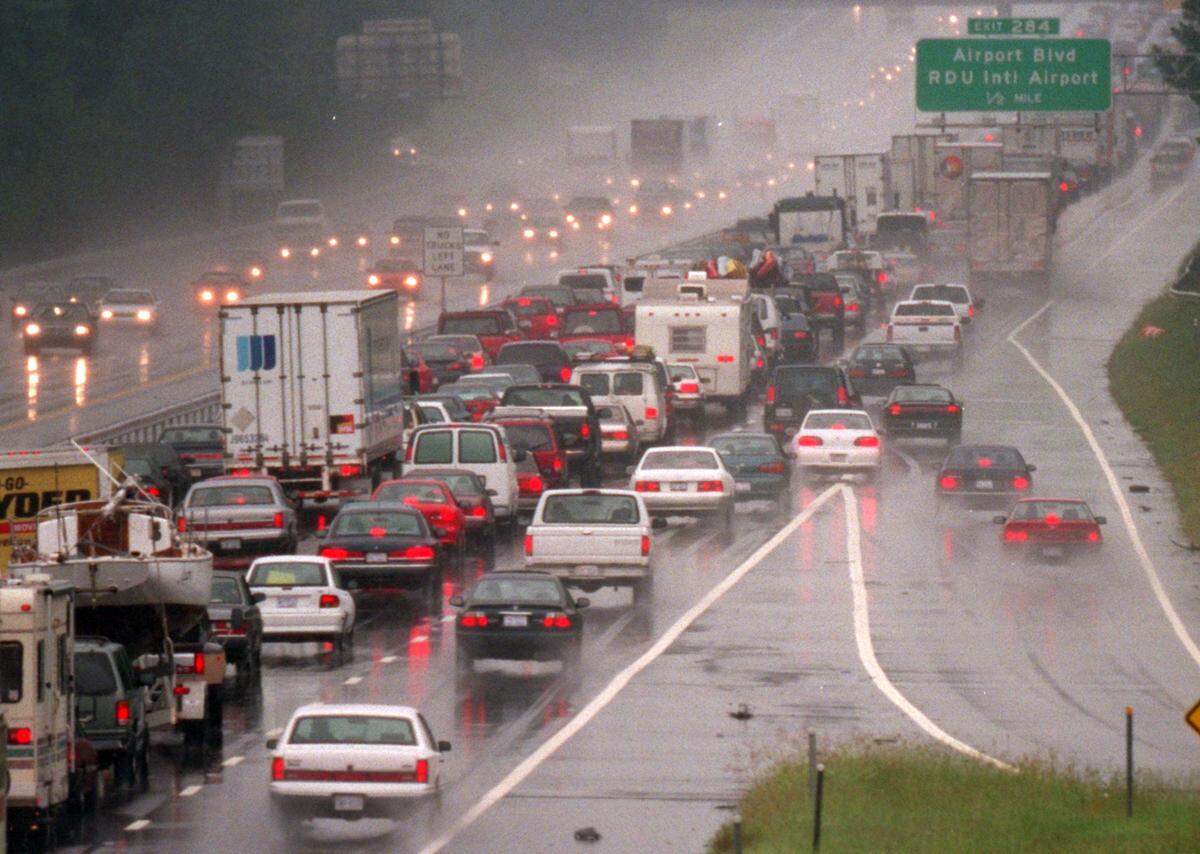
.JPEG "Floyd2.st.091699.cap (1).JPEG")
NOTE: If you are not in one of the 20 counties with predetermined evacuation routes, it is not expected that you would be evacuated due to hazardous storm conditions — but that doesn’t mean you’ll never receive instructions from local emergency officials during hurricanes or other major emergencies. You should still listen closely to emergency communications during any severe weather event.
What to do if you are ordered to evacuate
If you are ordered to evacuate during a hurricane or any other emergency, you should “promptly heed instructions from local officials,” the North Carolina Hurricane Guide says.
Those instructions should include when each evacuation zone should evacuate, as well as designated evacuation routes to take.
Note: You should follow designated evacuation routes, as opposed to any back roads or alternate routes that may be more familiar to you. The designated routes are generally designed to handle large volumes of traffic and have higher speed limits, allowing you to evacuate and get to safety quickly, the N.C. Department of Transportation says. Law enforcement and emergency officials will also be along designated routes to help motorists, if needed.
Other tips for evacuating from the Hurricane Guide include:
▪ Know your evacuation destination. While some public shelters will be available during hurricanes, you should first try to make arrangements with family or friends who have extra space, or even find a hotel where you can stay, N.C. Emergency Management spokesperson Keith Acree told The News & Observer. This allows public shelter space to be reserved for only those who absolutely need it.
If you cannot make other shelter arrangements and end up needing to use a public shelter, you can find a list of them at readync.gov/stay-informed/open-shelters. Remember: Not all shelters are pet friendly, so make sure you have a plan that includes your animals.
▪ Once you have decided to evacuate, notify family and friends of your plans, including where you are taking shelter.
▪ If there is time to do so safely before you need to evacuate, turn off the gas, electricity and water to your home. Unplug appliances before leaving.
▪ Take your emergency supply kit with you. Your kit should include enough food and water for three to seven days, plus extra cash, medications and important documents and more. Remember: Specialty items (infant formula, diapers, specific dietary foods, durable medical equipment and some medical supplies) may not be available at emergency shelters, so you should include those in your kit.
▪ Keep your cell phone charged and keep any calls you make brief to minimize network congestion.
▪ After the storm, be patient and listen to local officials for instructions on returning home. Reentry into communities may be initially limited to first responders and residents.
Evacuating from a hurricane with your pets
If you decide to evacuate your home, or you are asked to do so by local officials, keep in mind that your pets should evacuate with you.
▪ When you evacuate, bring both your own emergency supply kits and those for your pets.
▪ If you think you may be asked to evacuate, FEMA suggests practicing evacuating with your pets by riding them around in a vehicle similar to the one you will use to evacuate. This will help them feel more comfortable if or when you actually evacuate.
▪ You should also get your pets familiar and comfortable with the carrier they’ll be in when you evacuate, if applicable.
Note: If you are planning to head to a shelter when you evacuate, you should keep in mind that not all shelters are pet-friendly. Make a plan in advance for where you’ll go, and know whether they will accept pets. You may decide to stay with an out-of-town friend or family member, or at a hotel, instead of at a shelter, if you can’t find a pet-friendly shelter option.
If you’re searching for pet-friendly shelters or hotels to use when you evacuate from a hurricane, the CDC suggests the following online resources:
▪ bringfido.com (also available by phone at 877-411-FIDO)
▪ dogfriendly.com (also available by phone at 888-281-5170)
▪ pet-friendly-hotels.net (also available by phone at 866-966-3046)
You can also check with local animal shelters, local governments or local relief organizations to see if they will offer pet-friendly shelters, or know of organizations that will, during the storm.
When is hurricane season?
“Hurricane season” technically begins June 1 and runs through Nov. 30. Peak hurricane season is mid-August to late October.
But hurricanes can, and do, occur outside of that window. Since 2010, at least five tropical cyclones outside of hurricane season have impacted North Carolina to some extent.
What is a hurricane?
A hurricane is a type of storm called a tropical cyclone.
▪ A tropical cyclone is a rotating low-pressure weather system that has organized thunderstorms. The storms can bring large amounts of rain, high sustained winds, dangerous storm surges, tornadoes and rip currents.
▪ Hurricanes generally form in the Atlantic Basin, which includes the Atlantic Ocean, Caribbean Sea, Gulf of Mexico, the eastern North Pacific Ocean and, less frequently, the central North Pacific Ocean.
Tropical cyclones are classified by their maximum sustained winds.
▪ Cyclones with maximum sustained surface winds of 38 miles per hour (mph) or less are called tropical depressions.
▪ Cyclones with maximum sustained winds between 39 and 73 mph are called tropical storms.
▪ Storms with maximum sustained winds of 74 mph or higher are called hurricanes.
Hurricanes are further classified by the Saffir-Simpson Hurricane Wind Scale:
▪ A category 1 hurricane has sustained winds between 74 and 95 mph. Category 1 hurricanes produce “some damage” — think damage to roofs, house siding and gutters, plus large tree branches being downed. Power outages are possible and could last several days.
▪ A category 2 hurricane has sustained winds between 96 and 110 mph. Category 2 hurricanes produce “extensive damage,” including major damage to roofs and siding, along with shallow-rooted trees being uprooted. Near-total power loss should be expected, and could last for several days up to weeks.
▪ A category 3 hurricane has sustained winds between 111 and 129 mph. Category 3 hurricanes cause “devastating damage.” Well-built homes could suffer major damage, such as the removal of roof decking and gable ends. Trees will snap and be uprooted, blocking roads. Electricity and water will be unavailable for several days to weeks after the storm passes.
▪ A category 4 hurricane has sustained winds between 130 and 156 mph. Category 4 hurricanes cause “catastrophic damage.” Well-built homes could lose much of their roofs and some exterior walls. Most trees will snap or be uprooted, and power poles could also fall. Power outages will last weeks to possibly months, and most of the area will become uninhabitable for the same time frame.
▪ A category 5 hurricane has sustained winds of 157 mph or higher. Category 5 hurricanes also cause “catastrophic damage.” A high percentage of homes will be destroyed. Power outages will last weeks to possibly months, and most of the area will become uninhabitable for the same time frame.
What’s the difference between a hurricane watch and warning?
Knowing the difference between storm watches and warnings can help you and your family stay safe as a storm threatens your area.
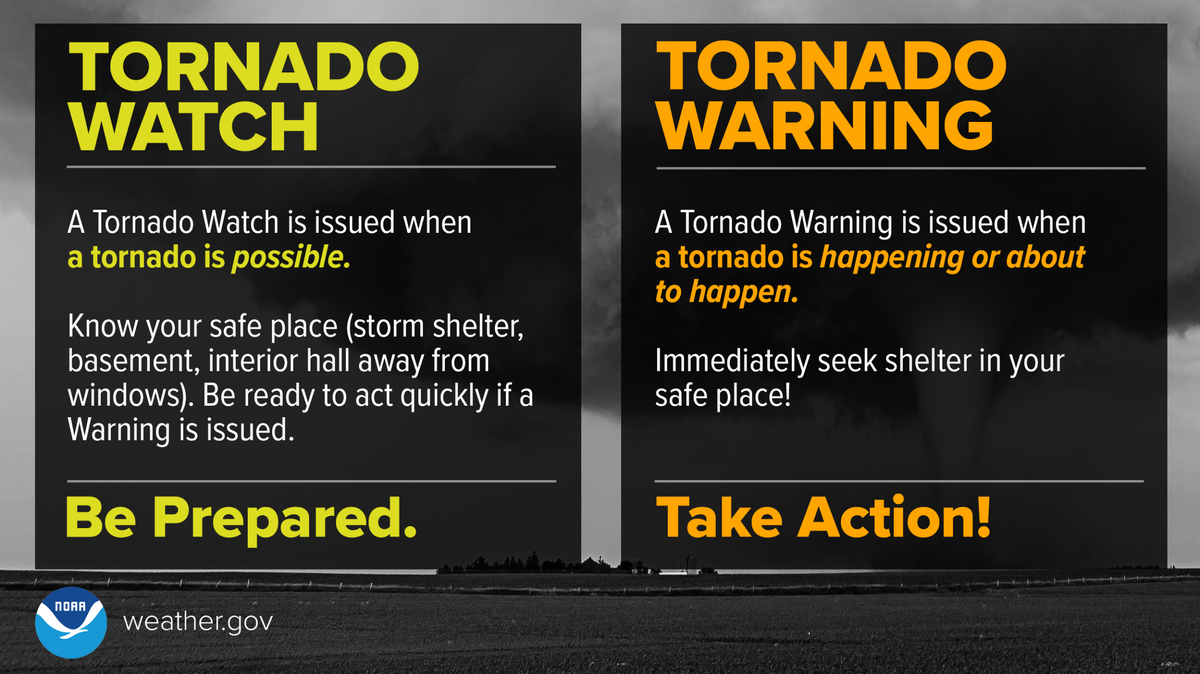
Watches mean that severe conditions haven’t occurred yet, but could in the near future.
▪ A tropical storm or hurricane watch means that tropical storm or hurricane conditions are possible within 48 hours.
If a warning is issued, it means dangerous weather is imminent.
▪ A tropical storm or hurricane warning means that tropical storm or hurricane conditions are expected within 36 hours.
This story was originally published June 5, 2022 at 6:00 AM.

.jpg)


.JPG)
.JPG)
.JPG)