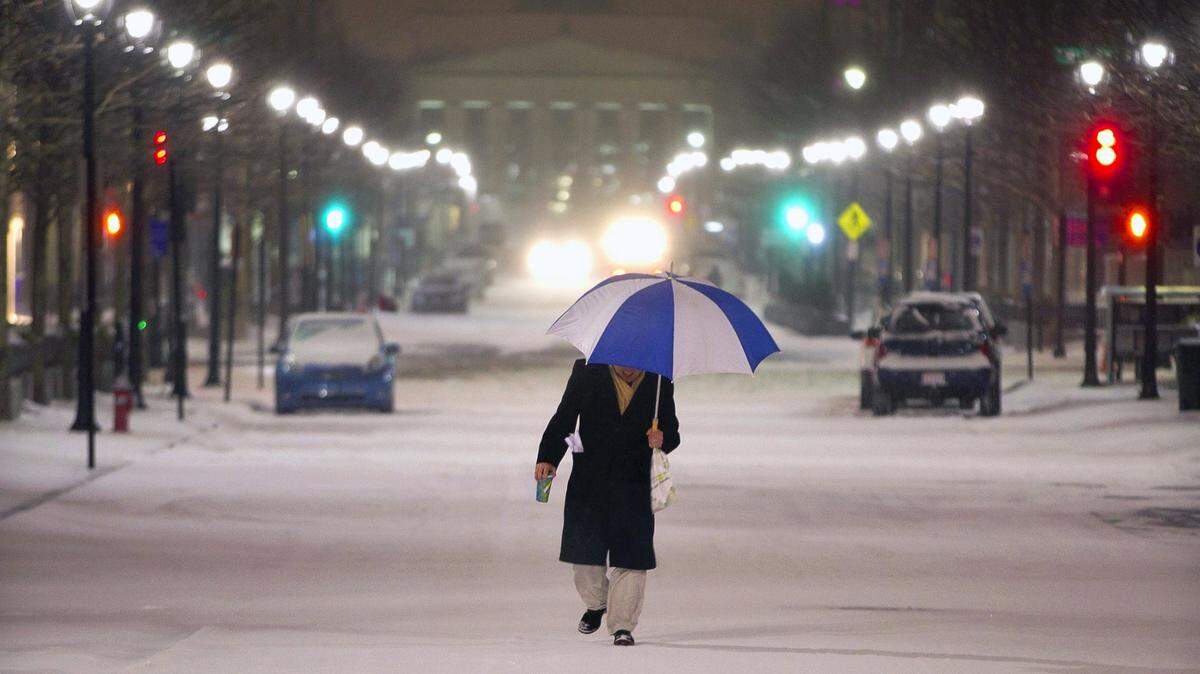
How much snow did NC get this week? Here are the totals and why they matter
READ MORE
What to know about cold weather & winter storms
Here’s everything to know about super cold weather and winter storms headed our way: forecasts, power outages, closings, snow cameras, winter prep, safety and more.
Expand All
North Carolina’s third winter storm of the season has moved out to sea, but it’s not over until we know what everybody got.
Like wind and rain measurements after a hurricane, like inventory after a night of trick-or-treating and the first homeroom after Christmas break, we have to ask: What did you get?
“It’s an important question,” said Nicholas Luchetti, a National Weather Service meteorologist in Raleigh.
Why does it matter?
▪ It’s a matter of historical record, Luchetti said, and except for sports enthusiasts, nobody keeps more meticulous records than the National Weather Service, which traces its bureaucratic roots to 1870 but has data going back to Thomas Jefferson’s observations at Monticello starting in 1772.
Accurate weather records help meteorologists spot trends and changes in weather patterns and help improve forecasting over time.
▪ Noting how much snow, sleet and freezing rain fell as a result of a storm that meteorologists had been watching is one of the ways the Weather Service is “graded” on how well it performs and keeps its mandate. Were the forecasts accurate? If they overstate or understate a threat, forecasters can lose credibility and people in the path of a big weather event can find themselves ill-prepared.
▪ It’s a relic of our agrarian history, from when the weather wasn’t just a polite topic of conversation; it was an economic indicator and everyone’s livelihood depended on it.
▪ It’s human nature. Weather is largely a game of chance, and when a storm rolls through, we all want to know who won.
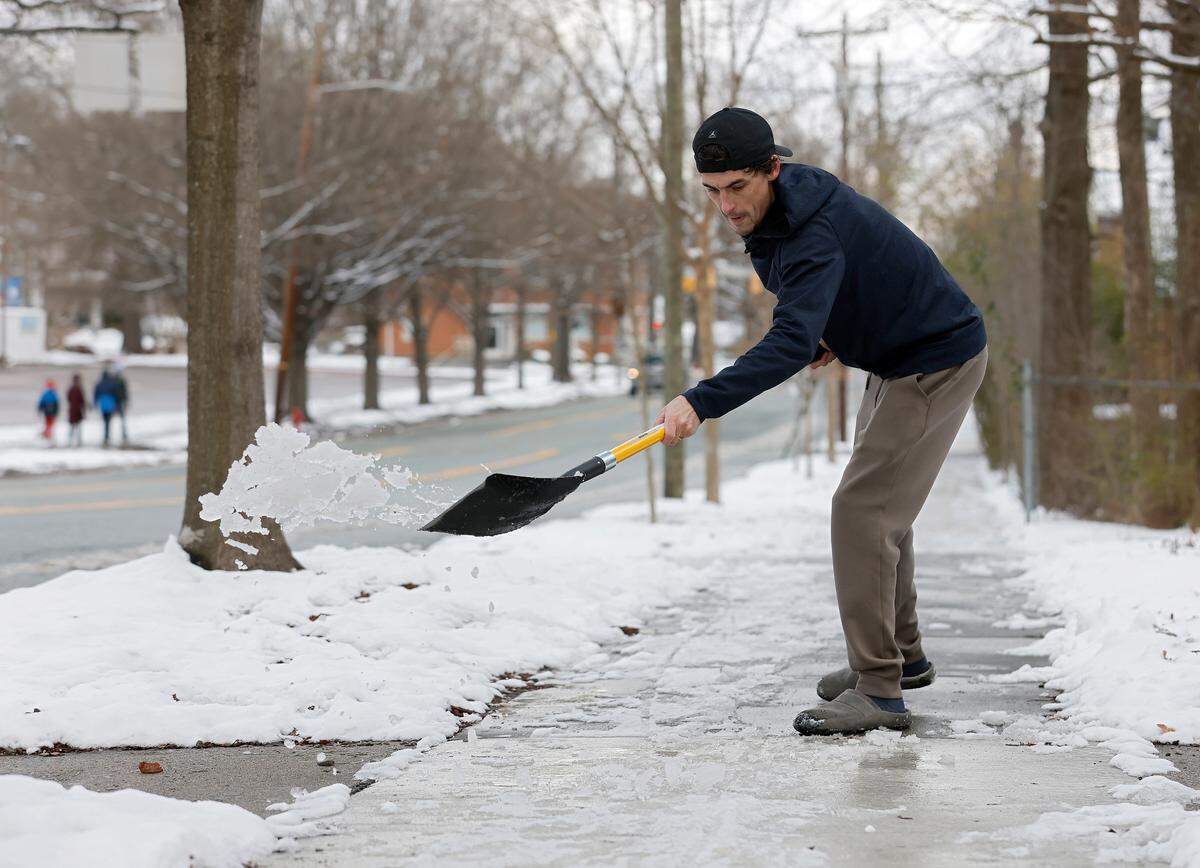
Where does the NWS get its totals?
At airports where the agency has stations, there are devices to measure wind speeds, temperatures and rainfall amounts.
But snow is different, Luchetti said, because it can be affected by moisture, compaction, melting and other factors.
So at its stations, including Raleigh-Durham International Airport and Piedmont Triad International Airport in Greensboro, a Weather Service reporter goes out every 6 hours during a winter storm to take a measurement.
Elsewhere, the Weather Service relies on members of the public, trained weather spotters and local emergency managers to send in measurements.
Those can be sent in through a form on the Weather Service’s Winter Weather page or, more commonly, Luchetti said, by tagging the National Weather Service through Facebook or other social media.
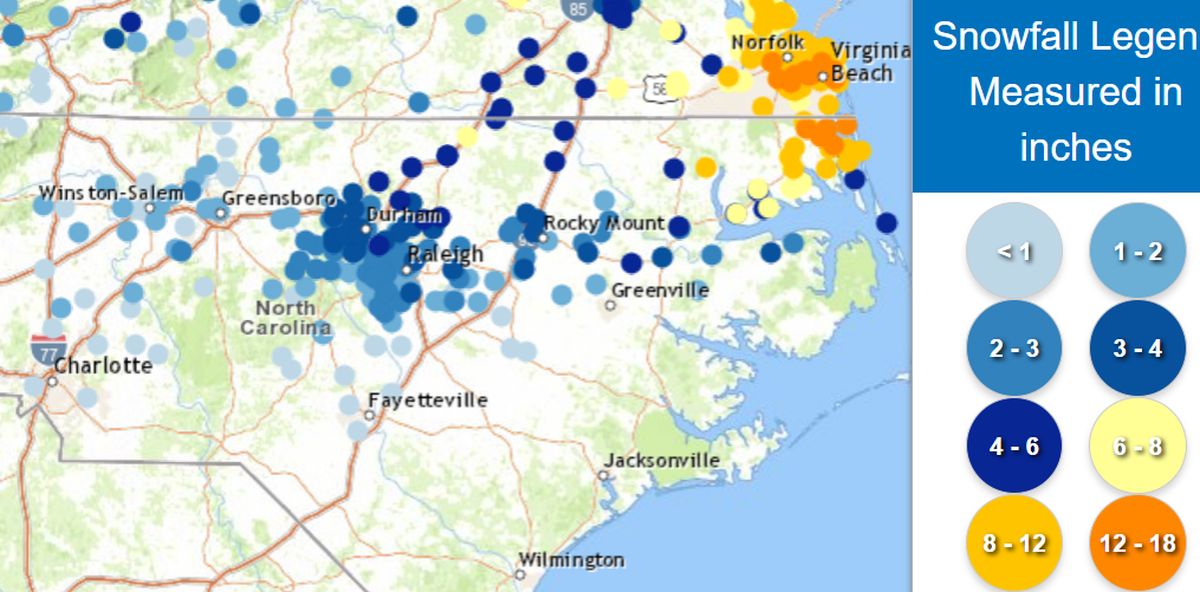
Meteorologists collect the information, plot it on the national snow map and enter it into their records, which they use to produce a storm report that serves as kind of a final word.
Luchetti said staff were still synthesizing the data Thursday and should have a final report in a day or two.
Here are some numbers
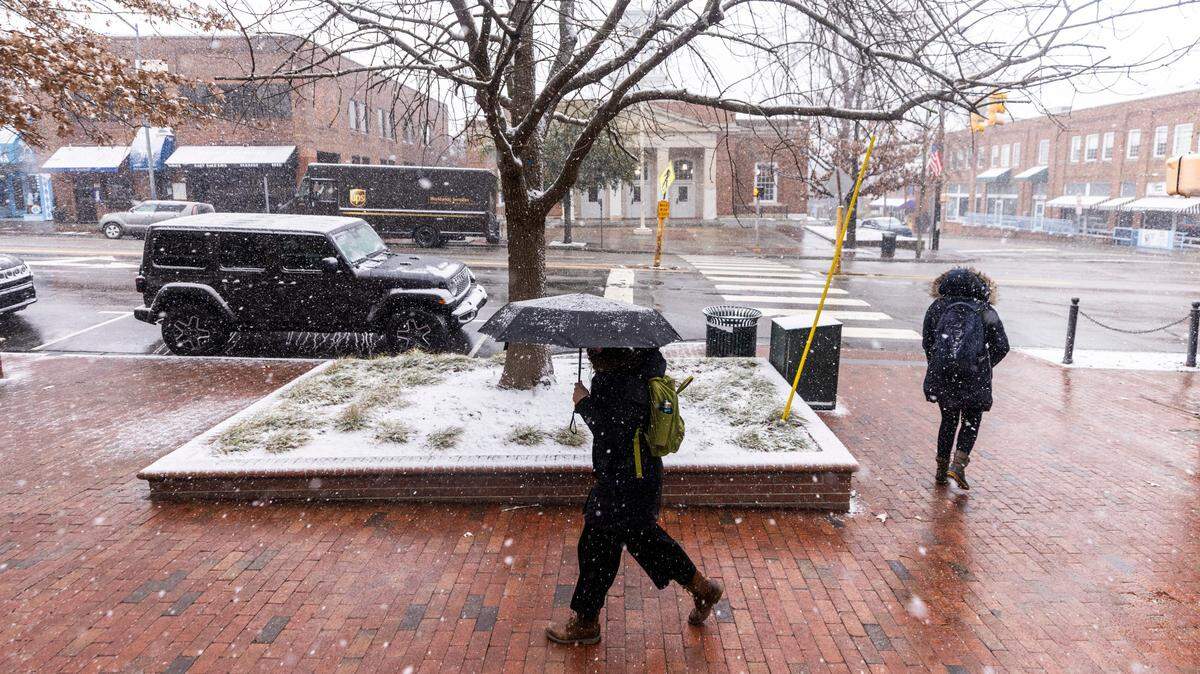
Meanwhile, Luchetti said, here are some of the measurements of snow, sleet and freezing rain from the Feb. 19-20 storm in central and Eastern North Carolina.
Snowfall amounts
Because in the South, snow is the best, whoever gets the most wins. This time, it was the northeastern corner of the state.
▪ 14 inches: Moyock, in Currituck County, by the Virginia border
▪ 13 inches: Knotts Island, in Currituck County
▪ 11 inches: Corolla, Currituck County
▪ 6 inches: Edenton
▪ 5 inches: Henderson, Roanoke Rapids
▪ 3 inches to 3.5 inches: Durham, Hillsborough, Youngsville
▪ 2 inches to 3.5 inches: Chapel Hill, Carrboro, Wake Forest Creedmoor, Holly Springs, Kernersville
▪ 1.5 to 2.5 inches: Raleigh
▪ 1 inch to 1.5 inches: Clayton, Micro, Fuquay-Varina, Angier, Sanford
▪ .5 inches to 1 inch: Lillington, Winston-Salem
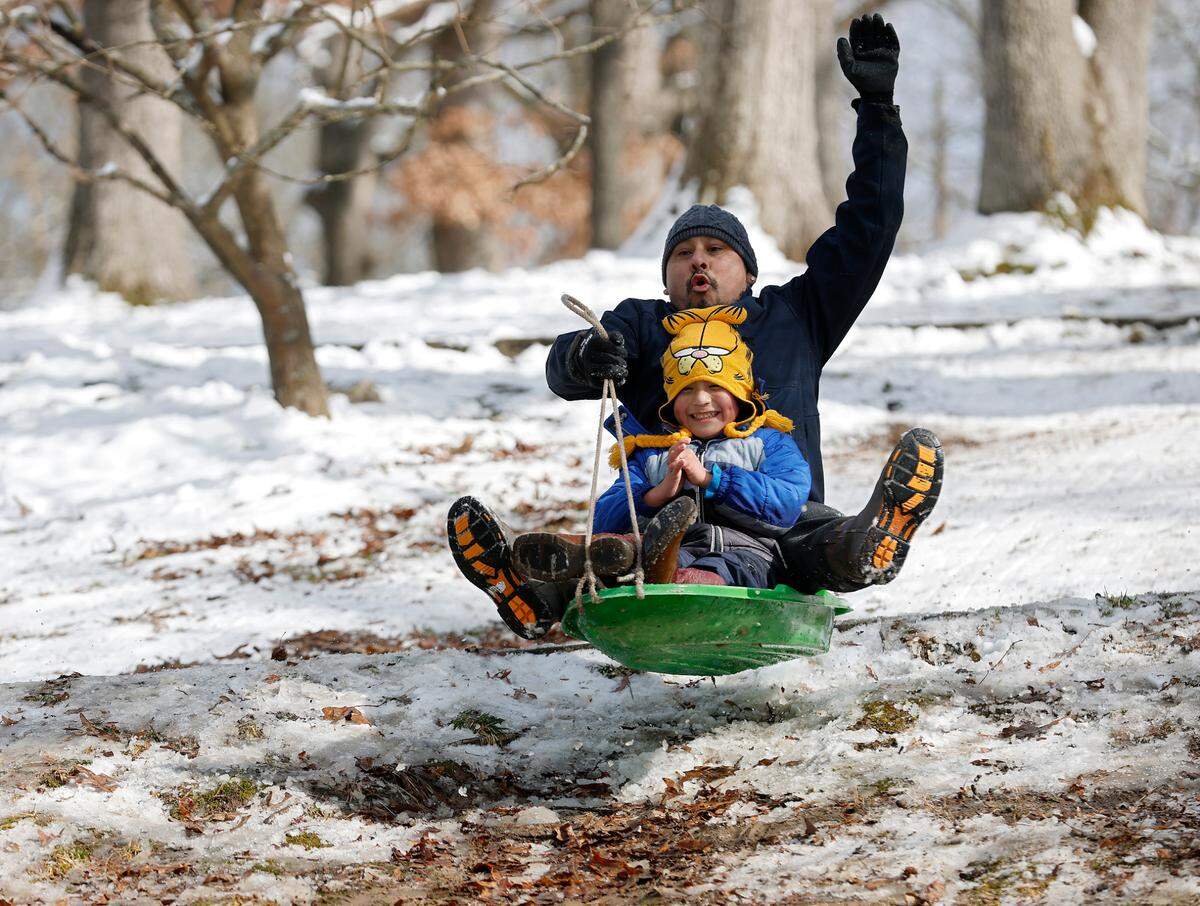
Sleet and freezing rain
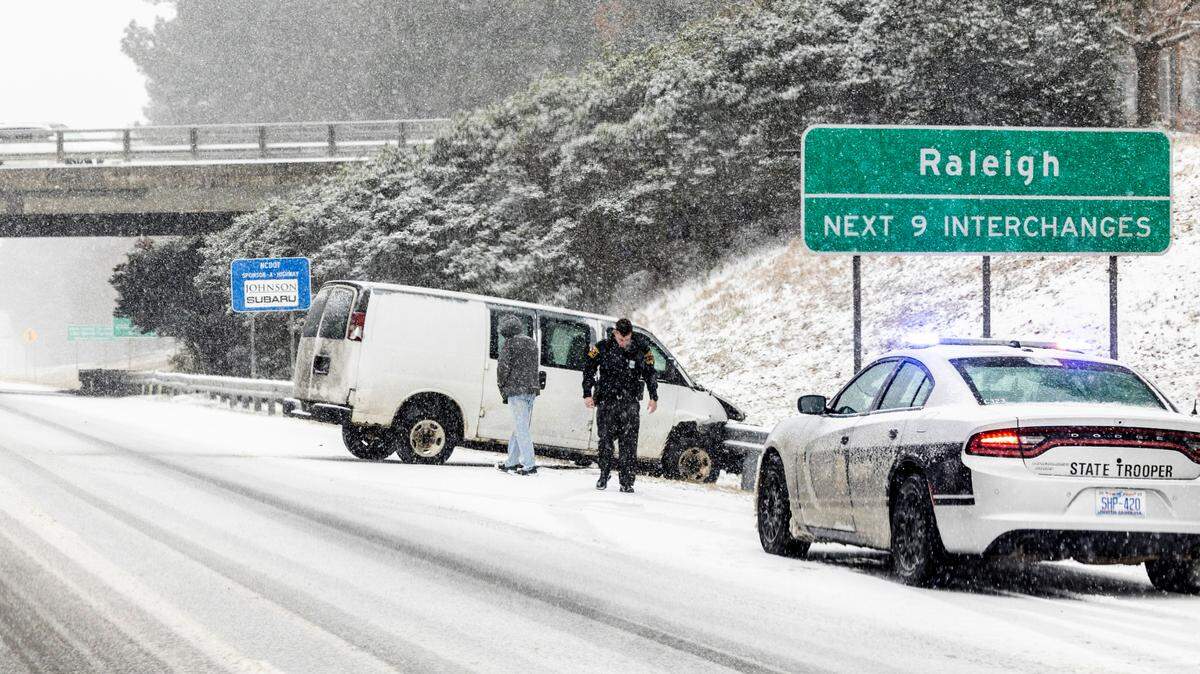
These are typically measured in tenths of inches. One-tenth of an inch on the ground is enough to turn a driveway into a skating rink with no boards, and a quarter-inch can take down power lines, so nobody brags about how much sleet or freezing rain they got.
When someone asks, “What’d you get?” and the answer is, “Sleet,” it doesn’t matter how much. They were cheated and deserve sympathy, like when Charlie Brown went out for Halloween and only got rocks.
With this storm, Luchetti said, the sleet and freezing rain were concentrated in the Sandhills and southern Coastal Plain.
These areas got from one-tenth to three-tenths of an inch, Luchetti said: Sampson, Richmond, Wayne, Hoke, Edgecombe and Harnett counties.
This story was originally published February 21, 2025 at 5:30 AM.

.JPG)