‘Toss-up’: No clear front-runner in GOP race for redrawn Eastern NC district

AI-generated summary reviewed by our newsroom.
- Crowded five-way GOP primary in NC-1 shows no clear front-runner ahead of voting.
- Redistricting added conservative counties, shifting the district toward Republicans.
- Split field and mixed fundraising raise strong chance of a runoff after the primary.
READ MORE
NC Primary Election 2026
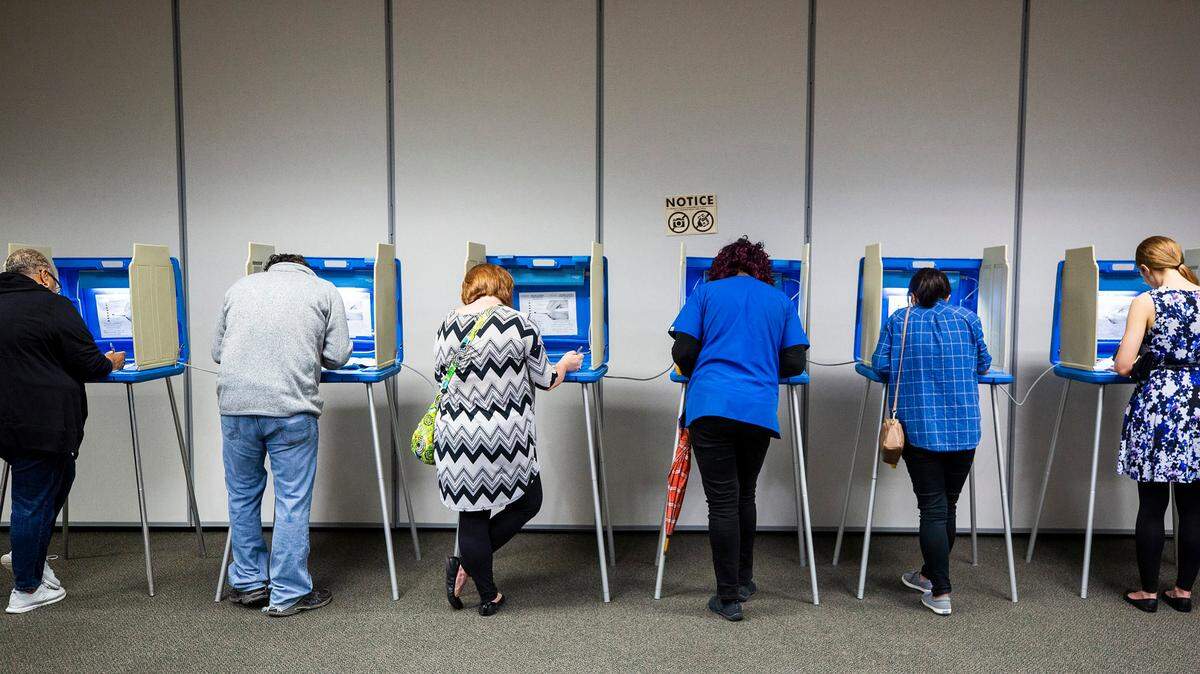
North Carolina’s primary election is March 3, 2026, with early voting starting Feb. 11, 2026. Here are stories on candidates, voting and issues to help voters as they head to the polls.
Expand All
Five Republicans are seeking the right to carry the party’s banner in November in the state’s 1st Congressional District, a once solidly Democratic seat in Eastern North Carolina that now leans Republican.
With in-person early voting starting Thursday and primary Election Day less than a month away, no clear front-runner has emerged. Party insiders and political observers say the divided field could send the race to a runoff unless something shifts.
No candidate has universal name recognition, though several have backgrounds in government and established local profiles. All have embraced President Donald Trump’s agenda and aligned themselves with current Republican priorities, though one has drawn attention for opposing a GOP-backed bill in an episode some dub “shrimpgate.” Campaign finance reports also show no clear fundraising leader, and several campaigns have hired top political consultants.
“The only thing that would really help a candidate get a boost in name recognition would be if President Trump endorsed someone, and I don’t see that happening in this primary,” said Michele Nix, chair of the 3rd Congressional District GOP.
“I really would expect a runoff,” she said.
Candidates are “trying to go to every place they can possibly go — every meeting,” said Mary Helen Warren, president of the Tar River Republican Women.
Getting their name out there “can be a challenge in this district,” Warren said. “It spans 23 counties and portions of two others, and it’s very rural across Eastern North Carolina. That makes campaigning difficult.”
A second primary is allowed if no candidate receives at least 30% of the vote and the runner-up requests a runoff.
Public polling on voter preferences in the district has been limited. That has made the outcome on Election Day difficult to predict, said Chris Cooper, a political scientist at Western Carolina University.
“The opinions of the people in the 1st are a bit of a black box at the moment,” said Cooper. “It’s as close to a toss-up primary as I can imagine.”
Appealing to voters across a vast district
The race may come down to popularity and tapping into what primary voters in a wide-ranging, newly configured district are looking for.
“It always, and especially in the old 1st District, comes down to which candidate is more likable and what issues they’re talking about,” Warren said.
“If you are in a coastal county, then you want to hear more about coastal issues,” she said. “If you’re in Nash, Edgecombe, Halifax, Northampton or Warren counties, you’re going to want to hear about farming, agriculture and jobs.”
“It is such a vast district, and we have a very diverse culture across the district,” she said, adding that while most primary voters cast ballots within their own party and Eastern North Carolina has a generally conservative mindset, candidates do best when they appeal to Republican, Democratic and unaffiliated voters.
North Carolina allows voters who are unaffiliated with either major political party to vote in either primary.
Republicans have the 1st district’s only primary this year, since Democratic Rep. Don Davis is running without opposition from his own party. Also running is Tom Bailey, a Vietnam War veteran, as a Libertarian.
In 2023, Republicans redrew congressional maps after courts ruled that partisan gerrymandering was allowed. That made the 1st district — which stretches across much of northeastern North Carolina and the Inner Banks — the state’s only true swing seat in 2024 and shifted North Carolina’s congressional delegation from an even 7-7 split to a 10-4 Republican advantage.
Davis, a Democrat from Snow Hill, held onto his seat that year, winning a second term.
That balance shifted again in October, when Republicans in the General Assembly approved a mid-decade redistricting plan following calls from President Donald Trump urging GOP-controlled legislatures to redraw maps. Trump’s effort helped spark a nationwide redistricting push, including in some Democratic-led states such as California.
The revised maps expanded the boundaries of the 1st Congressional District by pulling in more conservative territory from the neighboring 3rd district, represented by Rep. Greg Murphy.
“The district has really gotten stronger, especially with the additions of Pamlico, Craven, Carteret, Beaufort and Hyde counties, and Dare County,” said Nix.
“We’ve gained a very strong Republican presence,” said Nix, who lives in Carteret County and now votes in the 1st Congressional District after district lines changed. Under the state GOP’s plan, she will remain chair of the 3rd district party organization until April, after new delegate allocations have been tabulated.
“I see the candidates paying more attention to the coastal counties that have joined the district, as opposed to the northeastern section. Not that they’re not important, but the bulk of the votes are going to come from this part of the district,” said Nix.
A crowded field, with two drawing focus
Nix said all five candidates have been actively campaigning and “all have something good to offer.”
Laurie Buckhout, a former Army colonel; Bobby Hanig, a state lawmaker; Eric Rouse, a business owner and Lenoir County Commissioner; and Carteret County Sheriff Asa Buck “are all traveling and working through their county Republican parties, women’s clubs and men’s clubs,” Nix said.
Meanwhile, Ashley-Nicole Russell, a divorce attorney, “has taken a little bit more of a different approach” and has been “campaigning directly to the people” by traveling in her RV, stopping at Walmart parking lots and talking with voters, Nix said.
That approach is common during a general election, but not something she had seen before in a primary, said Nix, who is also the former vice chair of the North Carolina Republican Party.
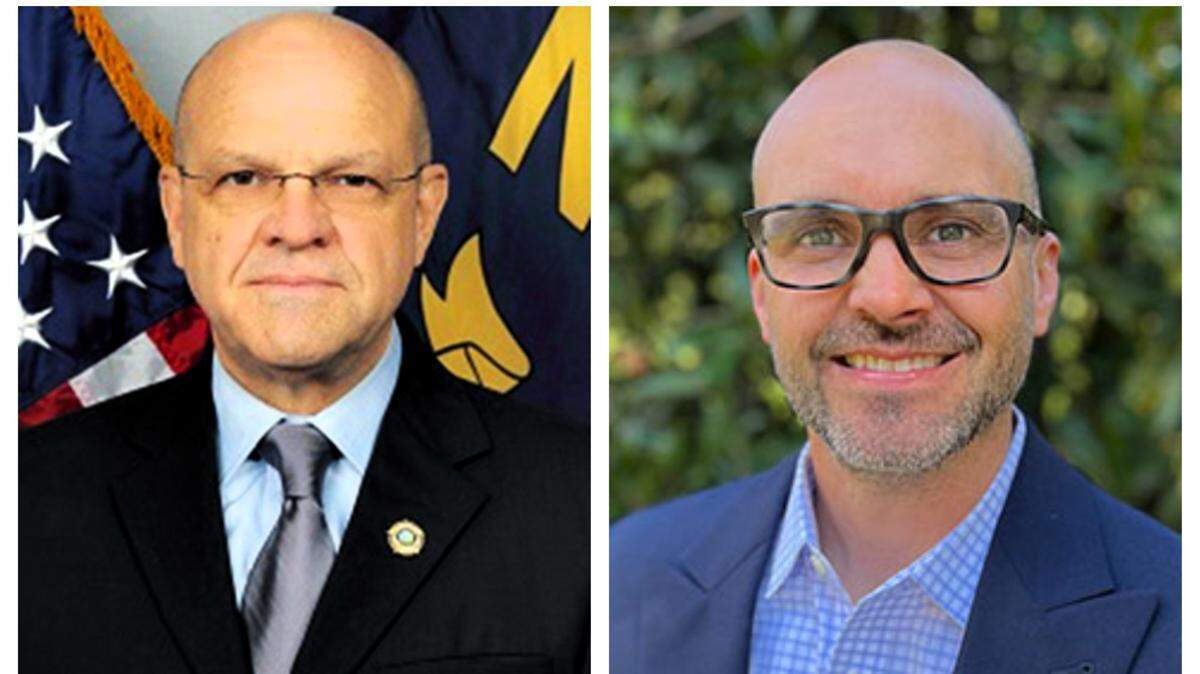
While no candidate has universal name recognition, Nix and Cooper said Hanig and Buckhout stand out as more familiar names.
Hanig, 62, of Powells Point, is a state senator representing District 1, which includes several Eastern North Carolina counties, such as Bertie and Camden. He previously served in the state House and as chairman of the Currituck County Board of Commissioners.
A U.S. Army veteran and the owner of a small business focused on pool care, Hanig has gained increased recognition for his opposition last year to a GOP-backed bill that failed to pass and would have banned shrimp trawling in North Carolina’s sounds.
Eastern North Carolina voters likely viewed this “as standing up for economic development in their part of the state,” Cooper said. “This may be a rare case where standing up against the party establishment might not hurt but could perhaps help.”
Rene’ Moseley Etheridge, chairwoman of the Currituck County Republican Party in Hanig’s home county, said Buckout and Hanig stand out: Buckhout for her past run in the district, and Hanig because he “went to bat for the fishing industry.”
Buckhout, 64, of Edenton, won the Republican primary in the 1st district in 2024 but lost the general election to Davis by less than 2 percentage points. She later joined the Trump administration, serving as acting assistant secretary of defense for cyber policy and later as White House assistant national cyber director for policy.
Buckhout founded Corvus Consulting, a firm focused on electronic warfare and cyberspace operations, after her military career.
Initially, Buckhout said she did not plan to run in 2026, citing health issues. But she entered the race in mid-December after redistricting, and after other candidates had already announced.
That late entry may explain Buckhout’s finances. Federal election data show Buckhout had more than $2.02 million on hand at the end of last year, with $2 million coming from a loan she made to her campaign on the final day of 2025. Another $9,000 came from individual donors.
Hanig raised just over $306,000 from July through December, including just over $100,000 in a loan from himself. Individual donors contributed just over $187,000. Campaign spending through the end of the year left him with over $234,000 in cash on hand.
“Hanig is doing about what you would expect through that point in the campaign,” Cooper said, while Buckhout “is investing wisely in her campaign,” as she did in 2024.
“It’s the best strategy she has. It’s the best play she has given how late she got in,” Cooper said.
Other candidates are also known
While Hanig and Buckhout have greater visibility, according to Nix and Cooper, the remaining candidates also have name recognition, particularly in their home regions, and mixed fundraising results.
Buck, who is from Beaufort, took in just over $248,000 from November through December, including a $59,000 personal loan. Individual contributions total just over $189,000. Spending through December left his campaign with over $233,000 in cash on hand.
He ran for sheriff at age 29, defeating six primary challengers, according to his website. Buck then defeated a 30-year veteran chief deputy in the general election, becoming the youngest sheriff in North Carolina, says his website. Buck also implemented a drug-collection program, Pills Can Kill, which his website says is now a model used throughout the state. He later served as president of the North Carolina Sheriffs’ Association.
“He’s got a really good name throughout this area, not only because he’s been our sheriff, but because he’s worked with other sheriffs and law enforcement across the district,” said Nix.
A poll on the race released Wednesday by Emerson College Polling in Boston shows Buckhout leading with 26% of the vote, followed by Buck at 22%. Hanig is third with 11%, while Rouse has 5% and Russell has 1%. About 36% of voters said they were undecided.
Rouse, 53, raised more than $534,000 from October through December, including a $500,000 personal loan. Individual contributions total just over $34,000. His spending left him with just over $418,000 in cash on hand at the end of last year.
An entrepreneur with six primary businesses ranging from modular construction to concrete and directional drilling, Rouse has also spent 16 years as a county commissioner. In 2019, Rouse ran unsuccessfully as one of 17 candidates seeking the Republican nomination in North Carolina’s 3rd Congressional District special election.
In a questionnaire sent by The N&O to candidates in the 1st district race, Rouse highlighted that throughout his civic involvement he has never voted for a tax or tax increase.
For Nix, Rouse has been getting his name out there and has recognition within Lenoir County. He could be “the silent candidate that no one pays attention to, that runs up the middle.”
Russell raised over $201,000 from October through December, including a $152,400 personal loan. Individual contributions total $49,340. She entered 2026 with just under $195,000 in campaign cash.
Russell, 39, from Atlantic Beach is a family law attorney and founder of AN|R Law, a firm with offices in Greenville, Raleigh, Beaufort, and Wilmington, according to her questionnaire. She’s been named Greenville-Pitt County Small Business Leader of the Year by the local chamber of commerce, and serves on the national board of the National Parents Organization.
The lesser known candidates, Cooper said, could push the election into a second primary.
Their odds of winning are low, but the odds that their presence prevents any candidate from reaching 30% of the vote are higher, Cooper said.
If that happens, the outcome of a second primary is unpredictable, said Cooper, citing instances in which candidates lost the first primary but won the second, such as the elections that launched the political careers of former U.S. Rep. Madison Cawthorn and State Auditor Dave Boliek.
“There’s no telling what happens in the second primary,” he said.


.JPG)