Early voting begins this week in Wake County. Details on when and where.
READ MORE
NC Primary Election 2026
North Carolina’s primary election is March 3, 2026, with early voting starting Feb. 11, 2026. Here are stories on candidates, voting and issues to help voters as they head to the polls.
Expand All
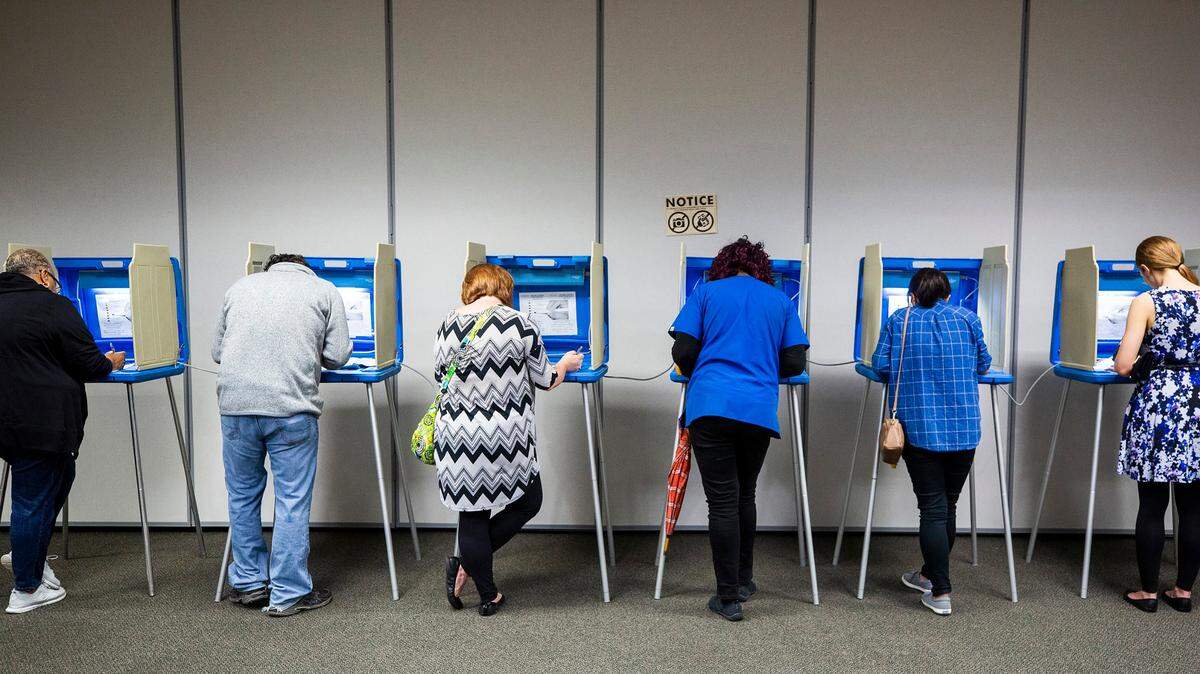
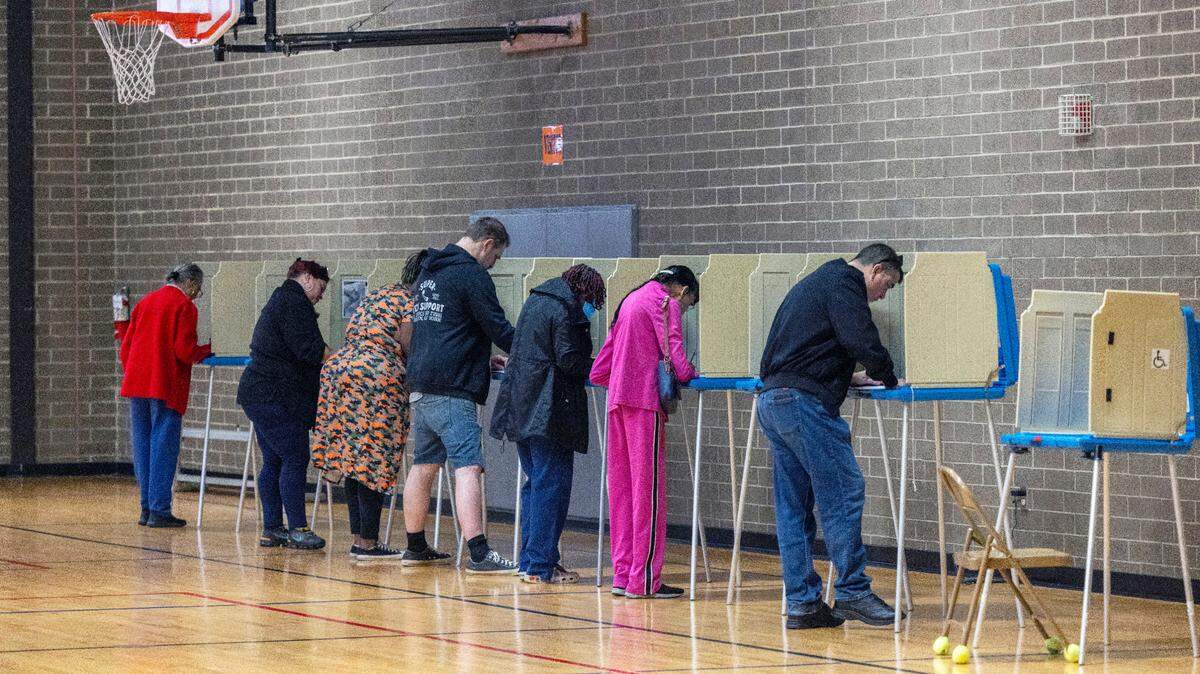
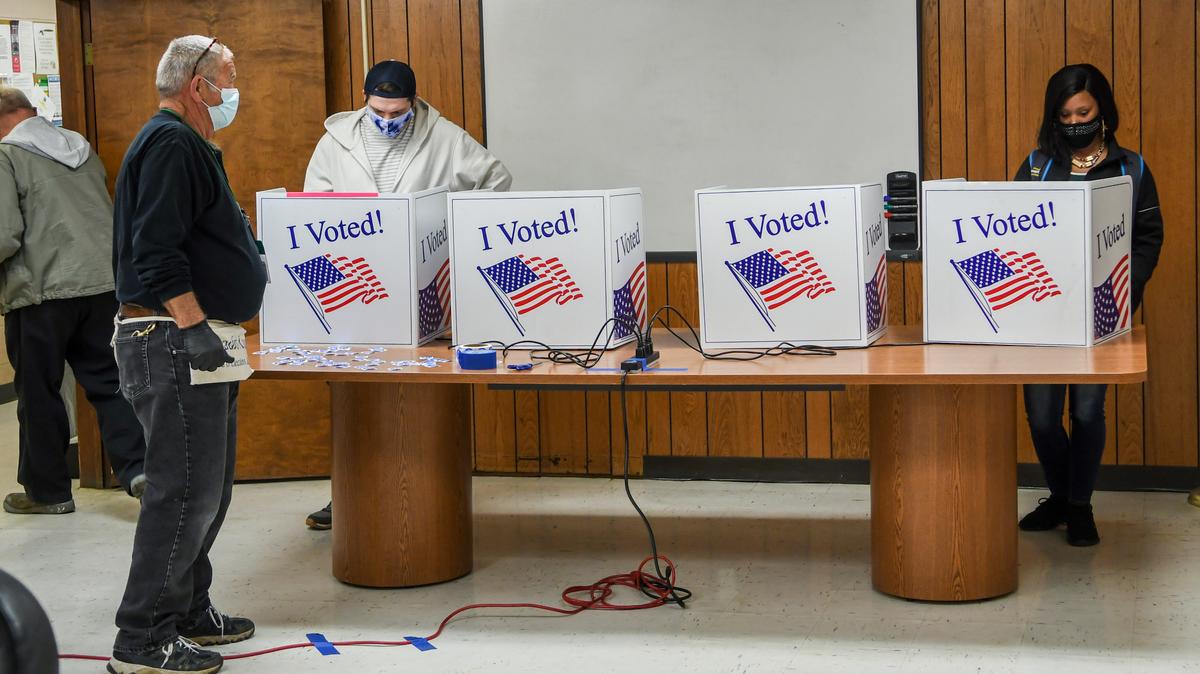
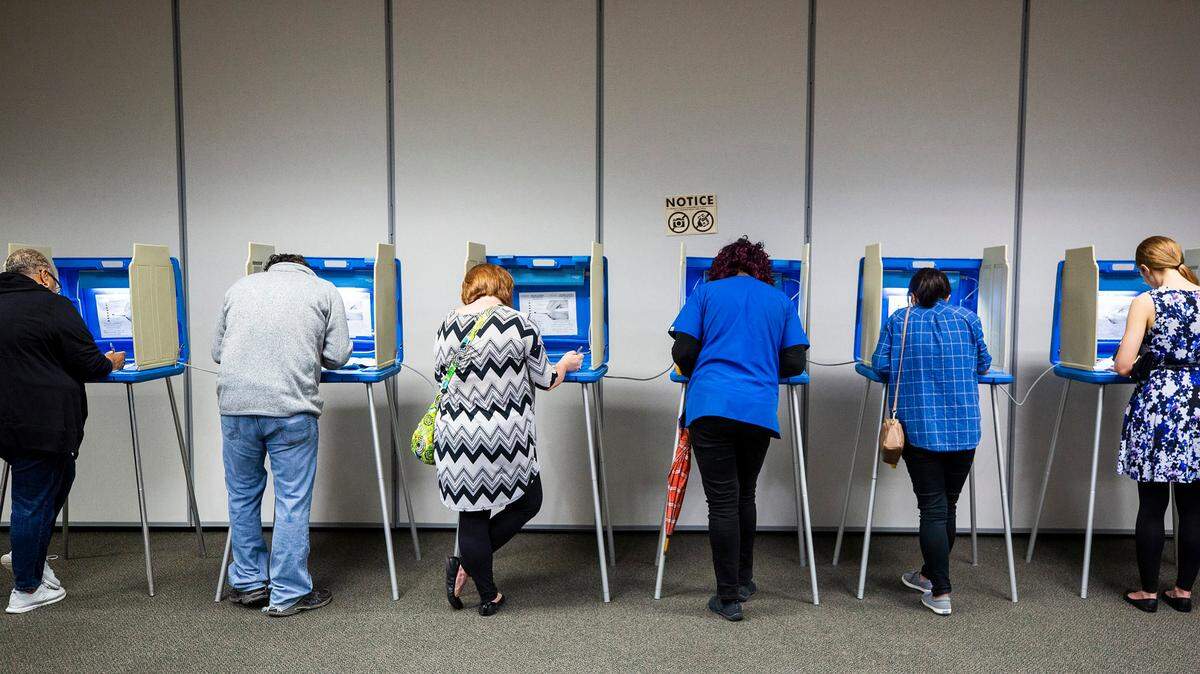
Early voting begins Thursday, Feb. 12, in Wake County with candidates for federal, state and local races hoping to make the cut and move on to the general election.
But in a predominantly left-leaning county, the Democratic primary is where some races will be determined.
There are no Republican challengers for Wake County district attorney, for example, but three Democrats who want to replace outgoing DA Lorrin Freeman, who is not seeking a fourth term.
And there are seven Democrats vying for two at-large seats on the Wake County Board of Commissioners. The top two finishers in the primary will face two Republicans in the general election, but voters have elected only Democrats to the county board for the last 12 years.
Nearly half, about 45%, of Wake County’s 847,071 registered voters are unaffiliated, followed by 280,722 registered Democrats and 174,246 registered Republicans.
Unaffiliated voters can choose which partisan primary they want to vote in or can request a nonpartisan ballot.
There are a dozen early voting sites throughout Wake County, while all 216 polling places will be open during the March 3 primary.
Every voter in the city of Raleigh will have the option to pick two candidates for two at-large seats on the City Council. Voters who live in District C, which covers southeast Raleigh, will also vote for one candidate for the District C seat. The council races are nonpartisan, and the top four finishers for the at-large seats and top two finishers for the District C seat will proceed to the general election in November.
In 2022, the last midterm primary, voter turnout was just short of 20% with more than 156,000 votes cast.
You can find information about local Wake County candidates here.
Here’s what you need to know.
When does early voting start in Wake County?
Early voting runs from 8 a.m. Thursday, Feb. 12, to 3 p.m. Saturday, Feb. 28.
Here are the early voting times for each day:
- 8 a.m. - 7:30 p.m. Thursday, Feb. 12
- 8 a.m. - 7:30 p.m. Friday, Feb. 13
- 8 a.m. - 3 p.m. Saturday, Feb. 14
- 1 -6 p.m. Sunday, Feb. 15
- 8 a.m. - 7:30 p.m. Monday, Feb. 16
- 8 a.m. - 7:30 p.m. Tuesday, Feb. 17
- 8 a.m. - 7:30 p.m. Wednesday, Feb. 18
- 8 a.m. - 7:30 p.m. Thursday, Feb. 19
- 8 a.m. - 7:30 p.m. Friday, Feb. 20
- 8 a.m. - 3 p.m. Saturday, Feb. 21
- 1-6 p.m. Sunday, Feb. 22
- 8 a.m. - 7:30 p.m. Monday, Feb. 23
- 8 a.m. - 7:30 p.m. Tuesday, Feb. 24
- 8 a.m. - 7:30 p.m. Wednesday, Feb. 25
- 8 a.m. - 7:30 p.m. Thursday, Feb. 26
- 8 a.m. - 7:30 p.m. Friday, Feb. 27
- 8 a.m. - 3 p.m. Sunday, Feb. 28
Wake County’s early voting locations
There are a dozen early voting spots in Wake County including five in Raleigh.
Registered Wake County voters can cast their ballot at any early-voting location regardless of where they live in the county.
- Avery Street Recreation Center, 125 Avery St., Garner
- Herbert C. Young Community Center, 101 Wilkinson Ave., Cary
- Hilltop Needmore Town Park Clubhouse, 4621 Shady Greens Drive, Fuquay-Varina
- John Chavis Memorial Park Community Center, 505 Martin Luther King Jr. Blvd., Raleigh
- John Brown Community Center, 53 Hunter St., Apex
- Lake Lynn Community center, 7921 Ray Road, Raleigh
- North Carolina State University Talley Student Union, 2411 Dunn Ave., Raleigh
- Northern Regional Center, 350 E. Holding Ave., Wake Forest
- Optimist Park Community Center, 5900 Whittier Drive, Raleigh
- Wake County Board of Elections Office, 1200 N. New Hope Road, Raleigh
- W.E. Hunt Recreation Center, 301 Stinson Ave., Holly Springs
- Wendell Community Center, 601 W. 3rd St., Wendell
How long are early voting lines?
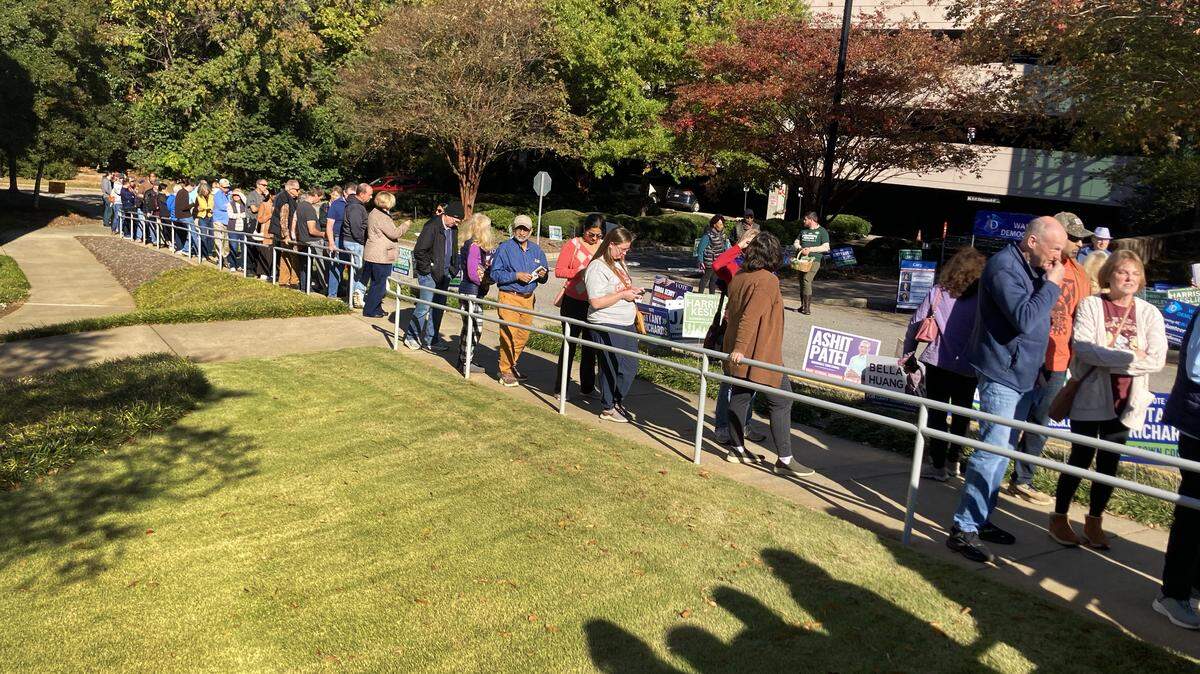
Lines are longer on weekends, especially in the last few days of early voting.
You can check the estimated wait times with Wake County’s online tracker bit.ly/WakeCountyEarlyVotingWaits.
Can I register to vote during early voting?
Yes, you can register to vote during the early voting period by filling out a voter application form, providing proof of residence and a photo ID.
Proof of residence can include a driver’s license or ID card issued by North Carolina, a utility bill, bank statement, paycheck, a property tax statement or government check like for Social Security.
Which primary can I vote in?
North Carolina has a semi-closed partisan primary. That means voters with a party affiliation must vote in that party’s primary. Unaffiliated voters can choose which partisan primary they want to vote in or, if they live within Raleigh city limits, can request a nonpartisan ballot.
There are four political parties recognized in North Carolina: Democratic Party, Republican Party, Libertarian Party and Green Party. There are no local primaries for the Libertarian and Green parities.
You also can’t change your party affiliation during the early voting period.
How can I check my sample ballot?
Residents can check their voter registration and sample ballot online at vt.ncsbe.gov/RegLkup
When is the North Carolina primary?
The 2026 primary in North Carolina is March 3. Polls are open from 6:30 a.m. to 7:30 p.m. If a second primary is needed, it will be held on May 12.
When is the North Carolina general election?
The 2026 general election in North Carolina is Nov. 3. Polls are open from 6:30 a.m. to 7:30 p.m.
This story was originally published February 10, 2026 at 12:30 PM.






.JPG)