Whether NC enacts new abortion restrictions will depend on moderates in both parties
READ MORE
Abortion in North Carolina
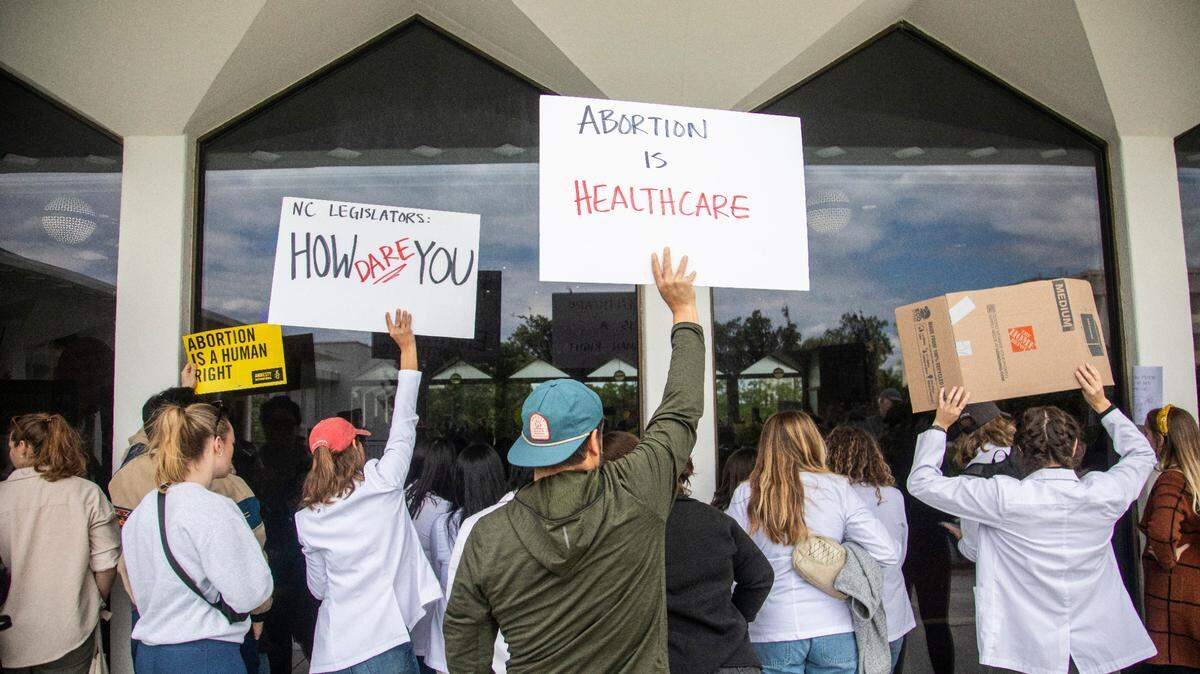
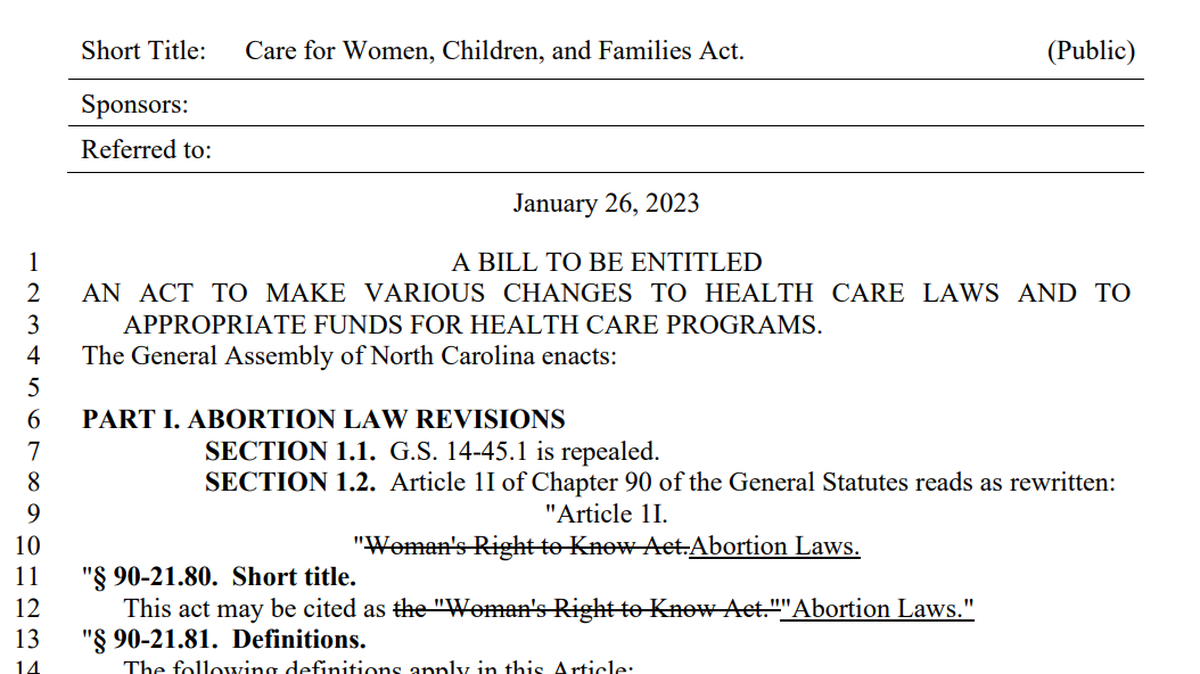
Republicans in the North Carolina state legislature passed a law that implements new abortion restrictions. What does that mean for access to abortion? Read coverage on the issue from The News & Observer and The Charlotte Observer.
Expand All
Republicans fell one seat short of total legislative control in last week’s elections. Now, whether North Carolina enacts further restrictions on abortion will likely depend on moderate members of both parties, whose votes could be the difference between Gov. Roy Cooper’s vetoes being sustained or overridden.
The slim margins mean a single vote could make or break the enactment of new abortion bills. Even though Republicans don’t have enough seats to override Cooper’s vetoes on their own, some abortion rights advocates, like Jenna Beckham, a Triangle OB-GYN, remain concerned.
“Yes, the veto power is still there, but it’s not as solidly protected and I still think there’s a chance it will be overruled,” Beckham said in an interview last week. “What if a Democrat isn’t there for a vote or there’s some socially conservative Democrats?”
Republicans will be counting on a few Democrats, moderates and social conservatives, some of whom have voted for anti-abortion bills in the past, to be open to supporting GOP-introduced bills during the upcoming session. But as legislative leaders and advocates have indicated since last week, there are many variables at play.
Tami Fitzgerald, the executive director of the conservative N.C. Values Coalition, said there are pro-life Democrats who Republicans have been able to work with in the past, but didn’t mention any specific lawmakers who might be open to a compromise bill, saying that she didn’t want to “put a target on their backs.”
“Unfortunately, they’ve had to experience a lot of extreme pressure from the governor,” Fitzgerald said, calling Cooper’s agenda “extreme.”
Can Republicans court any Democratic votes?
Cooper has blocked multiple Republican abortion bills in recent years.
In April 2019, GOP lawmakers passed Senate Bill 359, the so-called “Born Alive” bill, which instructed medical professionals to care for newborns who survive an abortion, and proposed criminal charges and fines of up to $250,000 for physicians and nurses who did not comply.
The bill passed the Senate and House with the support of a handful of Democrats, most of whom subsequently left the legislature to run for other office, or lost their reelection campaigns. Rep. Garland Pierce, who represents Hoke and Scotland counties and has served in the House since 2005, is the only Democrat who voted for the bill who is still serving.
When Cooper vetoed the bill, Pierce was one of two House Democrats (the other being Rep. Charles Graham, who unsuccessfully ran for Congress this year) to join Republicans in voting to override his veto. The effort ultimately fell short by five votes.
“This needless legislation would criminalize doctors and other healthcare providers for a practice that simply does not exist,” Cooper said in his veto message at the time.
Republicans passed another measure, House Bill 453, in the spring of 2021, which would have banned physicians from performing abortions due to the race or sex of a fetus, or because the fetus is suspected of having Down syndrome.
This bill, also vetoed by Cooper, passed the Senate on a strictly party-line vote, but received support from six Democrats in the House, three of whom remain in the legislature: Pierce, as well as Reps. Amos Quick of Guilford County, and Michael Wray of Halifax and Northampton counties.
But at the same time that Republicans gauge support among Democrats, it’s important they also make sure there’s agreement within their own ranks, Fitzgerald said.
“My hope is that the caucuses will be unified. But ultimately, that’s up to the leaders of both caucuses,” Fitzgerald said of Republicans. “They’ve done an amazing job of unifying their caucuses on other issues up to this point, and I would expect to see that here as well.”
For supporters of abortion rights, the hope is that Democrats will be able to band together and continue to uphold Cooper’s veto, even if it comes down to margins as small as a single vote.
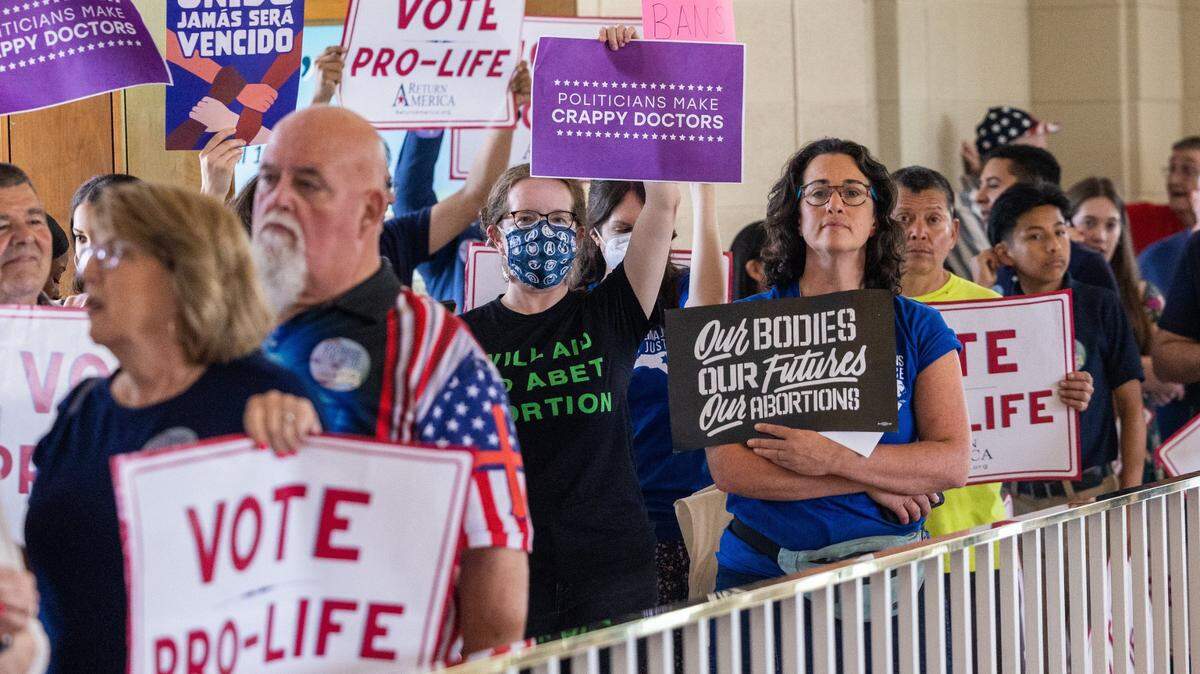
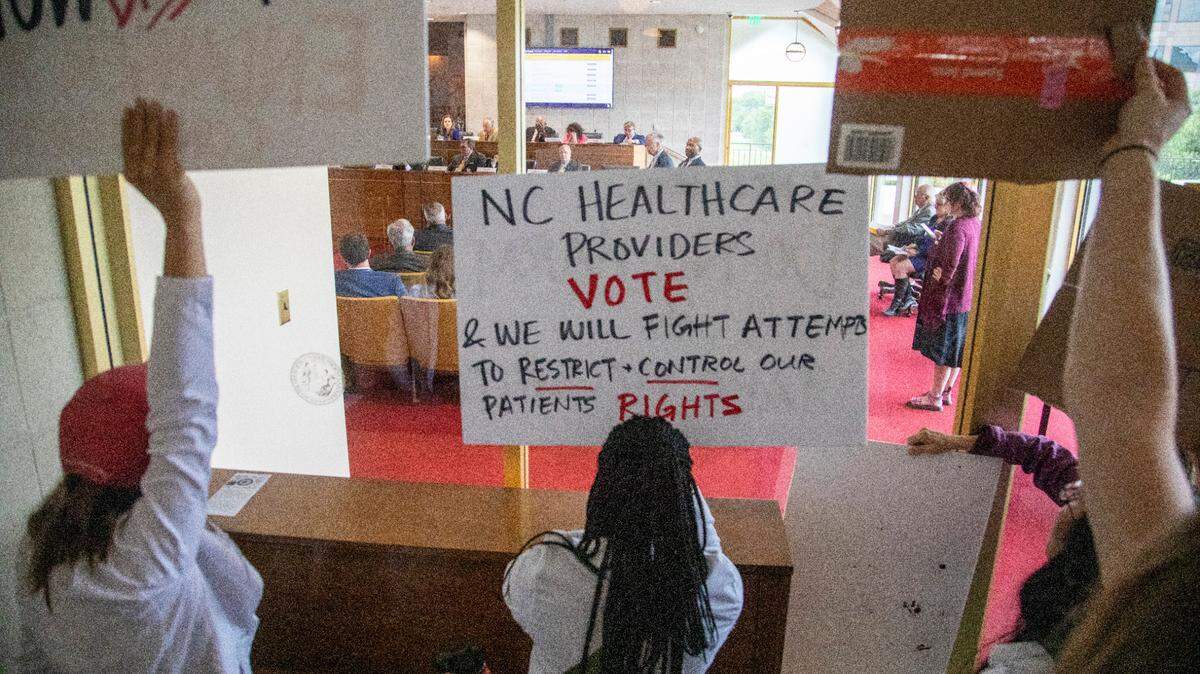
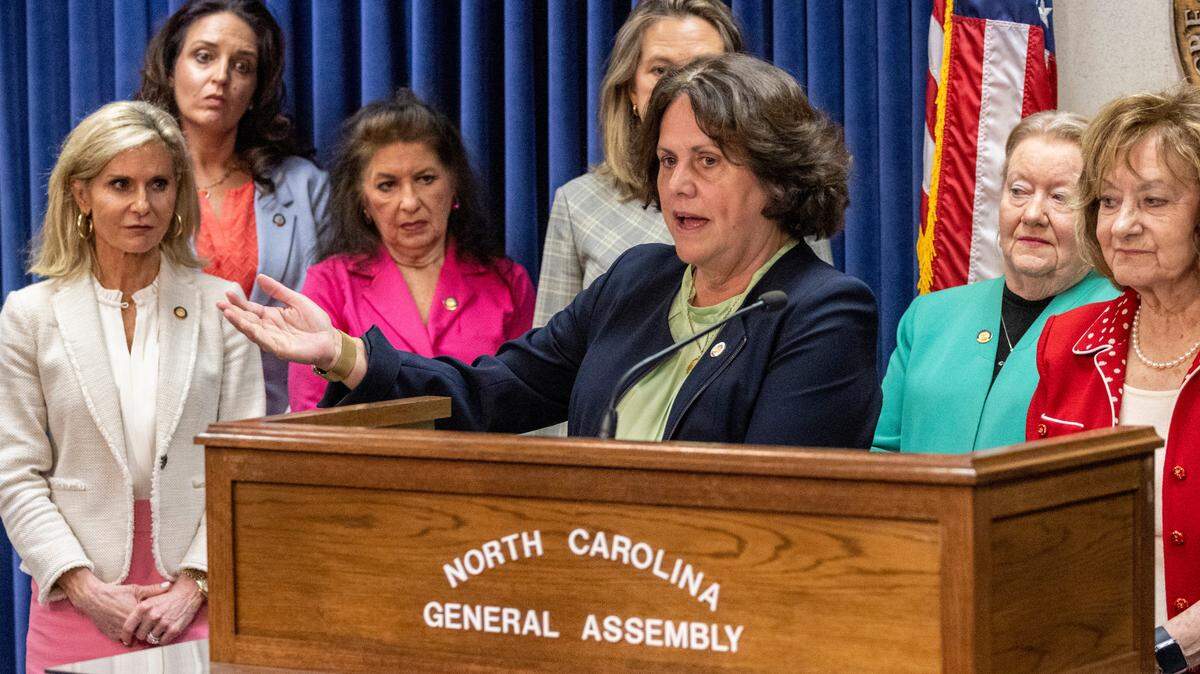
During a press conference the day after the election, abortion rights advocates said that even though Democrats would have hoped to keep Republicans further from supermajority thresholds, the election results were not an indication that voters want lawmakers to pass further restrictions.
“Any politician that interprets the results of this election as a mandate to pass a ban on abortion is gravely misreading this electorate,” said Jillian Riley, director of public affairs for Planned Parenthood South Atlantic. “There remains overwhelming support to access abortion in North Carolina.”
Asked about the possibility of Republicans garnering some Democratic support, Riley said the margin is “razor-thin” and that “we need every vote from our champions in the General Assembly and those who support reproductive freedom to uphold Gov. Cooper’s veto.”
Differences of opinion among Republicans
Republicans have suggested since the U.S. Supreme Court struck down Roe v. Wade in June that they would pursue an abortion ban that goes further than current state law, which doesn’t allow abortions after 20 weeks of pregnancy, except in cases of medical emergencies.
Speaking to reporters last week, Senate leader Phil Berger and House Speaker Tim Moore, the two top Republicans in the legislature, said they were encouraged by the results of the election that inched them closer to being able to pass and enact laws over the governor’s veto.
Still, they said, Republicans are of different minds when it comes to the specific abortion restrictions they want to pursue, if any. Those proposals would likely need to earn the support of at least one Democrat as well.
When the new session begins in January, Republicans will control 30 seats in the Senate and 71 seats in the House, according to unofficial election results, reaching the exact number needed for a veto-proof supermajority in the upper chamber, and falling one seat shy of the required number in the lower chamber. The tight margins are expected to empower moderates on both sides, whose decisions to vote with or against their party, or abstain from voting entirely, could determine the outcome of attempted veto overrides.

Berger and Moore have both previously said they support earlier bans on abortion. Berger has said he supports banning abortions after the end of the first trimester, at 13 weeks. Moore has expressed support for a so-called heartbeat bill, which bans abortion after cardiac activity is first detected, usually around 6 weeks.
But opinions in their caucuses are divided, both leaders told reporters Tuesday.
Some Republicans, part of the more conservative wing of the party, want to pass a heartbeat bill, and during last year’s session, more than 20 House Republicans sponsored a bill just like that.
Others want to keep the current 20-week law in place, The N.C. Tribune reported, while some want a middle-ground law that falls somewhere in between.
“We’ve got a 20-week law in effect right now, and I believe that we ought to do something less than the 20 weeks,” Moore said, according to the N.C. Tribune. “What that number is, I don’t know.”
Berger also indicated there might be room for Republicans to compromise with lawmakers who support abortion rights, noting that the current 20-week law allows an exception only for medical emergencies, which abortion-rights advocates say is defined too narrowly.
“Maybe there’s a compromise that can be worked out there where you drop it back to 13 weeks, 15 weeks, but you include the exceptions for rape and incest,” Berger said, according to the Tribune.
Both Berger and Moore said they have yet to have discussions of their entire party caucuses about what the best approach will be come January. Whatever bill Republicans decide to roll out, they’ll likely have to balance the interests of both the conservatives and moderates in their party — and possibly even some Democrats.
GOP may yet find it difficult to override vetoes
Republicans may feel confident that they have a “governing supermajority” in the House, as Moore put it last week, due to the possibility of cooperation with moderate Democrats. But Rep. Robert Reives, the leader of the House Democratic caucus, was quick to point out that Republicans weren’t able to override any of Cooper’s vetoes during the past session.
“And that was with legislation that probably would be considered more moderate legislation than we’re maybe looking at over the next few years,” Reives said in an interview.
Reives acknowledged that Republicans will likely make some “tough overtures” to moderate members of his caucus. Some of those Democrats represent “very impoverished areas,” he said, adding that “money is a factor when it comes down to things of that sort.” At the same time, he said, he believes every House Democrat shares the same “base core ideals.”
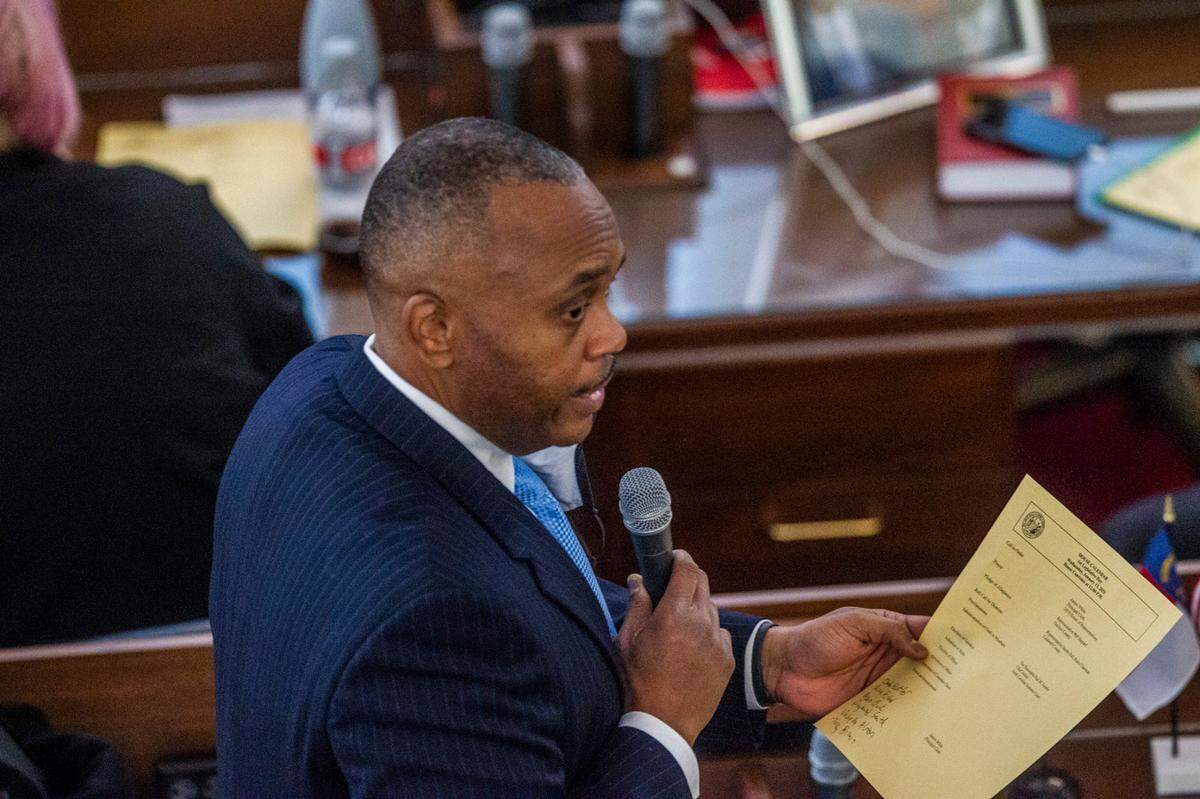
Addressing Moore’s suggestion that Republicans will be able to work with some Democrats on bypassing Cooper, Reives said he feels “fine about where we are” in terms of being able to uphold the governor’s vetoes, and said it’s worth remembering that there are moderates on the Republican side of the aisle as well.
“For every member that he feels he has a comfortable relationship with, that he may be able to persuade, and what other ways that he does, to vote with them on certain issues, I think he’s got the same problem in his caucus,” Reives said of Moore. “I mean, the reality is that there are areas trending our way, there are areas that are trending their way. And when you look at the two, for every member in my caucus that he may have, that may be inclined to lean with Republicans on certain issues, he’s got Republicans in his caucus who, the more they get out there on pretty extreme issues, the more at risk they are of losing those seats.”
Even though it’s unclear what kind of abortion bill Republicans will try to coalesce around, Reives said he believes many GOP lawmakers, especially on the more conservative side of the caucus, had made it “very clear” that they support a heartbeat bill, something that he said would not be “tenable to any Democrats” — or maybe even to Republicans in competitive districts.
“What you’ve seen across the country, even in places like Kentucky and Kansas, where you wouldn’t expect it, is a support for women’s autonomy,” Reives said.
For more North Carolina government and politics news, subscribe to the Under the Dome politics newsletter from The News & Observer and the NC Insider and follow our weekly Under the Dome podcast at campsite.bio/underthedome or wherever you get your podcasts.
This story was originally published November 17, 2022 at 2:58 PM.




















.jpg)